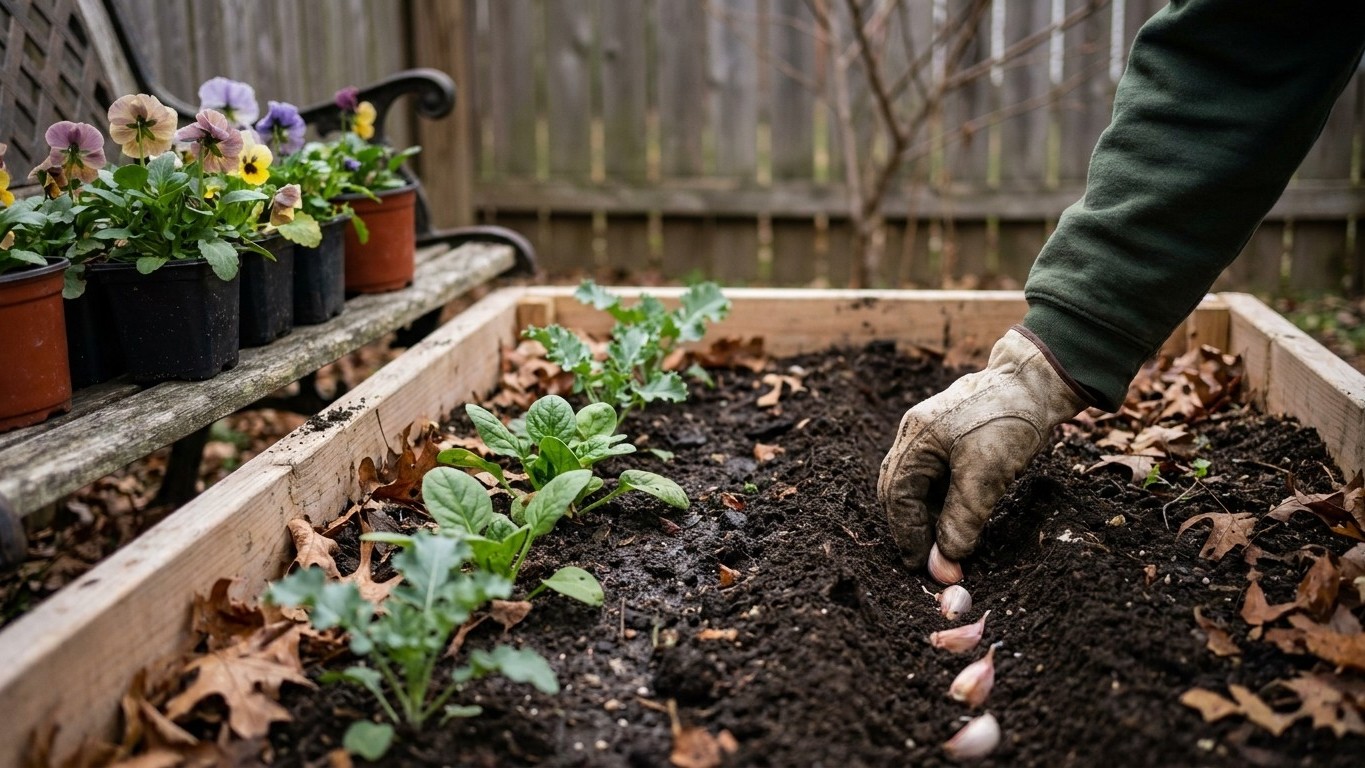

October in Pennsylvania means garlic goes in the ground, cover crops get sown, and hardy greens move under protection before the first hard frost. That frost lands November 5 to November 16 in Philadelphia, but gardeners at elevation or in the northern counties should expect it sooner. This is a transition month, not a planting month for anything tender.
What goes in the ground in October

The calendar says October, but the soil doesn’t care what the calendar says. What matters is soil temperature and how many weeks of root-growing time are left before the ground locks up for winter. In Philadelphia, that window still has roughly a month to five weeks before the first freeze arrives, based on the November 5 to November 16 range. Further north and at higher elevation in the Alleghenies, that cushion shrinks fast, sometimes to nothing by late October.
Garlic and shallots are the signature October planting across the state. Both go in as cloves or sets, four to six weeks ahead of the ground freezing solid, so they can push roots before dormancy without wasting energy on top growth that frost would just kill anyway. Cover crops belong in this same window: winter rye and crimson clover germinate in cool soil and hold bare beds together over winter instead of leaving them exposed to erosion.
Hardy greens still have a shot if they go in early in the month and get some protection. Spinach sown directly in the first half of October has time to establish before growth slows, then it sits through winter and resumes in spring. Kale and lettuce started as transplants can work too, but only under a cold frame or row cover once nights start dropping into the 30s.
What doesn’t belong in the ground this month is anything warm-season. Tomatoes, peppers, beans, squash, all of it is done for the year once nighttime temperatures start flirting with frost. Planting these now isn’t a gamble, it’s just a loss. The gamble crops are things like late lettuce transplants with no cover, or beets sown too late to size up before the ground cools past the point where roots grow. Those can go either way depending on how mild the back half of fall turns out.
What to start under cover
Working backward from the frost window is the only reliable way to plan October sowing, because a fixed date on a seed packet doesn’t know what county you garden in. If the first frost lands in the second week of November in Philadelphia, spinach or mache sown in a cold frame in early October has roughly five to six weeks to build a root system before growth stalls for winter. That’s enough. Sown two weeks later, those same seeds might only get two or three weeks of active growing time, which often isn’t enough to establish before the cold shuts things down.
Mache, also called corn salad, is one of the few crops actually suited to an October cold-frame start. It germinates in cool soil, tolerates hard freezes once established, and sits ready to harvest through winter and into early spring. Spinach behaves similarly when given a low tunnel or frame.
Indoors, this is a reasonable month to start windowsill herbs like parsley or chives from seed, and to get microgreen trays going since they don’t depend on outdoor light or temperature at all.
The two ways this goes wrong are predictable. Start too early under cover, before nights have cooled enough, and greens bolt or grow leggy reaching for light that isn’t there yet in a covered frame. Start too late, past that five- or six-week root-building window, and the plants never size up before dormancy, so they’re weak going into the coldest stretch and slow to recover in spring. There’s no fixed date that solves this. It’s counted from your local frost window, not from the first of the month.
What is ready to pick
October is one of the fuller harvest months in Pennsylvania gardens. Winter squash and pumpkins should be coming off the vine once the stem has dried and hardened and a fingernail can no longer easily pierce the skin. Apples are peaking in orchards across the state through the month. Storage potatoes dug now, once the tops have died back, cure best in a dark spot around 50 to 60 degrees for a couple weeks before going into long-term storage.
Root crops like carrots and beets actually improve with a light touch of cool weather, converting starches to sugars and tasting sweeter than their September selves. The same goes for brassicas: broccoli, cabbage, and Brussels sprouts left in the ground through a light frost or two often taste better for it.
Anything tender still hanging on, tomatoes, peppers, basil, needs to come in before a hard freeze turns it to mush. Green tomatoes picked ahead of frost will ripen indoors on a windowsill, slower than vine-ripened but far better than losing the whole crop.
For anything already in storage from earlier harvests, October is a good month to check onions, garlic, and summer squash for soft spots or sprouting. One rotting onion in a mesh bag can take down its neighbors fast, so a quick weekly check saves more than it costs in time.
The jobs that matter this month

Garlic planting tops this list, and it has a real deadline: get cloves in the ground while soil is still workable and before it freezes solid, ideally four to six weeks ahead of that. Miss the window and you’re waiting until spring, which means smaller bulbs at harvest.
Mulching follows close behind. A layer of straw or shredded leaves over newly planted garlic, over perennial beds, and over any greens left under row cover insulates roots against the freeze-thaw cycles that heave plants out of the ground over winter. This is also the month to rake and compost fallen leaves rather than bagging them for the curb; shredded leaves make free mulch and eventually free compost.
Cleaning up diseased plant debris matters more in October than people think. Tomato and squash vines carrying blight or powdery mildew should go in the trash, not the compost pile, because most home compost setups don’t get hot enough to kill those pathogens. Leave that debris in the garden over winter and it’s reinfecting next year’s crop before you’ve even planted it.
Soil testing is worth doing now rather than in spring, since results take a few weeks to come back and any lime or amendments recommended need time to work into the soil before planting season starts. October is also the month to drain and store garden hoses and irrigation lines before a hard freeze cracks them, and to order spring bulbs like tulips and daffodils while nurseries still have full stock, since the good varieties sell out by November.
Hold off on pruning fruit trees and berry canes this month. That job belongs to full dormancy in late winter, and cutting now, while wood can still be pushed into late growth by a warm spell, invites the kind of tender new growth that frost kills outright.
What not to do in October
The classic October mistake in Pennsylvania is trusting a warm afternoon over the calendar. A run of 70-degree days in early October doesn’t mean frost risk is gone, it means frost is delayed, not cancelled. Gardeners who pull row covers off hardy greens during a mild stretch often get caught out a few nights later when temperatures drop back down, undoing weeks of protected growth in a single cold night.
Planting anything warm-season this late is simply wasted money and effort. Tomato or pepper transplants set out in October, however cheap the garden center is selling them, have no realistic path to producing before frost ends the season.
Nitrogen fertilizer is the other trap. Feeding lawns or perennial beds with a high-nitrogen product this late pushes soft, leafy growth right when plants should be slowing down and hardening off for winter. That tender growth is exactly what a freeze damages first, so the fertilizer ends up weakening the plant instead of helping it.
Leaving winter squash and pumpkins in the field too long after the vines have died back is a quieter mistake. Once the foliage is gone, the fruit is exposed to ground moisture and pests, and quality starts to decline even before frost touches it. Get it harvested and cured rather than treating the vine’s death as a deadline to ignore.
Checking this against your own county
A statewide frost window is a starting point, not an instruction for your particular garden. Pennsylvania spans USDA Hardiness Zones 5a to 7b, and elevation, valley cold pockets, and simple distance from Philadelphia’s mild river-valley climate can shift these dates by two to four weeks in either direction. A garden in the Alleghenies or the northern tier should plan on frost arriving earlier than the Philadelphia range suggests, not later.
For dates and guidance calibrated to your specific county, the Penn State Extension service is the reliable next stop, with local offices that track conditions well beyond what any single statewide range can capture.
Common questions
Is it too late to plant garlic in October in Pennsylvania?
No, October is the classic window for it. Getting cloves in four to six weeks before the ground freezes gives roots time to establish before winter dormancy.
Can I still start a vegetable garden in October in Pennsylvania?
Only with hardy crops and protection. Spinach and mache in a cold frame, plus garlic and cover crops in open ground, are realistic. Warm-season vegetables are done for the season.
When does frost typically hit in Pennsylvania?
In Philadelphia, the first fall frost typically falls between November 5 and November 16, based on NOAA climate normals. Northern and higher-elevation areas of the state should expect it earlier.
Should I prune fruit trees in October?
No. Wait for full dormancy in late winter. Pruning now can trigger new growth that a freeze will damage.
Gardeners who plant by the Moon can check the October 2026 moon planting calendar, a tradition rather than a proven method.
Related guides
- When to Plant Cucumbers in Pennsylvania
- When to Plant Potatoes in Pennsylvania
- When to Plant Melons in Pennsylvania
- What to Plant in Pennsylvania in September
Elsewhere? See what to plant in October in every state and province.