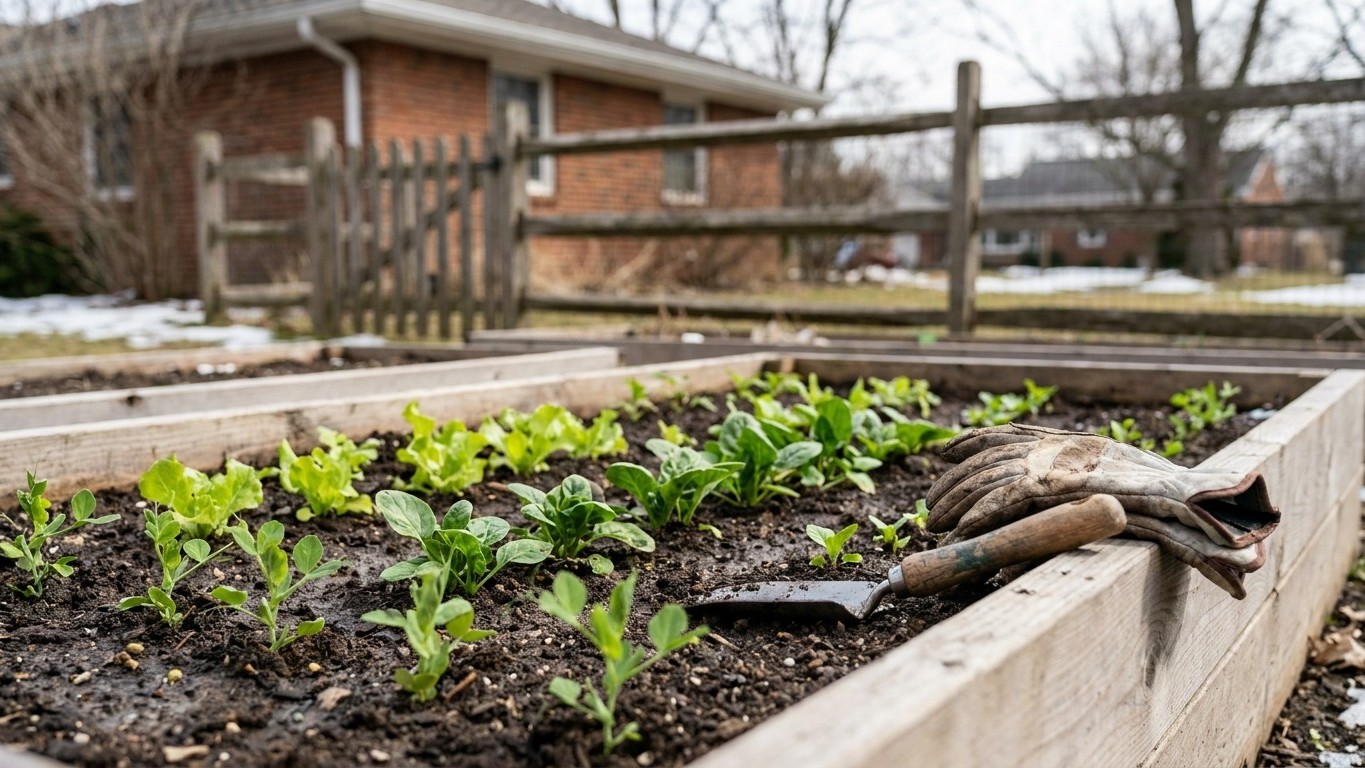

In March, Prince Edward Island gardeners plant almost nothing directly in the open ground. The average last spring frost at Charlottetown falls around May 16, so March sits roughly two months ahead of that window. The real work this month happens under cover and indoors: starting onions and cole crops, forcing rhubarb, pruning dormant fruit wood, and getting soil and seed orders sorted before spring arrives all at once.
What goes in the ground in March

What decides whether anything goes into Island soil this month is not the date on the calendar but two things working together: soil temperature and the frost window. The average last spring frost at the Charlottetown A station sits around May 16, and that figure is a mean, not a guarantee, so in about half the years frost arrives later than that. March lands roughly eight to ten weeks ahead of that average, which means the ground itself is usually the bigger obstacle than the air temperature. Island soil, the famous red clay, is either still frozen solid, blanketed in snow, or thawed into heavy, sticky mud that compacts hard if you so much as walk on it while wet.
For most of the province, honest advice is simple: open-ground planting does not happen this month. That is not a gap in the calendar, it is the calendar telling the truth.
What is actually possible
A few narrow options remain for gardeners who prepped beds in fall. Garlic and shallots that missed a fall planting can occasionally still go in during a brief thaw, provided the bed drains and is not a mud pit, though this is a gamble rather than a plan. Cold frames and low tunnels can protect overwintered greens and give them a head start once light lengthens. Bare-root fruit trees, currant and gooseberry canes, and other dormant stock can go into the ground the moment soil is workable, which for some sheltered coastal sites can happen toward the tail end of the month in a milder year. Forcing rhubarb crowns or chicory roots in a dark, warm spot indoors gives an early harvest weeks before anything stirs outside. None of this replaces spring planting; it fills the gap while the ground finishes its business.
What to start under cover
The arithmetic that matters here works backward from the average last frost date of May 16, not forward from the first day of the month. Onions, leeks, and celery are slow growers that benefit from ten to twelve weeks indoors before they go outside, so a March start lines up well with a transplant date after the frost risk has mostly passed. Cole crops, cabbage, broccoli, cauliflower, need only six to eight weeks before they go out, and because they tolerate a light frost, they can move to a cold frame a few weeks ahead of the average frost date rather than waiting for it entirely.
Tomatoes and peppers are a different story. They need only six to eight weeks of indoor growing before transplant, and transplant does not happen until frost danger has genuinely passed, well after the May average. Start them in March and by the time it is safe to set them out, they are rootbound and leggy, stretched toward the window and weak-stemmed. That is the first failure mode: starting warm-season crops too early produces sad, sprawling seedlings instead of sturdy ones. The second failure mode runs the other way: wait too long to start onions or leeks, and they never bulk up enough before the season runs out on the other end, in the average October 17 fall frost. Counting backward from both ends of the season, not from the date on the wall, is what keeps a seed-starting schedule honest.
What is ready to pick
Little or nothing comes out of the open garden this month, and that is worth saying plainly rather than dressing it up. Anything still standing outdoors is there because it survived under snow cover: kale, leeks, and parsnips left in the ground over winter can be dug as soon as the soil softens enough to get a fork into it, and cold often sweetens their flavor rather than ruining it. A cold frame planted in fall with spinach, mache, or claytonia can still be giving small, steady pickings if it was managed through the coldest weeks.
Indoors is where most March harvests actually happen. Sprouts and microgreens on a windowsill or under a light take only days from seed to plate and cost almost nothing in space. Forced rhubarb, started in the dark a few weeks earlier, is ready to pull now, pale pink and far more tender than the field-grown stalks that will come months later. This is also the month to walk the root cellar or storage shelf with a critical eye: check stored squash for soft spots at the stem end, potatoes for sprouting eyes or green shoulders, and onions for any that have gone soft in the neck. Use the ones that are turning first, and pull anything showing rot before it spreads to its neighbors.
The jobs that matter this month

March carries real deadlines even without a seed going into open ground. Dormant pruning of apple trees, plums, and berry canes should happen before buds swell, while the plant’s structure is still visible and cuts heal cleanly without pushing new growth into a late frost. Wait too long and pruning cuts into wood that is already waking up, which stresses the plant and invites disease at the cut.
Seed ordering belongs on this month’s list too, and not as an afterthought. Popular varieties, particularly short-season types bred for a shorter Island growing window, sell out earlier than gardeners expect, and a favorite variety missed one year often means substituting something less suited to local conditions. This is also the natural point to plan next season’s rotation on paper, moving heavy feeders away from where they grew the previous year and penciling in where legumes will rebuild the soil.
Soil testing pays off now rather than in May, when results take a couple of weeks to come back and planting is already pressing. Turning the compost pile, even one still frozen at the edges, keeps the center working and ready for spring. Tools deserve attention too: a sharp hoe or pruner makes cleaner cuts and less work later, and a few minutes with a file now saves frustration in the rush of planting season. Fencing and raised bed frames often take damage over winter from snow load or frost heave, and repairing them before the ground is busy is far easier than doing it around growing plants.
What not to do in March
The most common mistake is trusting a mild afternoon over the calendar’s real risk. A few warm days can tempt a gardener to direct-sow lettuce or peas outdoors, but the average last frost of May 16 means a warm stretch in March promises nothing about what April or early May will bring. Working Island clay soil while it is still wet is its own separate hazard: the same red soil that makes for rich growing conditions turns to hard, brick-like clods if it is dug or walked on before it has properly dried out, and that damage can affect drainage and root growth for the whole season.
Uncovering mulched beds or exposed perennials too early after a warm spell is another classic error. Strip away winter protection and a cold snap that follows can undo months of dormancy protection in a single hard night. Nitrogen feeding is also easy to mistime this month: fertilizing dormant plants before they are actively growing wastes the nutrient to leaching and can push weak, premature growth that a later frost simply kills. Holding off on all three, warm-day sowing, early uncovering, and early feeding, costs nothing and avoids setbacks that are hard to recover from once the real growing season starts.
Checking this against your own county
A province-wide average is a starting point, not an instruction for a specific backyard. The May 16 average last frost and the October 17 average first frost both come from the Charlottetown A station, and Prince Edward Island is not one uniform climate: coastal areas along the North Shore, inland sheltered valleys, and higher ground can each run days to weeks apart from that reference point depending on exposure and elevation. The hardiness zone figure of 5b, under the Canadian system, applies specifically to the reference city those normals describe, not to the whole province. For conditions closer to a specific address, the Prince Edward Island agriculture extension service is the better source to check before committing seed or transplants to the ground.
Common questions
Can anything be direct-sown outdoors in Prince Edward Island in March?
Realistically, no, for most gardens. The soil is typically still frozen, snow-covered, or too wet to work without compacting it, and the average last frost does not arrive until mid-May. Any outdoor sowing this month is a narrow exception on a well-drained, sheltered bed, not a general rule.
Is it too early to start tomato seeds indoors in March?
Yes, for most Island gardens. Tomatoes need only six to eight weeks of indoor growth before transplant, and transplanting does not happen until well after the frost risk has passed. Starting them in March usually means rootbound, leggy plants by the time it is safe to set them out.
What can I actually harvest in March in Prince Edward Island?
Little from the open garden. Overwintered kale, leeks, and parsnips can be dug once the ground softens, cold frame greens may still be producing, and indoors, sprouts, microgreens, and forced rhubarb give a reliable harvest while the outdoor season is still weeks away.
Why does the average last frost date matter if it feels warm outside?
Because it is a mean, not a safe cutoff. In roughly half of all years, frost at the Charlottetown A station has arrived later than May 16, so a mild March day says nothing reliable about the risk still ahead in April and early May.
Gardeners who plant by the Moon can check the March 2027 moon planting calendar, a tradition rather than a proven method.