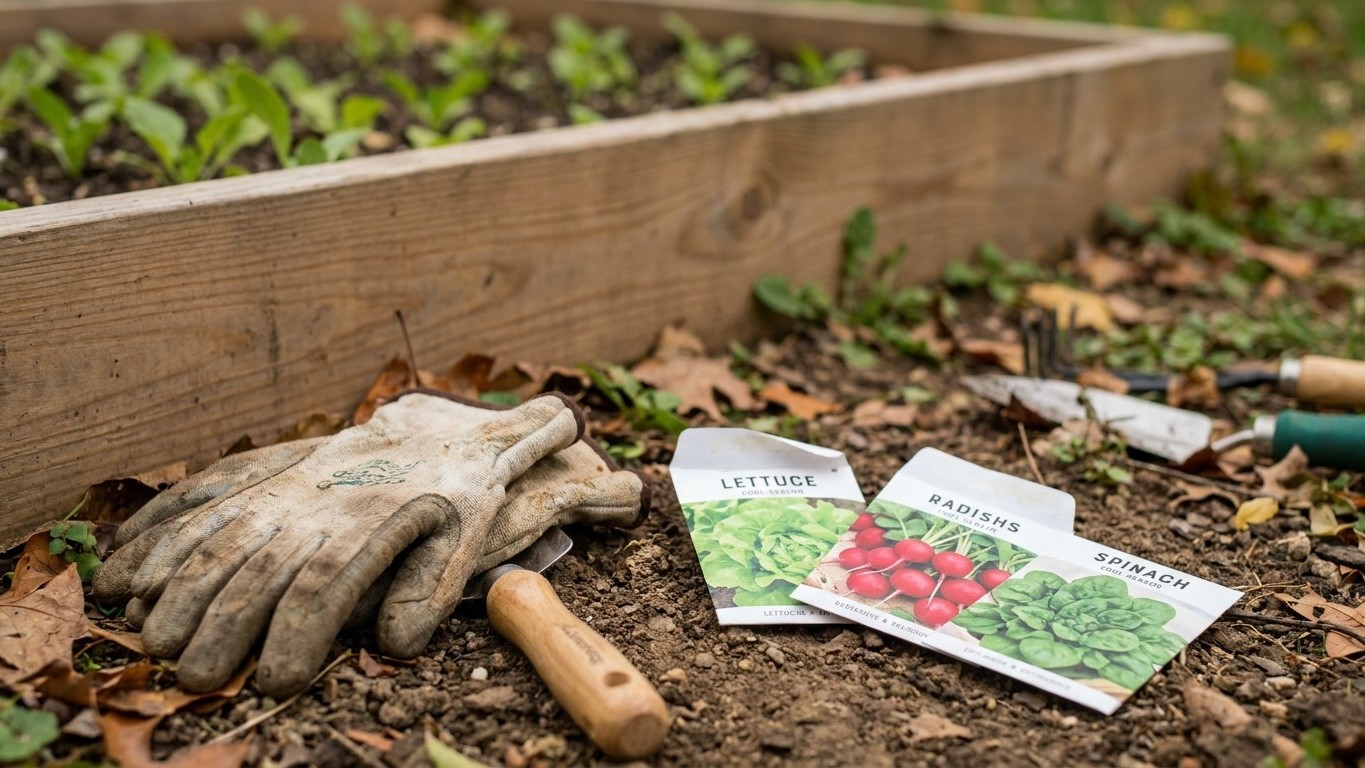

September in Rhode Island is fall-planting month: fast-maturing greens go straight into open beds, garlic beds get prepped for next month’s cloves, and cold frames start filling with crops meant to carry into winter. The state sits in USDA zones 6a to 7b, and the average first fall frost at the reference weather station runs October 24 to November 3, which leaves roughly six to nine weeks of open-ground growing before the cold really sets in.
What goes in the ground in September

The decision this month isn’t about soil warming up, it’s about counting backward from the first frost. A crop that needs 60 days to mature, sown on September 1, is cutting it close against an October 24 frost and will likely lose that race in a colder inland yard. A crop that needs 30 to 40 days has real margin. That arithmetic, not the calendar page, is what should decide what goes into a Rhode Island bed this month.
Direct-sown greens are the safest bet: spinach, arugula, mustard greens, mizuna, and loose-leaf lettuce all mature fast enough to beat the frost window with room to spare. Radishes and turnips fall into the same category, some radish varieties finishing in under a month. Mâche (corn salad) is worth naming separately: it actually prefers to germinate in cooling soil and will happily overwinter under a light mulch or cold frame for an early spring cut.
Garlic is the exception that trips people up. Rhode Island growers typically wait until mid-October through November to actually plant cloves, once the soil has cooled further, so September’s garlic job is bed prep (working in compost, clearing weeds) rather than planting itself. The same goes for spring bulbs like tulips and daffodils, which want cooler soil than September usually offers here.
The gamble crops are anything in the cabbage family needing 60 to 70 days from transplant to head, unless the plants went in back in August and are already sized up. A fresh broccoli or cabbage transplant set out in early September, in an inland or elevated garden, is racing a frost that could arrive before the head ever forms.
| Crop | Typical days to maturity | September planting verdict |
|---|---|---|
| Spinach | 30-45 | Safe, direct sow |
| Arugula | 21-40 | Safe, direct sow |
| Radish | 21-30 | Safe, direct sow, can repeat |
| Turnip | 35-55 | Safe early September |
| Mâche | 50-60, slow | Safe, overwinters |
| Broccoli/cabbage (transplant) | 60-70 from transplant | Risky without cover, best from August-set plants |
What to start under cover
Cold frames and unheated hoop houses earn their keep in September, and the seeds going into them are counted backward from that same frost window rather than sown on a fixed date. If the goal is a cold frame full of baby spinach or claytonia to harvest through the darker months, the sowing needs to happen while there’s still enough daylight and soil warmth left to get true leaves established before growth slows dramatically in November. Wait too long into the month and the seedlings stall out too small to be worth the space; sow too early into still-warm soil and lettuce or spinach can bolt or struggle with heat stress before the cooler nights arrive to favor them.
The two failure modes gardeners hit here are opposite problems with the same root cause: miscounting the days. Start too early, expecting a long fall, and warm September soil pushes cool-season crops to bolt or fall prey to the same pests that plague summer crops. Start too late, banking on a mild autumn, and the seedlings never build the root mass needed to survive under row cover once real cold arrives.
This is also the window to bring tender potted herbs and houseplants indoors before nights start dipping, and to take cuttings from tender perennials (coleus, geraniums) that won’t survive outdoors past the frost window. Anyone starting biennial flowers like foxglove from seed for next year’s bloom should do it now too, since those plants need a full season of leaf growth before winter dormancy.
What is ready to pick
September is one of the fullest harvest months in Rhode Island. Tomatoes, peppers, and eggplant are still producing, though the pace slows as nights cool. Summer squash and cucumbers keep coming until the first real chill knocks the vines back. Sweet corn plantings wrap up early in the month for most home gardens.
Tree fruit is a big part of the picture: many apple varieties reach peak ripeness in September, along with pears and the last of the summer raspberries. A ripe apple should separate from the branch with a gentle twist and upward pull, not a hard yank; if it resists, it needs more time.
Winter squash and pumpkins are usually harvested before the first hard frost and then cured in a warm, dry spot for one to two weeks to toughen the skin for storage. Garlic and onions planted earlier in the season should already be cured and in storage by now; this is a good month to sort through that stash and pull out any bulbs going soft before they spread rot to the rest.
Early fall greens sown in August, if the garden had them going, should be ready to cut for salads right alongside the last of summer’s bounty, a nice overlap that doesn’t last long once frost arrives.
The jobs that matter this month

Watering rhythm still matters here, especially for anything freshly seeded. A newly sown bed of fall spinach dries out fast in September sun even as overall garden water demand drops; keeping that seedbed consistently damp until germination is the difference between a full stand and a patchy one.
Sowing a cover crop on any bed that’s finished for the season is one of the highest-payoff jobs on this list, and the deadline is real: winter rye or crimson clover needs enough weeks of growth to establish roots before the ground freezes, so beds cleared early in the month should get seeded promptly rather than left bare through fall.
Seed saving from favorite tomatoes, peppers, and beans should happen before those plants get hit by frost or disease pressure late in the season. Anyone who wants to save cloves of a good garlic variety should also be setting aside the largest, healthiest bulbs now rather than eating through the whole harvest.
Pest scouting doesn’t stop just because summer’s winding down. Squash vine borer and squash bug populations are often at their peak late in the season, and cleaning out spent vines promptly denies them a place to overwinter. The same goes for any diseased tomato foliage; pulling it now rather than composting it reduces next season’s disease pressure.
Garlic and bulb orders placed now beat the rush; popular varieties sell out well before the actual October and November planting windows arrive. Soil testing is also worth doing this month, since amendments like lime take months to adjust pH and work best applied well ahead of spring planting.
What not to do in September
The classic misstep is treating a warm afternoon like it means the season’s still wide open. A run of 75-degree days in mid-September doesn’t change the frost math; a slow-maturing transplant set out during that warm spell is still racing the same October frost window, warm afternoon or not.
Feeding nitrogen-rich fertilizer to perennials, shrubs, or lawns late in the month is a common error with real consequences. Nitrogen pushes soft new growth right when plants should be hardening off for winter, and that tender growth is exactly what gets killed first by an early frost, weakening the plant going into the cold months.
Leaving winter squash and pumpkins in the field too long after a frost is another trap. A light frost on the vine won’t ruin the fruit itself, but the vines will die back and stop protecting the fruit from sun and moisture, so harvesting promptly once vines are frosted matters more than trying to squeeze out a few more days of “ripening.”
Delaying cover crop seeding is the other side of that same coin. Waiting until late September or early October to sow winter rye on a cleared bed, hoping for a longer fall, often means the cover crop germinates but never gets enough growth to hold soil through winter, defeating the point of planting it at all.
Checking this against your own county
The frost dates and zone range above come from one reference weather station and a statewide USDA hardiness range, not from every backyard in Rhode Island. A garden in the Blackstone Valley or in a low-lying frost pocket inland can see frost a week or two earlier than the coastal reference point, while a sheltered spot near Narragansett Bay often runs later. Elevation, distance from water, and even which side of a hill a garden sits on all shift these windows.
For county-specific guidance and updated planting calendars, the University of Rhode Island Cooperative Extension is the best next stop.
Common questions
Is it too late to plant vegetables in Rhode Island in September?
Not for fast-maturing crops. Spinach, arugula, radishes, and turnips all have enough time to mature before the average first frost of October 24 to November 3. Slow-maturing crops like broccoli from seed are a much bigger gamble this late.
When should garlic actually go in the ground in Rhode Island?
Most Rhode Island growers plant garlic cloves in mid-October through November, once soil has cooled further than it typically is in September. This month is better spent prepping the bed with compost.
Can I still start a fall vegetable garden this month?
Yes, as long as the crops chosen mature in 30 to 45 days. A cold frame or row cover extends that margin further by buffering the first light frosts.
How do I know if my area gets frost earlier than the state average?
Low-lying areas, valleys, and inland spots away from the coast tend to frost earlier than the reference dates listed here. Tracking a home garden’s own frost history over a few seasons, or checking with the University of Rhode Island Cooperative Extension, gives a more accurate local window.
Gardeners who plant by the Moon can check the September 2027 moon planting calendar, a tradition rather than a proven method.