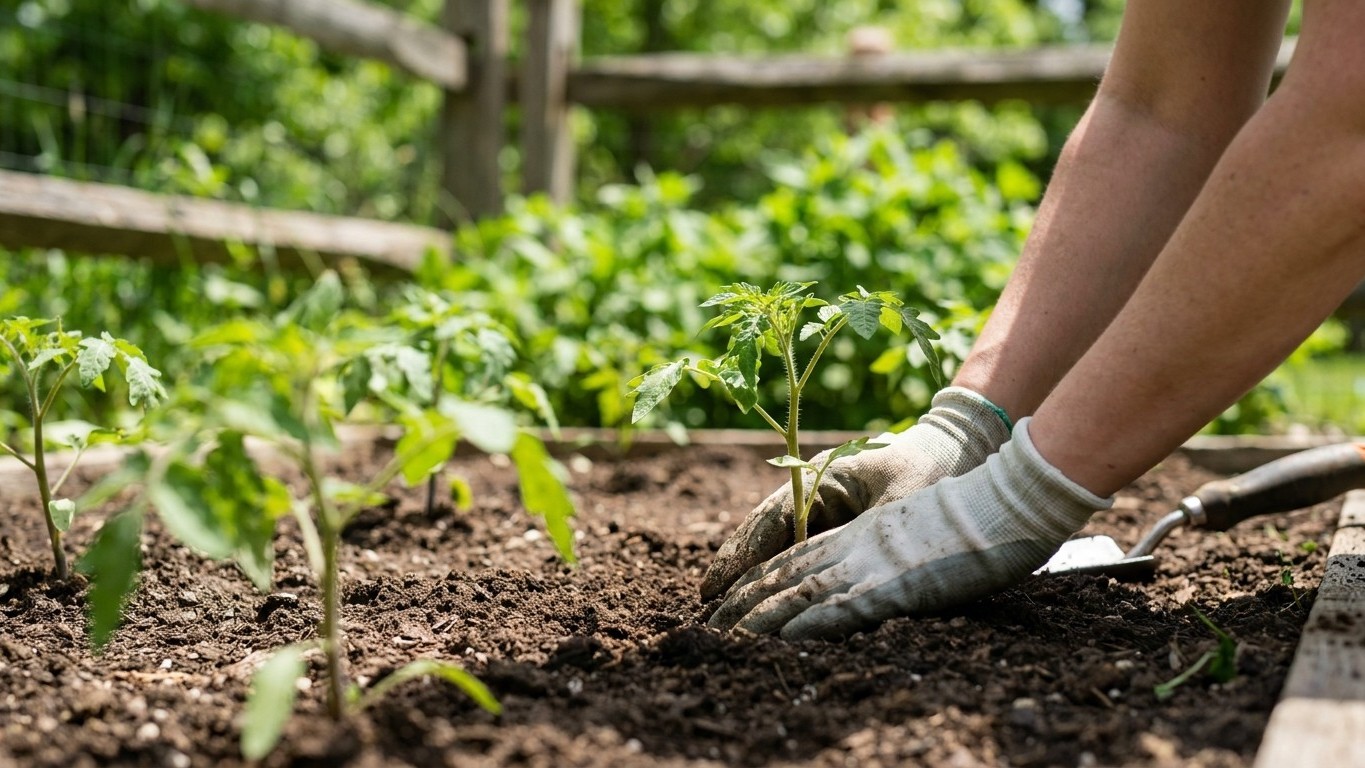

June in Tennessee means the frost risk is already behind you, so this is prime time for warm-season crops: beans, squash, cucumbers, melons, okra, southern peas, and sweet potato slips all go into the ground now. The real work this month is managing heat and moisture, not worrying about cold.
What goes in the ground in June

By June, Tennessee’s last spring frost window (March 31 to April 12, per NOAA NCEI 1991-2020 Climate Normals for station USW00013897) has closed for weeks. That changes the whole calculation. The question is no longer “will it freeze,” it’s “is the soil warm enough for the seed to germinate before it rots.” Soil temperature, not air temperature, decides what belongs in the ground this month.
Heat-loving crops are the safe bet: snap beans, lima beans, sweet corn, summer squash, winter squash, cucumbers, melons, okra, and southern peas all germinate readily in warm June soil and can be direct-sown with confidence. Sweet potato slips go in now too, once the ground has warmed through. If tomatoes and peppers weren’t transplanted in May, early June is still workable, though plants set out this late will lag behind those started sooner.
The gamble in June runs the other direction. Cool-season crops like lettuce, spinach, and most brassicas are a poor bet now, not because of frost but because rising soil and air temperatures push them straight to bolting or bitter, tough growth before they size up. If you want a spring green late in the game, choose a heat-tolerant lettuce variety and expect a short window before it turns.
Succession sowing matters here more than a single planting date. Beans, corn, and summer squash all benefit from staggered sowings every two to three weeks through June, since a single planting tends to come in all at once and then quit. Direct-sow into soil that’s been kept evenly moist for a few days beforehand; germination in dry, crusted June soil is where a lot of bean and squash seed fails before it ever gets started.
What to start under cover
The crop to think about starting under cover in June isn’t a summer vegetable, it’s the fall crop, and the math runs backward from Tennessee’s first fall frost window of October 28 to November 8 (NOAA NCEI, station USW00013897). Fall broccoli, cabbage, and cauliflower need roughly 60 to 70 days from transplant to harvest, plus another four to six weeks as seedlings before they’re ready to go into the garden. Counting back from early November, that puts the transplant date in mid to late August, which means seed starting under cover, in a shaded spot or cell trays kept out of direct June sun, needs to happen now.
The two ways this goes wrong are predictable. Start too early relative to that backward count and the seedlings sit too long in small cells through the worst of summer heat, turning leggy, rootbound, and stressed before they ever reach the ground. Start too late and the transplants go out in September already behind schedule, with too few weeks left before the first fall frost closes the season on a crop that hadn’t finished sizing up.
Starting under cover in June also serves a second purpose beyond timing: it protects seedlings from the harshest midday sun and from the flea beetles and cabbage moths that are active and hungry this time of year. A shaded porch, a lightly screened cold frame with the lid propped open, or a spot under taller plants all work better than open ground for getting brassica seedlings through their first weeks.
What is ready to pick
June is one of the more generous harvest months in Tennessee. Strawberries are finishing their run, garlic is being harvested or close to it once the lower leaves brown, and garlic scapes, if you grow hardneck varieties, are ready to cut and use. Sugar snap and snow peas planted in early spring are producing heavily but won’t last much past the first stretch of real heat, so pick them steadily rather than letting pods sit and toughen on the vine.
The first squash and cucumbers of the season typically start coming in during June, especially from plants set out in May. Pick summer squash small, at six to eight inches, since oversized fruit turns seedy and the plant slows production trying to mature it. Cucumbers are ready when they’re firm and fully colored for their variety, before any yellowing starts at the blossom end.
Blueberries begin ripening in many parts of the state during June, and early cherry varieties come in around the same window. If you’ve got overwintered or spring-planted lettuce and spinach still standing, harvest it now rather than later: once the heat sets in fully, both will bolt and turn bitter within days. Any onions or garlic from fall planting that are ready should come out and cure in a dry, airy spot rather than sitting in warm, humid soil.
The jobs that matter this month

Moisture and weed management
Mulching pays off enormously in June, and it pays off less the longer you wait. A two- to three-inch layer of straw, shredded leaves, or grass clippings around beans, squash, tomatoes, and peppers holds soil moisture through the hottest stretches and keeps weed pressure down at exactly the point in the season when weeds are growing fastest. Watering rhythm matters just as much: deep, infrequent watering that reaches six to eight inches down builds stronger root systems than a light daily sprinkle, and it’s the difference between tomatoes that shrug off a dry week and ones that split or blossom-end-rot the first time the soil dries out.
Staking, scouting, and support
Tomatoes, pole beans, and vining squash all sprawl fast once June heat kicks growth into gear, and staking or trellising now, before the vines tangle, saves a lot of frustration later. Pest scouting deserves a regular walk through the garden this month specifically because Japanese beetles, squash vine borers, and tomato hornworms all become active in June, and catching an infestation in its first week is far easier than fighting it in its third. Squash vine borer in particular is worth checking for at the base of squash and zucchini stems, since by the time wilting shows up top-side, the damage is already done inside the stalk.
Side-dressing sweet corn with nitrogen once plants reach knee height is a June job with a real deadline, since corn does most of its nitrogen uptake in the weeks just before tasseling. Miss that window and no amount of fertilizer later closes the gap in ear size.
What not to do in June
The most common mistake this month is treating a warm afternoon as proof the soil is ready, when it’s the soil temperature over several consecutive days that actually determines whether seed germinates or rots. A single 85-degree day doesn’t undo a cold, wet spring; check the ground itself before committing a full row of beans or squash to it.
Overwatering shallowly is nearly as common as underwatering. Light daily watering keeps the top inch of soil damp while the root zone below stays dry, which trains roots to stay shallow and leaves plants far more vulnerable the first time a watering gets skipped. It also encourages the kind of fungal disease that thrives on wet foliage overnight.
Feeding nitrogen at the wrong point in the season is a quieter mistake but a costly one. Heavy nitrogen on tomatoes and peppers once they’ve started flowering pushes leafy growth at the expense of fruit set, leaving you with a lush, dark green plant and disappointing yields. Save the nitrogen push for corn and leafy greens, and switch tomatoes and peppers to a lower-nitrogen, higher-phosphorus and potassium feed once blossoms appear.
Letting cool-season holdovers linger too long is the last trap. Lettuce, spinach, and peas that have started to bolt or toughen won’t reverse course; pulling them promptly frees the space for a second round of beans or a heat-tolerant summer green instead of watching bitter, spent plants take up bed space through July.
Checking this against your own county
A statewide frost window is a starting point, not an instruction. Tennessee’s hardiness zones run from 5b to 8a under the USDA Plant Hardiness Zone Map, and the frost dates cited here come from the Nashville-area station (USW00013897), which sits toward the milder, earlier end of that range. East Tennessee and the Cumberland Plateau run cooler and later in spring, which shifts every planting window discussed here back by a couple of weeks for those areas. Elevation changes the picture within a single county, too.
For a planting calendar built around your specific location, the University of Tennessee Institute of Agriculture Extension is the reliable next stop.
Common questions
Is it too late to plant tomatoes in Tennessee in June?
No. Transplants set out in early June still have a full growing season ahead of them before the first fall frost window of October 28 to November 8, though they’ll lag a few weeks behind plants set out in May.
Can I still direct-sow beans and squash in June?
Yes, and it’s one of the best months to do it. Warm June soil across Tennessee suits fast germination for beans, squash, cucumbers, and melons, and staggered sowings every two to three weeks keep the harvest coming rather than arriving all at once.
Why is my June-planted lettuce bolting so fast?
Rising soil and air temperatures push lettuce and spinach straight into flowering rather than leaf production. It’s a heat response, not a sign anything was done wrong; choosing a heat-tolerant variety and harvesting early extends the window slightly.
When should I start fall broccoli seeds if I want a fall harvest?
Counting back from Tennessee’s first fall frost window of October 28 to November 8, and allowing roughly 60 to 70 days from transplant to harvest plus four to six weeks as a seedling, June is the right time to start seeds under cover for a fall crop.
Gardeners who plant by the Moon can check the June 2027 moon planting calendar, a tradition rather than a proven method.