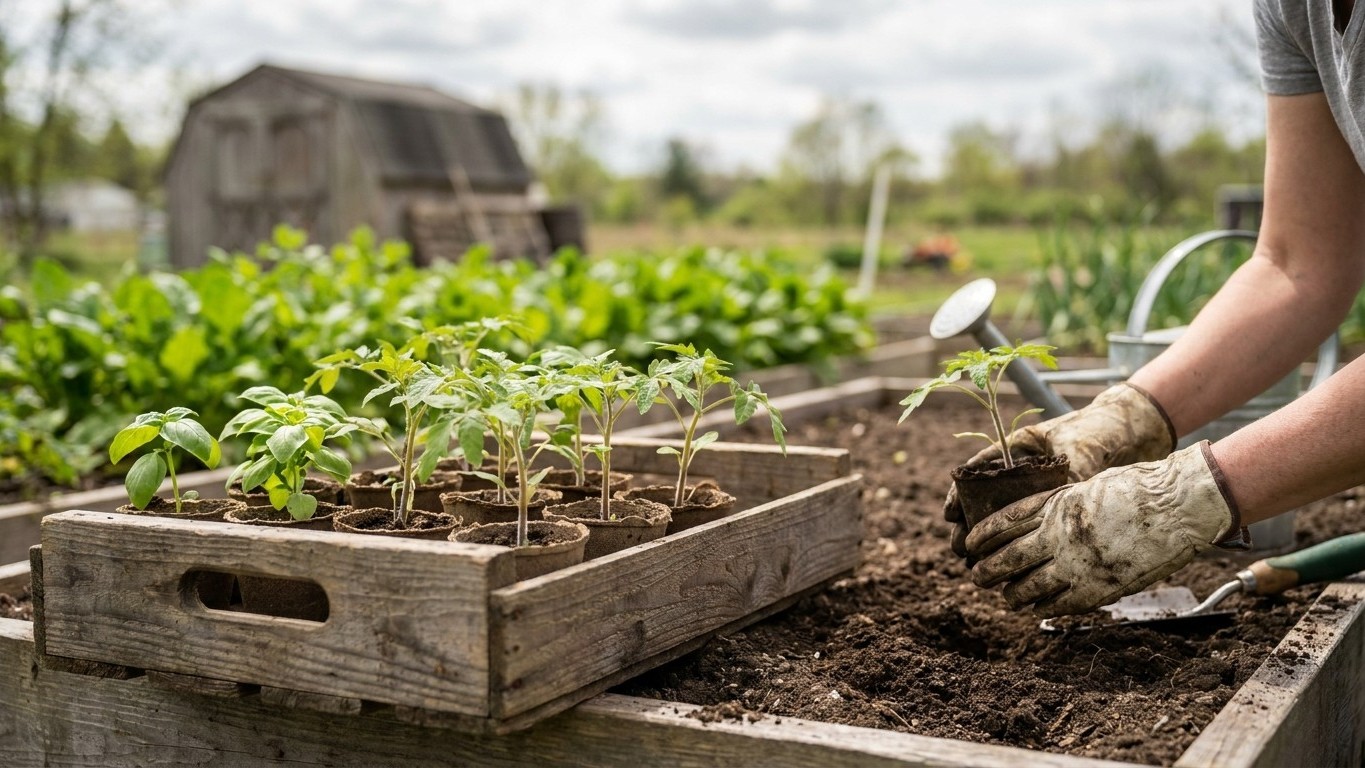

May splits into two different gardens in Wisconsin, depending on which half of the state you’re standing in. The last spring freeze, according to thirty years of NOAA climate data, lands somewhere between April 16 and April 29 across the region. That means by the time May opens, most of southern and central Wisconsin has already cleared that threshold. Cold-hardy crops go in early. Tomatoes, peppers, and beans wait for warmer soil, usually the back half of the month.
What goes in the ground in May
Soil temperature decides this month, not the date on the wall. A thermometer pushed four inches into the bed tells you more than any calendar page. Peas and spinach will germinate in soil as cool as 40°F. Beans, squash, and sweet corn hold out for something closer to 50°F, and tomatoes sulk unless nighttime soil temps stay well above that. Since the frost window for this territory runs April 16 to April 29, early May in southern and central Wisconsin usually sits just past that band, but it’s a probability range, not a guarantee, and a cold snap in the first two weeks is far from rare.
That’s why early May is alliums-and-greens territory. Onion sets and transplants go in as soon as the ground can be worked. Potatoes go in the same window, deep enough to dodge a light frost on the foliage. Direct-sow carrots, beets, radishes, and lettuce now, and keep a row cover or a bucket handy for the seedlings, because a late frost after germination can still nip tender leaves even when the soil itself has warmed.
Cabbage, broccoli, and other brassica transplants, hardened off over a week of increasing outdoor exposure, can go into the ground through early-to-mid May in the south. Farther north, especially near Lake Superior or at higher elevation, that same planting slides toward the end of the month or beyond.
Tender, warm-season crops are the gamble piece. Tomatoes, peppers, cucumbers, squash, and beans want both the air and the soil to have settled. In the southern third of the state, late May is usually workable. In the north, where the growing season starts later and the frost risk lingers, planting these crops in May at all is a bet against the odds rather than a sure thing.
| Crop group | Southern/Central Wisconsin | Northern Wisconsin |
|---|---|---|
| Peas, spinach, onions, potatoes | Early May, as soon as soil is workable | Early-to-mid May |
| Hardened-off brassica transplants | Early-to-mid May | Mid-to-late May |
| Tomatoes, peppers, beans, squash | Late May, once soil is consistently warm | Risky in May; often better held for June |
What to start under cover
By May, most of the classic transplant-starting has already happened for the season, since tomatoes and peppers typically need six to eight weeks indoors before the last frost. That means the work this month is less about the first sowing and more about the second wave, plus the careful business of hardening off what’s already growing on a windowsill or under lights.
Count backward from the frost window rather than from a fixed date. If the local last freeze usually falls in that April 16 to April 29 range, and a crop wants four weeks under cover before it goes outside, starting it indoors in early-to-mid May actually points toward a June transplant date, which fits succession crops like a second round of cucumbers or summer squash more than it fits tomatoes.
Melons and winter squash, which resent root disturbance and grow fast, are good candidates for a short stint in pots started early in the month, timed to go outside once soil has warmed rather than by a set number of weeks. Basil, too, is worth starting in small batches indoors through May, since it germinates fast and rots in cold outdoor soil if seeded too early.
The two failure modes both cost a harvest. Start too early and the tomatoes already in pots on a windowsill turn leggy and rootbound before the ground is ready, stunting them the moment they’re transplanted. Start a fast crop too late, on the other hand, and there isn’t enough of the season left for it to mature before fall frost closes things down, particularly in the northern third of the state where the growing window is shorter to begin with.
What is ready to pick
Asparagus is the headline crop this month for anyone who planted a bed in past seasons, since established crowns send up spears through most of May and the harvest window lasts roughly six to eight weeks before the plant needs to be left to grow foliage. Rhubarb stalks are usually ready to pull as well, and both crops reward regular picking rather than letting them sit.
Anything sown under cover or in a cold frame back in March or April, spinach, lettuce, and radishes especially, is often ready by early-to-mid May. Radishes in particular move fast, sometimes ready within three to four weeks of sowing, so check them by size rather than waiting for a set date. Green onions started early are usually pullable by now too.
Stored crops from the previous fall deserve a look this month, since warming temperatures in a garage or root cellar tend to wake up dormant potatoes and onions. Potatoes that have started sprouting eyes are still usable if the sprouts are trimmed off, but any that have gone soft or shown mold should be pulled from the bin before they spread. The same goes for stored winter squash: a sound one still feels solid and heavy for its size, while one going soft near the stem end is on its way out.
The jobs that matter this month
Staking belongs at the top of the list, and it belongs early. Peas, and any tomatoes that did go in during a warm stretch, sprawl fast once the weather turns, and it’s far easier to set a stake or trellis before the plant has anything to catch on than to wrestle a tangled vine into place two weeks later.
Mulching follows once the soil has actually warmed. Laying mulch too early traps cold in the ground and slows exactly the warming that tender crops are waiting on, so hold off until the soil has come up to temperature and then mulch to hold that warmth and moisture in place through the drier stretches that tend to show up as May moves into June.
Succession sowing keeps the harvest coming rather than arriving all at once. Radishes, lettuce, and spinach planted every ten to fourteen days through May spread out the picking window instead of dumping the whole crop into a single week.
Pest scouting matters more in May than gardeners tend to think, since early infestations are easiest to manage before populations build. Asparagus beetles show up on new spears, flea beetles riddle young brassica leaves with small holes, and cutworms can sever a seedling stem overnight at ground level. A five-minute walk through the beds every few days catches these problems while a simple fix, like a paper collar around a stem or picking beetles off by hand, still works.
Watering rhythm needs adjusting too. Seedbeds need to stay consistently damp for germination, while established perennials like asparagus and rhubarb do better with a deep soak less often rather than frequent shallow sprinkling.
What not to do in May
The classic mistake is planting by the feel of the air rather than the temperature of the soil. A run of 70°F afternoons doesn’t mean the ground four inches down has caught up, and tomatoes or beans dropped into soil that’s still in the 40s will sit stalled, rot, or germinate weak even if the calendar says it’s late enough.
Uncovering too soon after a warm stretch is the second trap. Pulling off row covers or removing mulch because a few mild days made it feel safe leaves tender transplants exposed the moment a cold night follows, and given that the frost window runs into late April in a normal year, a return to freezing overnight temperatures in early May is not unusual, especially away from the moderating effect of Lake Michigan.
Nitrogen timing trips people up as well. A heavy dose of nitrogen fertilizer on tomatoes or peppers early in the season pushes lush leafy growth at the expense of the roots and flowers that will actually produce a harvest later. Save the nitrogen push for leafy crops like lettuce and spinach, and hold off on feeding fruiting crops heavily until they’ve set their first flowers.
Skipping the hardening-off step is the last common error, and it shows up fast. A transplant moved straight from a warm windowsill into full sun and open wind can scald or wilt within a day, undoing weeks of indoor growing in a single afternoon.
Checking this against your own county
A statewide frost window is a starting point, not an instruction for a specific yard. Wisconsin’s hardiness zones, under the USDA Plant Hardiness Zone Map, run from 3b in the far north to 6a in the southern tier, and that spread alone can shift a safe planting date by several weeks. Elevation, low-lying frost pockets, and the moderating effect of Lake Michigan on the eastern shoreline all move the real date further, sometimes by more than the statewide range suggests. The University of Wisconsin-Madison Division of Extension keeps county-level guidance and a state planting calendar that accounts for these local differences far better than a single statewide range ever could.
Common questions
Can I plant tomatoes outside in Wisconsin in May?
In the southern part of the state, late May is usually workable once soil has warmed, but it’s still a risk in the first half of the month and a bigger risk in the north, where soil warms more slowly and frost lingers longer.
When is it actually safe to plant after the last frost?
The last spring freeze falls somewhere between April 16 and April 29 across the region, but that’s a probability band from historical data, not a guaranteed cutoff, so watching soil temperature and short-term forecasts matters more than the date itself.
What vegetables can I direct-sow in Wisconsin in May?
Peas, spinach, lettuce, radishes, carrots, beets, and onion sets all handle direct sowing early in the month. Beans, squash, and corn want warmer soil and generally wait for later in May or into June.
Is May too early for warm-season crops in northern Wisconsin?
Often, yes. The far north sits at the cold end of the state’s 3b to 6a hardiness range, and gardeners there frequently hold tender crops until June rather than risk a May planting.