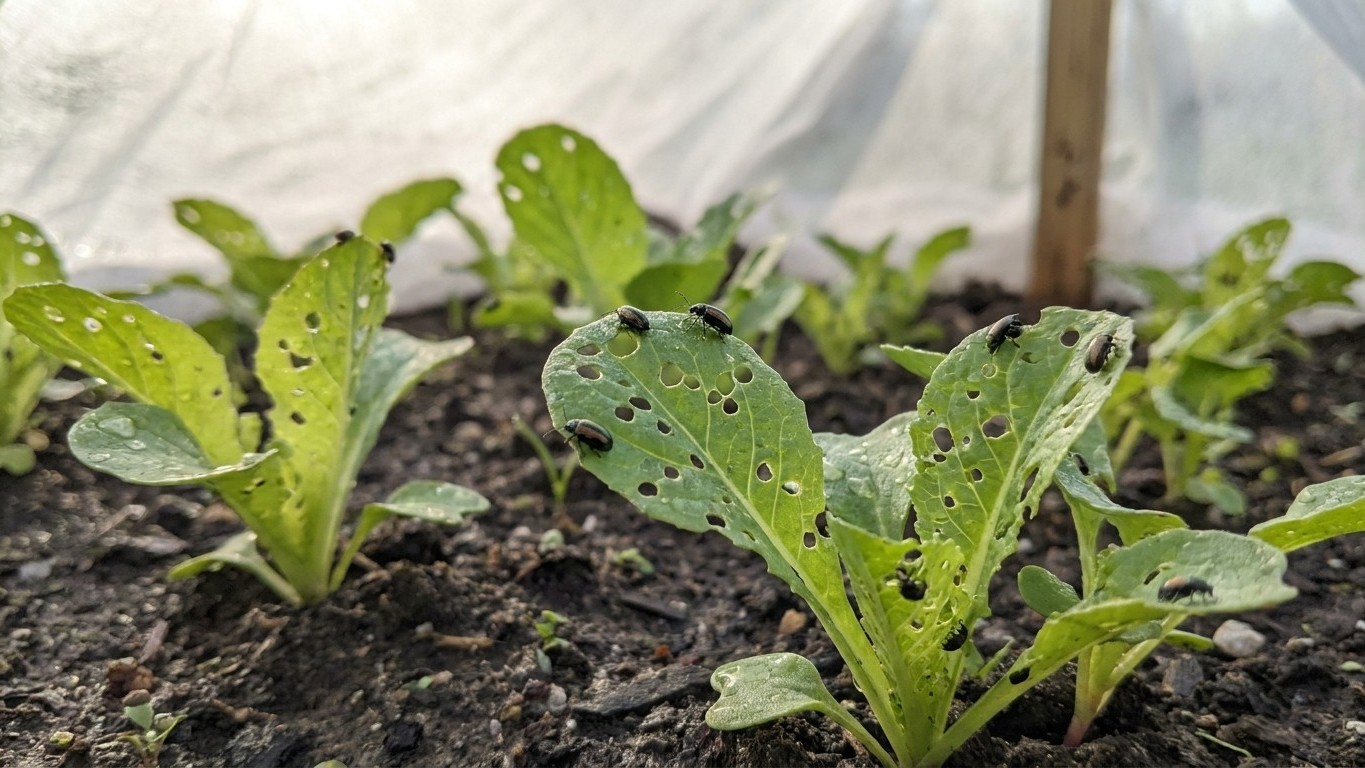

Flea beetles wake up in Wisconsin gardens the moment soil temperatures climb into the 50s, usually in late April or early May, and they hit hardest on young seedlings before plants build up their first true leaves. The tiny black or bronze insects chew shotgun-pattern holes in leaves, and on a cool spring morning they’ll jump like fleas if you brush a plant, which is exactly how they got their name. Row covers installed at planting time, timed transplanting after the first heavy emergence wave, and a couple of targeted insecticide options are what actually stop the damage in Wisconsin conditions.
Why Wisconsin’s Climate Sets the Flea Beetle Calendar

Wisconsin sits in USDA hardiness zones 3b through 5b, and that range matters more than most gardeners realize. Flea beetles overwinter as adults in leaf litter, hedgerows, and the edges of fields, then emerge once the soil warms past roughly 50°F. In southern Wisconsin, around Madison or Milwaukee, that can happen by mid-to-late April. Up in the Northwoods near Rhinelander or Ashland, growers often don’t see the first wave until mid-May.
That six-week emergence window across the state creates a real planning problem for anyone growing brassicas, eggplant, or potatoes. Plant too early in a warm spring and you miss the worst pressure. Plant at the “normal” date and you might walk straight into peak adult activity. The University of Wisconsin-Madison’s Division of Extension tracks degree-day models for several pest species specifically because fixed calendar dates don’t work well in a state where spring can vary by two or three weeks year to year.
Corn flea beetles carry an added risk here beyond leaf damage. They can transmit Stewart’s wilt bacterium to sweet corn, and Wisconsin’s seed corn and sweet corn growers watch overwintering survival rates closely because a mild winter often signals a rougher beetle season ahead.
Identifying the Species Active in Wisconsin
Not all flea beetles behave the same way, and Wisconsin hosts several species with different host preferences.
- Crucifer flea beetle (Phyllotreta cruciferae): shiny black, about 1/16 inch long, targets cabbage, broccoli, kale, radishes, and other brassicas almost exclusively.
- Striped flea beetle (Phyllotreta striolata): black with two wavy yellow stripes down the back, also a brassica specialist and common in home gardens statewide.
- Potato flea beetle (Epitrix cucumeris): dark brown to black, smaller than the crucifer species, and the main early-season threat to potato and tomato transplants.
- Corn flea beetle (Chaetocnema pulicaria): shiny black, slightly larger, and the one linked to Stewart’s wilt in sweet corn.
All four species leave a similar signature: small, irregular holes that give leaves a peppered or “shotholed” look. Seedlings with more than a few dozen tiny holes per leaf often stall out entirely, since young plants have so little leaf surface to spare.
Which Crops Take the Worst Damage in Wisconsin Gardens
Brassicas suffer the most across the state, and that’s not a coincidence given how much cabbage, kale, and Brussels sprouts acreage Wisconsin carries both commercially and in home plots. Seedlings under four inches tall are the most vulnerable window. A plant with two true leaves can lose enough tissue to die outright, while a six-week-old transplant with a full canopy usually shrugs off the same beetle population.
Eggplant runs a close second, and it’s the crop gardeners underestimate most. Eggplant seedlings grow slowly compared to tomatoes or peppers, so they sit in that vulnerable small-plant stage for longer, giving flea beetles more time to do damage before the plant can outgrow them.
Potatoes take a different kind of hit. Adult beetles chew foliage, which reduces photosynthesis and tuber size, but the bigger long-term concern in Wisconsin’s potato-growing counties (Portage and Waushara counties produce a significant share of the state’s potato crop) is the potato flea beetle’s role as a vector for certain plant pathogens, plus the tunneling damage some larvae cause underground.
Sweet corn, as mentioned, carries the Stewart’s wilt risk. Radishes and turnips get hit hard too, though their fast growth cycle sometimes lets them outrun beetle populations before serious damage sets in.
Timing: When Flea Beetles Actually Show Up
Early Season (Late April to Mid-May)
Overwintered adults emerge from field edges and leaf litter as soon as soil temperatures stabilize above 50°F. This first wave is often the most destructive because seedlings and transplants are at their smallest and most exposed. Southern Wisconsin counties see this wave two to three weeks ahead of northern counties.
Mid-Season (June)
Adults mate and lay eggs near the base of host plants. Larvae feed on roots (a bigger issue for potatoes than for brassicas), while surviving adults continue chewing foliage. Pressure often eases slightly here as plants mature and beetle numbers thin from natural predation and cooler nighttime temperatures typical of Wisconsin summers.
Late Season (July into September)
A new generation of adults emerges and feeds heavily before seeking overwintering sites. This second wave can hit fall brassica plantings hard, since cabbage or kale seeded in July for a fall harvest hits its seedling stage right when this generation is most active.
What Actually Stops Flea Beetles in Wisconsin Conditions
Floating row covers remain the single most reliable tool for home gardeners. Installed immediately after transplanting or seeding and sealed at the edges with soil or landscape staples, they physically block adult beetles from reaching plants. The catch: covers must go on before beetles arrive, and they need to come off once plants start flowering if the crop requires pollination (not an issue for brassicas grown for leaves or heads, but relevant for anything else in rotation).
Timing transplants to dodge the first emergence wave helps more than most gardeners expect. Starting brassica or eggplant transplants indoors and holding them until they’re at least six inches tall, with several true leaves, before setting them out gives the plant enough tissue to absorb beetle feeding without dying. A seedling with two leaves can be destroyed by the same beetle pressure that a robust transplant barely notices.
Sticky traps (yellow, specifically) catch adults and help gardeners monitor when the population actually arrives locally rather than guessing from a generic calendar date. This matters given the emergence spread across Wisconsin’s zones. Trap counts also tell you when a second wave is building in July, giving fall brassica growers a heads-up before damage starts.
Kaolin clay sprays, which coat leaves in a fine white film, disrupt the beetles’ ability to recognize host plants and feed. It’s an approach used in both organic vegetable production and home gardens, applied before damage starts rather than after.
For insecticide options, products containing spinosad offer control with a lower impact on pollinators when applied in early morning or evening, away from open flowers. Pyrethrin-based sprays work as a contact insecticide for active infestations. The University of Wisconsin-Madison Division of Extension publishes county-specific guidance on timing and product selection, and checking with a local county Extension office before spraying is worth the five-minute phone call, since recommendations shift based on what’s registered and what resistance patterns local offices are tracking that season.
Crop rotation reduces pressure over multiple seasons but won’t solve a current infestation. Moving brassicas to a different section of the garden each year, away from where they grew the previous season, cuts down on the overwintering adult population finding host plants immediately upon emergence nearby.
Garden Sanitation and Fall Prevention
Clearing plant debris and fallen leaves from garden beds each fall removes overwintering sites for adult beetles. This is one of the more overlooked steps, since flea beetles don’t migrate long distances. They spend winter close to where they fed the previous season, often in the exact leaf litter left behind after harvest.
Tilling garden soil in late fall, after harvest, exposes overwintering adults to Wisconsin’s harsh winter temperatures and predation from birds. It’s not a guaranteed fix (some adults still survive in field margins and windbreaks outside the tilled area) but it measurably reduces the local population feeding into the following spring’s emergence wave.
Weedy field edges, particularly those with wild mustard or other brassica relatives, function as reservoir habitat. Keeping garden borders mowed or cleared of these host weeds during the growing season limits the population that builds up nearby before moving into cultivated beds.
Wisconsin’s flea beetle pressure varies enough by region and year that no single fixed date works statewide, which is exactly why local Extension degree-day data and hands-on monitoring with sticky traps outperform generic advice pulled from a seed packet printed for a national audience.
Related guides
- Flea beetles in Michigan: When It Shows Up and What Stops It
- Flea beetles in Wyoming: When It Shows Up and What Stops It
- Flea beetles in British Columbia: When It Shows Up and What Stops It
- Flea beetles in New Hampshire: When It Shows Up and What Stops It
- Flea beetles in Ontario: When It Shows Up and What Stops It