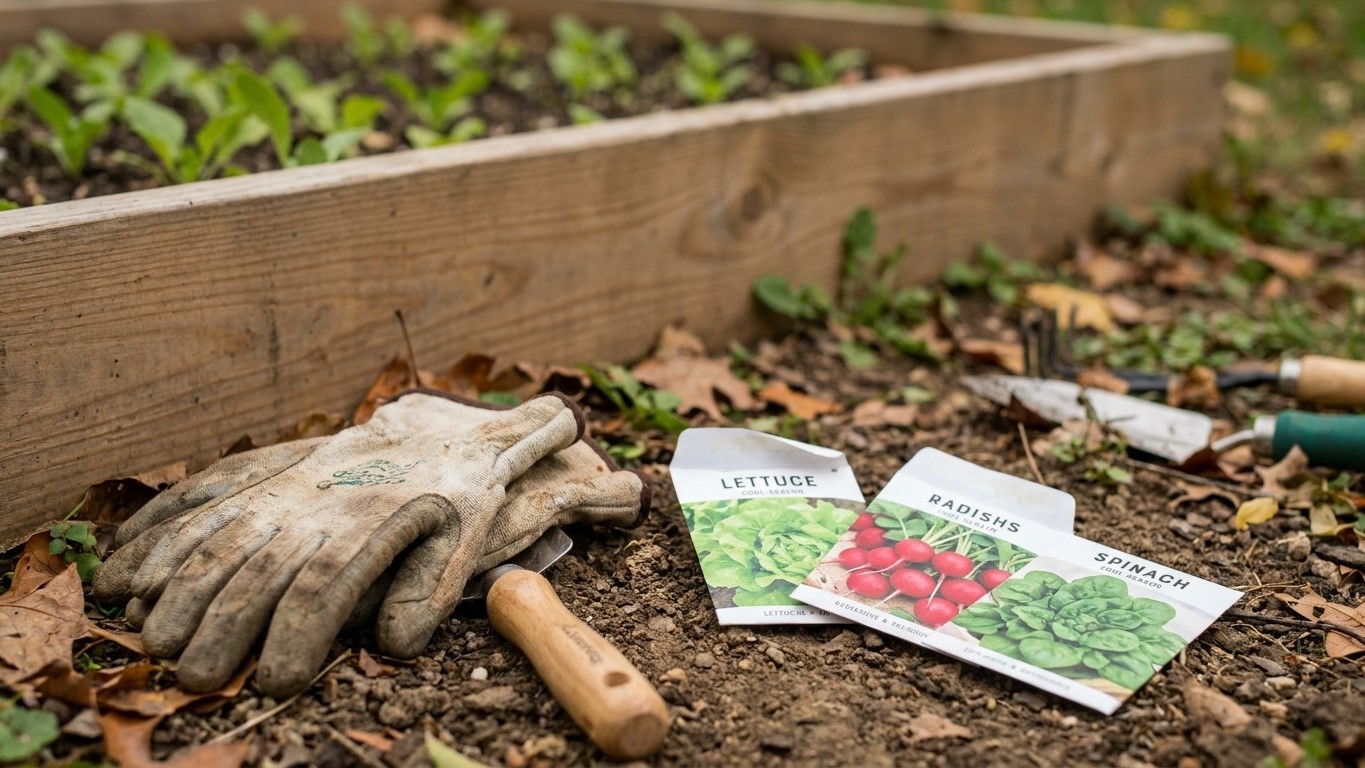

Garlic goes into Wisconsin soil this month, along with a last round of quick greens and a first wave of cover crops. NOAA’s climate normals put the first fall freeze anywhere from October 17 to October 29, depending on where you garden in the state, so September is a countdown against that window rather than a fixed date. Plant garlic cloves, fast greens, and spring bulbs now; skip anything that still needs a full frost-free season to finish.
What goes in the ground in September
The frost window itself does the deciding. NOAA NCEI’s 1991-2020 climate normals for station USW00014839 put the first fall freeze somewhere between October 17 and October 29 across the state, and that ten-to-twelve-day spread matters more than it looks. Lake Michigan pushes the freeze later along the shoreline, while inland southern Wisconsin typically freezes in early October and the north can go earlier still. So a gardener in Kenosha and a gardener near Superior are not working with the same September at all, even though the calendar page looks identical.
The math that actually decides what you can plant is simple: take the days-to-maturity on the seed packet and count backward from the earlier end of that frost range, October 17, since that’s the safer assumption if you don’t know your exact local average. A crop that needs 45 days has to go in by roughly the first days of September to have any margin. A 25-day radish can wait two more weeks. Here’s how that shakes out for common fall crops:
| Crop | Typical days to maturity | Latest safe sowing (counting back from Oct 17) |
|---|---|---|
| Leaf lettuce | 45 days | Early September |
| Spinach | 40 days | First week of September |
| Arugula | 30 days | Mid-September |
| Radish | 25 days | Late September |
Garlic is the outlier, and the reason it sits at the center of a September garden in Wisconsin. Cloves planted from mid-September through October don’t need to beat the frost at all; they root before the ground freezes hard and then sit dormant until spring, ready to push up early. Shallots follow the same logic. If you’re in USDA hardiness zone 3b to 6a (the statewide range on the 2023 USDA Plant Hardiness Zone Map, built from 1991-2020 extreme minimum temperatures), garlic planted now is one of the few crops that shrugs off whichever end of that zone range you fall in.
Spring-flowering bulbs (tulips, daffodils, crocus) can also go in this month once nighttime soil starts cooling, though many Wisconsin gardeners wait for October when the soil temperature drops further and bulbs are less tempted to sprout early.
What to start under cover
Starting seeds indoors in September isn’t about getting a jump on next year’s tomatoes. It’s about squeezing one more harvest of greens out of a cold frame or low tunnel after the open garden shuts down. Sow lettuce, spinach, or mesclun mix in trays now, and by the time seedlings have two or three true leaves (roughly two to three weeks), transplant them under cover rather than into open ground. The plastic or glass buys several extra weeks past that October 17 to October 29 freeze range, since a cold frame typically runs 5 to 10 degrees warmer than open air on a clear night.
Count backward the same way you would for direct-sowing: if you want transplants ready by early October, start seed in the first half of September. Wait past mid-month and the seedlings won’t size up before light drops and growth slows on its own, regardless of the cover.
The two ways this goes wrong both show up under cover. Start too early and the seedlings sit too long in cramped trays, get rootbound, and stall the moment you set them out, undoing the head start entirely. Start too late and you run out of daylight and warmth before the plants build enough leaf to be worth harvesting. Biennial flower seed (foxglove, hollyhock, sweet William) also gets started under cover this month, aiming for small, hardy plants that overwinter and bloom the following year rather than full-size ones now.
What is ready to pick
This is the harvest month in Wisconsin, and the list is long. Tomatoes and peppers are still coming on until frost threatens, and a lot of gardeners pick green tomatoes ahead of the first hard freeze to ripen indoors rather than lose the crop outright. Sweet corn planted in late spring finishes up early in the month. Summer squash and cucumbers keep producing as long as vines stay healthy, while winter squash and pumpkins are ready when the skin resists a fingernail and the stem starts to dry and corky.
Onions and garlic planted the previous fall or spring get pulled and cured now, tops flopped over and dried in a well-ventilated spot for a couple of weeks before storage. Potatoes can be dug once the foliage has died back; a light touch with the fork avoids nicking tubers meant for winter storage. Apples in home orchards ripen on their own schedule depending on variety, and the giveaway is usually the first ones dropping on their own.
For anything already in storage from earlier harvests, September is a good month to check bins and shelves. A single soft or moldy onion, potato, or squash spreads rot to its neighbors fast, so pulling the questionable ones out on a weekly basis protects the rest of the stash through winter.
The jobs that matter this month
September rewards a gardener who works with the season instead of fighting the end of it. Garlic beds need real preparation before cloves go in: work compost into the row, since garlic is a heavy feeder that sits in the same spot for eight or nine months. Beds emptied of summer crops are the moment to sow a cover crop like winter rye or crimson clover; sown early in the month, it has time to establish enough root and top growth to hold soil and suppress weeds through winter, something a cover crop seeded in October rarely manages.
Watering rhythm shifts this month too. Days get shorter and cooler, so established plants need less water than they did in July, but anything transplanted (those cold-frame seedlings, new perennials, garlic cloves) needs consistent moisture to root in before the ground cools further.
Pest scouting still matters. Squash vine borer damage shows up as sudden wilting vines even when soil is moist, a sign to cut open the stem near the base and remove the borer before it kills the plant. Cabbage worms keep working on brassicas until a hard frost stops them, so row cover over any fall cabbage or kale planting pays off through the month.
Perennials divide well now, since the cooler air reduces transplant stress compared to summer division. Order spring bulbs if you haven’t already; the popular varieties sell out earlier every season. And dormant fruit tree pruning is still a few months off, but this is the right time to walk the orchard and note which limbs need attention once the leaves drop, rather than trying to remember it later.
What not to do in September
The most common mistake is treating a warm afternoon as permission to plant something that needs a full season. Tomatoes, peppers, squash, and beans started now will not mature before the first fall freeze arrives, whichever end of the October 17 to October 29 range applies to your county. A warm stretch in September is not a second spring; it’s a pause before the freeze, and the soil temperature drop that triggers dormancy in perennials and bulbs is already underway even when the air feels mild.
Related to that: don’t uncover cold frames or row cover for good after one or two warm days. A mild spell in September is often followed by a sharp overnight drop, and young transplants that got hardened off under cover can take real damage if left exposed on the wrong night.
Nitrogen fertilizer is the other trap. Feeding lawns, perennials, or trees a high-nitrogen product this late pushes soft, leafy growth that has no time to harden off before frost, and that new growth is exactly what gets damaged first. If you’re feeding anything this month, a low-nitrogen or phosphorus-and-potassium-leaning product supports root and bulb development instead of top growth. Garlic beds are the exception where compost or a balanced amendment at planting time is appropriate, since the crop won’t push top growth until spring anyway.
Checking this against your own county
A statewide frost range is a starting point, not an instruction for your yard. Elevation, the moderating effect of Lake Michigan, and the sheer distance between the state’s northern and southern borders move the real planting and frost dates by weeks in either direction. A garden near the lakeshore in Milwaukee County can stay frost-free well past a garden at similar latitude fifty miles inland, and northern Wisconsin’s growing season is meaningfully shorter than the state’s southern counties. For county-level guidance, the University of Wisconsin’s extension service at extension.wisc.edu publishes local planting calendars and frost data that narrow this down to your actual conditions.
Common questions
Is it too late to plant a vegetable garden in Wisconsin in September?
For warm-season crops like tomatoes and squash, yes. For quick greens (lettuce, spinach, arugula, radish) sown early in the month, and for garlic planted from mid-September on, there’s still a real window before the October 17 to October 29 freeze range arrives.
When should I plant garlic in Wisconsin?
Mid-September through October is the standard window, giving cloves enough time to root before the ground freezes without pushing top growth that could be damaged by frost.
What zone is Wisconsin for planting purposes?
The USDA Plant Hardiness Zone Map (2023 edition, based on 1991-2020 extreme minimum temperatures) places Wisconsin across zones 3b to 6a. That’s a wide range built on one variable, winter extreme minimum temperature, so a zone lookup for your specific city or county gives a far more useful number than the statewide range.
Can I still start seeds indoors in September in Wisconsin?
Yes, for crops meant to grow on under cover through fall, such as lettuce and spinach transplants for a cold frame, and for biennial flowers meant to overwinter as small plants. It’s not the moment to start anything that needs a full growing season to produce.