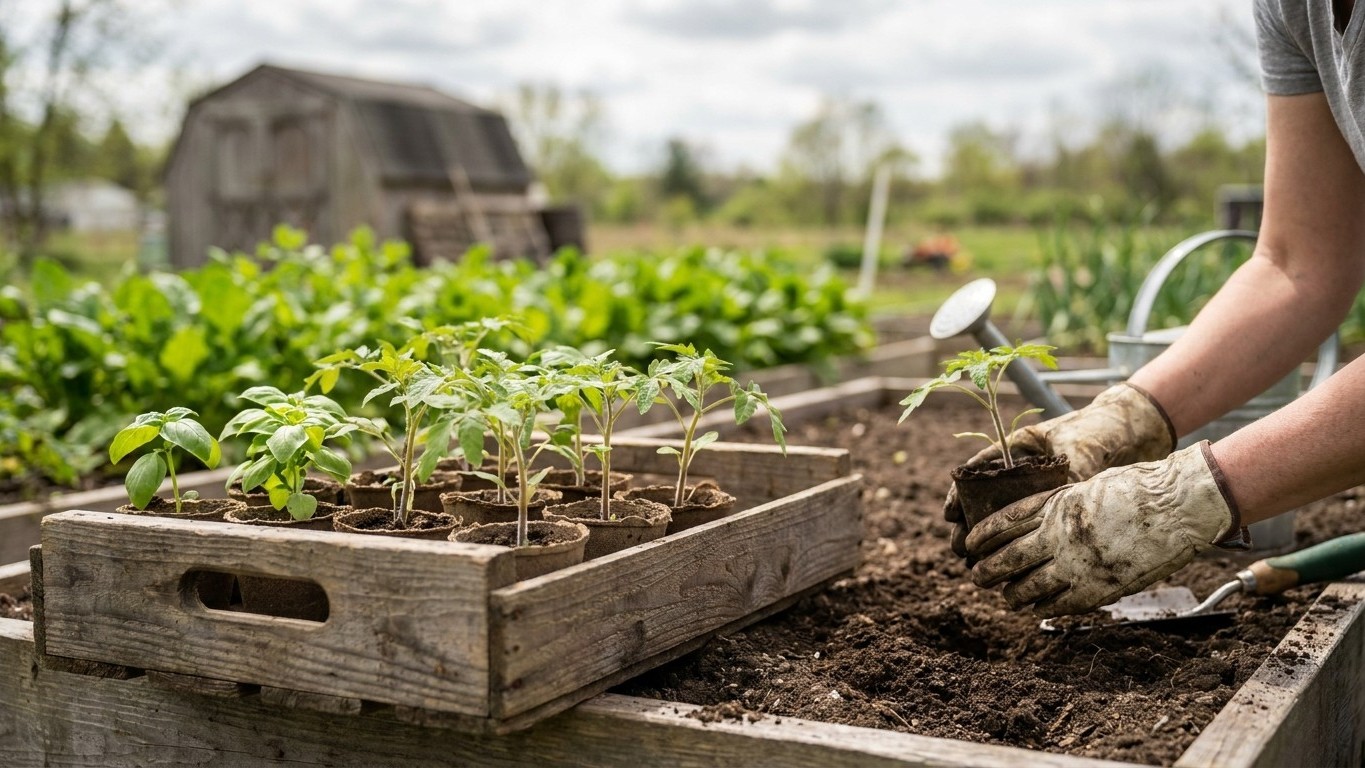

Early May in Wyoming still sits inside the frost window in most counties, so the safe move is to fill beds with cold-hardy crops now and hold tender ones until the soil itself warms, not just the air. Peas, greens, onions and root vegetables go in through the month; tomatoes, peppers and squash wait.
What goes in the ground in May

The decision here isn’t the calendar page, it’s soil temperature and where a given spot falls inside the last-frost band. Statewide, that band runs from May 7 to May 18, based on 1991-2020 climate normals from the NOAA station used for the region. That’s an average window, not a guarantee, and at 6,000 feet elevation the frost-free season shrinks to roughly 130 days total, with frost possible in any month once you’re up in the higher valleys. A warm afternoon in the first week of May tells you nothing about what the soil four inches down is doing.
What’s safe right now: spinach, lettuce, arugula and other salad greens direct-sown as soon as the ground can be worked. Peas go in early and don’t mind a cold snap once they’ve sprouted. Onion sets and transplants, along with shallots, can go into the ground through most of the month since they tolerate a light frost without much drama. Radishes, carrots and beets handle direct sowing too, and brassica transplants (broccoli, cabbage, kale) that have been hardened off outdoors for a week can go in toward the back half of the month in most valleys.
What’s a gamble: tomatoes, peppers, squash, cucumbers, melons, corn and beans. Cold soil rots seed before it germinates, and a transplant set out before the frost window closes can be killed in a single overnight dip, even if the days leading up to it felt like summer. In counties that sit at higher elevation than the reference station, push these back further and lean on row cover or a cold frame if you want to get an early jump.
What to start under cover
Anything that needs six to eight weeks of indoor growth before it goes outside should already be started by the time May opens, but there’s still room to sow warm-season crops that need less lead time, and to start a second round of cold-hardy transplants for succession. Work backward from the transplant date, not forward from today: if the plan is to set tomato transplants out near the tail end of the frost window in mid-May (or later, at elevation), and the crop needs roughly six to eight weeks indoors before it’s ready, the sowing date lands in mid-to-late March. Squash and cucumbers need far less lead time, often three to four weeks, so early May is still workable for an indoor start aimed at a late-May or early-June transplant date.
The two ways this goes wrong are opposite problems. Start too early and the transplants outgrow their pots weeks before the soil and air are ready, turning into leggy, rootbound plants that sulk for a month after transplanting instead of taking off. Start too late and the plant never reaches transplant size before the window opens, which matters more here than in milder states because the growing season is short, running only from the May frost band to the fall frost band of September 24 to October 5. A short season doesn’t forgive a late start the way a six-month growing region can.
What is ready to pick
May is early in a Wyoming garden, so outdoor harvests are thin, but they’re not zero. Established asparagus beds start sending up spears this month, and once they do, cutting every couple of days keeps the bed productive. Rhubarb crowns that have been in the ground more than a season are usually ready for a first cut as well, and pulling a few stalks now doesn’t hurt the plant if you leave most of the crown intact.
Anything that overwintered under mulch or in a cold frame, spinach, kale, or hardy lettuce that survived the cold months, tends to wake up fast once daylight lengthens, and those beds can produce a real harvest before the spring-sown crops catch up. If cold frame greens have been going since late winter, this is often their heaviest month before the frame gets too warm to hold them.
It’s also worth a walk through the root cellar or pantry. Stored potatoes, squash and onions from the last harvest are entering their final stretch: potatoes that have started sprouting hard, squash with soft spots, or onions going soft at the neck should get used first, since none of them hold much longer once the weather warms.
The jobs that matter this month

Soil prep tops the list, but only once the ground is actually dry enough to work. Wyoming’s clay-heavy soils compact badly if they’re tilled while still wet from snowmelt, and that compaction can undo a season’s worth of drainage work in one pass. Wait until a handful of soil crumbles instead of smearing before turning a bed.
Mulching comes right behind it. As soil temperatures climb, a layer of mulch around cold-hardy transplants slows moisture loss and buffers the soil against the swings between warm afternoons and cold nights that are typical this time of year. Staking matters now too, before peas and early brassicas sprawl into each other, since it’s far easier to set a trellis over bare soil than to untangle vines after the fact.
Watering rhythm needs adjusting as the month goes on. Early May often still gets moisture from snowmelt and spring rain, but by late month, especially in drier eastern counties, seedlings need a consistent watering schedule rather than relying on the sky. Overwatering cold soil, though, invites rot in newly planted seed, so the goal is steady moisture, not saturation.
Succession sowing keeps salad crops coming instead of arriving all at once: a new short row of lettuce, spinach or radish every couple of weeks through the month spreads the harvest out. And this is the point to start scouting for early pests, aphids showing up on tender new growth and flea beetles riddling holes in brassica leaves, since catching them in the first week beats fighting an established infestation later.
What not to do in May
The classic mistake is planting tomatoes, peppers or squash because the air finally felt like summer on a nice afternoon. Air temperature is not soil temperature, and the frost window here doesn’t close until sometime between May 7 and May 18 in an average year, later at higher elevations. A transplant set out on a warm day can still be killed by a clear, cold night a week later.
Uncovering row covers or cold frames too early after a mild stretch is the second trap. A few warm days in a row feels like permission to pull the protection off, but frost is possible in any month once you’re up at elevation, and tender growth that’s been hardened under cover has no defense once it’s exposed.
Nitrogen timing trips people up too. Feeding a heavy dose of nitrogen early in the month pushes soft, leafy growth that’s more vulnerable to a late frost, and on root crops like carrots and beets it can encourage top growth at the expense of the root itself. Hold off on nitrogen-heavy feeding until plants are established and the frost risk has genuinely passed, and lean on compost or a balanced feed instead if soil needs a boost this early.
Checking this against your own county
A statewide frost window is a starting point, not an instruction for a specific yard. Elevation alone can shift the last frost date by weeks between a low valley town and a mountain community thirty miles away, and the difference between the northern and southern parts of the state adds another layer on top of that. A garden at 7,000 feet should treat late May with the same caution a lower-elevation garden reserves for early April.
The University of Wyoming Extension service tracks these local variations county by county and is the better reference for a specific yard. Their office can be reached through https://www.uwyo.edu/uwe/.
Common questions
Is it safe to plant tomatoes outside in Wyoming in May?
Only near the very end of the month in lower-elevation areas, and only after checking that the local frost window, which runs May 7 to May 18 on average statewide, has actually closed. Higher elevations should wait longer and keep row cover on hand regardless.
Can I still plant peas and onions in May?
Yes. Both tolerate a light frost, and onion sets or transplants along with pea seed can go into the ground through most of the month without much risk.
Why isn’t there much to harvest yet in May?
The growing season here is short, and most crops planted this month won’t mature for weeks. Asparagus and rhubarb from established plantings, along with anything that overwintered under mulch or in a cold frame, are the exceptions.
What USDA hardiness zone does Wyoming fall into?
The state spans zones 3a to 6a under the USDA Plant Hardiness Zone Map, a range built on average extreme minimum winter temperature. That’s a wide spread across one state, so a zone-based recommendation should always be checked against the specific county rather than the state average.
Gardeners who plant by the Moon can check the May 2027 moon planting calendar, a tradition rather than a proven method.