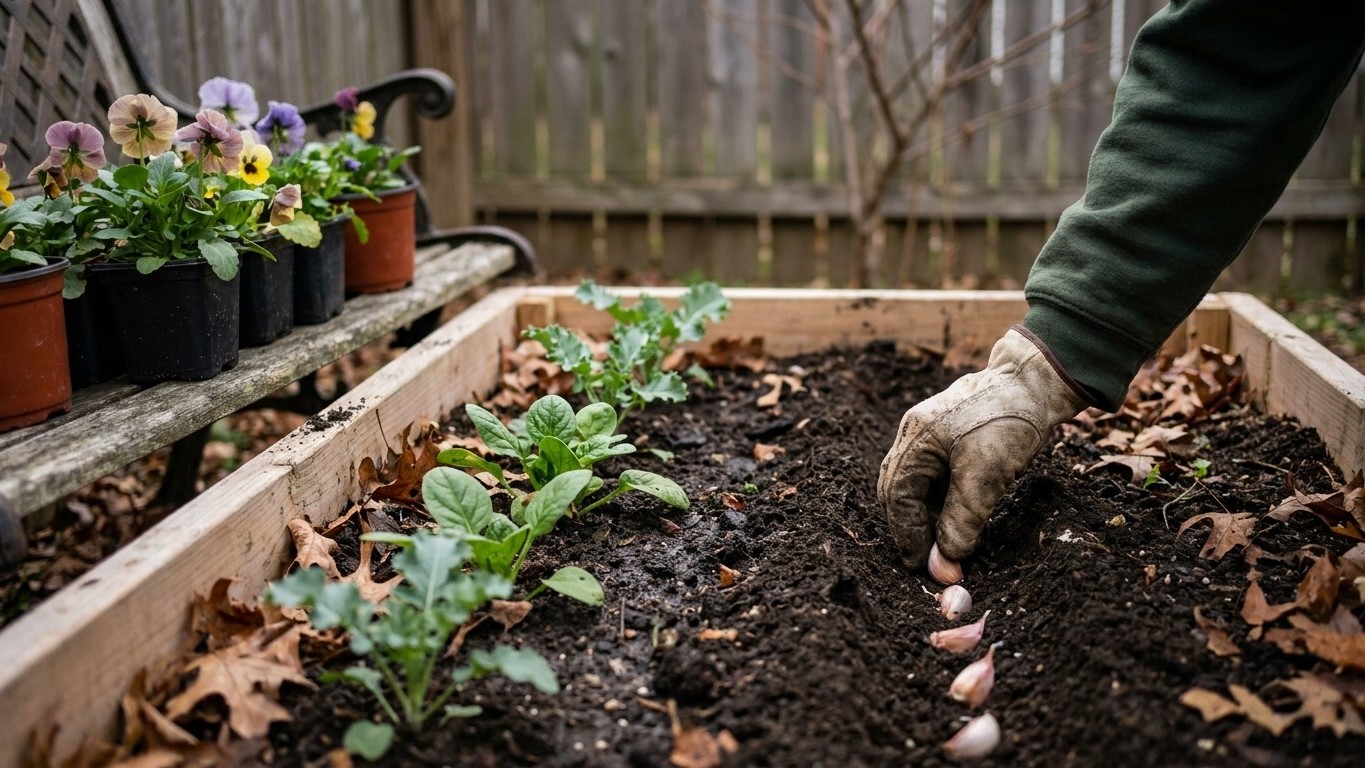

By October, most of Wyoming has already crossed its first fall frost. NOAA’s 30-year average puts that date between September 24 and October 5 for the reference station, and at elevation the real number often lands earlier. So the direct-sowing season is over for tender crops. What’s left is garlic and shallot planting, bare-root and dormant work, and anything you can tuck under a cold frame or low tunnel.
What goes in the ground in October

The frost window matters more than the calendar page. NOAA NCEI’s 1991-2020 normals put the first fall freeze at USW00024018 between September 24 and October 5, which means that by the time October opens, a large share of Wyoming gardens have already seen their first hard nip. At 6,000 feet, the growing season runs roughly 130 frost-free days, and freezing temperatures are possible in any month at the higher elevations around Jackson, the Snowy Range, or the Wind River foothills. That reality decides what’s safe this month far more than any generic planting guide.
The honest answer for most tender vegetables is that nothing new goes into open ground in October. Tomatoes, peppers, squash, beans: their season closed with the frost that already passed or is about to. What still works is narrower but real.
- Garlic and shallots, planted while the soil is still workable, for harvest the following summer.
- Cold frames and low tunnels holding spinach, mâche, and other cold-hardy greens that will keep growing slowly through the shoulder season.
- Bare-root and dormant plantings of fruit trees, shrubs, and canes, timed to root before the ground locks up.
- Forcing rhubarb or chicory indoors, using roots dug earlier and moved to a dark, cool space.
Notice what’s missing from that list: no lettuce transplants, no pea sowing, no root crop starts. In a state where USDA hardiness zones run from 3a to 6a depending on elevation and exposure, the same October weekend can mean bare ground in the Bighorn Basin and snow cover in the mountains. Garlic tolerates both. Most everything else doesn’t.
What to start under cover
Counting backward from the first fall frost, rather than forward from a date on the wall, is the only arithmetic that holds up across a state this varied. If frost typically arrives between September 24 and October 5, then by October any sowing under cover is aimed at a harvest weeks or months out, not at squeezing in one more outdoor crop.
Indoors or under protection, this is the month for microgreens on a windowsill, sprouting seed in jars, and starting hardy greens like spinach or mâche in a cold frame where they’ll hold through the cooling weeks ahead rather than race to maturity. Some gardeners also use this window to pot up herbs, dug from the garden before the ground firms, to carry them through the dark months on a bright sill.
Two mistakes show up every year. Starting too early under cover, with warm indoor temperatures and long summer light memory, produces leggy, rootbound seedlings that stall the moment they’re set outside next spring. Starting too late, on the other hand, means the plant never builds enough root or leaf before the short days and low light of late fall slow everything down. The fix for both is the same: work backward from your local frost dates, not from what worked in a garden three states away, and check the extension service’s own calendar for your elevation before committing trays of seed.
What is ready to pick
Outdoors, October offers little for most of Wyoming. Anything still standing in the open garden should already be in, or covered, given that the state’s first freeze typically lands in the last days of September or the first days of October. What’s left to harvest lives mostly in storage, under a frame, or on a windowsill.
Cold frames and low tunnels can still be producing small pickings of spinach, kale, and mâche, cut a little at a time rather than all at once, since growth has slowed to a crawl. Sprouts and microgreens started indoors earlier in the month are usually ready within a week or two and give a fresh bite when nothing else is coming out of the ground.
The bigger job this month is checking what’s already in storage. Winter squash should feel hard all over, with no soft spots near the stem, and any squash showing a sunken or damp patch needs to be used immediately, not left to spread rot to its neighbors. Potatoes stored in a dark, cool spot should be checked for green shoulders or soft ends, both signs to pull that tuber before it takes down others in the bin. Onions are the most unforgiving: one soft neck in a mesh bag can turn into a moldy corner within a week if it isn’t caught and removed.
The jobs that matter this month

October in Wyoming is a working month even where nothing new goes in the ground, and the jobs done now are the ones that protect next year’s harvest rather than this year’s.
Pruning, planning, and protection
Dormant pruning of fruit trees and cane fruits can begin once leaves have dropped and the wood has hardened off, cutting out dead, crossing, or diseased branches while the plant’s structure is easy to see. This is also the window to order seed for next season, since the varieties gardeners actually want, especially short-season types bred for a state with roughly 130 frost-free days at elevation, tend to sell out over winter rather than in spring. Sketching next year’s rotation now, while this year’s layout is still fresh in memory, avoids the common mistake of planting the same family in the same bed two years running.
Soil, tools, and storage
Soil testing and amending pays off more in fall than in spring, because amendments like lime or compost have the whole winter to break down before planting resumes. Turning the compost pile one more time before it freezes solid keeps decomposition going a few extra weeks. Cleaning and sharpening tools before they’re put away prevents rust and dull edges that always seem to surprise gardeners come the first warm day. Beds and fencing damaged by summer storms or animal pressure are far easier to repair now, on solid ground, than after a snow load has settled in. And every stored crop, squash, potatoes, onions, apples, needs a walk-through for rot at least every couple of weeks, since one bad piece left in a bin can spread quietly through the whole harvest.
What not to do in October
The classic mistake in Wyoming is trusting a mild afternoon over the calendar of averages. A warm 65-degree day in early October can feel like an invitation to set out one more round of tender starts, but the state’s first freeze typically falls between September 24 and October 5, and a single clear, calm night is often all it takes to undo weeks of growth. Treat a warm spell as a bonus, not a green light.
Uncovering cold frames or row covers too early after a mild stretch is the same error in reverse. Plants that have adjusted to protected conditions lose their hardening-off the moment they’re exposed, and a following cold snap can hit harder than it would have without the false break. Leave covers on longer than instinct suggests, especially at higher elevations where frost can arrive in any month of the year.
Feeding nitrogen at this point in the season is another common misstep. Nitrogen pushes soft, leafy growth precisely when plants should be hardening off and shutting down for winter, leaving that tender new growth exposed to damage at the next freeze. If soil needs amending in fall, phosphorus and potassium sources, or a general soil test-guided amendment, do far less harm than a shot of nitrogen aimed at growth that shouldn’t be happening this late.
Checking this against your own county
A state-wide October guide is a starting point, not a set of instructions for a specific backyard. Wyoming’s elevation swings, from valley floors to mountain foothills, and the divide between its northern and southern counties, can move frost dates by weeks in either direction from the statewide average. A garden at 4,000 feet and one at 7,500 feet are not on the same calendar, even in the same month.
For a planting window built around your own elevation and county, the University of Wyoming Extension publishes local guidance worth checking before committing seed or transplants to a specific date.
Common questions
Is it too late to plant garlic in October in Wyoming?
No. Garlic is one of the few crops planted specifically in fall, and October usually falls within the workable window before the ground firms up, as long as the soil hasn’t already frozen solid.
Can I still start a fall vegetable garden in October in Wyoming?
Not outdoors in most of the state. With the first fall frost typically landing between September 24 and October 5, October sowing belongs under cover, in cold frames, or indoors rather than in open beds.
What USDA hardiness zone is Wyoming in?
Wyoming spans USDA Plant Hardiness Zones 3a to 6a, according to the USDA Plant Hardiness Zone Map. That range reflects elevation and location differences across the state, so a zone lookup for your specific county is more useful than the statewide range.
Why did my plants freeze even though the forecast said it would stay above freezing?
Frost dates from NOAA are averages built on 30 years of data, not guarantees for any single night. At higher elevations, where frost is possible in any month, a clear, calm night can drop temperatures below freezing even when the forecast average suggests otherwise.
Gardeners who plant by the Moon can check the October 2026 moon planting calendar, a tradition rather than a proven method.
Related guides
Elsewhere? See what to plant in October in every state and province.