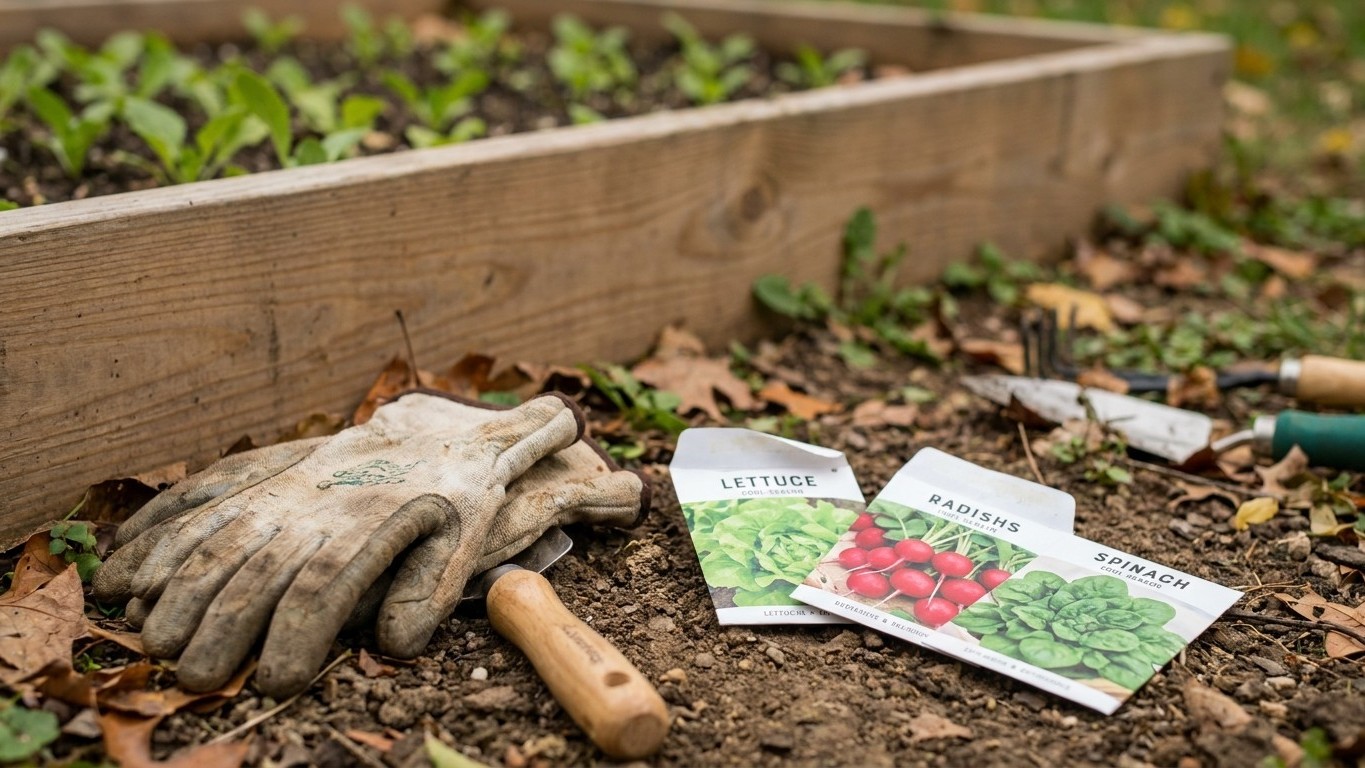

September in Wyoming is a closing window, not an opening one. The state’s first fall frost lands between September 24 and October 5, so the first two or three weeks still allow quick hardy crops and fall bulb planting, while the last week of the month is when most gardens shut down for the season. What you plant depends less on the date on the calendar than on how close you are to that frost line and how high up you garden.
What goes in the ground in September

The frost window is the whole story here. With the first freeze arriving somewhere between September 24 and October 5 across most of the state, the first half of the month still offers real planting days at lower elevations, while gardens above 6,000 feet may already be flirting with their first light frost. That elevation gap matters more in Wyoming than in almost any other state: at 6,000 feet the frost-free season runs only around 130 days, and freezing temperatures can show up in any month once you climb high enough.
Garlic and shallots are the reliable September crop. Both want to go into the ground roughly four to six weeks before the soil locks up for winter, which in much of Wyoming means mid-to-late September through October depending on elevation. Push individual cloves root-down, two inches deep, and mulch heavily once the ground starts to cool. This is not a gamble crop; garlic planted now sits quietly through winter and bulbs up the following summer.
Quick hardy greens are a narrower bet. Spinach, mache, and radishes sown in the first week or so of September can still mature before frost at lower elevations, but anyone gardening above the mid-elevation range is racing a closing door and should lean on a cold frame or low tunnel rather than open ground. Those season-extension tools buy real weeks: a low tunnel over a bed can push the effective frost date back significantly, which is often the difference between a harvest and a loss.
Bare-root and dormant plantings also belong in September. Fall is a legitimate time to put in dormant fruit trees, shrubs, and perennials in the parts of the state where the ground stays workable into October, since the plant spends the cold months establishing roots instead of pushing top growth. Where the ground is already firming up at higher elevations, that job waits for spring.
What to start under cover
Counting backward from a frost window of September 24 to October 5 changes what makes sense to start now. Almost nothing sown under cover this month will mature outdoors before that freeze arrives, so the value of starting seeds in September lies elsewhere: filling a cold frame for a late, protected harvest, or getting a jump on plants that will overwinter and finish next spring.
Fast greens like mache, claytonia, and baby spinach are the exception worth the arithmetic. Mache in particular can germinate and put on enough growth under a cold frame lid to survive winter and resume growing at the first spring thaw, so a September sowing under cover is not wasted even though it won’t feed anyone until spring. Anything slower, like head lettuce or brassicas started from seed now, runs into the second failure mode: not enough daylight or warmth left to finish before growth stalls for winter.
The other common mistake runs the opposite direction. Starting cool-season transplants too early in a warm September stretch produces leggy, rootbound seedlings sitting in trays with nowhere to go, since the outdoor bed they’re meant for may already be too cold or too short on daylight to support them by the time they’re ready to move. The safer approach is to start only what you intend to overwinter under cover, and treat everything else as a spring project.
Indoor bulb forcing is worth a mention here too. Paperwhites and amaryllis started indoors in September or October give a mid-winter bloom, and it’s a low-risk way to use windowsill space once the outdoor sowing calendar has effectively closed for the year.
What is ready to pick
September is usually the heaviest harvest month of the year in Wyoming gardens, and the approaching frost adds urgency rather than emptiness. Tomatoes, peppers, summer squash, sweet corn, and beans should all be coming in steadily through the first three weeks, and anything still on the vine when a hard frost is forecast needs picking or covering, since a single freeze night ends tender crops outright.
Winter squash and pumpkins are the crop to watch closely. They’re ready when the rind resists a fingernail push and the stem has started to dry and turn brown; pulling them too early leaves thin skin that won’t store, while a light frost on the foliage (not the fruit itself) actually signals it’s close to time. Cure them in a warm, dry spot for a week or two before moving to cold storage.
Onions and potatoes follow a similar late-season rhythm. Onions are ready to pull once their tops have yellowed and flopped over on their own; potatoes are ready once the vines have died back, and both need a proper curing period in a dry, airy spot before they go into long-term storage. Check anything already in storage from earlier in the season for soft spots or sprouting, since one bad squash or onion in a bin can spread rot to its neighbors faster than most gardeners expect.
The jobs that matter this month

Frost protection tops the list, and it’s a job with a real deadline attached. Once the calendar moves past the middle of September, every clear, calm night is a candidate for the season’s first freeze, and tender crops left uncovered on that night are simply gone. Row cover, old sheets, or a cold frame lid thrown on before sunset can carry tomatoes and peppers through several extra weeks of marginal nights.
Curing and storage prep is the second big task. Winter squash, onions, and potatoes all need a curing window before they go into cold storage, and skipping it is the single most common reason stored crops rot early. Set aside a warm, ventilated space for this now rather than scrambling once the frost forces an emergency harvest.
Garlic bed preparation deserves attention alongside the actual planting: work in compost, correct drainage issues, and mark the row before the ground firms up. Cleaning up spent plant debris also pays off now rather than in spring, since diseased leaves and stems left in the bed over winter give pests and fungal spores a head start next season.
A few other tasks belong on the September list even though they feel like housekeeping: dividing overcrowded perennials while the soil is still workable, planting spring-flowering bulbs like tulips and daffodils, testing soil pH before amendments become a spring rush, and winterizing drip irrigation lines before a hard freeze cracks the fittings. None of these are optional if the goal is a garden that comes back strong.
What not to do in September
The classic mistake is treating a warm afternoon as proof that frost isn’t coming. Wyoming’s first fall frost window (September 24 to October 5) is an average range, not a guarantee, and a mild stretch of daytime weather says nothing about what happens overnight once the sky clears and the temperature drops. Gardeners who uncover tender crops after a few warm days, thinking the risk has passed, are usually the ones caught out by the next clear night.
Planting warm-season crops now is the second recurring error. Tomato, pepper, or squash transplants set out in September have no realistic path to producing before frost ends the season, and the cold soil itself will stunt them long before a freeze finishes the job. If a transplant needs 60 or more warm days to fruit, September in Wyoming is not that window.
Late nitrogen feeding is a quieter mistake with the same root cause. Nitrogen pushes soft, leafy growth, and that new growth is exactly what frost damages first. Feeding fruit trees, shrubs, or perennials with nitrogen this late in the season encourages tender tissue that has no time to harden off before the cold arrives; if feeding is needed at all this month, a low-nitrogen or phosphorus-leaning amendment supports root and bulb development without the same risk.
Checking this against your own county
A statewide frost window is a starting point, not an instruction for your specific garden. Wyoming’s elevation swings are extreme enough that two towns 50 miles apart can see their first frost weeks out of sync, and the state’s official hardiness range of zone 3a to 6a reflects exactly that spread. A garden at 6,000 feet or higher should assume frost risk is real in any month, while lower valley gardens often get meaningfully more room on both ends of the season.
For a planting calendar tuned to your county, the University of Wyoming Extension is the reliable next stop: https://www.uwyo.edu/uwe/.
Common questions
Can I still start a vegetable garden in Wyoming in September?
Only with hardy, fast crops and only in the first couple of weeks at lower elevations. Garlic and shallots are the exception that works reliably all month, since they’re meant to overwinter rather than mature before frost.
When exactly will the first frost hit my garden?
Statewide data puts the first fall frost between September 24 and October 5, but that’s a range built from one weather station, not a guarantee for every county. Elevation shifts this window by weeks in either direction.
Should I cover tomatoes and peppers on cold nights this month?
Yes, once the calendar moves past mid-September. Row cover or a sheet thrown on before a clear, calm night can carry tender crops through several extra weeks of marginal weather.
Is it too late to plant fruit trees or shrubs in September?
Not where the ground is still workable. Dormant bare-root trees and shrubs planted in fall put their energy into root establishment over winter rather than top growth, which gives them a head start once spring arrives.
Gardeners who plant by the Moon can check the September 2027 moon planting calendar, a tradition rather than a proven method.