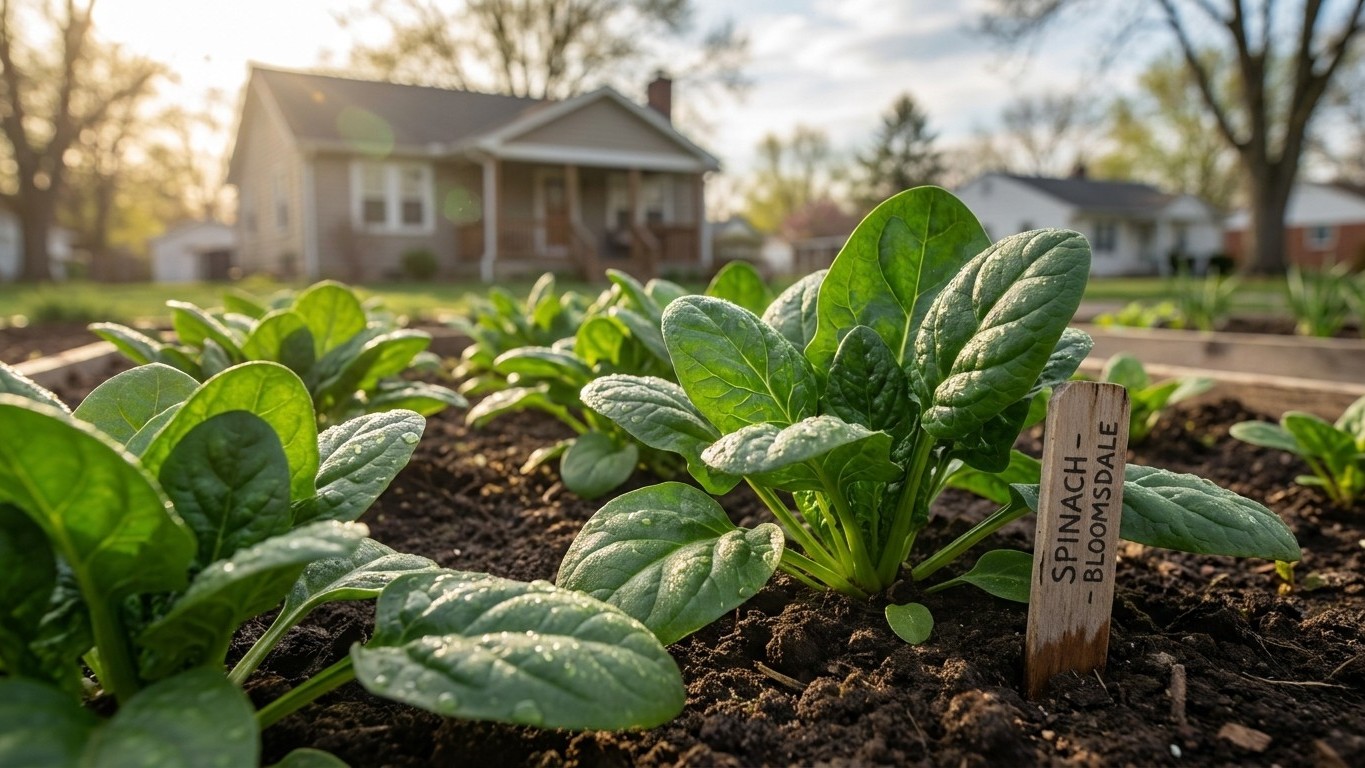

North Florida gets 13 hours and 58 minutes of daylight on the longest day of the year, and that number alone is enough to push spinach into flower. Add in an average of 73.2 days a year that reach 90 F or hotter, and you have two separate triggers working against the crop at once. Spinach here does not bolt because of one problem. It bolts because day length and heat arrive together, and neither gives the plant any slack.
The short answer
Will Spinach Bolt Early in Florida? Spinach flowers, or bolts, when day length gets long and temperatures climb, and it grows best only where temperatures stay under 75 F. In north Florida, the calendar works against both of those requirements almost as soon as spring starts. The 13 hours 58 minutes of daylight on the summer solstice is nowhere near the kind of short-day, low-light conditions spinach prefers, and by the time days start stretching out in March and April, north Florida’s air temperature is usually already climbing past the point where spinach holds its leafy stage.
So which is the limiting factor here, day length or heat? Both, but they don’t arrive on equal footing. Day length is the trigger that starts the bolting process biologically, the same lengthening days that push many plants toward reproduction. Heat is what accelerates it and makes it irreversible. In a region with 73.2 days a year above 90 F, the growing season simply doesn’t give spinach much cover once temperatures start climbing in mid-spring. A cooler summer wouldn’t help, either, because the long days alone are enough to flip the switch. This is worth stating plainly: nothing about a mild Florida summer buys extra weeks, because the day length itself, not just the heat, is doing part of the work.
Compare that to a crop like onions, where long days are what builds the harvest. Spinach runs the opposite direction. The lengthening days of a north Florida spring are not neutral background weather. They are actively working against the plant at the same time the thermometer is climbing toward and past 75 F, which is both spinach’s growth ceiling and the point where its leaves start turning bitter.
Practically, that means spinach in this region is a short-window crop, planted early enough to mature before day length and heat combine, then pulled before the plant sends up a seed stalk and the leaves lose their flavor. The four commonly named spinach varieties, Bloomsdale, Melody, Teton, and Olympia, don’t have published days-to-maturity figures from the source used here, so no specific timeline can be assigned to any one of them. Given how narrow the spring window is, many growers instead look at When to Sow Autumn Spinach in Florida as a more forgiving alternative. What’s certain is the spring window itself: narrow, temperature-driven, and closing fast once both day length and heat move against the plant together.
How long the spring window really is
- Start with the last frost date. North Florida’s last spring frost falls somewhere between February 16 and March 7, based on 30-year climate normals for the region. Spinach seed should go in the ground two to three weeks before that date, which puts a realistic sowing window in late January through the third week of February.
- Track how fast the ceiling arrives. Spinach growth stays good only while temperatures remain below 75 F. North Florida’s spring doesn’t linger in that range for long. Air temperatures typically climb through the 60s and 70s by March and keep rising into April, meaning the “good growth” period after that late-January to mid-February sowing date is compressed into roughly six to eight weeks before the 75 F ceiling starts being crossed regularly.
- Add day length to the mix. Those same six to eight weeks are also the exact stretch when daylight is lengthening toward the 13-hour, 58-minute peak of the solstice. That combination, rising heat and lengthening days, means the harvest window effectively closes by mid-spring, well before the calendar reaches the long, hot stretch of a north Florida summer.
- Total usable window. Counting from the earliest reasonable sowing date to the point where both heat and day length make further growth unreliable, north Florida gardeners get roughly six to eight weeks of usable spring spinach production, not the full length of spring itself.
The autumn crop, and when the soil lets you sow
Fall is the more forgiving season for spinach in this region, but it comes with its own obstacle course. Two separate limits bracket the autumn planting window, one on each end.
Soil too warm to germinate
Spinach seed germination drops off once soil temperature climbs above 80 F, and north Florida’s soil holds summer heat well past the point where the air itself starts feeling like fall. Early September ground is typically still too warm for reliable germination. That pushes the practical start of fall sowing later into September or into October, once soil temperatures have had a chance to drop following cooler nights and shorter days.
The frost that ends the season
On the other end of the calendar, north Florida’s first fall frost arrives somewhere between November 26 and December 13, based on the same 30-year climate normals used for the spring date. Working backward from a harvest target in that window, using the 50-to-75-day range from sowing to harvest, a harvest planned for late November means sowing sometime between mid-September and early October. A harvest pushed into early December stretches that sowing window a bit later, into October.
Put those two obstacles together and the realistic fall sowing window in north Florida lands in late September through October, once soil has cooled below the 80 F germination threshold but with enough time left before frost to reach harvest. It’s a tighter window than gardeners in cooler climates get, but it’s also more reliable than the spring attempt, since the crop is moving into cooling weather and shortening days rather than racing against both heat and daylight at once.
Checking this against your own county
Everything above is built from climate normals at a single reference station, and Florida’s weather doesn’t stay consistent from the panhandle down through the peninsula. A few miles inland or a short drive toward the coast can shift both frost dates and soil warming timelines. Central and south Florida operate on an entirely different calendar, one where winter is the main growing season and summer is what growers work around, so none of the frost-date math here applies south of about Ocala.
Before finalizing a sowing date, check with your local UF/IFAS Extension office through UF/IFAS Extension’s county office directory. County agents track local frost records and soil conditions that a single regional reference station can’t capture, and that local data is the more reliable guide for exact timing.
Common questions
Can spinach survive a north Florida summer at all?
Not for leaf production. Once day length and heat both push past spinach’s tolerance, the plant bolts and the leaves turn bitter. There’s no summer planting window for this crop in this region.
Does shade help delay bolting?
The source used for this page doesn’t address shade cloth or partial shade as a bolting countermeasure, so no claim can be made either way here.
Is fall or spring the better season for spinach in north Florida?
Fall gives a more workable window, since the crop moves into cooling temperatures and shortening days rather than racing against both heat and lengthening daylight at once, as it does in spring.
Why do the named varieties (Bloomsdale, Melody, Teton, Olympia) not come with a maturity date on this page?
The source used here names those four varieties but publishes no days-to-maturity data for any of them, so none is invented or borrowed from another crop.