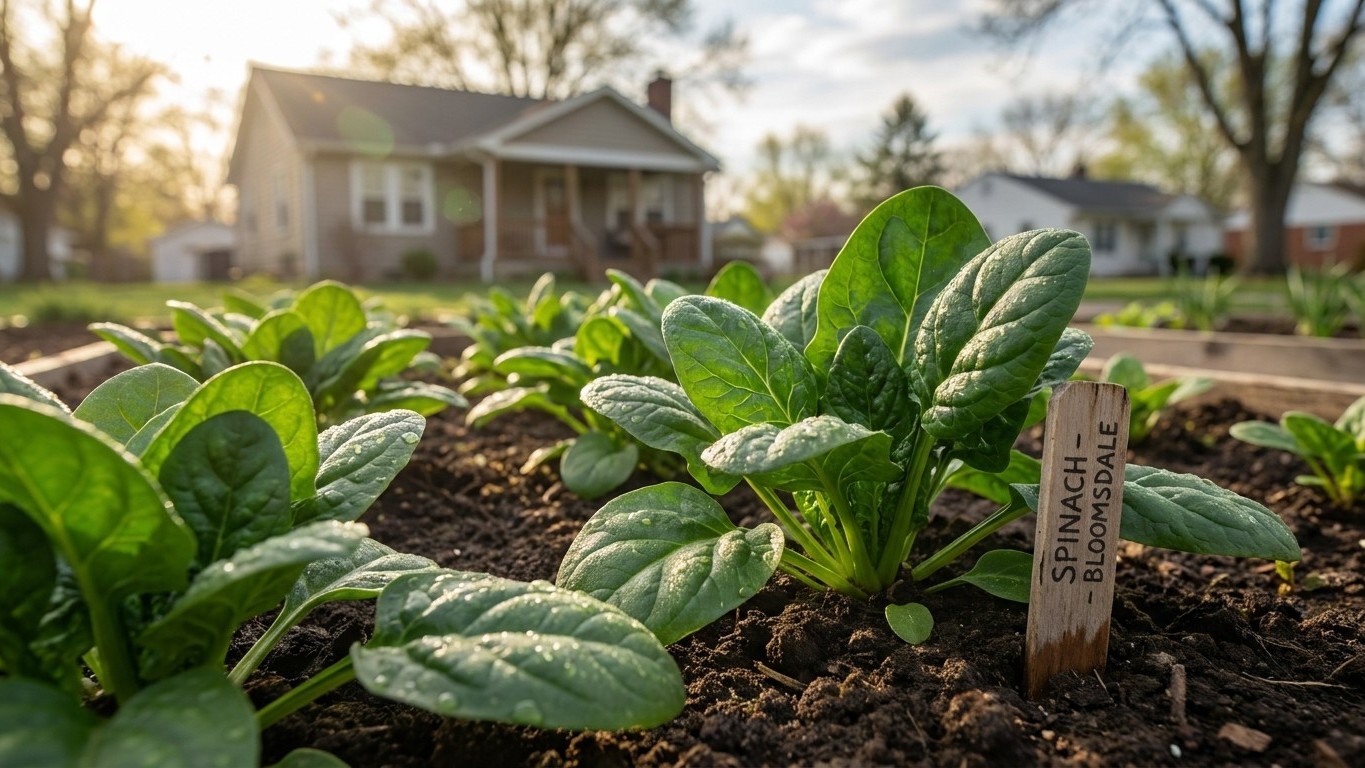

In St. John’s, spinach starts bolting well before the calendar reaches its longest day. The culprit isn’t heat, since this province rarely sees a hot afternoon. It’s the light itself: once the days stretch long enough, the plant switches from making leaves to making seed, no matter how mild the air feels. So Will Spinach Bolt Early in Newfoundland and Labrador? The answer, as it turns out, is almost always yes.
The short answer
On the longest day of the year, St. John’s gets 15 hours and 47 minutes of daylight. That’s an enormous amount of light, and it matters a great deal to spinach, because long days are one of the two triggers that push the plant toward flowering, the process gardeners call bolting. The other trigger is warmth above 75 F. In most of the United States, gardeners deal with both problems at once: the days get long right around the same weeks the air turns hot, so spinach gets hit from two directions.
Newfoundland and Labrador is different. This reference station records an average of 0.0 days a year reaching 90 F, and afternoons rarely climb anywhere near the 75 F ceiling that stresses the plant and turns the leaves bitter. That means the heat side of the equation barely exists here. A gardener could grow spinach through the entire summer without the crop ever facing a truly hot day.
The day length problem doesn’t go away just because the heat does. Fifteen hours and forty-seven minutes of light is long enough to trigger flowering on its own, and a cool, damp Newfoundland summer does nothing to slow that clock down. The plant reads the light, not the thermometer. So the honest answer to “when will it bolt” is: sometime as the days lengthen toward the solstice, driven almost entirely by day length rather than by heat.
That’s worth sitting with for a moment, because it runs against a common assumption. Gardeners in cooler climates often expect their spinach to hang on longer simply because the weather stays mild. In Newfoundland and Labrador, mild weather buys you almost nothing against bolting. The limiting factor here is day length, full stop, with heat playing only a minor supporting role in how quickly the leaves turn bitter once flowering starts. Anyone planning a spinach bed around this province’s cool summers needs to plan around the sun, not the thermometer, which is exactly why many gardeners sidestep the problem entirely by shifting their focus to When to Sow Autumn Spinach in Newfoundland and Labrador, when shortening days work in the crop’s favor instead of against it.
How long the spring window really is
- Environment and Climate Change Canada’s 1981 to 2010 normals put the average last spring frost at the ST JOHN’S A station on May 30. That’s a mean date, not a guarantee, and in one year out of two the real frost lands later than that. Sowing spinach two to three weeks before the average last frost points to a window opening somewhere between roughly May 9 and May 16, and a cautious gardener should lean toward the later end given how unreliable “average” frost dates can be in a coastal province.
- From that sowing point, the plant has to establish itself while the days are still relatively short and cool, which is exactly the stretch of the calendar when spinach grows best.
- The days keep lengthening every week after sowing, climbing toward that 15 hour, 47 minute peak around the summer solstice in June. Long before the calendar reaches that peak, the plant will already be responding to day lengths well past whatever triggers flowering, since the pull toward bolting builds gradually as the light increases, not only on the single longest day.
- Put together, that leaves a usable spring window of only about four to five weeks between a mid-May sowing and the point in early-to-mid June where lengthening days start pushing the crop toward bolting. It’s a narrow window, and it closes because of light, not because of any heat wave.
The autumn crop, and when the soil lets you sow
Fall spinach in Newfoundland and Labrador faces two separate obstacles, and they sit on opposite ends of the season. One is about soil temperature at sowing time. The other is about frost closing things down at the finish.
Soil still too warm to germinate
Utah State University Extension notes that spinach seed germination drops off once soil temperatures climb above 80 F. In much of the country, that’s a real headache for anyone trying to start a fall crop in August, because the ground is still baking from summer. In this province, though, the obstacle barely applies. With an average of 0.0 days a year reaching 90 F in the air, soil temperatures rarely get anywhere close to that 80 F germination ceiling to begin with. A Newfoundland or Labrador gardener sowing a fall spinach crop in late summer is unlikely to be fighting overheated soil the way a gardener in a hot southern state would be. It’s one less thing to worry about here.
The frost that ends the season
The average first fall frost at the ST JOHN’S A station lands on October 17, again a mean date rather than a promise, with frost arriving later than that in roughly half of all years. Utah State University Extension’s guidance for a fall crop is to sow 50 to 75 days before the date you actually want to harvest. Counting back from an October 17 target gives a sowing window that runs from roughly August 3 (75 days out) to roughly August 28 (50 days out). Sow any later than late August and the plant is racing a frost date that, on average, arrives before the crop has had its full 50 days to mature.
Seed catalogs commonly list Bloomsdale, Melody, Teton, and Olympia as spinach varieties gardeners grow for fall harvests, though no data on their individual performance is published in the source used for this guide, and none is claimed here.
Checking this against your own county
Every figure above comes from a single reference station in St. John’s, and this province covers a lot of ground and a lot of microclimates. Inland and upland areas, along with much of Labrador, run noticeably cooler and later than the Avalon Peninsula. A garden thirty miles inland can see its last frost weeks after the coast does.
Before locking in a sowing date, check current conditions and local guidance with the Newfoundland and Labrador Forestry and Agrifoods Agency at gov.nl.ca/ffa. They can speak to your specific district in a way that a single provincial average never fully can, and they’re the right first call for anything that depends on local soil and frost timing rather than a coastal weather station.
Common questions
Does a cool Newfoundland summer delay bolting?
Not much. Bolting is triggered by long days as well as by heat, and this province’s day length alone, 15 hours and 47 minutes at the peak, is enough to push spinach toward flowering regardless of how mild the air stays.
Is heat ever really a problem for spinach here?
Rarely. With an average of 0.0 days a year reaching 90 F, and afternoons seldom near the 75 F growth ceiling, heat plays a much smaller role in this province than day length does.
Can I sow spinach earlier than the recommended window to dodge bolting?
Sowing earlier than two to three weeks before the average May 30 last frost risks seedling damage from a late frost, since that date is a mean, not a guaranteed cutoff, and frost arrives later than that in about half of all years.
Why does soil temperature matter less here than in warmer states?
Because germination struggles once soil passes 80 F, and this province’s cool summers, reflected in that 0.0 average days above 90 F, rarely push soil anywhere near that ceiling in the first place.