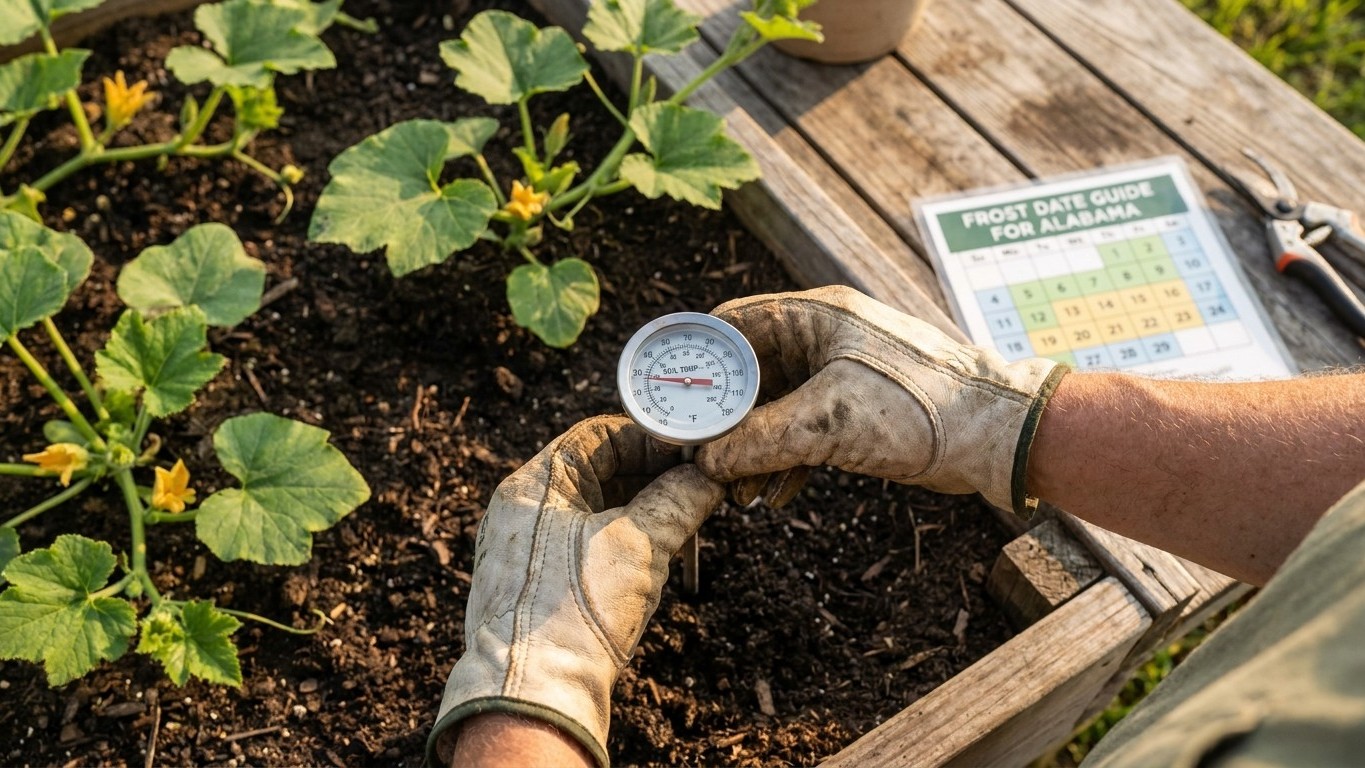

Sow pumpkins in Alaska once the soil, not the air, reaches 65°F, which in most of the state pushes actual sowing into early-to-mid June. Work backward from there: the first fall frost caps how late a flower can open, and that flowering deadline, not the sowing date, is what decides whether a pumpkin finishes at all.
The short answer
Anchorage’s first fall frost typically arrives between September 22 and October 1, based on NOAA’s 1991-2020 climate normals for station USW00026451. That’s the wall every pumpkin vine in the region is racing against, and it’s earlier than a lot of gardeners moving north from milder states expect. But the number that actually drives the calendar isn’t the seeding date. It’s the day the first female flower opens, because a pumpkin needs 45 to 55 days from that bloom, not from the day the seed went into the ground, to finish with a hard, fully colored shell, according to Utah State University Extension.
Run that backward from the frost window and a picture forms. Subtract 55 days from September 22, the earlier edge of the frost range, and you land on July 29. Subtract 45 days from October 1, the later edge, and you land on August 17. That gives a flowering deadline somewhere between late July and mid-August: any flower opening after that point is betting on a warm fall and a fast-finishing fruit, and losing that bet leaves a green, frost-nipped pumpkin on a dying vine.
That window isn’t something to circle on a calendar and stop thinking about. It’s a range precisely because both halves of the math are ranges themselves: the frost date shifts by roughly nine days from year to year, and the fruit’s finishing time swings by about ten days depending on variety and how sunny the back half of the season turns out to be. Treat late July as the target you’re aiming for and mid-August as the edge you don’t want to lean on.
Anchorage’s relatively mild standing inside Alaska matters here too. With roughly 143 frost-free days on average, it holds one of the longer growing seasons available to home gardeners in the state. The Interior around Fairbanks and anywhere north of the Alaska Range works with a noticeably shorter frost-free stretch, which drags that flowering deadline earlier and shrinks the margin further. The long summer daylight helps the vine grow fast once it’s going, but it doesn’t move the frost date back, and it doesn’t make a flower open a day sooner than the plant is ready to open it.
When to sow here
Soil temperature, not the frost date, is the trigger for sowing pumpkin seed, and treating the two as the same thing is the most common miscalculation home gardeners make in this climate. Here’s how the sequence actually runs.
- Start from the last spring frost window, but only as a floor. Anchorage’s average last spring frost falls between May 3 and May 12, per the same NOAA climate normals used above. That date tells you when the air has stopped freezing overnight. It says nothing about the temperature six inches down, which is where a pumpkin seed actually has to germinate.
- Wait for the soil to reach 65°F, not for the last frost to pass. Utah State University Extension sets 65°F soil as the sowing threshold for pumpkins. Soil in this climate warms on its own schedule, lagging well behind the air by weeks, since it depends on sun angle and how much bare ground is absorbing heat, not just on the thermometer reading at 6 a.m. A soil thermometer pushed a few inches down at midday is a far better guide than counting days off the frost date.
- Warm the bed deliberately if the calendar is tight. A sheet of clear plastic or a row cover laid over the bed for a week or two before sowing can raise soil temperature enough to buy back roughly two weeks on the calendar, which matters when the flowering deadline sits in late July.
- Weigh starting indoors instead of direct sowing. Given how short the frost-free stretch already is, many gardeners in this region start seed indoors under grow lights and transplant hardened-off starts outside only once nights are reliably staying warm, rather than gambling on a slow direct-sown germination in cool ground.
- Check the sow date against the flowering deadline before committing. Whatever date the soil actually hits 65°F, count forward through germination and vegetative growth and see whether there’s realistically enough calendar left before the late-July-to-mid-August flowering cutoff established above. If the math doesn’t work, an indoor head start is the fix, not a later frost date that isn’t coming.
What goes wrong here
Alaska’s short season doesn’t leave much slack, and most of the failures below trace back to the same root cause: the flowering deadline got missed, whether the gardener knew it existed or not.
- A flower opens too late and the fruit never colors. A bloom that opens after the mid-August edge of the flowering window is asking a pumpkin to do 45 to 55 days of finishing work in less time than the season has left. The fix is upstream: get seed in as soon as soil hits 65°F, and if that date keeps sliding into June, start seed indoors the following season instead of direct sowing.
- Frost hits a fruit that’s still mid-ripening. Even a flower that opened inside the safe window can run into a fall frost that arrives on the early edge of the September 22 to October 1 range. Harvest with the stem attached as soon as frost is forecast, rather than waiting for full color, since a pumpkin cut too early is still better than one caught outright by a freeze.
- The vine dies back before the skin hardens. A vine that collapses from cold nights or disease pressure before the rind toughens leaves fruit vulnerable to rot in storage. Keep vines as healthy as possible through the finishing stretch by watching for the pest pressure covered on this site’s pages for squash bugs in Alaska and cucumber beetles in Alaska, both of which can weaken a vine right when it needs to hold on longest.
- Seed rots in cold, wet soil before it even germinates. Sowing ahead of the 65°F mark, out of impatience with a long winter, often ends with seed sitting in cold ground and failing before a seedling ever appears. Confirm the temperature with a thermometer rather than the calendar, and hold off if the reading isn’t there yet.
Common questions
What’s the single most important date for pumpkins in Alaska?
It’s not the sowing date. It’s the day the first flower opens, since that’s the point the 45-to-55-day countdown to a finished fruit actually starts, and it has to happen early enough to beat the first fall frost.
How do I know when the soil has actually reached 65°F?
Use a soil thermometer pushed a few inches into the bed, checked around midday, rather than counting days from the last spring frost. Utah State University Extension doesn’t publish a fixed calendar date for this because it depends on the bed itself, not the season alone.
Will a row cover let me sow earlier than the soil would naturally allow?
Yes, within limits. Warming the bed with clear plastic or row cover ahead of sowing can move the workable date up by roughly two weeks, which can matter when the flowering deadline is fixed by frost but the sowing date isn’t.
What should I do if my pumpkin still hasn’t flowered by mid-August?
Treat that vine as unlikely to finish a fruit this season. There’s no published fix for compressing the 45-to-55-day maturation window once a flower opens that late; the more reliable move is adjusting next season’s sowing date, or starting seed indoors earlier, rather than trying to rescue a late-flowering vine after the fact.