
Sweet corn can ripen in most of coastal British Columbia in an average year, but the margin is thinner than the calendar suggests. When to Sow Sweet Corn in British Columbia looks generous on paper if you only check the frost-free window. What actually decides the outcome is soil temperature at planting and how much summer heat the corn gets afterward, and both of those run against the gardener here more than the frost dates do.
The short answer
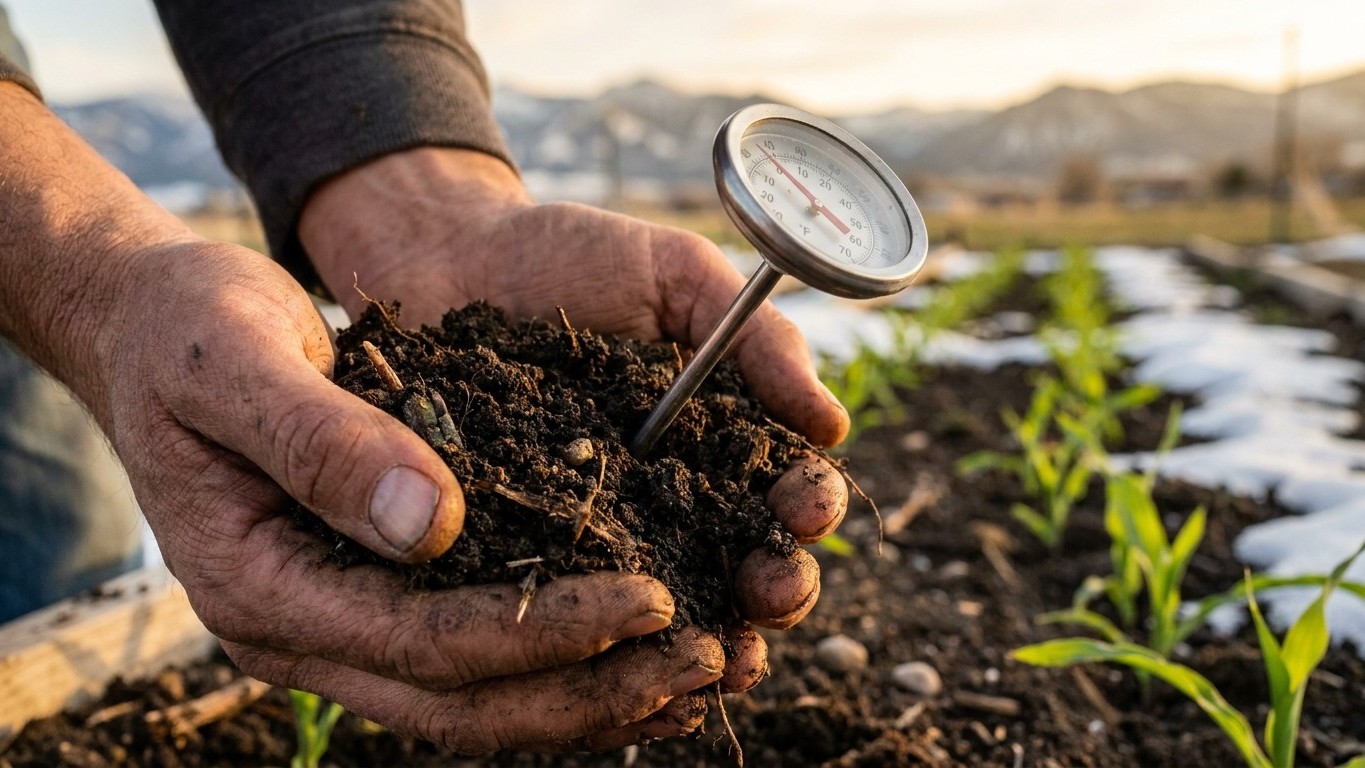
Start with the Soil, Not the Frost. Environment and Climate Change Canada’s Climate Normals for the Vancouver Int’l A station put the average last spring frost at March 18. That date tells you almost nothing about when to plant corn, because corn seed needs soil consistently above 60°F to germinate well, and soil in this part of the province typically doesn’t reach that mark until well after mid-March. Sow into ground that’s still cold and the seed sits, rots, or comes up patchy. The 60°F threshold, not the frost date, is the real starting gun.
From that later starting point, the crop needs 60 to 90 days to reach maturity, depending on the variety. The average first fall frost at the same reference station lands on November 10. Measured purely as a calendar gap between a warmer spring soil and that November date, there’s plenty of room for a 60-day type and, on paper, room for a 90-day type too. So why isn’t this simple?
Because days-to-maturity figures assume a normal warm-season heat supply, and this region doesn’t offer one. The same climate normals show 0.0 days a year averaging 90°F or higher at the Vancouver reference station. That’s not a detail. Corn is a heat-driven plant: its growth is tied to accumulated warmth, not to days flipping past on a calendar. In a climate with essentially no hot days, a variety rated at 90 days under typical growing conditions can easily take noticeably longer in the ground here, because the heat that would normally push it along simply isn’t showing up. This is exactly the question addressed in Will Sweet Corn Ripen in British Columbia?.
Two more things to hold onto. Both frost dates from Environment and Climate Change Canada are means, not guarantees: in one year out of two, frost arrives later than the stated date, which also means in the other half it can arrive earlier. Treat March 18 and November 10 as the midpoints of a window, never as safe dates to plant or harvest by. And remember the source station is Vancouver. A province is not one climate: interior valleys and upland districts run weeks behind the coast, so anyone gardening away from the Lower Mainland should shift this whole picture later.
Does a late variety fit here?
A 60-day variety
An early type built around 60 days from planting has real slack built into this climate. Even after allowing for a delayed start while the soil climbs to 60°F, and even after allowing for slower growth through a cool, heat-light summer, there’s still comfortable calendar room before the November 10 average frost. This is the safer bet for most gardens on the coast, and it’s the type that tolerates a cooler-than-average summer without running out of season. In interior or upland districts, where the whole calendar shifts later, a 60-day type is also the one that keeps the most breathing room.
A 90-day variety
A late type rated at 90 days is a harder case, and it does not fit reliably here. The problem isn’t the frost-free window in the abstract, it’s that the nominal 90 days assumes a heat supply this climate doesn’t provide. With zero days a year reaching 90°F at the reference station, growth slows relative to what the seed packet’s day count expects, so the real time in the ground stretches out. Push that stretched timeline against a first fall frost date that is only a mean, one that arrives earlier than November 10 in roughly half of all years, and a 90-day variety is gambling on two things going its way at once: a warmer-than-usual summer and a later-than-usual fall frost. Plainly put, a true 90-day type is a poor match for this territory except in the warmest, most sheltered coastal microclimates, and even there it carries real risk in a cool year.
What Goes Wrong here
- Soil sown too cold. Planting on the strength of the March 18 average last frost, rather than waiting for the soil itself to hold above 60°F, is the single most common failure. Cold, wet soil rots seed or produces a thin, uneven stand that never catches up. The remedy is simple: check the soil with a thermometer instead of the calendar, and hold off until it reads consistently above 60°F, even if that means planting weeks after the frost has passed.
- A variety too late for the season. Choosing a 90-day type on the assumption that the frost-free window is long enough ignores the region’s near-total lack of hot days, which slows the corn’s real progress toward maturity. The remedy is to favor an early or midseason variety with a lower nominal day count, and to treat any late variety as a warm-microclimate gamble rather than a routine choice.
- Sweetness lost, and it has nothing to do with climate. Standard (su), sugary-enhanced (se), and supersweet (sh2) sweet corn types cross-pollinate when they tassel at the same time nearby, and the result is starchy, tough kernels regardless of how well the plants grew. Per Utah State University Extension, the fix is timing and planning, not distance: grow only one of these types in a given season, or stagger plantings so their tasseling windows don’t overlap, and plant each block in a group of three or more rows so pollination within that block stays reliable.
Checking this against your own county
British Columbia doesn’t run on counties, and it certainly doesn’t run on one climate. The Fraser Valley, Vancouver Island, and the Okanagan and other interior valleys each carry their own frost timing and their own summer heat pattern, and all of them can differ meaningfully from the Vancouver reference station used above. Before committing to a variety or a planting date, check current local guidance from the BC Ministry of Agriculture and Food, which tracks growing conditions and crop advice specific to the province’s different regions. Local agricultural extension staff can also tell you how far your particular garden runs behind or ahead of the coastal averages used here.
Common questions
When should I plant sweet corn in coastal British Columbia?
Once the soil holds consistently above 60°F, not on the March 18 average last frost date. That threshold typically arrives weeks after the frost, and planting earlier risks rotted or patchy seed.
Does the province’s frost-free season really last eight months?
The gap between the average last spring frost (March 18) and the average first fall frost (November 10) at the Vancouver reference station is wide, but it’s a mean, not a promise. Frost can arrive earlier than November 10 in about half of all years, and the real limiting factor for corn is often summer heat, not the frost dates themselves.
Can I grow supersweet (sh2) corn next to a regular variety?
Not if they tassel at the same time. Cross-pollination between su, se, and sh2 types ruins sweetness and texture regardless of climate. Stagger planting dates or grow only one type per season instead.
Why did my late-season corn variety not ripen this year?
Most likely a combination of the region’s very low heat supply, which slows a 90-day variety’s real progress, and a fall frost that arrived at or before the November average rather than later. Late varieties carry this risk every season here, not just in unusually cool years.