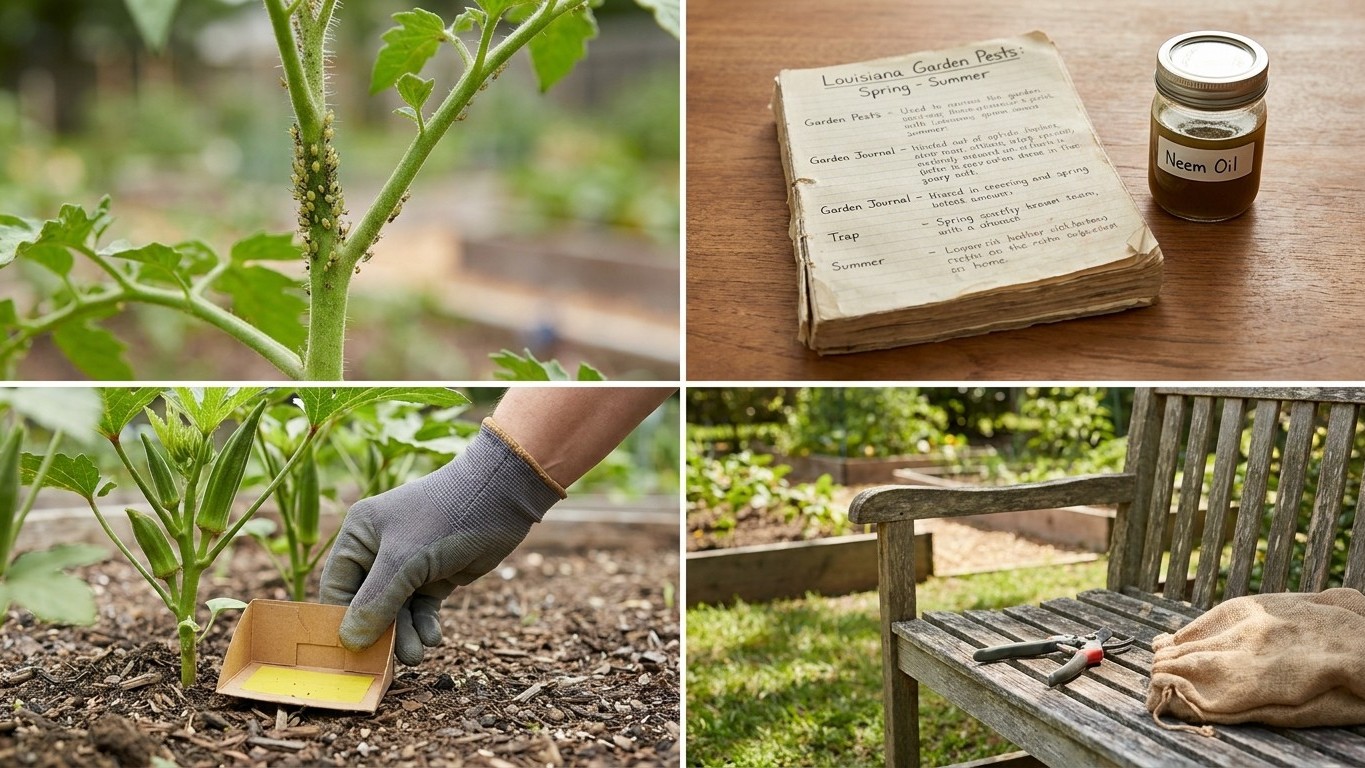

Louisiana gardens deal with insect pests in every month of the year, not just in the heat of summer. LSU AgCenter’s home vegetable and ornamental insect guides name Pickleworm in Louisiana as a pest gardeners watch for, along with leaf-footed bug, Cowpea curculio in Louisiana, vegetable weevil, pepper weevil, tomato pinworm, the Squash vine borer in Louisiana that gardeners keep an eye on, Squash bug in Louisiana, which gardeners report often, Fall armyworm in Louisiana and crape myrtle bark scale, as the ones that show up most often in home gardens statewide. Start checking the undersides of squash, pepper and tomato leaves and the base of squash stems every week from the time you transplant, because by the time damage is obvious the insect has already had days to work unseen.
What Louisiana gardens actually deal with

Louisiana’s long, warm growing season gives pest insects exactly what they need to run through several generations before anything resembling a hard freeze shows up, and in much of the state that freeze is short and late. LSU AgCenter points out that the same mild winters and stretched-out warm season that let gardeners plant something nearly year-round also let insects reproduce and thrive year round. A pest problem that starts on one crop in spring does not disappear by summer. It just moves to whatever host is available next. For more on what grows well across the state and when to plant it, our other Louisiana guides go into the calendar in more detail.
The ten pests below are the ones LSU AgCenter’s Louisiana Vegetable, Ornamental and Flowering Plants Insect Management Guide and its home vegetable garden guide call out by name for home gardens. That is not a complete list of every insect you could ever meet here, and pressure differs from one parish to the next, so treat this as the short list of usual suspects, not a full diagnosis.
Vegetable weevil

The adult is a grayish-brown snout beetle around 3/8 inch long that cannot fly, so it moves by walking and hides in soil or mulch during the day. The larva, a legless pale green to cream grub, does the real damage, chewing ragged notches into the leaves and boring into the roots of turnips, cabbage, carrots and other cool-season crops. Row covers over young transplants and rotating crucifers out of the same bed each year cut down on repeat infestations.
Cowpea curculio

This small, shiny black to dark brown snout weevil, about 3/16 inch long, lays eggs inside developing pea and cowpea pods. The larva feeds inside the seed, leaving warty, discolored knots on the outside of the pod that are easy to spot once you know to look. Destroying crop residue right after harvest and rotating away from the same bed the following year breaks the cycle, since the adults overwinter nearby.
Squash bug

Adults are flat-backed, grayish-brown bugs about 5/8 inch long that cluster at the base of squash and pumpkin vines. Nymphs are gray with black legs, and eggs show up as neat bronze-colored clusters on the underside of leaves, easy to crush before they hatch. Both nymphs and adults suck sap from the leaves, causing yellow speckling that turns brown and the whole vine to wilt as the population builds. Handpicking adults in the cool of the morning and removing spent vines at the end of the season keep numbers down.
Squash vine borer

The adult is a day-flying moth with an orange and black body that looks more like a wasp than a moth, but it is the larva that causes trouble: a cream-white, brown-headed caterpillar that tunnels into the base of the stem. LSU AgCenter notes this pest is much heavier late in the season, so plants set out earlier often dodge the worst of it. Wilting vines with sawdust-like frass at a hole near the soil line are the giveaway. Slitting the stem lengthwise to remove the borer, then mounding soil over the wound, can save an otherwise doomed plant.
Pickleworm

The adult is a mottled tan and brown moth with feathery tufts at the wingtips. The young larva is translucent pale green with small dark spots, turning creamy white as it nears pupation, and it bores into squash and cucumber fruit, plugging the entry hole with frass. Like squash vine borer, LSU AgCenter flags this one as far worse late in the season, which makes early plantings and prompt removal of damaged fruit the most reliable defense.
Pepper weevil

This small, dark brown to black snout beetle, about 1/8 inch long, lays eggs inside pepper buds and young fruit. The creamy white grub that hatches feeds inside, causing buds and fruit to drop early or show sunken, discolored patches near the stem. Picking up and disposing of dropped fruit and buds through the season removes the next generation before it can pupate in the soil.
Tomato pinworm
The adult is a small gray-brown moth easy to miss. Its larva, a tiny caterpillar that ranges from yellowish green to purplish gray, mines leaves with pinhole tunnels before boring into the fruit near the stem end, leaving a dark scarred entry point that is often mistaken for disease. Removing volunteer tomato plants between seasons and rotating beds limits how many pinworms carry over.
Leaf-footed bug
Adults are grayish-brown, narrow-bodied bugs three-quarters of an inch to an inch long with a flattened, leaf-shaped flare on the hind legs, and the orange to reddish nymphs are just as capable of feeding damage. LSU AgCenter notes they attack tomatoes and peppers in high numbers in late summer and early fall. Their piercing feeding leaves hard, pale spots under the skin of the fruit and a cloudy, sometimes bitter interior. Handpicking adults and clearing garden debris where they overwinter are the most practical home controls.
Fall armyworm
The larva ranges from pale green to nearly black, marked with pale stripes down the length of the body and a light-colored, inverted Y on the dark head capsule. It feeds on the foliage of a wide range of vegetables and turf grass, and a heavy infestation can strip leaves to the veins within a day or two. Scouting for small larvae before they get large, and handpicking them off, is far more effective than waiting until the damage is already extensive.
Crape myrtle bark scale
Adult females look like small, felt-like white to gray encrusted bumps clustered along bark and twigs, and heavy infestations coat the trunk in black sooty mold that grows on the honeydew the scale excretes. This one attacks the ornamental crape myrtle rather than food crops, but it is common enough in Louisiana landscapes that LSU AgCenter lists it alongside the vegetable garden pests. Washing the trunk and lower limbs with a mild soap solution and encouraging lady beetles, which feed on the scale, reduces the population over time.
Telling damage apart

Reading the pattern before you treat anything
The shape of the damage usually tells you more than trying to spot the insect itself, especially since several of these pests do their worst work as larvae hidden inside a stem, pod or fruit where you will never see them. Ragged, chewed leaf edges with visible bite marks point to a chewing insect out in the open, like fall armyworm larvae or adult weevils working at night. Stippling and yellow speckling that later turns brown on squash or tomato foliage usually means a piercing-sucking feeder like squash bug or leaf-footed bug has been drawing sap out of the leaf or fruit tissue rather than eating it outright.
Small round holes plugged with a crumbly, sawdust-like material on fruit or at the base of a stem are the signature of a borer working from the inside, whether that is pickleworm in a squash fruit, squash vine borer at the crown, or pepper weevil inside a pod. A wilting plant needs a closer look before you treat it as a pest problem at all. Wilting that starts at one vine near a hole packed with frass points to squash vine borer. Wilting across the whole plant with no visible entry hole is more often a watering fault, root disease such as fusarium wilt, or simple heat stress, and spraying an insecticide will do nothing for any of those.
Sticky residue on leaves or stems, sometimes followed by a black sooty coating, is honeydew from a sap-feeding insect like scale, not a fungus on its own. The black mold is secondary, growing on the sugary excretion, so treating the mold without addressing the insect underneath just means it comes back. When in doubt about whether a symptom is insect, disease or a cultural problem like overwatering, look for the insect or its frass first before assuming the worst.
When each one shows up
Louisiana’s insect calendar runs on plant growth stage and temperature more than on the date on a calendar, and LSU AgCenter’s guidance reflects that: it describes conditions here as supporting year-round insect activity rather than a short, defined pest season. Cool-season crops like turnips and cabbage bring vegetable weevil pressure while those plants are actively growing, since the larvae need that foliage and those roots to develop. Cowpea curculio follows the bloom and pod set of southern peas, showing up as soon as pods start to fill rather than on a fixed week.
Squash bug and squash vine borer track the squash plant itself, appearing not long after vines start to run and building through the season as more generations overlap. LSU AgCenter is specific that pickleworm and squash vine borer pressure gets much heavier late in the season, which is why an early planting often outruns the worst of both, while a late planting sits in their path the whole time it fruits. Pepper weevil and tomato pinworm follow fruit set on their host plants, so scouting should start as soon as the first buds or small fruit appear, not after the first big flush.
Leaf-footed bugs are the clearest example of a late-season pest here: LSU AgCenter notes they attack tomatoes and peppers in high numbers specifically in late summer and early fall, which is worth remembering if a fall tomato crop is part of the plan. Gardeners in cooler climates plan around a much shorter window. Someone gardening in Maryland deals with a compressed season where a pest like squash vine borer usually gets through only one generation before frost shuts things down, as covered in our guide to garden pests in Maryland, while Louisiana’s stretched season lets several of these insects cycle through more than once.
What actually works
Prevention comes first
Rotating crop families so the same pest does not find its host waiting in the same bed year after year is the single cheapest thing a gardener can do, and it works especially well against soil-dwelling and residue-overwintering pests like cowpea curculio and vegetable weevil. Timing plantings earlier in the season, where the crop allows it, sidesteps the worst of pickleworm and squash vine borer pressure since both build through the season rather than starting strong. Floating row cover kept on until flowering starts keeps squash bug, pepper weevil and vegetable weevil adults off young plants entirely, though it has to come off once the plant needs pollinators.
Encouraging predators matters more than most gardeners give it credit for. Lady beetles feed on crape myrtle bark scale, parasitic wasps attack armyworm and pinworm larvae, and neither shows up in numbers if broad-spectrum insecticides are being sprayed on a schedule regardless of whether pests are present. A garden that skips unnecessary spraying keeps more of its own pest control working for free.
What doesn’t do much
Once pests are present, targeted intervention beats a blanket spray. Handpicking works well for slow, visible insects like squash bug and leaf-footed bug adults, and for fall armyworm larvae while they are still small. For borers already inside a stem or fruit, no surface spray reaches them. The only real options are removing and destroying the affected plant part or, for squash vine borer specifically, slitting the stem to physically remove the larva. Home remedies like dish soap sprays, garlic or hot pepper infusions, and ultrasonic pest repellers have no real effect on any of the ten pests covered here. A gardener in Michigan dealing with a shorter, cooler season faces some of the same disappointment with those same home remedies, as our guide to garden pests in Michigan notes, because the insects involved there feed the same way regardless of climate.
What control costs
Comparing the options
None of these approaches cost the same in money or time, and the cheapest option for most home gardeners is also the most time-consuming: handpicking. It costs nothing but a weekly walk through the garden, but it has to be repeated on a schedule all season, since eggs hatch continuously once pests establish.
| Method | Money cost | Time cost | Repeat frequency |
|---|---|---|---|
| Handpicking / crushing eggs | None | Low per visit, adds up over a season | Weekly |
| Row cover / barriers | Moderate, reusable for several seasons | Low once installed | Removed at bloom, reinstalled if needed |
| Encouraging predators (habitat, reduced spraying) | Low | Low, mostly a change in habits | Ongoing, not a single treatment |
| Targeted insecticide (spot treatment) | Moderate per application | Moderate, timing matters | Repeated through fruiting period |
Row cover and other barriers cost more upfront than a bag of insecticide, but the material is reusable across several seasons, which lowers the real cost fast for anyone growing the same crops year after year. Biological and cultural controls like encouraging predators and rotating beds cost almost nothing in cash but demand a change in habits rather than a one-time fix. Sprays sit in the middle: cheap per application, but a borer or weevil population that overlaps generations through a long Louisiana season often means several applications rather than one, which adds up over a season faster than the per-bottle price suggests.
Local help
LSU AgCenter tracks pest pressure across the state and offers specimen identification through its parish extension offices, which matters most when the damage does not clearly match anything described here. Before spraying anything, especially on a fruiting vegetable close to harvest, get the insect identified first rather than guessing from a photo online. Start at the LSU AgCenter website to find the office closest to you.
Dig Deeper Into Specific Pests
Louisiana’s climate doesn’t give gardeners much of an off-season, and that shapes how pests behave here. Warm stretches run long, winters stay mild, and caterpillar pressure can build up in ways gardeners in colder states never see. If you want to understand one of the trickiest examples of that pattern, take a look at what fall armyworm does in Louisiana, where you’ll find why this pest doesn’t follow a tidy published timeline the way it might elsewhere, and what that means for spotting and stopping it before it chews through a lawn or a stand of vegetables. It’s a useful case study in how the state’s nearly year-round growing season keeps pest pressure going instead of letting it die off with the first frost, and it’s worth reading if you’ve ever wondered why the general advice for northern gardens doesn’t quite hold up once you’re dealing with Louisiana’s warm, wet stretches.
Common questions
Why do my squash plants keep dying even after I sprayed them?
Spraying does nothing once squash vine borer larvae are already inside the stem, since the spray never reaches them. Check the base of the stem for a frass-plugged hole and a soft, mushy feel before assuming a spray failed.
Is it too late to plant squash if pickleworm is already a problem in my area?
Pickleworm and squash vine borer pressure builds through the season and gets heavier late, according to LSU AgCenter, so a later planting sits in their path longer rather than avoiding them. Planting earlier in the window your crop allows, rather than later, is the better bet.
Can I just let ladybugs handle everything and skip spraying entirely?
Predators like lady beetles help, particularly against scale insects, but they rarely control a heavy infestation of a fast-reproducing pest like squash bug or leaf-footed bug on their own. Treat predators as one layer of a plan, not a replacement for scouting and handpicking.
My tomato fruit has a weird hard spot under the skin, is that a disease?
That is more likely leaf-footed bug feeding damage than a disease, especially if it shows up in late summer or fall when LSU AgCenter notes this pest is most active. Cut the fruit open. A disease shows internal rot or discoloration spreading through the flesh, while insect feeding leaves a localized hard, pale spot with otherwise normal tissue around it.