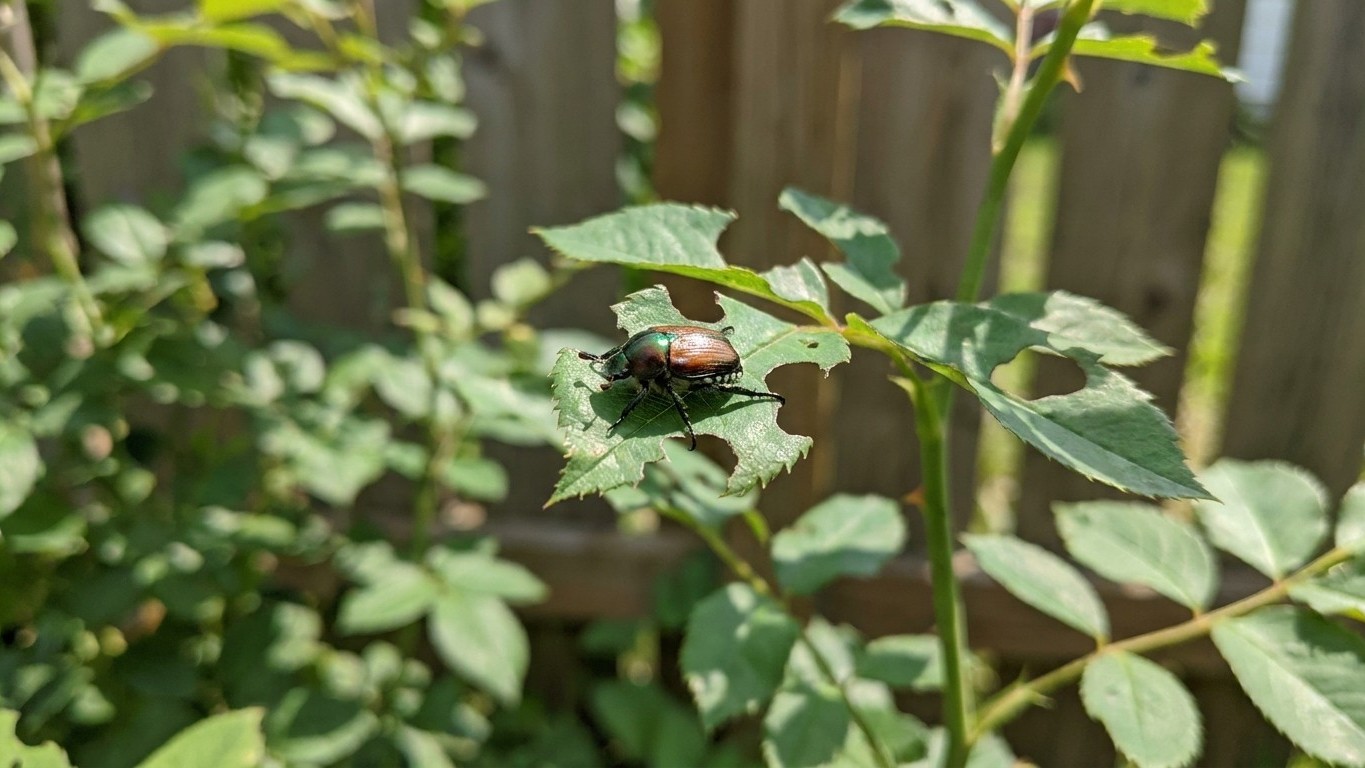

Michigan State University Extension’s Bulletin E3276 names ten pests that account for most of the calls county offices field from home gardeners: Squash vine borer in Michigan, Squash bug in Michigan, the Striped cucumber beetle in Michigan and the Spotted cucumber beetle in Michigan, along with Seedcorn maggot in Michigan, the Asiatic garden beetle in Michigan, cutworms, Slugs in Michigan, Flea beetles in Michigan, and trees affected by Emerald ash borer in Michigan. Pressure runs from late April through September, according to MSU Extension. Start checking cucurbit seedlings and new transplants for chewing or wilting the week they go into the ground, and keep checking weekly through midsummer.
What Michigan gardens actually deal with

What’s chewing on your Michigan garden right now, and what’s it going to be next month? Ten insects cause most of the damage home gardeners in this state deal with, and which one you’re facing shifts fast between late April and September as the weather turns and different crops come up. So the single thing to do this week: get down low and check the undersides of your cucurbit seedlings and any new transplants for chewed leaves, wilting, or clusters of eggs, and keep making that same check every week straight through midsummer.
Seedcorn maggot

The adult is a small gray fly, barely bigger than a gnat, but the larva does the damage: a legless, cream-white maggot about a quarter inch long that tunnels into germinating seeds and young roots before a seedling ever breaks the surface. Beans, corn, and cucurbit seed sown into cold, wet soil high in organic matter are the most exposed. Waiting until soil has warmed and dried somewhat before sowing, and avoiding fresh manure or green residue worked in right before planting, cuts the risk substantially.
Cutworms

Cutworms in Michigan appear as fat, smooth caterpillars, gray to nearly black, that curl into a tight C when the soil around a damaged plant is disturbed. They feed at night and sever transplant stems right at the soil line, so a seedling that looked fine at dusk can be found toppled by morning. A cardboard or foil collar pushed an inch into the soil around each transplant stops them cold, and it costs nothing but a few minutes per plant.
Flea beetles

Adults are tiny, shiny black or bronze beetles that jump like fleas when the foliage is brushed. They riddle eggplant, radish, and young brassica leaves with small round shot holes, and a heavy early infestation can stunt a seedling outright before it has a chance to establish. Floating row cover kept on until plants are large enough to shrug off the damage handles most of the problem without a single spray.
Striped cucumber beetle

This one is easy to identify on sight: a yellow beetle about a fifth of an inch long with three bold black stripes running the length of its back. Adults move into Michigan gardens in April, according to MSU Extension, heading straight for cucumber, squash, and melon seedlings to chew leaves and scar stems near the soil line. They also spread bacterial wilt, so a handful of beetles feeding early can cost a vine later in the season even after the chewing itself has stopped. Row cover, removed only for pollination and paired with prompt cleanup of old vines at season’s end, is the most reliable defense.
Squash bug

Adults are grayish-brown, flat-backed, shield-shaped bugs about five-eighths of an inch long that emerge between April and May, per MSU Extension. Nymphs are smaller, gray with black legs, and cluster tightly on the undersides of squash and pumpkin leaves. Both stages suck sap, and heavy feeding turns leaves black and crisp starting at the edges. Checking leaf undersides for the bronze, football-shaped egg clusters and crushing them before hatch beats any spray, and hand-picking adults in early morning, when they’re sluggish and slow to fly, works better than most people expect.
Slugs

Slugs are soft, legless mollusks, gray to brown and up to a couple of inches long, leaving a telltale silvery slime trail across leaves and soil in the morning. They rasp irregular holes with smooth edges in tender leaves, especially seedlings and lettuce. MSU Extension notes they’re most troublesome in spring and again in fall, when soil stays damp and nights turn cool. A ring of coarse diatomaceous earth or crushed eggshell around vulnerable plants, or a simple shallow beer trap sunk to soil level, both cut numbers noticeably.
Squash vine borer
The adult is a day-flying moth with an orange-and-black body and clear hind wings, more wasp-looking than moth-looking, and it emerges in June, according to MSU Extension. The larva does the real damage: a cream-white caterpillar with a brown head that tunnels inside squash and pumpkin stems, leaving sawdust-like frass piled at the entry hole. By the time a vine wilts suddenly in midsummer, the borer is already inside, and spraying the foliage does nothing at that point. Wrapping the base of young stems in foil or a nylon stocking before the moths arrive is the prevention that actually works.
Spotted cucumber beetle
Similar in size to its striped cousin, this beetle is yellow-green with twelve black spots across its back. It does not overwinter in Michigan, MSU Extension notes. Adults ride warm fronts up from the South and typically arrive in local gardens in late June. It feeds on cucurbit foliage and blossoms much like the striped beetle and can carry the same bacterial wilt, so the same row-cover-until-bloom approach applies.
Asiatic garden beetle
Adults are small, cinnamon to reddish-brown beetles about three-eighths of an inch long that feed at night and hide in soil or mulch by day, appearing toward the end of June, per MSU Extension. They chew ragged holes across a wide range of vegetable and ornamental leaves, while their grubs feed on roots underground where nobody sees them. Because the adults are nocturnal, a flashlight check after dark is often the only reliable way to catch them in the act of feeding.
Emerald ash borer
This is a tree pest, not a vegetable pest, but it belongs on this list because it has reshaped yards across Michigan over the past two decades. Adults are slender, metallic emerald-green beetles about half an inch long, and their cream-colored larvae tunnel under the bark of ash trees, cutting off water and nutrient flow until the canopy dies back branch by branch. A mature ash on the property that’s thinning at the top is worth a call to the county extension office to confirm the D-shaped exit holes before deciding on treatment or removal.
Telling damage apart

Not every ugly leaf is an insect problem, and treating a soil issue like a pest issue wastes a season chasing the wrong fix. Look at the shape and location of the damage before reaching for anything.
- Ragged holes with chewed edges across a whole leaf point to a chewing insect, such as a beetle or caterpillar, not a fungus.
- Tiny pale speckles without any holes usually mean a sap-sucking insect, like a squash bug nymph, is draining cells from the underside of the leaf.
- Sudden wilting of one vine while its neighbors stay upright is the classic sign of a borer working inside the stem, or of bacterial wilt spread by a cucumber beetle, not drought.
- A shiny, sticky film on leaves is honeydew left by aphids or scale, and it often grows a black sooty mold on top that gets mistaken for a disease on its own.
- Slime trails paired with smooth-edged holes are a slug’s calling card, distinct from the jagged tearing a caterpillar leaves behind.
Watering faults mimic insect damage more often than gardeners expect. Leaf edges that brown and curl inward, lower leaves first, usually trace back to inconsistent soil moisture rather than any pest, and the fix is a watering schedule change, not a spray. Wilting that recovers by evening is a moisture problem. Wilting that doesn’t bounce back overnight is a pest or disease problem worth digging into further before anything else.
Disease often shows up as color change before it shows up as damage: yellow rings, dusty white patches, or brown lesions with distinct margins are fungal or bacterial signs, not chew marks. Cross-checking against pest identification photos from the state extension service before assuming the worst also catches the cases where a plant only needed feeding, not spraying.
When each one shows up
Early season
Once soil warms enough to plant, cutworms, flea beetles, and seedcorn maggot are the first threats, working on seeds and young transplants before they’ve hardened off. Slugs are active early too, and MSU Extension notes spring dampness makes them especially troublesome on tender lettuce and seedling leaves.
April into May
Striped cucumber beetle adults move into Michigan gardens in April, and squash bug adults follow in April and May, according to MSU Extension’s monitoring compiled near Detroit. Both target cucurbit seedlings right as they’re establishing, which is exactly why row cover needs to go on before transplant, not after the first beetle is spotted.
June through midsummer
Squash vine borer adults emerge in June, and by late June the spotted cucumber beetle arrives from the South along with the first Asiatic garden beetle adults, all per MSU Extension. This stretch is the busiest of the season for cucurbit growers specifically, and it overlaps with the last window to protect stems before borers get inside. Weekly checks matter more in June than at any other point in the season. Gardeners farther south, where the same insects show up months earlier, can compare that timeline against Michigan’s in the Louisiana pests guide.
Fall
Slug pressure rises again as temperatures cool and dampness returns, per MSU Extension, making fall greens and late lettuce worth a second look even after the summer’s beetle pressure has faded. Cooler parts of the state, including the Upper Peninsula, tend to see these same insects arrive later than the near-Detroit timeline above, so local observation still matters more than a calendar.
What actually works
Prevention comes first
Rotating cucurbits, brassicas, and other pest-prone families to a different bed each year breaks the cycle for insects that overwinter in soil near last year’s crop, and it costs nothing but planning. Floating row cover installed at transplant, before adults arrive, blocks cucumber beetles, squash bugs, and flea beetles outright, though it has to come off for pollination once flowers open on cucurbits. Leaving some flowering plants nearby for ground beetles, lady beetles, and parasitic wasps to shelter in gives natural predators a reason to stick around, and that background pressure adds up over a season even though it’s invisible day to day.
Targeted intervention
Hand-picking works well for slow-moving pests like squash bug adults and egg clusters, and it’s most effective in early morning when insects are sluggish. For squash vine borer, prevention through stem wrapping matters far more than any treatment after larvae are inside, since nothing sprayed on the outside of the plant reaches a caterpillar already tunneled into the stem. Slug bait and barriers like diatomaceous earth address slugs directly rather than through prevention alone.
What doesn’t pull its weight
Companion planting with marigolds or nasturtiums as a blanket beetle repellent has far weaker evidence behind it than gardeners assume, and it shouldn’t replace row cover as the primary defense. Ultrasonic pest repellent stakes marketed for garden insects have no meaningful effect on beetles, borers, or slugs. Broad-spectrum insecticide sprayed on a schedule, rather than in response to an actual sighting, also kills the predatory insects that would otherwise be doing some of the work for free.
What control costs
Cost in a home garden is mostly a trade between money spent up front and time spent all season. Hand-picking and simple barriers cost almost nothing in dollars but demand a standing weekly habit through the pest’s active window. Row cover and biological approaches cost more upfront but need less ongoing attention. Sprays sit in between: cheap per application, but they have to be reapplied repeatedly and timed to the pest’s vulnerable stage to do any good at all.
| Method | Upfront cost | Time demand | Repetition needed |
|---|---|---|---|
| Hand-picking | None | High, weekly checks | Ongoing through the pest’s active season |
| Row cover / barriers | Moderate, reusable | Low after install | One removal at bloom, otherwise none |
| Biological controls (predator habitat) | Low | Low, mostly passive | None, benefits build over seasons |
| Targeted sprays | Low per use | Moderate | Repeated through the pest’s active window |
For most home gardeners growing a few beds of cucurbits, row cover installed at transplant is the cheapest approach over a full season once the material is bought once and reused for several years, because it removes the need for repeated hand-picking or spray applications entirely. Sprays that have to be reapplied every week or two after rain end up costing more in time, if not always in dollars, than a single barrier that goes on once.
Local help
MSU Extension tracks pest outbreaks across the state and offers specimen identification for gardeners who aren’t sure what’s chewing on their plants. Michigan’s diagnostic services and county offices, reachable through the MSU Extension outreach directory, are the right first call before spraying anything you can’t positively identify. For broader planning across the state, the Michigan guides hub covers frost dates and other seasonal basics that shape when these pests show up in the first place.
Common questions
Do I need to spray every week to keep cucumber beetles off my squash?
No. Row cover kept on from transplant until flowering blocks cucumber beetles without any spraying at all. Sprays only make sense once cover comes off for pollination and beetles are actually present in numbers.
My squash plant wilted overnight, is it too late to save it?
If the wilting is sudden and doesn’t recover by morning, check the stem base for a small entry hole and sawdust-like frass. Once a squash vine borer larva is established inside, the plant usually can’t be saved, though sometimes a stem can be split open, the larva removed, and the wound buried in soil to encourage new roots.
Are the beetles on my squash the same ones that will show up on my tomatoes?
Not usually. Striped and spotted cucumber beetles and squash bugs target cucurbits specifically, while flea beetles and cutworms hit a much wider range of vegetables, including tomatoes, eggplant, and brassicas. Identify the insect on the plant in front of you rather than assuming one pest explains damage across different crops.
Is it worth treating for emerald ash borer myself, or should I call someone?
Confirming the pest matters before spending any money, since D-shaped exit holes and canopy thinning can have other causes too. Contact the county extension office or a certified arborist to confirm identification before deciding between treatment and removal, since a mature ash represents a much bigger investment than an annual vegetable bed.