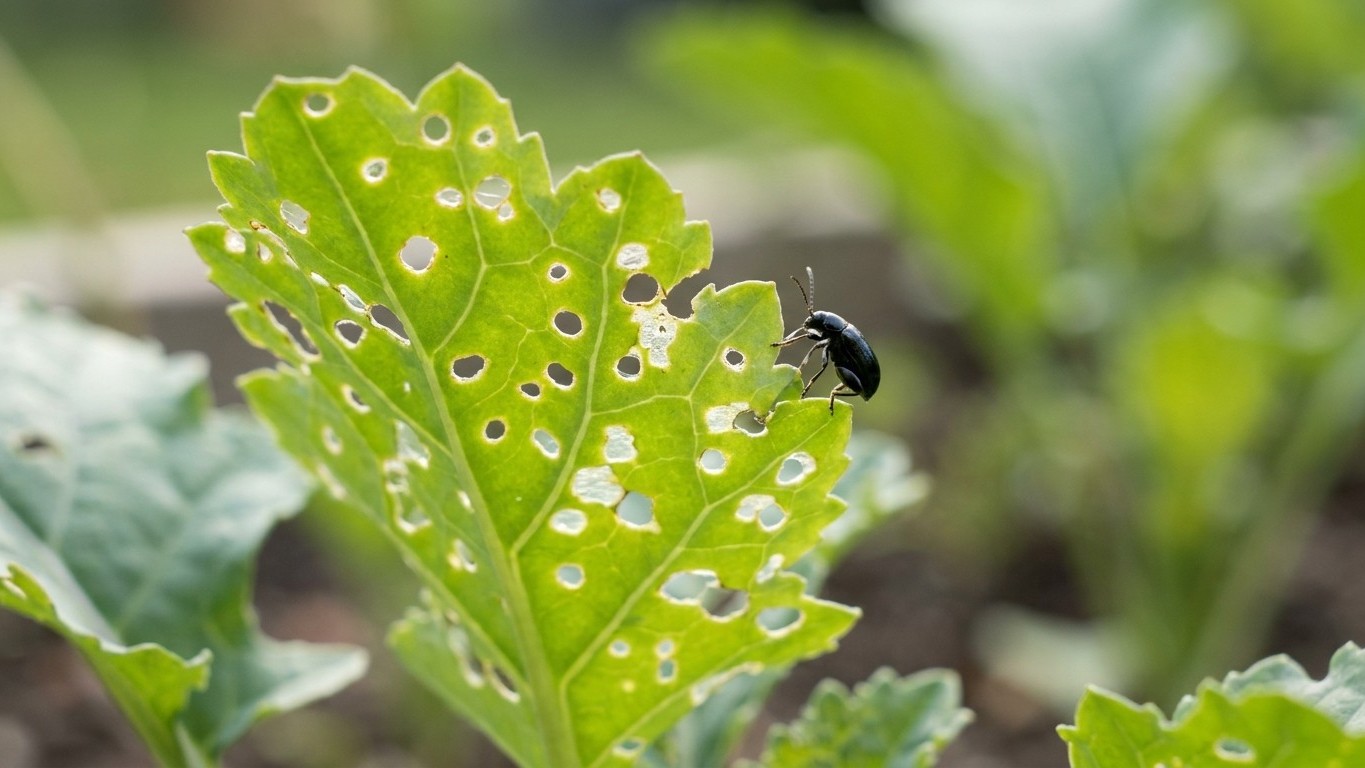

Flea beetles start chewing through British Columbia gardens and canola fields as soon as soil temperatures climb past 55°F, which typically happens in late April along the coast and closer to mid-May in the Peace River region. They stick around through early summer, slow down in the heat of July and August, then some species make a second pass on fall seedlings before frost. Row covers, delayed planting, and trap crops are the three moves that actually keep populations in check.
Meet the Beetle Behind the Shotgun Holes

If your radish leaves or canola cotyledons look like they’ve been hit with tiny buckshot, you’re looking at flea beetle damage. Two species dominate in BC: the crucifer flea beetle (Phyllotreta cruciferae) and the striped flea beetle (Phyllotreta striolata). Both are shiny, black or bronze, barely a tenth of an inch long, and named for their habit of springing away the instant you get close. That jump isn’t a fluke of anatomy for show, it’s a genuine survival trick, powered by enlarged hind legs that launch the beetle several inches in a fraction of a second.
These insects feed almost exclusively on plants in the brassica family: canola, mustard, cabbage, broccoli, kale, turnips, radishes, and arugula. A homeowner growing a backyard mix of kale and bok choy is essentially running a smaller version of what a Peace River canola grower deals with on hundreds of acres. The damage pattern is the giveaway, small round or irregular holes concentrated on young leaves, sometimes so dense the leaf looks lace-like. Seedlings take the worst hit because they have so little leaf surface to spare; a few dozen beetles can wipe out a tray of just-emerged canola or radish before the plants ever get established.
When Flea Beetles Show Up Across British Columbia
Timing varies more than most gardeners expect, largely because BC spans coastal rainforest, dry interior valleys, and northern prairie-like farmland within a single province.
Coastal and Lower Mainland Timing
Around Vancouver, the Fraser Valley, and Vancouver Island, adult flea beetles that overwintered in leaf litter and soil debris become active in April once daytime highs settle into the mid-50s. Mild coastal winters mean survival rates are high, so pressure in these zones tends to build quickly and stay steady through May and June. Gardeners transplanting brassica seedlings outdoors before mid-May in this region are planting right into peak beetle activity.
Okanagan and Southern Interior
The Okanagan’s drier climate and hotter summer stretch shifts the pattern slightly. Beetles emerge a little later, generally early to mid-May, but heat above 85°F in July tends to suppress activity temporarily. Growers in this region often see a second wave in late August and September when cooler temperatures return and beetles target fall brassica plantings and volunteer weeds.
Peace River and Northern BC
This is the zone where flea beetles matter most economically, since the Peace River region grows a meaningful share of BC’s canola acreage. Cold winters there don’t eliminate the beetle population; overwintering adults simply wait under crop residue and emerge as soon as soil warms, usually mid-to-late May. Because canola seedlings in this region germinate into a narrow, cool window, the beetle’s arrival often coincides almost exactly with the crop’s most vulnerable growth stage, the two-to-four-leaf phase. Provincial agriculture agencies have flagged flea beetle feeding at the seedling stage as one of the most consistent early-season threats to canola establishment in northern growing areas.
One detail that surprises a lot of home gardeners: flea beetles don’t need a host crop to survive winter. They shelter in soil cracks, under leaf litter, and along field margins, then simply walk or fly to the nearest food source once temperatures allow movement. That’s why a garden bed that had no brassicas the previous year can still see damage in the current season if beetles are overwintering nearby, in a hedgerow or an untended lot next door.
What Actually Stops Flea Beetles
Control comes down to timing, barriers, and making the plant less appealing or less accessible during the narrow window when it’s most vulnerable. No single method wipes them out completely, but stacking two or three cuts damage dramatically.
Delay Planting Past Peak Emergence
Since beetle activity tracks soil temperature closely, pushing transplant dates back by even two to three weeks after the typical emergence window can mean seedlings go in with sturdier leaves that tolerate some feeding without collapsing. A radish seed sown into a plant with four or five true leaves survives far better than one sown into two tiny cotyledons.
Physical Barriers
Floating row covers, the lightweight fabric sold at most garden centers, are the single most reliable tool for backyard growers. Laid over beds immediately after seeding or transplanting and secured at the edges with soil or landscape staples, they block adult beetles from reaching the plant entirely. The catch is that row covers need to come off once flowers form on crops that require pollination, and they need to go on before beetles arrive, not after, a cover placed on an already-infested bed just traps the problem inside.
Trap Crops and Timing Tricks
Flea beetles show a strong preference for certain brassicas over others. Some growers plant a border of highly attractive mustard or Chinese cabbage a week or two before the main crop goes in, drawing beetles to the sacrificial planting and away from the intended harvest. This works best on a garden scale; commercial canola fields rely more on seed treatments and monitoring thresholds than trap cropping.
Cultural Practices That Reduce Overwintering Sites
Clearing crop residue and fallen leaves from brassica beds in fall removes some of the shelter beetles use to survive winter. Rotating brassicas to a different part of the yard each year also helps, since it forces overwintered adults to travel farther to find food, and some simply won’t make the trip. Weeds in the mustard family, like wild mustard and shepherd’s purse, host flea beetles too, so keeping garden margins mowed reduces the reservoir population sitting just outside the vegetable bed.
For anyone dealing with heavier infestations, insecticidal soap or diatomaceous earth dusted on affected leaves can knock back adult numbers, though both need reapplication after rain or irrigation. Neem-based products offer another option for home use, working best when applied in early morning or evening when beetles are actively feeding rather than sheltering. Commercial canola growers typically rely on seed treatments applied before planting, since by the time visible damage shows up in the field, the most vulnerable growth stage has often already passed.
Reading the Damage Threshold Before You Act
Not every hole means the crop is doomed. Established plants with five or more true leaves can tolerate noticeable flea beetle feeding, sometimes 20 to 25 percent leaf area loss, without a meaningful yield or growth impact. The real danger window is narrow: seedling to early true-leaf stage, when the plant simply doesn’t have enough leaf tissue to spare. Canola growers in the Peace region often use a rough guideline of stand-loss risk once damage exceeds 25 percent of the cotyledon or first-leaf surface across a meaningful share of the field, which is the point where reseeding decisions come into play. A backyard gardener can apply the same logic on a smaller scale: check seedlings daily during the first two weeks after emergence, and treat only if damage is accelerating rather than just present.
Beetle pressure also tends to concentrate at field or bed edges first, since that’s where overwintering adults arrive from. Checking the outer few feet of a planting before assuming the whole bed is affected can save an unnecessary full-scale treatment, and it’s often where a strip of row cover or a targeted soap application makes the biggest difference for the least effort.