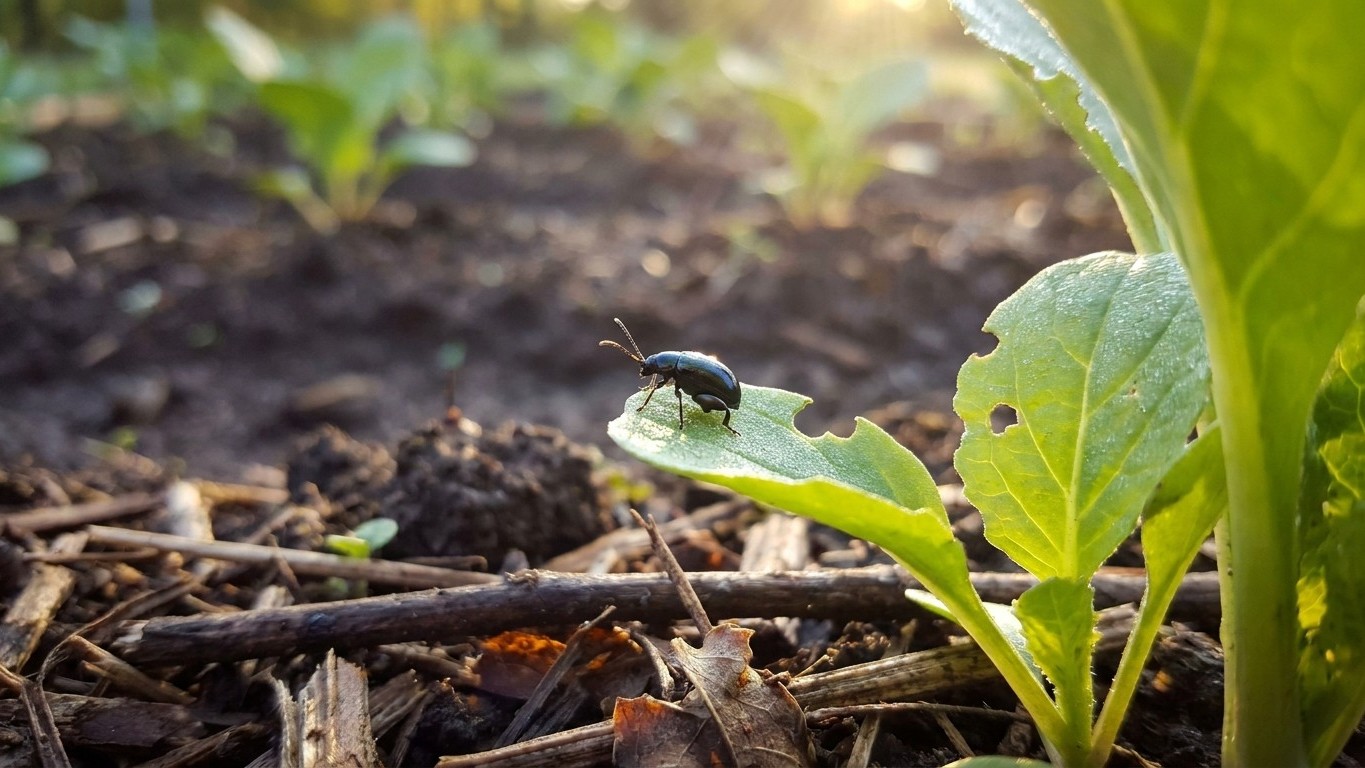

Flea beetles show up in Maryland gardens the moment soil temperatures climb past 50°F, which usually lands somewhere between late March and mid-April depending on where you sit in the state. They stop being a problem when three things happen together: cooler fall temperatures arrive, plants mature past their vulnerable seedling stage, and gardeners intervene early with row covers or targeted treatments rather than waiting for damage to spread.
That timing window matters more than most people think. A flea beetle infestation that hits in April looks nothing like one that hits in August, and the fixes aren’t identical either. Maryland’s mix of humid Chesapeake lowlands, cooler western mountains, and hot Eastern Shore farmland creates a patchwork of emergence dates across the state.
When Flea Beetles Actually Show Up in Maryland

Adult flea beetles spend winter tucked into leaf litter, garden debris, and the top few inches of soil near where they fed the previous season. They’re not migrating in from somewhere else. They’re already in your yard, waiting.
Once soil temperatures hold steady above 50°F, those overwintering adults wake up and start feeding almost immediately. In the Baltimore-Washington corridor and Southern Maryland, that typically means late March through early April. Head west into Garrett or Allegany County, where spring lags a couple weeks behind the rest of the state, and you’re often looking at mid-to-late April instead. The Eastern Shore, with its lighter sandy soils that warm faster, sometimes sees activity even earlier.
Maryland’s growing zones run from 6a in the western mountains to 7b and even pockets of 8a along the lower Eastern Shore and near the Chesapeake Bay. That range translates to roughly a three-week spread in when flea beetles first appear from one end of the state to the other. If you garden near Frederick, don’t assume your neighbor’s timeline in Salisbury applies to you.
A Second Wave in Late Summer
Most flea beetle species common to Maryland, including the striped flea beetle and the crucifer flea beetle, complete one to two generations per year. The first generation feeds hard in spring, lays eggs in the soil near host plants, and by midsummer a new batch of adults emerges. This second wave typically shows up in August and September, right when fall brassicas like kale, collards, and turnips are just getting started.
This is the wave that catches people off guard. Gardeners protect their spring seedlings, relax once June arrives, and then watch their fall planting get shredded in early September. The eggplant flea beetle in particular tends to build up numbers through the season, so late-summer damage on eggplant is often worse than what showed up in May.
Which Maryland Crops Take the Hardest Hit
Flea beetles aren’t picky in the sense that they’ll sample almost anything green, but a handful of Maryland garden staples consistently draw the worst damage.
- Eggplant, which the eggplant flea beetle treats as a primary host and will attack from transplant through harvest
- Brassicas across the board: cabbage, broccoli, kale, collards, radish, and turnip, all favored by crucifer flea beetles
- Tomato and pepper seedlings, especially in the first two to three weeks after transplanting
- Potato foliage, where flea beetle feeding can open the door to secondary fungal infections
- Corn seedlings, though damage here tends to be cosmetic unless populations are unusually heavy
Eggplant deserves special attention because it’s disproportionately popular in Maryland home gardens and disproportionately vulnerable. A young eggplant transplant can go from healthy to riddled with holes in under a week if flea beetle numbers are high and no protection is in place.
How to Recognize the Damage
Flea beetle feeding leaves a signature that’s hard to confuse with anything else once you’ve seen it: small, round to irregular holes scattered across leaves, often described as a “shotgun” or “shot-hole” pattern. The holes rarely go all the way through on tougher leaves; instead you get a papery, translucent window where the beetle chewed through the surface layer but left the opposite side intact.
The insects themselves are tiny, usually under an eighth of an inch, dark or metallic in color depending on species, and they earn their name honestly. Disturb a plant and they don’t fly away so much as spring several inches in a single jump, which is often the first clue gardeners get before they even spot the damage.
Seedlings and young transplants show the effects fastest and worst. A mature, established plant with a full canopy can shrug off moderate flea beetle feeding without much yield impact. A three-week-old brassica seedling can be killed outright, since the growing point and few available leaves are exactly what the beetles target first.
Telling Flea Beetle Damage From Other Culprits
Slugs leave larger, irregular holes with slime trails and prefer damp, low-light conditions. Cabbage worms and other caterpillars chew from the leaf edges inward and leave visible frass. Flea beetles are the ones responsible for that fine, evenly distributed peppering across the whole leaf surface, and they’re active during the day, which makes them relatively easy to catch in the act if you check plants in morning sun.
What Actually Stops Flea beetles in Maryland Conditions
Timing beats reaction every time with this pest. Because adults emerge predictably once soil warms, the most effective control window opens before you ever see a hole in a leaf.
Floating row covers installed immediately after transplanting or seeding remain the single most reliable physical barrier. Since Maryland’s first flea beetle wave typically hits in late March through April, covers should go on at planting time and stay sealed at the edges with soil or landscape staples. Remove them once plants are large enough to tolerate light feeding, or when flowering crops need pollinator access, whichever comes first for that particular vegetable.
Delayed planting works as a low-effort alternative for crops that tolerate it. Pushing eggplant or brassica transplants out by two to three weeks past the earliest safe date means the first generation of hungry adults has already moved on or died back somewhat by the time your seedlings are in the ground. This won’t help with the August generation, so fall brassicas still need their own protection plan.
Cultural Controls That Reduce Numbers Long-Term
Fall garden cleanup matters more for flea beetles than for almost any other common Maryland pest, since adults overwinter directly in leftover plant debris and loose soil near where they fed. Clearing spent brassica and eggplant plants at season’s end, rather than leaving them to break down over winter, removes a meaningful chunk of the overwintering population before it gets the chance to wake up in spring.
Crop rotation helps for the same reason. Moving eggplant and brassica plantings to a different section of the garden each year, ideally at least 30 feet from the previous spot, forces newly emerged adults to travel farther to find a host, which reduces the speed and severity of early-season damage.
Trap cropping has real research support too. Planting a sacrificial row of radish or mustard, both of which flea beetles find intensely attractive, a short distance from your main brassica or eggplant crop can pull feeding pressure away from the plants you actually want to harvest. The trap crop gets sacrificed; the main planting gets a pass.
For active infestations that have already crossed the threshold where cultural controls aren’t enough, targeted treatments applied directly to affected foliage in the early morning, when beetles are most active and exposed, tend to work better than blanket applications timed for convenience. Products containing spinosad or pyrethrin are commonly used by home gardeners for this pest, and Kaolin clay applied as a foliar spray creates a physical barrier that discourages feeding without relying on an active toxin. The University of Maryland Extension service publishes region-specific pest guidance and is worth checking for updated recommendations each season, since approved products and thresholds shift over time.
One detail that surprises a lot of Maryland gardeners: flea beetle pressure tends to run heavier on the Eastern Shore and in Southern Maryland than in the cooler western counties, largely because those regions warm earlier and stay warm longer, giving the pest more time to complete a second generation before frost shuts things down. A gardener in Cumberland dealing with a single spring wave is fighting a fundamentally different battle than one in St. Mary’s County managing both a spring and a late-summer generation in the same season.
Related guides
- Flea beetles in Pennsylvania: When It Shows Up and What Stops It
- Flea beetles in West Virginia: When It Shows Up and What Stops It
- Flea beetles in Michigan: When It Shows Up and What Stops It
- Flea beetles in New Hampshire: When It Shows Up and What Stops It
- Squash vine borer in Maryland
- Box tree moth in Maryland
- Flea beetles in Colorado: When It Shows Up and What Stops It
- Flea beetles in Utah: When It Shows Up and What Stops It