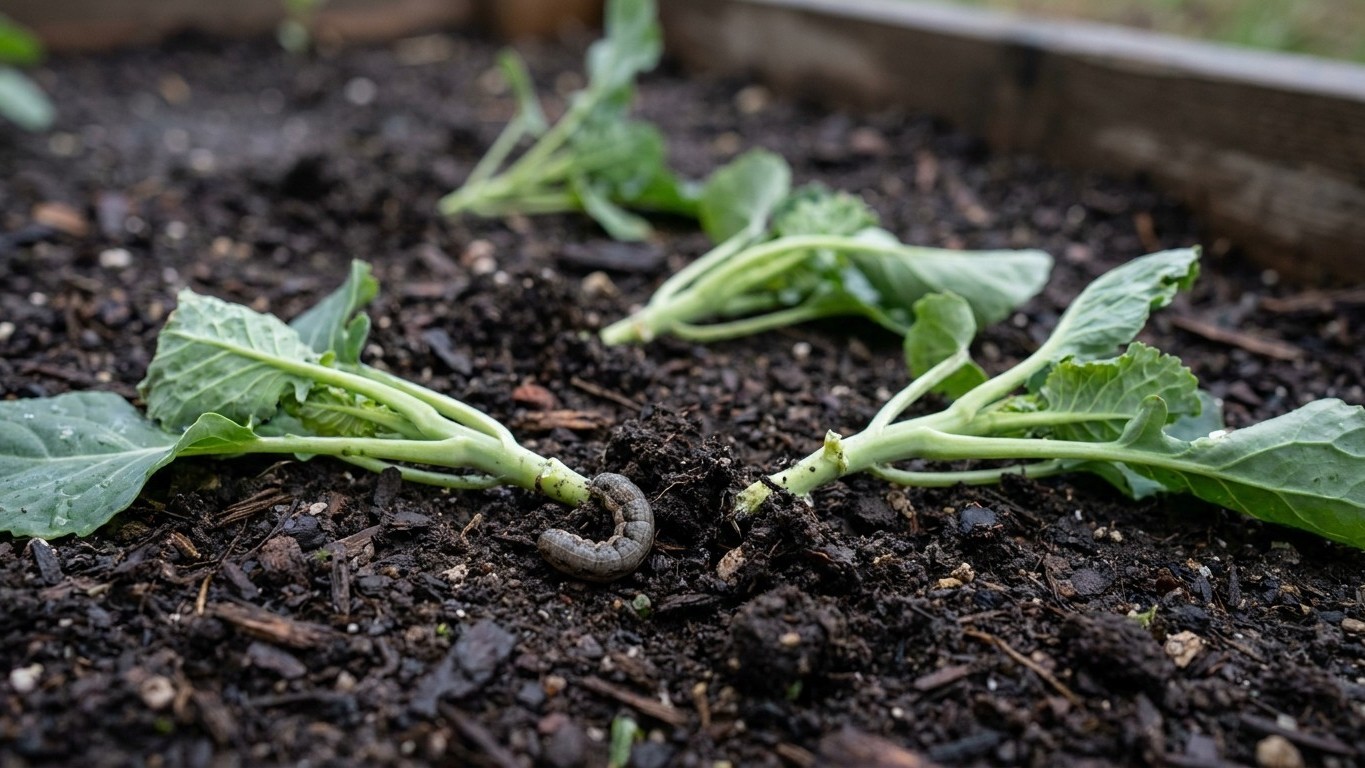

Cutworms show up in Colorado gardens in spring, as soil warms enough for overwintering larvae to start feeding at night on young transplants. There’s no single date to circle on the calendar. The window runs from roughly the time you set out tomato and pepper starts through early summer, then tapers as larvae pupate and the damage window closes for the season.
The weeks to watch

Cutworms do their worst work in the first six to eight weeks after spring transplants go into the ground, which in most of Colorado means April through June. That’s the plain answer. The finer point is that Colorado State University Extension’s PlantTalk Colorado, which does publish seasonal windows for cabbage flea beetles (worst in June), squash bugs (egg-laying mid-June, a second wave late summer) and spider mites (peaking in the hot, dry stretch of summer), doesn’t name a specific week for cutworms. There’s no published local flight or hatch date to quote here. What’s known instead is the general biology of the insect, and that pattern holds well enough to plan around.
One generation, then mostly gone
Unlike squash bugs or corn earworm, which build a second generation or reinvade later in the season, cutworms in home gardens are mostly a one-shot spring problem. The larvae that survive winter in the soil or in plant debris wake up as the ground warms, feed hard for several weeks while transplants are still small and tender, then pupate and drop out of the picture. By midsummer, established plants have usually outgrown the vulnerable stage, and cutworm damage on mature stalks is rare.
Reading the calendar from your last frost

The date a Colorado gardener actually plans around isn’t a pest calendar at all. It’s the last spring frost. For the Denver area, NOAA’s 30-year climate normals put that window at May 1 to May 11 (32°F freeze probability band), based on station data at 5,280 feet on the plains. Cutworms don’t read a calendar either. They respond to soil temperature, so a warm March pushes larval activity earlier and a cold, wet April delays it. The frost date is a normal, not a promise.
- Start with your local last-frost window (May 1 to May 11 for the Denver metro area).
- Add roughly two to three weeks after transplanting, which is when gardeners commonly see the first cut seedlings while soil is still cool near the surface.
Run that math and the highest-risk stretch for a Denver-area garden lands somewhere in mid-May to early June. Mountain towns and the western slope shift the whole sequence later and compress it into a shorter season, since frost risk there can extend into July.
What it attacks, and what the damage looks like

The symptom almost always shows up before the insect does. A gardener walks out to find a young plant lying flat, severed cleanly at or just below the soil line, sometimes with the top part still green and untouched a few inches away. That’s the signature: not chewed leaves, not holes, but a stem cut like scissors got to it overnight. It’s the larval stage doing the damage, feeding after dark and hiding in the top inch of soil during the day, which is why the culprit is rarely seen and treatments aimed at flying adults don’t help once the cutting has started.
Crops most at risk are young transplants and direct-seeded vegetables in that vulnerable first month:
- Tomatoes and peppers
- Cabbage, broccoli, and other cole crops
- Sweet corn seedlings
- Beans
- Young cucurbit transplants (squash, cucumbers, melons)
Once stems thicken past the seedling stage, cutworms mostly leave plants alone, which is why the same garden can lose a tray of transplants in May and see no further damage by July.
How Colorado sits in this pest’s range

Cutworms aren’t a regional specialty. Multiple species, including black cutworm, variegated cutworm, and army cutworm, range across nearly the entire country, and Colorado sits well within that range rather than near an edge of it. That matters for how a gardener should read the risk: presence isn’t in question anywhere in the state. What changes from one part of Colorado to another is timing, not whether the pest shows up at all.
A Denver-area garden at 5,280 feet, a high-mountain garden that still risks frost in July, and a western-slope orchard valley all deal with the same insect on different schedules, because soil warms at different rates at different elevations. No neighboring state’s data stands in for Colorado’s own here. CSU Extension covers the pest for gardeners statewide, but the effective planning date still has to come from a gardener’s own local frost normal, not a single number for “Colorado” as a whole.
What actually works against it

Cheapest and most effective first, most effort last:
- Delay transplanting by a week or two if the spring has been slow to warm. Larvae are most active on cool, damp soil early in the season; waiting lets both the soil and the plant stem toughen up before exposure.
- Install stem collars at transplant time, cardboard tubes, tin cans with both ends cut out, or paper cups work fine, pushed an inch into the soil and standing an inch or two above ground. The larvae feed right at the soil line, so a physical barrier there blocks access. This only works if it’s in place before damage starts; once a stem is already cut, a collar does nothing.
- Hand-pick at night with a flashlight. Cutworm larvae curl into a tight C-shape when disturbed and hide just under the soil surface by day, so an evening check around damaged plants often turns them up directly.
- Clear garden debris and weeds in fall. Removing plant litter takes away overwintering sites and egg-laying spots, cutting down on the population that emerges the following spring.
- Till or turn the soil before spring planting. Disturbing overwintering larvae exposes them to cold and to birds, reducing numbers before transplants ever go in.
Home remedies like diatomaceous earth barriers around stems are common in gardening circles, sold on the idea that the abrasive powder damages soft-bodied larvae. Field trials on its effectiveness against cutworms are inconclusive, and rain or irrigation washes the barrier away fast enough that it needs constant reapplication to matter. None of these measures reverse damage already done. Once a stem is severed, that plant is finished; everything on this list is prevention, not rescue.
Common questions
Do cutworms come back after cutting one plant?
A single larva can cut down several seedlings in a night before it’s done feeding, so losing more than one plant in a row is common. It doesn’t mean an infestation is spreading across the whole garden; it usually means one or two larvae are working a small area.
Are cutworms and armyworms the same insect?
No. They’re related moth larvae and can look similar, but armyworms feed above ground on foliage in groups, while cutworms feed alone at the soil line and sever stems rather than skeletonizing leaves.
Do cutworms bother established, mature plants?
Rarely. Once a stem thickens past the seedling stage, usually within a month of transplanting, cutworms lose the ability to sever it and largely move on, which is why the damage window is short and concentrated in spring.