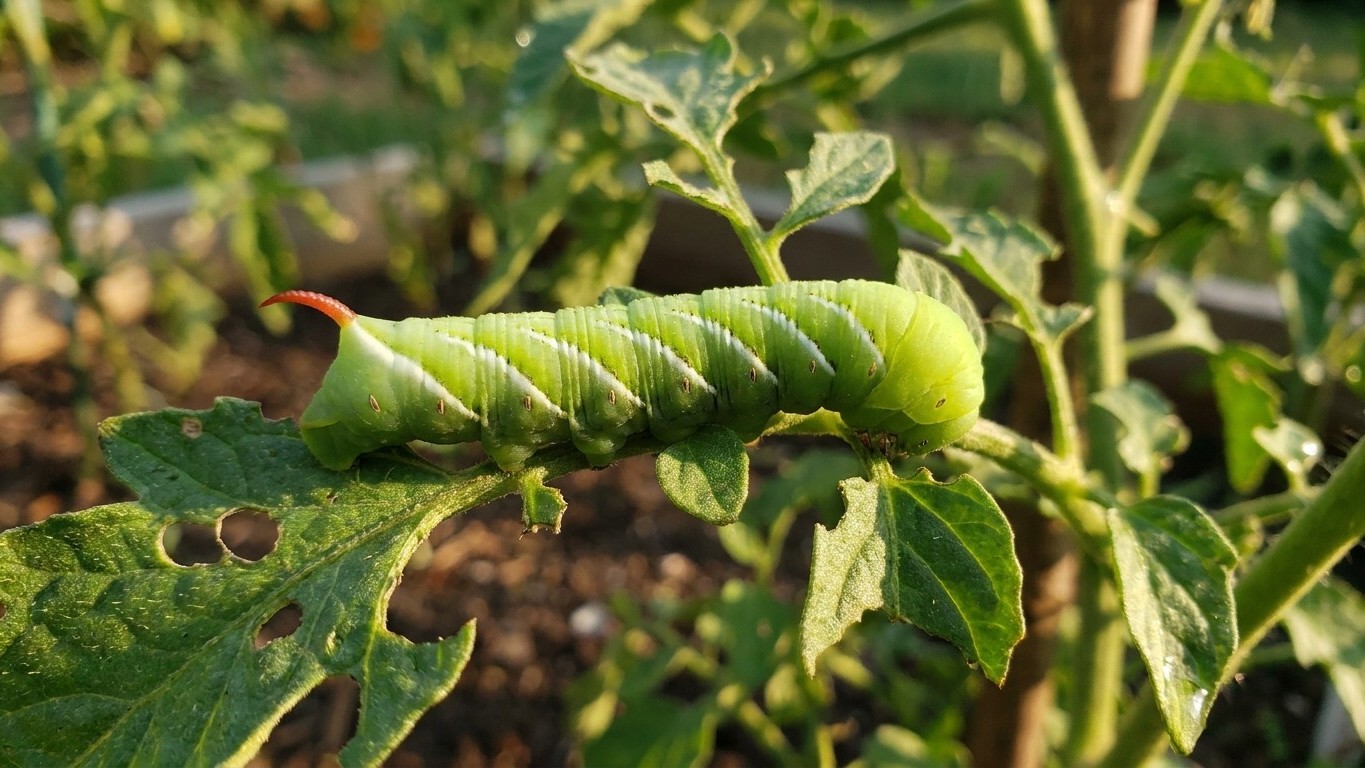

Tobacco hornworms show up in Missouri gardens from late June through September, with the heaviest feeding damage typically hitting tomato, pepper, and eggplant plants in August as the second generation of caterpillars matures. The fastest way to stop them is a two-step approach: handpick what you can see, then treat remaining foliage with a Bacillus thuringiensis (Bt) spray, which targets caterpillars without harming bees or other pollinators.
Tobacco Hornworm vs. Tomato Hornworm: Telling Them Apart in Missouri

Here’s the twist most Missouri gardeners don’t know: the caterpillar chewing through your tomato plants is more likely a tomato hornworm (Manduca quinquemaculata) than a true tobacco hornworm (Manduca sexta). Both species live in the state, both attack the same plants, and both look enormous and alarming. But they’re not identical.
The tobacco hornworm has seven diagonal white stripes running down each side and a curved horn that’s usually red or orange. The tomato hornworm has eight V-shaped white markings and a horn that’s typically black or dark blue. If you’re staring at a four-inch green caterpillar and trying to decide which one you’ve got, flip it toward the light and check the horn color first. That single detail settles it faster than counting stripes.
Adult tobacco hornworms become the Carolina sphinx moth, a large gray-brown moth with a wingspan that can stretch close to five inches. These moths fly at dusk and are frequently mistaken for hummingbirds as they hover at flowers, drinking nectar through a long proboscis. If you’ve ever seen a “hummingbird” feeding on your petunias after sunset, there’s a decent chance it was actually this moth.
When Tobacco Hornworms Appear in Missouri
Missouri’s climate supports two generations of hornworms most years. The first wave of moths emerges from overwintered pupae in late May or June, once soil temperatures warm consistently. Those moths lay eggs on host plant leaves, and the resulting caterpillars feed through late June and July before dropping to the soil to pupate again.
A second generation of moths emerges in late July or August, producing the caterpillars that cause the most visible damage in home gardens, usually peaking between mid-August and mid-September. This is why so many gardeners feel like hornworms “appear out of nowhere” right when tomato plants are loaded with fruit. The insects were there all along, just smaller and harder to spot until they reach their full size in the final week or two before pupation.
Warmer, longer growing seasons in southern and central Missouri sometimes allow a partial third generation, though this is inconsistent and depends heavily on how early spring warmth arrives. Gardeners in the northern part of the state, closer to Iowa, generally see a cleaner two-generation cycle with less late-season pressure.
What Tobacco Hornworms Eat and Why They Do So Much Damage Fast
Tobacco hornworms feed exclusively on plants in the nightshade family. In Missouri gardens, that means tomatoes, peppers, eggplant, and potatoes are all fair game, along with tobacco where it’s still grown commercially. They’ll also feed on wild relatives like jimsonweed and horsenettle, two common weeds along fence rows and field edges that can serve as a reservoir population between garden seasons.
A single hornworm can strip a tomato branch of leaves in a day or two once it reaches full size, which is typically three to four inches long. The damage looks worse than it usually is agriculturally speaking. Established, healthy tomato plants can lose a fair amount of foliage and still produce a decent harvest, though heavy infestations on young or stressed plants can stunt growth and reduce yield noticeably.
The bigger issue for many gardeners isn’t the leaf loss. It’s the caterpillars occasionally feeding directly on green fruit, chewing round holes that ruin tomatoes for fresh eating even if the plant survives fine.
Natural Predators: The Detail Most Gardeners Get Wrong
If you find a hornworm covered in what looks like small white grains of rice sticking up from its back, leave it alone. Those aren’t eggs the hornworm laid. They’re the cocoons of a parasitic braconid wasp that has already laid eggs inside the caterpillar’s body. The wasp larvae fed internally, then emerged to pupate on the surface, and the hornworm is essentially a dead insect walking at that point.
Killing a parasitized hornworm interrupts a natural control cycle that Missouri gardeners benefit from every season. Those wasps will emerge, mate, and go hunt down more hornworms in the same yard. Extension entomologists in the Midwest generally recommend leaving parasitized caterpillars in place, sometimes even moving them to an out-of-the-way spot in the garden, rather than destroying them.
Birds also take a real bite out of hornworm populations. Cardinals, robins, and several other backyard species will pick caterpillars off plants, particularly smaller instars before they reach full size. Gardens with mature trees and shrubs nearby, which support more resident bird activity, tend to see somewhat lower hornworm pressure than bare, exposed vegetable plots.
Practical Control Methods for Missouri Gardens
Handpicking remains the most reliable first step, and it works better than most people expect once they know what to look for. Hornworms are surprisingly well camouflaged against green foliage, so check plants in early morning or evening light, when the angle makes the caterpillar’s shadow more visible against the stem. Frass, the dark green or black droppings that collect on lower leaves, is often the first clue that a hornworm is feeding somewhere above.
Bacillus thuringiensis, sold under several brand names as a biological caterpillar control, works well against hornworms when applied while they’re still small. It needs to be eaten to work, so coverage on the leaves the caterpillar is actively feeding on matters more than blanket spraying the whole plant. Reapplication after rain is usually necessary since Bt breaks down quickly in sunlight and moisture.
A few other steps make a real difference over a full season:
- Tilling or turning garden soil in fall disrupts overwintering pupae before they can emerge the following spring.
- Removing jimsonweed and horsenettle from field edges and fence rows reduces the wild host population nearby.
- Rotating tomato, pepper, and eggplant beds to a different part of the yard each year lowers the odds that emerging moths find host plants right where last year’s pupae are buried.
- Row covers on young transplants block egg-laying moths early in the season, though covers need to come off once plants flower and require pollinator access.
Chemical insecticides labeled for caterpillar control on vegetables will kill hornworms, but they also kill the parasitic wasps and other beneficial insects that provide free control in following seasons. For a backyard garden, that tradeoff rarely makes sense given how effective handpicking and Bt already are.
A Detail Worth Knowing Before You Spray Anything
Missouri’s two-generation cycle means a garden that looked clean in July can suddenly show heavy hornworm damage in late August, right as tomato harvest peaks. Checking plants weekly through the second half of summer, rather than assuming spring vigilance was enough, catches that second wave before it strips a plant bare. The caterpillars grow fast in their final stage, sometimes doubling in size within 48 hours, so a plant that looked fine on Monday can lose several leaves by Wednesday.