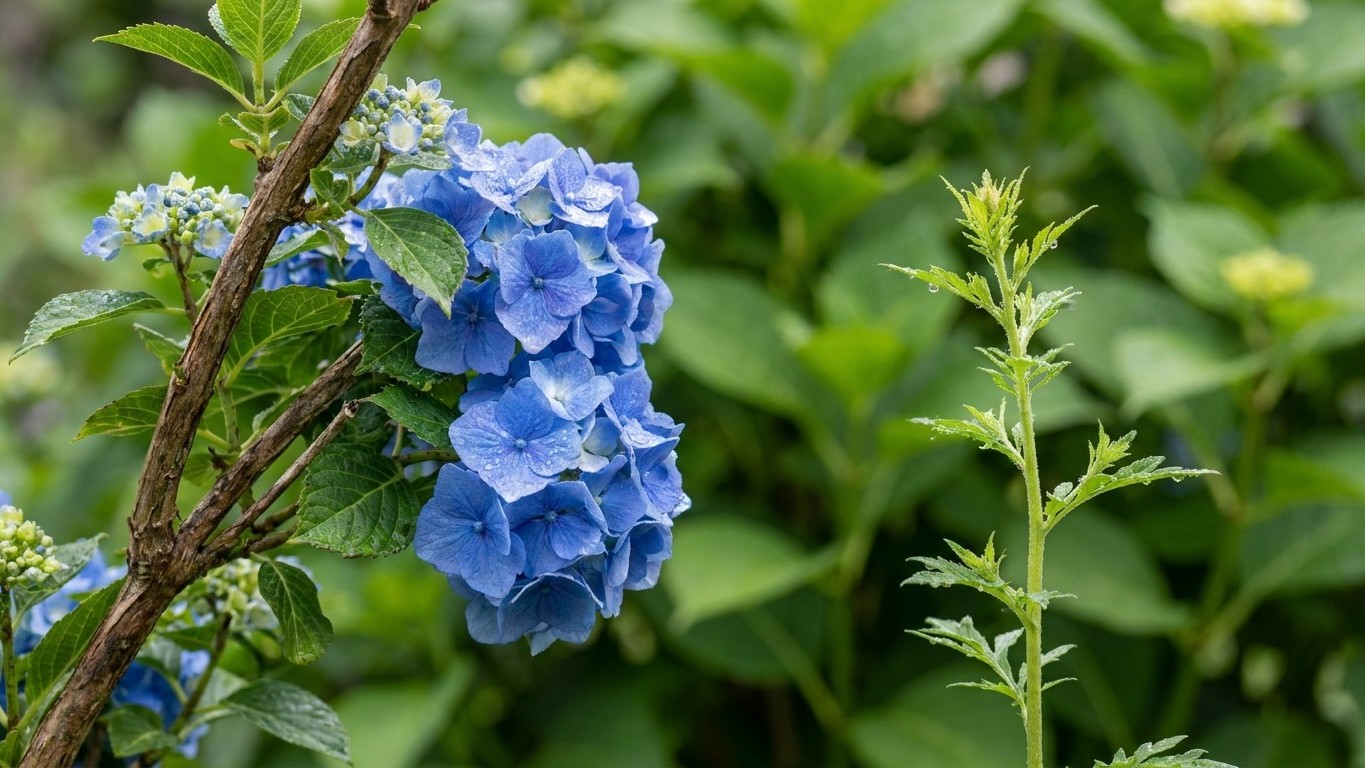

In most of Alabama, hydrangeas that bloom on new wood, like panicle types (Hydrangea paniculata) and smooth hydrangeas (Hydrangea arborescens), come through winter without issue across the state’s 7a to 9a hardiness range. Bigleaf hydrangeas that flower only on old wood are the ones winter actually damages, because a late frost inside the reference city’s typical spring frost window can wipe out the buds before they ever open.
What this comes down to in Alabama
The reference station for this analysis, sited near Birmingham, shows a last spring frost falling somewhere between March 19 and April 3, and a first fall frost between November 2 and November 16. That gap matters less for whether a hydrangea survives winter and more for whether it blooms. A plant can be perfectly cold-hardy for Alabama’s 7a-9a zone range and still show up bare in June, because the flower buds, not the shrub itself, are what a late frost kills.
Old-wood bloomers set their flower buds the previous summer and carry them through winter dormant. If a warm stretch in late winter coaxes those buds into early swelling, a frost landing anywhere in that March 19 to April 3 window can burn them off entirely, even though the roots and stems survive fine. New-wood bloomers sidestep the whole problem: they form buds on the growth that comes up after the last frost, so the exact date barely matters to them.
Six cultivars below are ordered from the most reliably winter-hardy in Alabama down to the one most exposed to that late-frost gap. That order is the practical answer to which survives here.
Annabelle
Hydrangea arborescens ‘Annabelle’ is rated hardy to USDA zone 3, well past the cold end of Alabama’s 7a-9a range. It blooms entirely on new wood, so even a hard winter that kills stems back to the ground still produces a full flush of white blooms by summer.
Limelight
This panicle hydrangea is rated to zone 3 as well and blooms on new wood exclusively. It tolerates the freeze-thaw swings common in north Alabama without any bud loss, since there are no old buds at risk to begin with.
Little Lime
A compact sibling of Limelight, also hardy to zone 3 and also a new-wood bloomer. Its smaller size makes it a fit for tighter yards, but its winter performance across the state is identical to its taller relative: reliable regardless of when the last frost lands.
Alice
This oakleaf hydrangea (Hydrangea quercifolia) is rated to zone 5 and blooms on old wood, yet it is native to the Southeast and its bud set is timed to the region’s typical frost pattern. It handles Alabama’s frost window far better than bigleaf types, though a late freeze can still trim some bloom in a rough year.
Endless Summer
A bigleaf hydrangea (Hydrangea macrophylla) rated to zone 4, but its trick is blooming on both old and new wood. If a late frost takes the old-wood buds, the new-wood buds still deliver a bloom later in the season, just not the earlier one.
Nikko Blue
Rated to zone 6, this classic bigleaf blooms on old wood only. It is the cultivar most exposed to Alabama’s late-frost window, because a warm February stretch can trigger early bud swelling well ahead of the March 19 to April 3 close, leaving no backup bloom if frost follows.
Working it out for your own garden
The reasoning here is not about counting days to maturity, since hydrangeas aren’t annual crops. It’s about matching a cultivar’s bud biology to the reference frost window and then adjusting for how much colder or warmer your own yard runs.
Start with the fall side. Old-wood buds form on a bigleaf hydrangea’s stems roughly around the first-frost window itself, November 2 to November 16, and then sit dormant through winter. Where the arithmetic gets you into trouble is the following spring: if a warm spell pushes those buds into early growth weeks before the last frost date closes on April 3, and a normal frost then arrives anywhere in the March 19 to April 3 band, the buds that already broke are the ones that die. Subtract nothing precise here; the point is that the earlier a mild winter lets buds swell, the wider the exposure gap becomes before that window shuts.
Run it against Limelight first. As a new-wood bloomer, its flowering wood grows out after April 3, whatever the actual frost date turns out to be that year. There is no bud sitting exposed during the window, so the plant blooms on schedule almost every year, cold spring or not.
Now run the same test against Nikko Blue. Its buds are already formed by winter’s start. A mild January or February, not unusual in the warmer parts of Alabama’s zone range, can bring those buds out of dormancy a month or more before the window closes. A typical frost landing anywhere between March 19 and April 3, the same frost Limelight shrugs off, catches Nikko Blue’s buds already active and kills the season’s bloom. The shrub survives. The flowers do not.
That comparison is the method: check whether a cultivar blooms on new wood, old wood, or both, then weigh how much of its bud-forming and bud-breaking cycle falls inside or ahead of the reference frost window for your area.
What changes across the state
Alabama’s 7a-9a hardiness range spans a real difference between its northern corner and its Gulf coastline, and that difference changes how much risk an old-wood bloomer carries. The northern part of the state, closer to the Appalachian foothills and at higher elevation, tends to hold onto colder winter minimums and sees its last frost arrive later than the Birmingham reference figure suggests. That later frost date narrows the gap for any bud that breaks early, but the colder winter itself also means fewer of those false-spring warm spells that trigger premature bud swelling in the first place.
Move south toward the coast and the pattern flips. Warmer winters there mean old-wood buds are more likely to break dormancy early during a mild stretch, and the milder overall climate makes it tempting to plant bigleaf cultivars rated for zone 8 or 9. But even in that warmer zone, a late frost can still occur, and a bud that broke a month earlier because of the milder winter is more exposed, not less.
Distance from the Gulf also moderates temperature swings generally, smoothing out the sharp freeze-thaw cycles that stress old wood the most. Inland and upland gardens, by contrast, see more of those swings, and elevation adds another layer on top of that, since even a few hundred feet of elevation gain inside north Alabama can shift bud timing and frost exposure noticeably.
The mistakes this state punishes
The most common one is pruning a bigleaf hydrangea in late fall or winter thinking it needs tidying up like other shrubs. For an old-wood bloomer, that pruning removes the very buds that were supposed to open the next spring, and no amount of good weather afterward brings them back.
A second mistake is planting a cultivar rated for the warm end of Alabama’s zone range into a colder northern yard, assuming the whole state behaves like the reference city. A bigleaf variety that performs fine near the coast can lose its bloom most years once planted at higher elevation or further inland, where the last frost tends to run later than the Birmingham figures show.
The third is treating a mild winter as good news. A warm January stretch that feels like an early spring is exactly what pushes old-wood buds into early growth, setting them up to be killed by a completely ordinary frost landing inside the March 19 to April 3 window. The fix in all three cases is the same: favor new-wood or reblooming cultivars in any spot with a history of erratic winters, and leave old wood alone until well after the last frost has passed for the season.
Checking this against your county
The frost window and hardiness figures here come from one reference station near Birmingham, and they are a starting point, not a guarantee for every yard in Alabama. Local frost dates, elevation, and microclimate can shift both numbers by a week or two in either direction. Before locking in a cultivar choice, check with your county office of the Alabama Cooperative Extension System, which tracks local conditions and can confirm whether a specific hydrangea variety holds up in your part of the state.
Common questions
Can bigleaf hydrangeas survive winter in Alabama?
The plant itself generally survives across the state’s 7a-9a range. What’s at risk is the bloom, since old-wood buds can be killed by a late frost even when the shrub comes through winter unharmed.
What’s the most cold-hardy hydrangea for Alabama?
Smooth hydrangea (‘Annabelle’) and panicle hydrangeas (‘Limelight’, ‘Little Lime’) are the most reliable, since they bloom on new wood and are rated to USDA zone 3, well below anything Alabama sees.
Do hydrangeas need winter protection in Alabama?
New-wood bloomers generally don’t. Old-wood bloomers benefit from a layer of mulch over the root zone and, in colder northern spots, some protection over the stems to slow early bud break during warm winter stretches.
Why did my hydrangea not bloom this year in Alabama?
For an old-wood bloomer, the most common cause is a late frost hitting buds that had already broken dormancy during a mild spell, or fall/winter pruning that removed the buds before they ever had a chance to open.