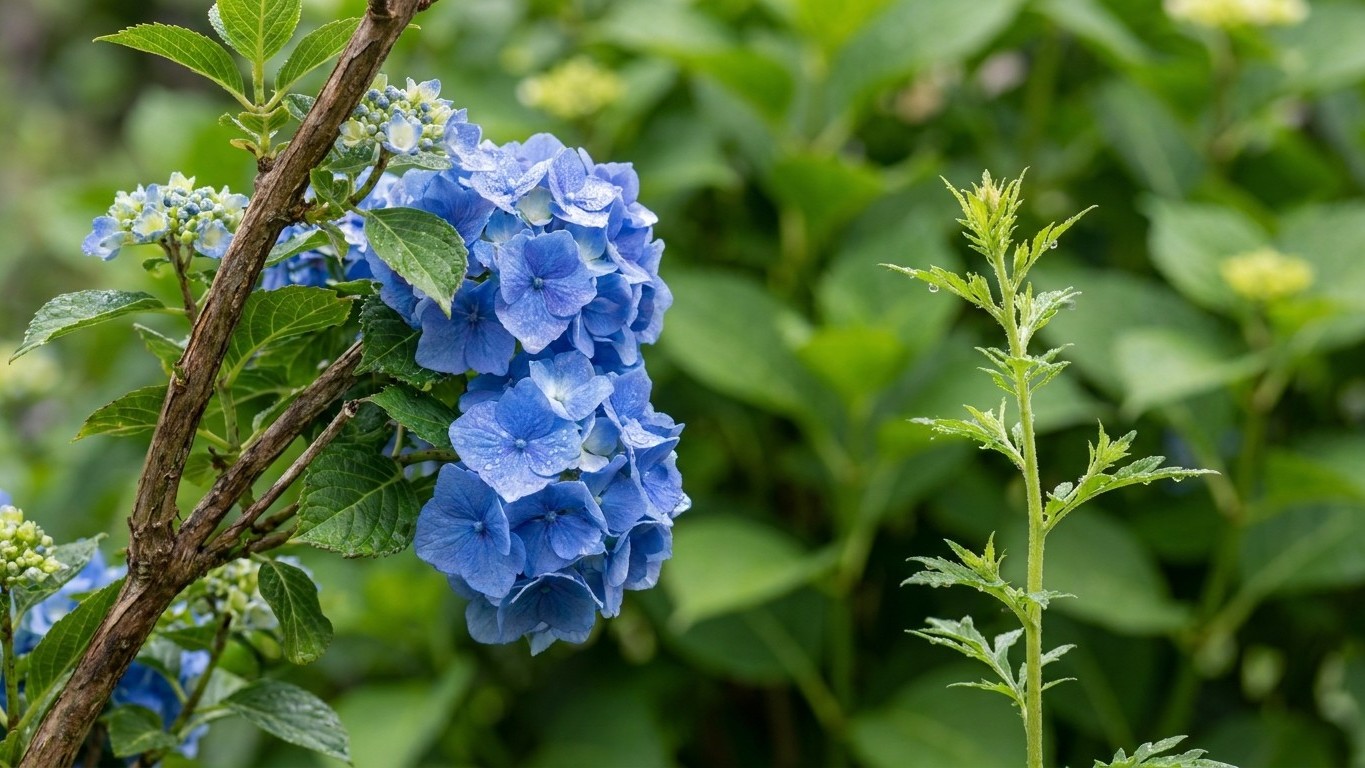

Alabama winters rarely kill a hydrangea plant outright. The real threat is timing: a mild stretch that fools the shrub into pushing new growth, followed by a frost that burns those buds off before they ever open. Protection here is less about insulating against brutal cold and more about managing a freeze window that runs, near Birmingham, from March 19 to April 3 in spring and comes back November 2 to November 16 in fall.
What this comes down to in Alabama
Near Birmingham, where NOAA’s National Centers for Environmental Information keeps the Alabama station used for these Climate Normals (USW00003856), the last spring freeze falls somewhere between March 19 and April 3, and the first fall freeze arrives between November 2 and November 16. That six-and-a-half-month gap is generous by national standards, and it’s the reason Alabama gardeners spend far less effort protecting Hydrangeas from a killing winter than gardeners in Ohio or Minnesota do. The state’s problem isn’t survival. It’s bud loss.
Most old-fashioned bigleaf hydrangeas set their flower buds on the previous year’s wood, in late summer and fall. Those buds sit through winter dormant, then swell as days lengthen. If a warm February convinces the plant those buds are safe to open, and then a frost lands inside that March 19 to April 3 window (or later, since the window is a 30-70% probability band and not a guarantee), the open or swelling buds die. The shrub survives. It just doesn’t bloom that year, or blooms only from new growth low on the stem.
The USDA Plant Hardiness Zone Map, built on the average annual extreme minimum temperature, places Alabama across zones 7a to 9a. That’s nearly two full zones of range in one state, and it matters more for whether a plant survives an unusually harsh winter than for whether it blooms in an ordinary one. A zone 7a winter low is cold enough to occasionally damage stems on marginal hydrangea species, but it’s the frost timing around bud break, not the winter minimum, that decides most seasons’ flower count in Alabama gardens.
Practically, this means the protective work concentrates at two moments: late fall, when a layer of mulch buffers the root zone and crown against the season’s cold snaps, and early spring, when covering emerging buds during a late frost threat inside or just after the March 19 to April 3 window does the actual work of saving that year’s blooms.
Working it out for your own garden
Start from the fall frost window, not the spring one, because fall protection sets up the whole winter. If the first freeze near Birmingham lands November 2 to November 16, mulching two to three weeks ahead of that puts the job in the middle of October to the very start of November. Mulch applied earlier than that, while soil is still warm, does little good and can even encourage rot. Mulch applied after the freeze has already hit has missed its purpose for that particular cold snap, though it’s still worth doing for the freezes still to come.
For spring, work backward from the March 19 to April 3 window rather than from the calendar date you’d like to uncover your plants. Hydrangea buds typically begin visible swelling four to six weeks before a region’s average last frost. Subtract four to six weeks from March 19 to April 3 and you land in roughly the first half of February as the point when buds start becoming vulnerable, well before the frost window itself even opens. That’s the arithmetic that matters: the danger period isn’t the frost date, it’s frost date minus several weeks of bud swell, and it runs right up through the frost window’s late edge, April 3, and sometimes a week or two past it since the window only covers a 30-70% probability band.
| Bloom timing | Where buds form | Winter protection priority |
|---|---|---|
| Old-wood bloomers (many bigleaf types) | Previous year’s stems | High: buds are exposed and vulnerable through the whole frost window |
| New-wood or rebloomer types | Current season’s new growth | Lower: even if old buds are lost, new stems still flower later |
Knowing which type you’re growing changes how much protective effort is worth spending. An old-wood-only shrub caught by a late frost inside that March 19 to April 3 window may skip flowering for the year. A reblooming type, setting buds on new spring growth as well, tends to recover and still put on a show by summer, which is one reason so many Alabama gardeners have shifted toward reblooming cultivars over the past couple of decades. That variety-level decision belongs on this cocon’s varieties page; the point here is simply that your protection plan should match the bloom type you already have in the ground.
What changes across the state
Alabama’s frost timing and winter severity are not the same from Muscle Shoals to Mobile. North Alabama, especially the higher ground of the Appalachian foothills and the Tennessee Valley, sits colder and later in spring than the Birmingham reference figures suggest, sometimes running into zone 7a territory where a hard freeze arrives further into what would otherwise be spring elsewhere in the state. Elevation compounds this: a garden a few hundred feet higher than the valley floor commonly sees its last frost stretch later into the calendar than a garden down the slope, simply because cold air pools in low spots and lingers on high ridges longer into the morning.
South Alabama, closer to the Gulf, runs warmer and lands nearer zone 9a, with a shorter and milder frost season overall. Coastal counties buffered by the Gulf of Mexico rarely see the kind of hard, prolonged freeze that damages hydrangea stems, so protective effort there leans almost entirely toward guarding against the occasional rogue cold snap rather than a real winter threat. The takeaway isn’t a second precise date for either end of the state; it’s that a Birmingham-based frost window should be nudged later in the north and treated as conservative in the deep south, with your own county extension office the only reliable way to know by how much.
The mistakes this state punishes
The costliest mistake in Alabama isn’t neglecting protection altogether, it’s removing it too early after a warm February stretch. A run of 70-degree days convinces gardeners the danger has passed, mulch gets pulled back and any frost cloth comes off, and then a cold snap lands squarely inside that March 19 to April 3 window and burns every bud that had started swelling. The fix is patience: keep protective mulch and any frost covers in place until the window has fully closed for your county, not until the weather simply feels warm.
A second common error is pruning old-wood hydrangeas in late winter or early spring, thinking it tidies the plant before the growing season. That cut removes the very buds that were set the previous fall, and the plant responds with healthy foliage but no flowers that year. Prune old-wood types right after they finish blooming instead, giving the shrub the rest of the growing season to set next year’s buds undisturbed.
The third mistake is planting into soil that’s warmed up after an early spring thaw, without accounting for the frost still likely inside the window. New transplants have no established root system to buffer temperature swings, so a frost that a mature shrub shrugs off can kill a young plant’s top growth entirely. Hold new plantings until the frost window has passed for your specific location, not the calendar date that feels safe.
Checking this against your county
Everything above is anchored to one Alabama weather station, and it is a starting point, not a guarantee for your yard. Elevation, distance from the coast, and even which side of a ridge you garden on can shift these numbers by a week or two in either direction. Before you settle on a protection schedule, call your county extension office or check the Alabama Cooperative Extension System’s own hydrangea guidance at aces.edu for figures adjusted to your part of the state.
Common questions
Do hydrangeas need to be covered every winter in Alabama?
Not every winter, and not for survival in most of the state. Covering matters most in years with an unusually warm late winter followed by a frost landing inside or just past the March 19 to April 3 window, when swelling buds are exposed.
When should I stop worrying about frost in spring?
Near Birmingham, the freeze probability drops off after April 3, based on NOAA’s 1991-2020 Climate Normals for that station. Gardens at higher elevation or further north in the state should expect that safety margin to arrive later.
Does mulch alone protect the flower buds, or just the roots?
Mulch mainly protects the root zone and crown through winter cold. It does little for exposed buds already swelling on stems in early spring; those need direct covering, such as frost cloth, during an active cold snap.
Is Alabama’s hardiness zone range a useful guide for winter protection?
The USDA’s 7a to 9a range for the state, built from the average annual extreme minimum temperature, is useful for judging whether the plant itself might suffer stem damage in a severe winter. It says little about bud loss from a routine spring frost, which is the more common issue for Alabama hydrangea growers.