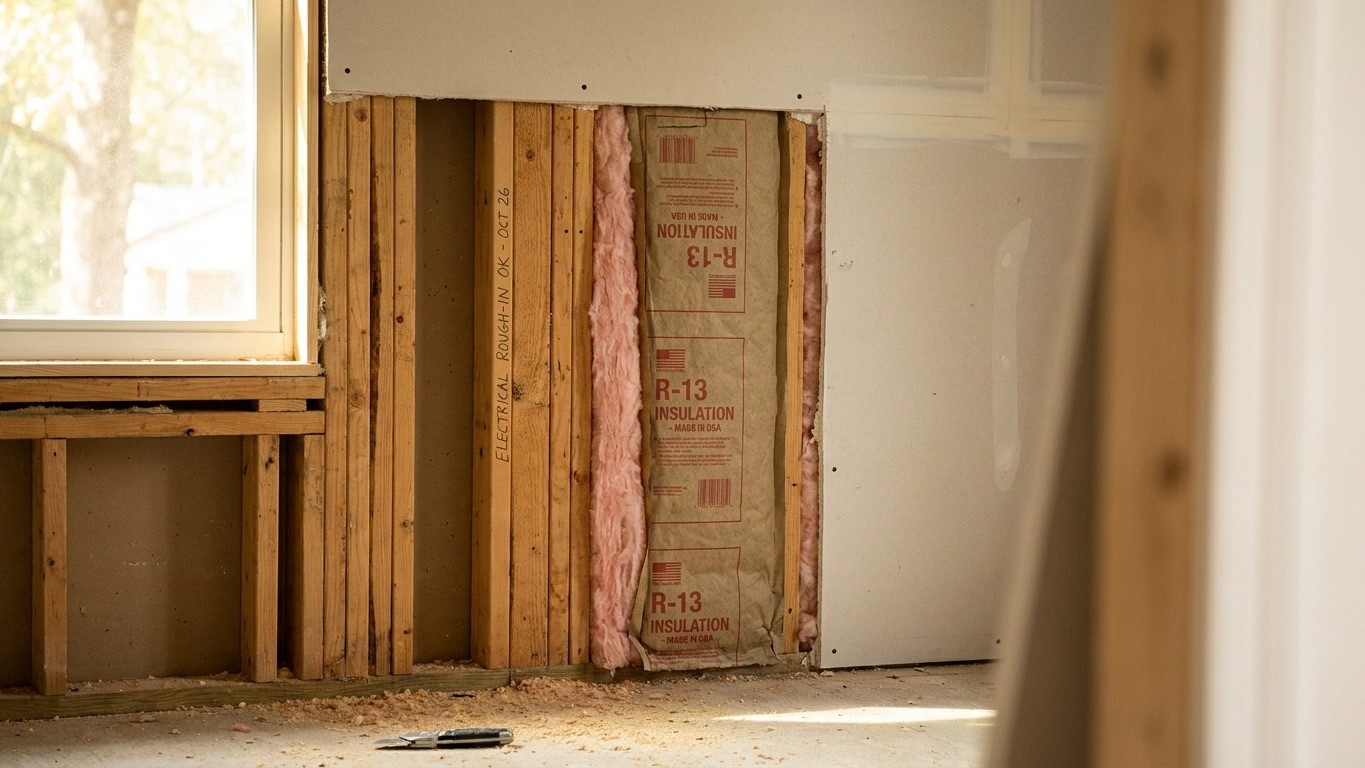

Hawaii sits entirely in IECC Climate Zone 1A, and under the 2021 International Residential Code, a vapor retarder is not required in Climate Zones 1, 2 and 3. That covers every county in the state, from Honolulu to Hilo. No single zone-line splits the islands, which is rare compared with most mainland states.
What the code asks for in Hawaii

Section R702.7 of the 2021 IRC states that a vapor retarder of the class listed in Table R702.7(2) “shall be provided on the interior side of frame walls.” That’s the general rule, written for the country as a whole. But the same section carries four exceptions, and one of them reads: “A vapor retarder shall not be required in Climate Zones 1, 2 and 3.” Since Hawaii’s climate zone fact places the whole state in Zone 1A, with no county exceptions listed in the IECC’s Table R301.1, that exception applies statewide.
Worth being precise about what that exception does and doesn’t do. It removes an obligation. It doesn’t forbid anything. A builder in Kailua isn’t breaking any rule by installing a vapor retarder, and nothing in the code makes one illegal on the islands. What the exception means is that the state’s building departments aren’t required to enforce an interior vapor retarder as a condition of passing inspection on an above-grade frame wall.
That distinction matters because it’s easy to read “not required” as “banned,” and that’s simply not what the code says. It also matters because the exception is climate-specific, not a blanket rule for the whole country. A reader in a state that straddles several zones could have a next-door county under a completely different requirement. Hawaii doesn’t have that complication: one zone, one answer, statewide.
None of this tells an individual homeowner what to put in their own wall. The code gives a floor, not a design manual, and the class of retarder that makes sense for a given assembly depends on the wall’s construction, its cladding, and how moisture moves through it. A wall built with the wrong vapor control doesn’t announce the mistake right away. It shows up years later as rotted framing or blackened sheathing, discovered during a renovation or a termite inspection, long after the drywall went up looking perfectly fine. The only way to know what’s required, or what’s wise, for a specific project is to check with the local building department and the code edition that jurisdiction has actually adopted.
Why the answer is the opposite in a warm climate
Codes don’t treat Hawaii and Minnesota the same because the water isn’t moving in the same direction in those two places. In a cold climate, the warm, moisture-laden air sits inside the house all winter, and a vapor retarder on the interior side of the insulation stops that indoor humidity from reaching the cold sheathing, where it would condense. That’s the textbook case the general rule in R702.7 was written for.
Flip the climate and the physics flips with it. In a warm, humid environment like Hawaii’s, the moisture load comes from outside: humid air pushes inward through the wall assembly, driven by air conditioning that keeps interior surfaces cooler than the outdoor air. If there’s a Class I vapor retarder sitting on the interior side of that wall, it becomes the first cold, impermeable surface the incoming vapor meets. The U.S. Department of Energy’s Building America program puts it directly: “If the wall contains a vapor retarder on the interior side of the insulation, the water vapor will condense on this cool, impermeable surface.” The result, in the DOE’s own words, is “ruined insulation, mold, and structural rot of framing members.”
That’s the mechanism behind the exception, not a bureaucratic quirk. The 2021 IRC doesn’t drop the requirement for Zones 1, 2 and 3 out of leniency. It drops it because an impermeable interior layer in a warm-humid wall works against the building instead of protecting it. The direction water vapor travels through a wall assembly determines where the moisture-blocking layer should go, and in Hawaii that direction is the opposite of what a builder in a cold-winter state is dealing with. Same code, same document, two opposite answers depending on which way the vapor is headed.
The three classes, and why the word matters
“Vapor barrier” gets used loosely, but the code doesn’t talk in terms of barriers versus no barriers. It talks in classes, defined by how much moisture actually moves through the material, measured in perms. Table R702.7(2) sorts common materials into three tiers.
| Class | Example materials | Perm range |
|---|---|---|
| Class I | Sheet polyethylene, nonperforated aluminum foil | 0.1 perm or less |
| Class II | Kraft-faced fiberglass batts, vapor retarder paint | Above 0.1 up to 1.0 perm |
| Class III | Latex or enamel paint | Above 1.0 up to 10.0 perm |
Polyethylene sheeting is only ever a Class I material, and calling it “a vapor barrier” without that label glosses over the entire point of the debate. Nobody actually disagrees about whether a wall needs some kind of vapor control; the disagreement, zone to zone, is about which class belongs on which side of the assembly. Class I in the wrong place in a warm-humid climate is the exact problem the DOE describes above. Class III in the wrong place in a cold climate might not slow interior moisture enough.
Here’s the detail most homeowners miss entirely: ordinary latex or enamel wall paint falls squarely into Class III. Anyone who’s painted an interior wall already has a vapor retarder on it, whether they thought of it that way or not. It’s a mild one, permeable enough to let a wall dry in either direction, but it’s on the list.
One more distinction worth keeping straight: a vapor retarder is not an air barrier. Controlling water vapor diffusion and stopping bulk air leakage are two separate jobs. Some products, like certain rigid foams or specialty membranes, do both at once, but the code treats them as different requirements, and a wall can meet one without meeting the other.
Where the rule stops
The Zone 1, 2, 3 exception is the one that matters for Hawaii specifically, but R702.7 lists it alongside three others that apply everywhere, regardless of climate:
- Basement walls
- The below-grade portion of any wall
- Construction where accumulation, condensation or freezing of moisture will not damage the materials
The basement exception is the one most readers actually run into, even in a state without many basements. The reasoning is worth understanding because it shows up in any below-grade assembly: a concrete or masonry wall in contact with soil holds and releases moisture continuously, sometimes for years, and that wall needs the ability to dry toward the interior when conditions allow it. Sealing that surface with an impermeable interior sheet traps moisture inside the assembly instead of letting it escape, which invites the same kind of rot and mold the DOE describes for warm-climate frame walls above grade. For the full mechanics of that assembly, the basement wall guide on this site walks through it in more detail.
These exceptions aren’t a Hawaii-specific list. They’re written into the same section of the IRC nationwide, and they apply independent of climate zone. What changes state to state, or territory to territory, is which of the exceptions actually comes into play, and that’s where the local zone designation does the work.
Who actually decides, in Hawaii
The IRC is a model code. It becomes law only once a state or local jurisdiction adopts it, sometimes with amendments, sometimes on a lag of a code cycle or more behind the national publication. That gap is exactly why this page can describe what the 2021 IRC says and what the IECC’s zone table shows, but can’t tell an individual homeowner in Kona or Kaneohe what their own building permit will require. The authority that answers that question is the local building department, and specifically the edition of the code that department has actually adopted and is currently enforcing.
This matters more in some places than others, and Hawaii is a useful example of why. The reference station at Honolulu International Airport shows about 0 heating degree days a year against roughly 4,767 cooling degree days, based on NOAA’s 1991-2020 climate normals. Degree days measure demand, not a temperature reading, and a heating figure near zero means there’s essentially no annual heating load driving moisture behavior from the indoor-warm-air side of the equation that colder states deal with. That’s consistent with the whole state landing in Zone 1A and with the code’s decision to drop the interior vapor retarder requirement there.
None of that substitutes for a conversation with the county building department before framing a wall. The code sets a floor and explains the physics behind it, but the class of vapor control that makes sense for a specific wall assembly, cladding type, and construction method is a decision made at the permit counter, not from a table of climate normals. A wall assembled with the wrong vapor control doesn’t fail an inspection on the spot. It fails quietly, inside the wall cavity, and the discovery usually comes years later, during a renovation, a termite inspection, or a moisture problem nobody expected.