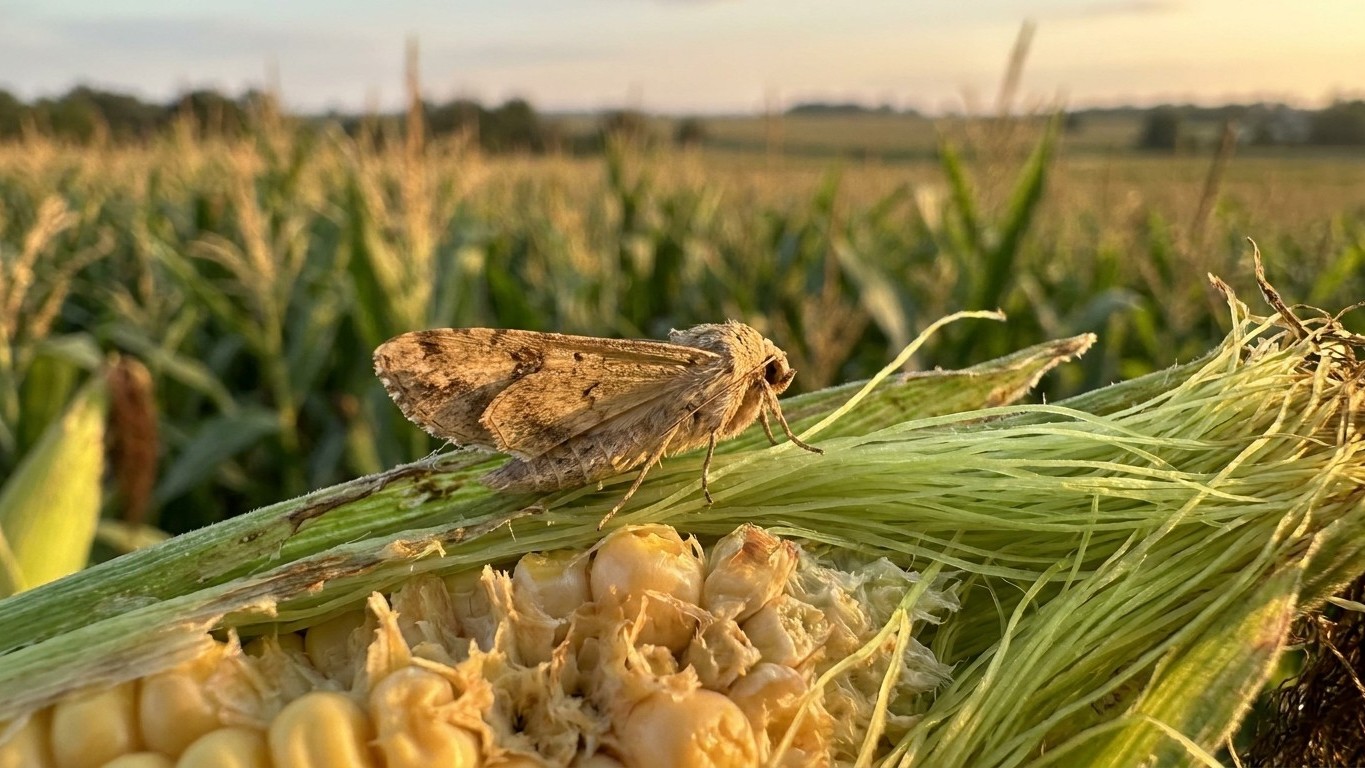

California’s corn patches lose ground to a short, specific list of insects and mollusks, not a long one. Corn earworm moths target fresh silks, aphids and spider mites build up as the plant grows, and snails, slugs, earwigs and cucumber beetles go after seedlings before the stalk toughens up. Stink bugs and leaffooted bugs arrive later, feeding on the developing ear itself. Timing decides who gets a shot at the crop, not the calendar month.
Which pests attack corn in California

UC Agriculture and Natural Resources documents eleven pests for California vegetable gardens: Aphids including melon aphid, Brown garden snail and slugs (Cornu aspersum), Corn earworm (Helicoverpa zea), Cucumber beetles, Earwigs, Leaffooted bugs, Root-knot nematodes, Spider mites, Stink bugs, Tomato hornworm (Manduca sexta and quinquemaculata), and Whiteflies. That’s the full state-level list, and it isn’t corn-specific. It’s what the service tracks across California vegetable gardens as a whole, which means a fair chunk of it has no business near a corn patch.
Tomato hornworm feeds on tomato, pepper and eggplant foliage, all members of the nightshade family. Corn is a grass. There’s no overlap. Whiteflies settle on broadleaf crops like tomato and squash, and corn’s narrow, upright leaves aren’t the surface they colonize, so damage from them on corn is rare at best. Root-knot nematodes have a wide host range in vegetable roots, but corn tolerates them far better than tomatoes or carrots do, so unless soil already carries a heavy population, they’re an unlikely explanation for trouble in a corn bed.
Corn is a grass, not a broadleaf plant, and that single fact rules out tomato hornworm and most whitefly damage. It’s the fastest way to cross two names off the list before spending time chasing the wrong culprit.
That leaves eight pests that genuinely go after corn. Aphids including melon aphid colonize the whorl and the underside of leaves, leaving sticky honeydew behind. Brown garden snail and slugs mow down seedlings at night. Corn earworm larvae tunnel into the ear tip after hatching on fresh silks. Cucumber beetles chew pits in young leaves and can feed on silks and roots. Earwigs shred seedling leaves and fresh silks, leaving ragged rather than clean-edged holes. Leaffooted bugs and stink bugs pierce the husk to feed on developing kernels. Spider mites stipple leaves during hot, dry stretches. That’s the working list for anyone growing corn anywhere in the state.
When each one shows up, and what it does first
Sweet corn goes into the ground once soil warms past 60 F, not on a fixed date, and that threshold matters more than any frost line. Soil above 60 F, not the last frost date, is what actually opens the pest calendar in California gardens, because most of the coast and the south never sees a freeze in an average year at all, according to NOAA’s 1991-2020 Climate Normals and daily station records, while the Central Valley and the Sierra foothills do freeze most winters and warm well after their own last frost before hitting 60 F soil.
Right at and just after planting, the ground-floor threats show up first. Brown garden snail and slugs feed after dark, mowing down cotyledons and first true leaves so a bed that looked fine one evening shows chewed stubs by morning, usually with a slime trail leading back to a hiding spot nearby. Earwigs shred the same young leaves but leave ragged holes instead of clean bites. Cucumber beetles chew small pits into leaves and will also work on roots and silks if given the chance.
As the plant builds height, aphids move into the whorl and the undersides of leaves, curling new growth and leaving sticky honeydew that draws ants and can grow sooty mold. Spider mites build up during hot, dry stretches, and the heat load behind that is real: the state’s reference station averages 2.4 days a year reaching 90 F or higher, and that kind of heat stress is exactly what pushes mite populations up.
Once tasseling and silking arrive, roughly the back half of the 60- to 90-day maturity window sweet corn needs, corn earworm moths lay eggs directly on fresh silks, and the larva that hatches rides the silk down into the ear tip before anyone sees so much as a moth. Leaffooted bugs and stink bugs move in around the same window, piercing the husk to feed on milky kernels, leaving shrunken or discolored spots that only show up once the husk gets peeled back.
Telling the damage apart from Everything else
Not every ragged leaf or stunted stalk is a pest problem, and treating a plant for insects that were never there wastes a season most California gardens can’t spare a second try at. Heat above 90 F during silking can abort kernels and shrink ears with zero insect involved, so blaming a bug for Pollination failure means missing the actual cause.
| Symptom | Also looks like | What actually tells them apart |
|---|---|---|
| Chewed seedling leaves, stubs by morning | Wind or hail bruising | Slime trails and hollowed edges point to snails and slugs; hail tears tissue rather than eating it |
| Ragged night-time holes in tassels or silks | Crowding or self-damage | Earwigs hide in curled leaves or under debris at dawn; check there before assuming it’s mechanical |
| Stippled, bronzed leaves in hot weather | Drought stress or nutrient deficiency | Fine webbing on the leaf underside means spider mites; deficiency shows even yellowing without stippling |
| Sticky residue and ants on curled new growth | Nothing else produces this combination | Aphid honeydew with sooty mold is a fairly unmistakable pairing |
| Tunneling at the ear tip | Poor pollination, empty tip kernels | Frass and a larva mean corn earworm; bald kernels with no frass point to a pollination gap instead |
| Stunted, yellowing plants despite regular water | Nutrient deficiency | Knots or galls on the roots point to root-knot nematodes; deficiency changes leaf color without root galls |
None of this replaces a look from a county extension office. A photo and a plain description of when the symptom appeared usually settles it faster than guessing from a list.
What actually works here, and what is a waste of time
A barrier placed before the pest arrives outperforms a treatment applied after the damage is already done, and that ordering matters more on a short season than the choice of product ever will.
For snails and slugs, hand removal after dark, copper barriers around the bed edge, and clearing daytime hiding spots (boards, dense mulch pressed against the stem) work because these are night feeders that get caught out by a bright, exposed barrier. Broadcast bait without removing the hiding spots first tends to underperform. For cucumber beetles and earwigs, row cover over seedlings until they’ve grown a few true leaves excludes both without any spray at all. Remove any row cover before tasseling, since corn needs open air movement to pollinate itself, and cover left on through that stage does more harm to the ear than the beetles would have.
Corn earworm is trickier because the larva enters right after hatching and then lives protected inside a closed husk. The window that matters is at the silk, not afterward. A light coating of mineral oil on the silk tip within a few days of pollination is a widely used physical method that blocks the larva’s route in; anything applied once the tip is already chewed and the husk has closed simply doesn’t reach it. Stink bugs and leaffooted bugs respond better to regular monitoring at pollination time, checking for them and knocking them off, than to a blanket treatment, since they tend to move in from nearby weeds and can return regardless.
Aphids are usually kept in check by natural predators already present in the garden. A strong jet of water to knock a colony off a stem does more good than a routine spray, and spraying on a fixed schedule regardless of whether a pest is actually present is close to pure waste: it tends to wipe out the very predators holding aphids and mites down. Beyond physical controls and timing, only a county’s UC Cooperative Extension office knows what’s currently labeled for use in California, and that decision belongs to them, not to a general gardening article.
Where to check this for your own county
UC Agriculture and Natural Resources is the statewide source behind everything above, but that eleven-name list is a compilation for the whole state, not a guarantee for any single garden. A coastal town with no frost at all runs on a different pest clock than a Central Valley or Sierra foothill garden that freezes most winters, and pressure shifts even within a region: a shaded backyard near the coast isn’t fighting the same spider mite load as a full-sun bed sitting through days above 90 F.
A pest documented for the state is not the same as a pest confirmed in a particular yard. County office records, local Master Gardener programs, and the specific growing conditions on one property fill in the gap that a statewide list can’t.
The concrete next step is reaching out to the local county office of UC Cooperative Extension. Many run a Master Gardener helpline that takes a photo and a short description and can confirm which of these species are active in that county’s current growing season, along with what’s legal to use there if treatment turns out to be warranted.
Common questions
Does frost keep corn pests in check anywhere in California?
Only where frost happens at all. Coastal and southern California run frost-free in an average year, so pests aren’t knocked back by winter cold the way they are in the Central Valley or Sierra foothills, where a real freeze does occur most years.
Can more than one corn variety be grown in the same garden?
Yes, but su, se and sh2 sweet corn types lose their sweetness if they tassel at the same time as each other, so plantings need to be timed apart rather than tasseling together. Sweet corn should also go in blocks of three or more rows rather than a single line, since that shape is what lets pollen reach the silks reliably.
Why do my corn ears have holes right at the tip?
That’s the classic entry point for corn earworm. The moth lays eggs on the fresh silk, and the larva rides the silk down into the tip, which is why the damage shows up there before anywhere else on the ear.
Does hot weather make corn pests worse?
It’s tied to spider mites in particular, which build up fastest during hot, dry stretches. The reference station’s climate data puts the average heat load at 2.4 days a year reaching 90 F or higher, and that same heat can also abort kernels on its own, with no pest involved at all.