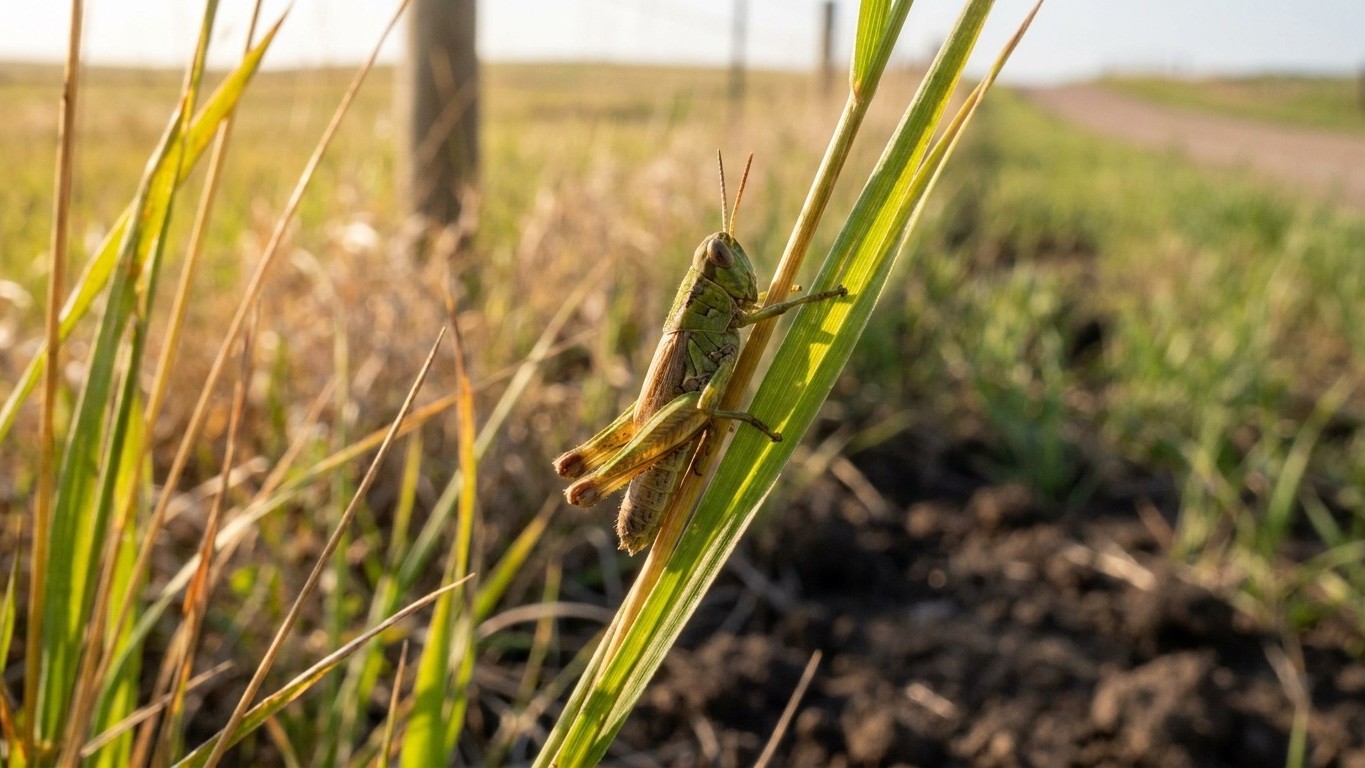

Grasshoppers show up in Saskatchewan in a predictable rhythm tied to soil temperature, not the calendar. Eggs laid the previous fall hatch once soil warms into the mid-50s to low-60s Fahrenheit, usually in late May through mid-June. Nymphs feed and molt for five to six weeks, turning into winged, egg-laying adults by late July or August. What stops an outbreak from becoming a full-blown infestation comes down to a mix of hard frost, wet spring weather, natural predators and disease, and, when those fail, timed cultural or chemical control on fields and yards.
That timing matters because grasshoppers do almost all their crop and garden damage in a narrow window, and the difference between a minor nuisance and a severe year often traces back to what happened the previous August, when adult females chose where to lay their eggs.
The Grasshopper Season in Saskatchewan, Month by Month

Saskatchewan’s grasshopper cycle runs on a single generation per year for the species that matter most to farmers and homeowners. Understanding where the population sits in that cycle explains both when you’ll see them and when control efforts actually work.
Spring Hatch: Timing and Triggers
Eggs overwinter a few inches below the soil surface, often clustered along field margins, road ditches, and untilled ground with south-facing exposure that warms early. Hatch begins when the soil reaches a sustained temperature in roughly the 60-degree Fahrenheit range, which in most of Saskatchewan lands somewhere between the third week of May and mid-June. Cool, wet springs delay hatch and can knock down survival rates, since young nymphs are vulnerable to fungal disease when humidity stays high. A warm, dry spring does the opposite: hatch comes early, survival runs high, and nymphs get a head start on feeding before natural predators build up their own numbers.
This is why drought years and grasshopper years tend to overlap in the province’s history. The dry stretches around 2017-2019 and again in 2021 saw noticeably heavier grasshopper pressure across the southwest and west-central grain belt, a pattern consistent with how the insect’s biology favors warm, low-moisture conditions.
Summer Buildup: When Damage Peaks
By early to mid-July, nymphs have molted through several instars and start doing the visible damage people associate with an infestation, chewing through cereal crop leaves, garden vegetables, and roadside grasses. Adults with fully developed wings appear from mid-July onward, and this is also when grasshoppers become mobile over longer distances, moving from ditches and pasture into cropland or backyard gardens as vegetation dries out elsewhere.
Egg-laying starts in August and runs into September, with females favoring firm, undisturbed soil, which is exactly why fence lines, grassy field edges, and untilled acreage become the seedbed for next year’s population. A single female can lay several dozen eggs over her lifetime, so a heavy adult population in August translates directly into hatch pressure the following spring unless something interrupts the cycle.
Which Grasshopper Species Cause Trouble in Saskatchewan
Not every grasshopper in a Saskatchewan field is an economic threat. Of the many species present in the province, three account for most agricultural and garden damage:
- Migratory grasshopper (Melanoplus sanguinipes), the most widespread pest species, feeds on cereal crops, forages, and broadleaf plants, and is highly mobile once winged.
- Two-striped grasshopper (Melanoplus bivittatus), larger-bodied, favors lush vegetation including garden crops, alfalfa, and canola, and tends to concentrate in low, moist areas early in the season before spreading.
- Clear-winged grasshopper (Camnula pellucida), feeds heavily on cereal crops and grasses, often builds up in dense local populations on pasture and roadside before moving into adjacent fields.
Most other grasshopper species found on the prairie, including many band-winged types, feed mainly on native rangeland grasses and rarely reach numbers that threaten crops or gardens. Distinguishing the pest species from background populations matters for anyone deciding whether a control response is actually warranted, since a yard full of grasshoppers isn’t automatically an infestation worth spraying for.
What Actually Stops an Outbreak
Grasshopper populations rise and fall on a handful of levers, and most of them aren’t things a homeowner or farmer controls directly. Weather does the heaviest lifting, but biology and timed intervention matter too.
Natural Checks: Weather, Predators, and Disease
A hard, early frost in fall shortens the egg-laying window and can reduce the number of eggs a female manages to deposit before dying off. In spring, a cold snap after hatch kills young nymphs outright, since they have almost no cold tolerance in their first few days. Wet weather at hatch time also promotes fungal pathogens, particularly Entomophaga grylli, a naturally occurring fungus that can wipe out large portions of a local population during humid stretches, sometimes leaving dead grasshoppers clinging to plant stems, a visible sign the fungus has been at work.
Predation adds another layer. Ground beetles and blister beetle larvae feed on grasshopper eggs in the soil, robber flies and birds (particularly grassland species like meadowlarks and various sparrows) take a steady toll on nymphs and adults, and rodents will dig up egg pods when they find them. None of these predators eliminate a population on their own, but in a normal year they hold numbers well below the threshold where crop or garden damage becomes noticeable.
Cultural and Chemical Control for Landowners
For anyone managing acreage, a garden, or field margins, timing is the whole game. Tilling known egg-laying sites in fall or early spring physically destroys egg pods before they hatch, which is one of the few control actions that pays off before the season even starts. Once nymphs are active, control works best while they’re still in the early instars, roughly the first two to three weeks after hatch, because young nymphs are more vulnerable to insecticide and haven’t yet dispersed into a wide area. Waiting until adults have wings means dealing with a mobile population that can simply move to avoid treated ground.
Insecticide products labeled for grasshopper control are widely available for both agricultural and residential use, but they work far better as a targeted response to nymphs concentrated along field edges and ditches than as a blanket spray once adults are dispersed. Biological options exist too, including bait formulations containing Nosema locustae, a naturally occurring protozoan that infects grasshoppers and reduces feeding and reproduction, though it acts more slowly than conventional insecticide and tends to suit lower-pressure situations better than a heavy outbreak.
For home gardens specifically, physical barriers like fine mesh row covers protect vegetables during the peak feeding weeks in July and early August, and keeping grass mowed short around garden borders removes some of the shelter grasshoppers use to move in from surrounding vegetation.
Reading the Risk: Forecast Maps and What They Mean
Saskatchewan’s Ministry of Agriculture compiles annual grasshopper risk maps based on late-summer adult counts collected across the province’s agricultural zones. These surveys, typically conducted in August, count grasshoppers per square yard along roadsides and field margins and translate the numbers into risk categories ranging from very low to severe for the following spring. A count of roughly eight or more grasshoppers per square yard in a surveyed area generally signals enough egg-laying pressure to warrant close monitoring the next season.
These maps consistently show the same regional pattern: the drier southwest and west-central grain belt runs higher risk more often than the wetter east and northeast, simply because the climate there aligns more consistently with the warm, dry conditions grasshoppers favor. Anyone farming or gardening in that western band benefits from checking the current year’s forecast before deciding how much scouting effort to put in come May and June.
Scouting itself is straightforward and doesn’t require special equipment. Walking field edges or garden perimeters in late May and counting grasshoppers per square yard, then repeating the count a week or two later, shows whether a hatch is building toward trouble or staying manageable. Catching that trend early, while nymphs are still small and concentrated near hatch sites, is what turns a potential bad year into a controlled one.
One detail that surprises a lot of acreage owners: grasshoppers rarely need standing crop to cause meaningful damage in a dry year. When pasture and roadside grass dry out ahead of schedule, hungry nymphs and adults will move into anything green nearby, including vegetable gardens, ornamental plantings, and shelterbelt seedlings that would otherwise never register as a target.