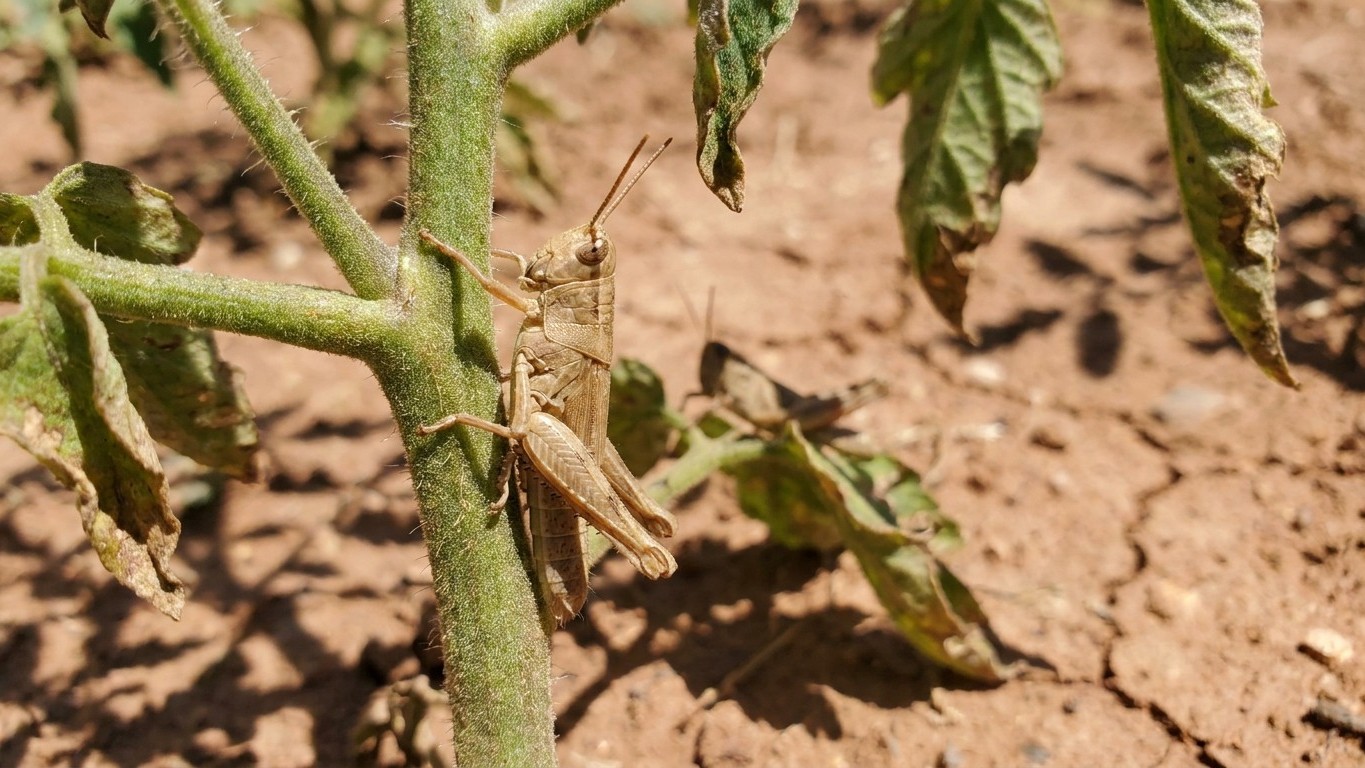

Texas grasshopper season typically kicks off in late April as nymphs hatch from overwintered eggs, builds through the brutal heat of July and August when adult swarms strip gardens bare, and finally tapers off after the first hard freeze in November. The window for effective control sits earlier than most homeowners think: once you see fully-grown, winged grasshoppers devouring tomato plants in July, you’ve already missed the cheapest and easiest intervention point.
When Grasshoppers Actually Show Up in Texas

Texas hosts more than 150 grasshopper species, but only a handful cause real trouble for homeowners and farmers. The differential grasshopper (Melanoplus differentialis) and the two-striped grasshopper are the usual suspects behind the garden destruction people report from the Panhandle down to the Hill Country.
Eggs laid in undisturbed soil the previous fall survive winter and hatch when soil temperatures climb into the 60s, usually mid-to-late April in Central Texas and slightly later in the northern parts of the state. Nymphs look like miniature wingless adults and spend about five to six weeks molting through several stages before they mature. This nymph stage, roughly late April through early June, is the single best window for chemical or biological control because young grasshoppers can’t fly away from treated areas and haven’t yet developed the appetite of a full-grown adult.
By July, populations peak. Adult grasshoppers can travel long distances, migrate in from neighboring fields, and eat their body weight in vegetation daily. This is when Texas AgriLife Extension gets flooded with calls about stripped pastures and gutted vegetable beds. Activity stays high through August, driven partly by drought stress that pushes grasshoppers out of dried-up rangeland and into irrigated lawns and gardens, which suddenly look like an oasis.
Cooling temperatures in September and October slow reproduction and feeding, though warm spells can trigger late-season activity. The first freeze, which arrives anywhere from late October in the Panhandle to mid-December in South Texas, kills adults outright. Eggs already laid in the soil simply wait for spring.
Drought Years Change the Timeline
Texas grasshopper outbreaks track closely with drought conditions. Dry falls followed by warm, dry springs create ideal egg survival and hatching conditions, since fungal pathogens that normally kill a portion of the egg pods and nymphs need moisture to thrive. The 2011 Texas drought, one of the most severe on record according to state climate data, produced grasshopper numbers so high that some ranchers reported pasture damage rivaling cattle overgrazing. Years with a wet spring tend to see natural fungal die-off knock populations down before they become a real problem, which is why two consecutive dry years often produce worse infestations than one dry year alone.
Where Infestations Concentrate Across the State
Grasshopper pressure isn’t uniform across Texas. West Texas and the Panhandle, with their expansive rangeland and lower rainfall, see the heaviest and most consistent outbreaks, mirroring patterns across the broader Great Plains. The semi-arid conditions favor both egg survival and the native grass species that many grasshopper species prefer for early feeding.
Central Texas and the Hill Country experience moderate but reliable pressure, especially in years following dry winters. Homeowners with native grass lawns or properties bordering undeveloped land report the most damage, since untended field edges serve as egg-laying and nymph nursery sites before grasshoppers move into cultivated areas.
East Texas, with its higher humidity and denser vegetation, generally sees lower grasshopper pressure. The moisture supports the fungal pathogens that keep populations in check naturally, and the tree cover doesn’t offer the open, grassy conditions grasshoppers favor for egg-laying.
The Gulf Coast region falls somewhere in between, with occasional spikes tied to drought years but generally less severe outbreaks than the western half of the state.
What Actually Stops a Grasshopper Infestation
Timing matters more than product choice when it comes to grasshopper control. Treating adult swarms in July with any method is playing defense against a problem that’s already won. The strategies below work from most preventive to most reactive.
Target the Egg-Laying Sites in Fall
Female grasshoppers prefer undisturbed soil with some vegetation cover, think fence lines, field edges, and untended lots, for laying their egg pods. Tilling or mowing these areas closely in late summer and fall exposes eggs to weather and predators, cutting survival rates. This won’t eliminate a problem tied to a large rangeland population next door, but for a homeowner dealing with a border area, it’s the cheapest control step available and requires zero pesticide.
Hit Nymphs Early with Bait or Biological Options
Once nymphs emerge in spring, a narrow window opens where control is dramatically more effective than waiting for adults. Nosema locustae, a naturally occurring protozoan sold as a bait product, infects grasshoppers and reduces feeding and reproduction over several weeks. It works best applied early against nymphs rather than mature adults, and it’s compatible with organic gardening practices since it targets grasshoppers specifically without harming bees or other beneficial insects.
Carbaryl-based baits also target nymphs effectively and break down faster than some other chemical options, making them a common choice for homeowners who want a quicker knockdown without long-term residue concerns in vegetable gardens.
Protect High-Value Plants with Barriers
For vegetable gardens and ornamental beds, physical exclusion works regardless of timing. Floating row covers or fine mesh netting over young transplants keep grasshoppers off entirely during the vulnerable early growth stage. This matters most in June and July when adult grasshoppers migrating from dried-out fields target anything green and irrigated. Row covers won’t stop a determined swarm from eating everything else on the property, but they protect the tomatoes, peppers, and squash that homeowners actually care about saving.
Encourage Natural Predators
Birds, particularly ground-feeding species like meadowlarks and killdeer, along with predatory insects and spiders, all eat grasshopper eggs and nymphs. Maintaining some brushy or unmowed border areas (away from egg-laying zones you’re actively trying to disrupt) gives these predators habitat. Chickens and guinea fowl, where local zoning allows backyard flocks, are effective at reducing nymph populations in a yard, since both species actively hunt grasshoppers as a food source.
When Chemical Treatment Makes Sense for Adults
Sometimes prevention fails or wasn’t started early enough, and adult grasshoppers are already stripping a garden or pasture. At this stage, options narrow considerably. Broad-spectrum insecticides labeled for grasshoppers can knock down visible populations, but adults fly readily, meaning treated areas often get reinvaded within days from untreated neighboring land. This is the reality that frustrates a lot of homeowners: individual property treatment against adult grasshoppers rarely produces lasting results if the surrounding acreage isn’t also managed.
Texas AgriLife Extension recommends coordinating with neighbors on larger rural properties when possible, since grasshopper populations don’t respect fence lines. For urban and suburban homeowners dealing with a smaller-scale problem, spot treatment on high-value plants combined with the barrier methods above tends to produce better results than trying to treat an entire yard against a mobile, flying pest.
A Note on Scale
What separates a minor Texas grasshopper nuisance from a genuine outbreak is population density, and researchers measure this in grasshoppers per square yard. Extension entomologists generally consider eight or more grasshoppers per square yard in rangeland a threshold worth treating economically, since below that density, natural predation and normal pasture recovery usually keep pace with the damage. Home gardens don’t have an official threshold, but if you’re spotting multiple grasshoppers on every third or fourth plant during a walk through the yard, that’s well past the point where waiting makes sense.
Related guides
- Grasshoppers in New Mexico: When It Shows Up and What Stops It
- Grasshoppers in Oklahoma: When It Shows Up and What Stops It
- Grasshoppers in Utah: When It Shows Up and What Stops It
- Grasshoppers in Wyoming: When It Shows Up and What Stops It
- Pickleworm in Texas
- Corn earworm in Texas
- Melonworm in Texas
- Grasshoppers in Arizona: When It Shows Up and What Stops It
- Grasshoppers in Idaho: When It Shows Up and What Stops It