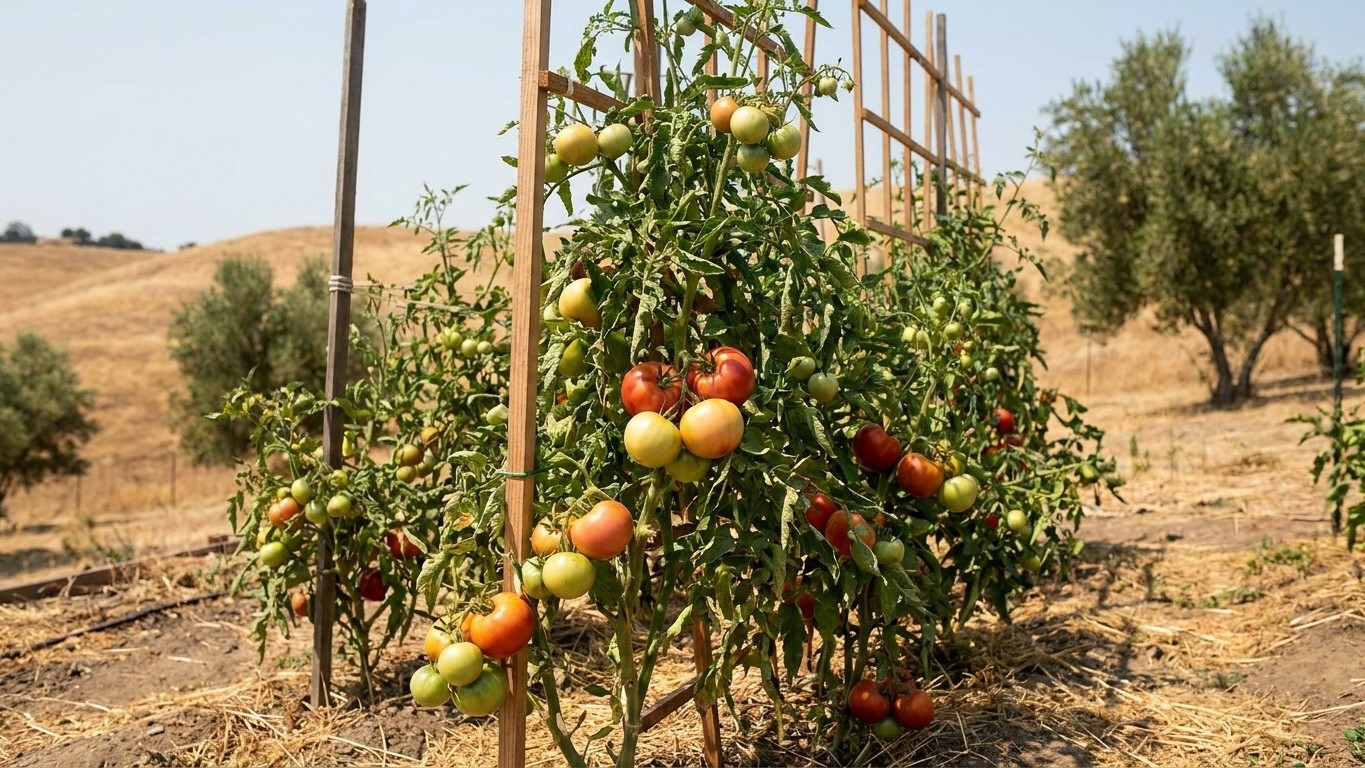

Pick tomatoes in Idaho as soon as frost is forecast, not after it hits. In the Boise area, the first fall frost typically lands between October 7 and October 21, and every green tomato still on the vine at that point needs to come inside if it’s reached full size. Smaller, high-elevation growing areas across Idaho see frost sooner, sometimes weeks sooner, so the calendar matters less than watching your own thermometer.
When to Pick Tomatoes in Idaho
The decision to pick isn’t really about color. It’s about whether the fruit has finished growing. A tomato that’s reached full size, even a pale green one, has usually stored enough sugar and started the internal chemistry that lets it ripen after harvest. A small, hard, marble-sized fruit hasn’t, and pulling it off the vine just wastes it. So the real question every Idaho gardener needs to answer in early fall isn’t “is it red yet” but “is it done growing.”
Frost timing is what forces the issue. For the Boise area, NOAA’s 1991-2020 climate data (station USW00024131) puts the first fall freeze between October 7 and October 21. That’s a three-week window, not a fixed date, and it shifts year to year depending on how the season behaves. Growers who wait for a specific date on a calendar often get caught off guard when frost arrives at the early edge of that range.
Boise sits in a warm river valley, one of the mildest spots in the state. Most of Idaho is higher and colder. The Panhandle, the eastern high desert, and mountain valleys around Stanley or Salmon see frost land well before the Treasure Valley does, sometimes a full month earlier. The USDA Plant Hardiness Zone Map, built from average annual extreme minimum temperatures, puts the whole state on a range from zone 3b up to zone 7b. Boise sits toward the warmer end of that range; a garden at higher elevation can sit two or three zones colder. That’s a different growing season entirely, not just a slightly shorter one.
| Reference point | Window | Source station |
|---|---|---|
| Last spring frost, Boise | April 23 to May 7 | USW00024131 |
| First fall frost, Boise | October 7 to October 21 | USW00024131 |
Use that fall window as a planning trigger, not a deadline. Once local forecasts start mentioning overnight lows near freezing, anywhere inside or before that window, it’s time to walk the rows and start sorting fruit rather than waiting for the frost warning itself.
What to do with the green ones
Not every green tomato deserves the same treatment. There’s a real difference between a mature green fruit, one that’s reached full size and has a slightly waxy, pale look, and an immature one that’s still small, dull, and hard as a golf ball. The mature ones are worth bringing inside. The immature ones almost never ripen properly, and even when they do, the texture and flavor disappoint.
A quick way to tell them apart: slice one open. If the interior shows developed gel around the seeds, the fruit was mature enough to keep growing its flavor even off the vine. If the inside looks solid and the seeds are barely formed, that tomato was picked too early to save for ripening, and it’s better used green.
For the truly immature fruit, cooking green is the better path. Fried green tomatoes are the obvious answer, but a firm green tomato also holds up well in salsa verde, chow-chow, or a quick pickle brine. These preparations don’t need the fruit to ripen at all; the tartness and firmness are the point, not a flaw to work around.
For the mature green fruit, sorting by size and firmness before storage saves headaches later. Group them roughly by how close they look to ripening, since fruit that’s already blushing pink will finish in days, while pale green fruit of the same size might take a couple of weeks. Keeping those groups separate means you’re not constantly digging through a box to find the ones that are ready.
Damaged fruit needs its own pile entirely. Any tomato with a crack, a soft spot, or insect damage should be used right away or discarded, not stored with the rest. One bruised tomato in a box of ripening green ones can bring mold to everything around it within days, especially in a humid or poorly ventilated space.
Ripening indoors, and how long they keep
Bringing green tomatoes indoors works because ripening is a chemical process the fruit continues on its own, triggered by ethylene gas the tomato produces itself. It doesn’t need sunlight and it doesn’t need to stay attached to the plant. It just needs time, a bit of warmth, and space to sit without touching other fruit that might be starting to rot.
The simplest method is a single layer of tomatoes on a tray or cardboard box, out of direct sun, checked every few days for any signs of softening or spoilage. Some gardeners wrap each fruit individually in newspaper, which slows moisture loss and keeps one bad tomato from spreading mold to its neighbors. A paper bag works too, and tucking a ripe banana or apple inside speeds things along, since both release extra ethylene that pushes the tomatoes toward ripeness faster.
Storage timelines
How long a green tomato takes to ripen depends almost entirely on how mature it was when picked. Fruit that was already blushing when harvested might turn fully red within a week. Fruit that was solid pale green when it came off the vine can take several weeks, and some of the least mature fruit in a batch may never fully ripen at all, staying at a dull orange-yellow stage instead.
Once ripe, a home-ripened tomato doesn’t keep much longer than a store-bought one at the same stage. It’s best eaten within a few days of turning fully colored, kept at room temperature rather than in the refrigerator, since cold temperatures dull both texture and flavor in tomatoes more than in most other vegetables. If you’ve got more ripening at once than your household can eat, canning, freezing, or turning the surplus into sauce stretches the harvest well past what the fresh fruit alone would allow.
Checking the batch every couple of days matters more than picking a single ripening method. Fruit ripens unevenly even within the same box, and catching a spoiling tomato early is the difference between losing one fruit and losing a dozen.
What goes wrong here
The most common mistake is treating the fall frost window as a single hard date instead of the range it actually is. Waiting until mid-October because “that’s when frost usually comes” ignores the fact that Boise’s own recorded window starts more than two weeks earlier, on October 7. A grower who waits for the tail end of that range gambles on the mildest possible outcome.
The second mistake is applying Boise’s numbers to gardens elsewhere in the state. A backyard at elevation in eastern or northern Idaho can sit solidly in a colder USDA hardiness zone than the Treasure Valley, and frost there often arrives well ahead of the Boise-area window. Gardeners in those areas need to watch local conditions directly rather than borrowing a valley city’s frost dates.
Storage problems account for most of the fruit lost after harvest. Piling tomatoes several layers deep in a box traps moisture and heat, and one soft spot spreads to everything it touches within days. Stacking fruit of different maturity together is another common error, since the riper tomatoes release ethylene that pushes their less-ripe neighbors to soften unevenly, sometimes rotting from the inside before the skin even shows color.
A few gardeners also make the opposite mistake: picking too early out of frost anxiety, before the fruit has actually finished growing. Immature green tomatoes pulled weeks ahead of any real frost risk waste fruit that could have kept sizing up on the vine. Checking an actual forecast, rather than a general worry about the season ending, avoids that loss. Local extension offices, including the University of Idaho Extension, track regional frost patterns and can offer guidance specific to a given county’s elevation and microclimate, which matters more here than any single statewide number.
Common questions
Should I pick all my tomatoes before the first frost warning?
Only the ones that have reached full size. Small, immature fruit rarely ripens well after harvest, so it’s usually better left on the vine until the last possible moment, then used green in cooking rather than saved for ripening.
Does the Boise frost date apply to the rest of Idaho?
No. The October 7 to October 21 window comes from a single Boise-area station. Higher and colder parts of the state, which make up most of Idaho’s land area, see frost earlier, sometimes by weeks.
Do green tomatoes need sunlight to ripen indoors?
No, ripening runs on ethylene gas the fruit produces itself, not on light. A tray or box out of direct sun works better than a sunny windowsill, since sun mainly adds heat that can speed up spoilage instead of ripening.
How can I tell if a green tomato is worth saving?
Slice one open from the same batch. If the seeds sit in developed gel, the fruit was mature enough to ripen after picking. If the interior looks solid and underdeveloped, that tomato is better used green than stored.