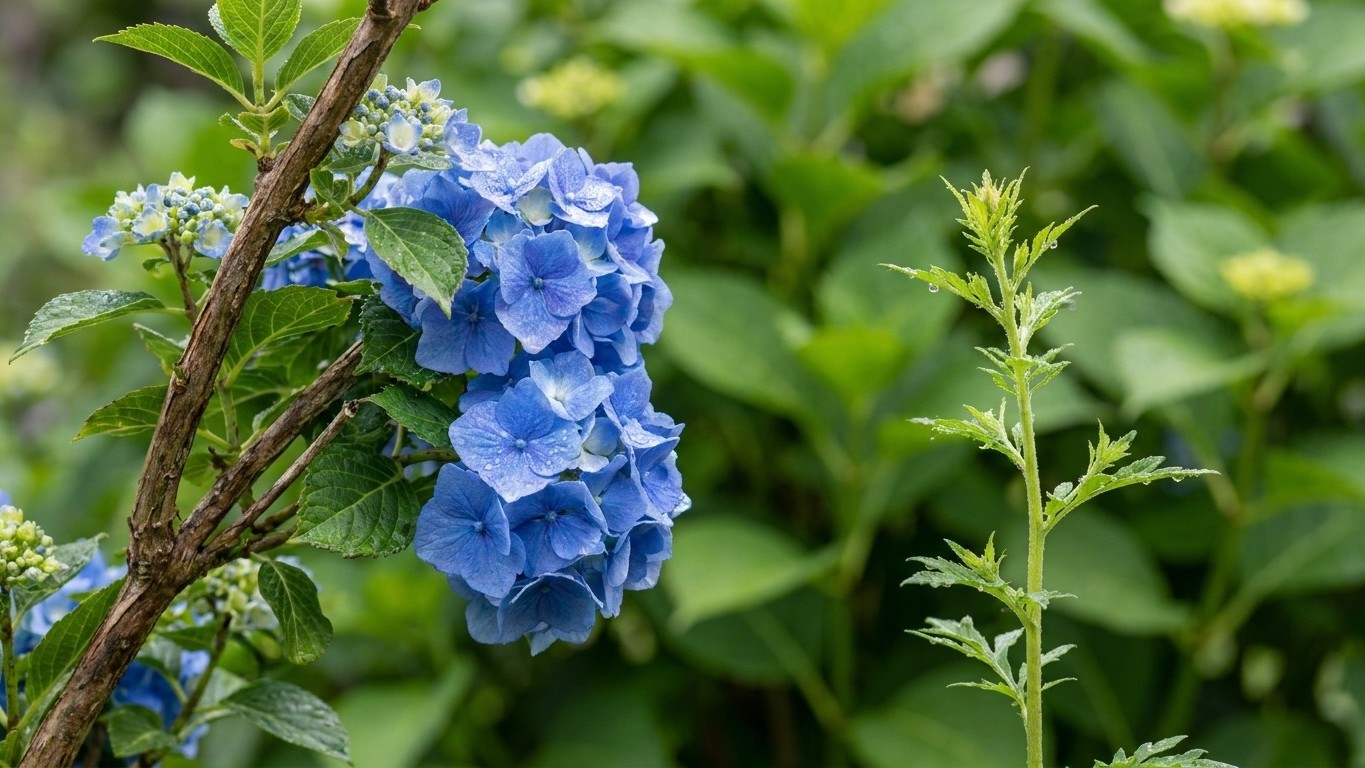

Where you garden in California decides almost everything about growing hydrangeas. Coastal and Southern California never see a hard freeze in an average year, so the limiting factor is heat and drought, not frost. Farther north and at elevation, in the Central Valley and the Sierra foothills, winter cold is real and bud survival becomes the issue. Bloom color, meanwhile, comes from soil chemistry, not luck.
When to plant Hydrangeas in California

NOAA’s 1991-2020 Climate Normals for the Los Angeles reference station (USW00023174) show zero days at or below 32°F across three decades of daily records, and the station’s frost season is listed as 365 days, meaning frost-free, year-round. That is a striking number if you’re used to gardening anywhere else in the country: no last spring frost date, no first fall frost date, no freeze normal to plan around at all. Coastal and Southern California gardeners simply don’t have a frost calendar to work from. Northern California, the Central Valley, and the Sierra foothills are a different story entirely and do freeze in winter, so nothing about the Los Angeles figures should be read onto those regions.
That absence of frost changes the planting calendar for hydrangeas more than it simplifies it. Without a killing freeze to dodge, the real constraint becomes summer heat and the plant’s need to get roots established before the hottest, driest months arrive. Hydrangeas are almost never started from seed in home gardens; they’re grown from container nursery stock or rooted cuttings, so there’s no seed-starting-indoors step the way there is for many garden plants. What replaces it is a timing calculation built around heat instead of cold.
Working backward from summer heat
In frost-free coastal and Southern California, the two reliable planting windows are late fall through winter (roughly November through February) and again in early spring before temperatures climb. Planting in late fall gives roots four to five months of cool, moist weather to spread before the plant has to cope with 90-degree afternoons, and that head start matters because a hydrangea with a shallow, unestablished root system wilts fast once summer heat arrives. Count back from the point where daytime highs regularly clear 85°F, usually by June in inland valleys and later along the immediate coast, and aim to have the plant in the ground at least eight to ten weeks before that threshold. If you’re buying container stock in spring instead, harden it off gradually: leave the plant in its nursery pot in a shaded spot for a week, then move it into its final sun exposure over another week before transplanting, so the leaves don’t scorch from a sudden jump in light intensity.
Gardeners in the Central Valley and Sierra foothills, where real winter freezes occur, should plant in early spring after the coldest nights have passed, since newly planted hydrangeas with unestablished roots are far more vulnerable to freeze damage than mature plants. Check local frost patterns with your county extension office rather than assuming coastal timing applies.
Soil and site preparation
Hydrangeas want morning sun and afternoon shade almost everywhere in California, and that’s not a minor preference, it’s the difference between a plant that blooms reliably and one that scorches by July. In the Central Valley and inland Southern California, afternoon shade is close to mandatory; along the cool, foggy coast, more sun is tolerable. Dappled light under high tree canopy or an east-facing wall works well in hot inland spots.
Soil texture matters as much as light. Hydrangeas need soil that holds moisture without staying waterlogged, since their large leaves lose water fast and their roots rot quickly in soggy ground. California’s clay-heavy valley soils and its lean, fast-draining coastal sand both need correction, just in opposite directions. Clay benefits from generous compost worked into the top twelve inches several weeks before planting, which opens up drainage and air pockets. Sandy soil needs the same compost addition for the opposite reason: to hold water and nutrients that would otherwise wash straight through.
Amend beds two to four weeks ahead of planting so the organic matter has time to start integrating with the native soil rather than sitting as a separate layer the roots avoid. Dig the planting hole twice as wide as the root ball but no deeper, since a hydrangea set too low stays wet at the crown and is prone to rot. Space plants three to six feet apart depending on the mature variety, wide enough that mature foliage doesn’t trap humidity against a neighboring plant, which invites fungal disease in California’s warm season.
If you plan to manipulate bloom color with soil additives, start that process now, not after planting. Aluminum sulfate for blue tones or garden lime for pink tones both take weeks to shift soil chemistry, and working them in before the roots are in place avoids a shock of concentrated product sitting right against new roots.
Varieties that suit California
The trait that matters most for California gardeners is heat tolerance, followed closely by how much water the plant demands during the state’s long, dry summer. A shorter bloom season isn’t really the concern here the way it might be for a cold-climate crop; California’s frost-free or nearly frost-free seasons give hydrangeas plenty of time to flower. The bigger question is whether a variety collapses in July heat or keeps producing blooms through it.
| Type | Traits that matter here | Good for |
|---|---|---|
| Bigleaf hydrangea (Hydrangea macrophylla) | Blooms on old wood in most types; color shifts with soil pH; less heat-tolerant than other groups | Coastal gardens with mild summers and reliable afternoon shade |
| Panicle hydrangea (Hydrangea paniculata), including varieties sold as ‘Limelight’ | Blooms on new wood; more heat and sun tolerant; sturdy stems | Inland and Central Valley gardens with hot summers |
| Smooth hydrangea (Hydrangea arborescens), including varieties sold as ‘Annabelle’ | Blooms on new wood; tolerates a wider range of soil; large white flower heads | Gardeners who want reliable blooms without fussing over pH |
| Oakleaf hydrangea (Hydrangea quercifolia) | Good drought tolerance once established; strong fall foliage color | Gardeners in drier inland spots wanting lower water use |
| Mountain hydrangea (Hydrangea serrata), including varieties sold as ‘Bluebird’ | More compact, somewhat more cold-hardy for Sierra and Northern California gardens | Smaller spaces and colder-winter regions of the state |
Whether a hydrangea blooms on old wood or new wood, similar in concept to determinate versus indeterminate crop timing, decides how forgiving it is of a bad pruning year or a freeze in the Sierra foothills. New-wood bloomers like panicle and smooth hydrangeas simply grow fresh flowering stems each season, so a hard winter or a mistimed cut doesn’t erase the year’s blooms. Old-wood bloomers set next year’s buds on the current season’s growth, so a late freeze or an ill-timed pruning session in Northern California can wipe out a whole season of flowers. No official body is cited here recommending any specific named variety; these are simply widely available types with track records that match California’s growing conditions.
What to plant alongside
Shade-loving perennials are the most genuinely useful companions for hydrangeas in California gardens. Hostas, ferns, astilbe, and hellebores share the same moisture and light preferences, so grouping them together means one watering routine covers the whole bed instead of fighting over conflicting needs. Camellias and azaleas make sense too, since they share hydrangeas’ taste for acidic, well-drained soil, and planting them together simplifies any soil amendment you’re doing for blue bloom color.
Low ground covers like sweet woodruff or creeping Jenny fill the bare soil at the base of hydrangeas, which helps hold moisture and keep roots cooler through the hot months, a real benefit in inland California summers. Pollinator-drawing companions like bee balm or catmint at the sunnier edge of a hydrangea bed can bring in beneficial insects that help keep aphid populations down, though this is a general garden benefit rather than something specific to hydrangeas.
What competes rather than helps: Mediterranean drought-tolerant plants like lavender, rosemary, and sage want dry soil between waterings and will either rot from hydrangea-level moisture or force you to underwater the hydrangea to keep them happy. Keep them in a separate bed entirely. There’s also no real evidence behind the common claim that marigolds or garlic planted nearby repel the pests that trouble hydrangeas; that pairing gets repeated in casual gardening advice but doesn’t hold up against how these pests actually behave, and it isn’t worth building a planting plan around.
Watering, feeding and support
Deep, infrequent watering beats a light daily sprinkle every time with hydrangeas, because shallow watering trains roots to stay near the surface where they dry out fast in California’s dry season. Water deeply enough to soak the top eight to twelve inches of soil, then let the top inch or two dry before watering again. In coastal gardens that might mean once or twice a week in summer; in the Central Valley, three times a week in peak heat isn’t unusual. Established, drought-tolerant types like oakleaf hydrangea need less.
Mulch is not optional here. A three-inch layer of bark or compost mulch keeps soil temperature down and moisture in, which matters enormously given how much water hydrangea leaves lose on a 95°F Central Valley afternoon. Keep the mulch a few inches back from the main stems so it doesn’t hold moisture against the crown and invite rot.
Feed in early spring as new growth starts, using a balanced fertilizer formulated for acid-loving plants if you’re also managing bloom color, and stop feeding by midsummer. Feeding late in the season pushes soft new growth right into the hottest, driest stretch of the year, and that new growth wilts and scorches faster than hardened stems do.
Panicle hydrangeas with heavy flower heads, especially ‘Limelight’ types, often need staking or a simple cage once blooms mature, since a summer thunderstorm or even their own weight can bend stems to the ground. Prune according to bloom type: cut old-wood bloomers back right after flowering, and cut new-wood types back in late winter before spring growth starts. Remove any suckers growing from the base of grafted or standard-form hydrangeas as you see them, since they draw energy away from the main plant’s bloom production.
Common problems

Wilting hydrangea leaves in California almost always trace back to one of two opposite causes: not enough water reaching the roots, or too much sitting around them. Heat wilt shows as leaves drooping in the afternoon sun and recovering by morning; that’s normal stress, not disease, and deeper watering usually fixes it. Wilting that doesn’t recover overnight, paired with yellowing lower leaves, points to root rot from soil that’s staying wet too long, usually from poor drainage or mulch piled against the stem.
Leaf curl and browning at the edges (often called leaf scorch) shows up on plants getting more direct afternoon sun than their variety can handle, especially bigleaf types in inland gardens. The fix is either moving the plant in the next dormant season or adding artificial shade, like a taller companion plant or a shade cloth, for the hottest months.
Poor bloom set, flowers that fail to open fully or don’t appear at all, usually comes down to pruning timing. Cutting an old-wood bloomer back in late winter removes the buds that were already set for that year’s flowers. It can also come from too much shade for the variety or from a late-season cold snap in Northern California and Sierra gardens damaging buds before they open.
Powdery mildew, a grayish-white coating on leaves, is common in California’s warm, sometimes humid coastal microclimates. It’s more of a cosmetic problem than a plant-killer, but it spreads fastest where air circulation is poor, which is another reason not to crowd plants at planting time. Iron chlorosis, yellow leaves with green veins, shows up in alkaline valley soils where iron becomes less available to the roots; an iron chelate soil drench corrects it faster than trying to acidify the whole bed.
Pests that actually show up in California
The University of California’s Master Gardener Program and its IPM Pest Notes name several pests as consistent problems in home gardens across the state, and a handful of them are the ones that actually target hydrangeas rather than vegetable crops.
Brown garden snails and slugs are the most persistent hydrangea pest in California, and they’re active at night and on foggy, humid mornings, which describes a lot of coastal California weather for a good part of the year. In the mildest southern coastal gardens they can stay active essentially year-round rather than dying back seasonally. The tell is ragged holes chewed into leaf edges and a silvery slime trail across nearby soil or pavement. Hand-picking at night with a flashlight, or setting out beer traps or commercial baits, is the control that actually works, since these pests hide during the day and daytime spraying misses them.
Aphids, including melon aphid, cluster on new growth and the undersides of leaves, sucking sap and leaving a sticky honeydew residue that can attract sooty mold. UC’s Master Gardener resources flag melon aphid as particularly troublesome in September and October, which lines up with the tail end of a California hydrangea’s active growing season. A strong jet of water from the hose, repeated every few days, knocks populations down without resorting to spray.
Spider mites thrive in the hot, dry conditions common to inland California summers and show up as fine stippling or a bronze cast on leaves, sometimes with faint webbing on the undersides in bad infestations. They multiply fastest in dusty, water-stressed plants, so regular hosing of foliage and consistent watering are the most effective prevention.
Earwigs chew irregular holes in leaves and flowers, mostly at night, and hide in mulch, under pots, or in tight plant crevices during the day. Rolled, damp newspaper or a shallow oil trap set out overnight and emptied in the morning is a simple, effective control that avoids broad-spectrum spraying.
Harvest and end of season
“Harvesting” a hydrangea means cutting blooms for the vase or for drying, and timing that cut changes the outcome. For fresh arrangements, cut when the flower head has fully opened and feels slightly papery rather than soft, which usually means the bloom will hold up well out of water. For dried arrangements, wait until the petals start to feel papery on the plant itself, usually late summer, then cut and hang the stems upside down in a dark, dry spot for a couple of weeks.
Because coastal and Southern California don’t see a first fall frost in an average year, there’s no hard cutoff forcing a rush to finish up the growing season the way there is in colder states. Plants can keep pushing new growth and occasional blooms well into fall along the coast. What does matter is easing off water and fertilizer as days shorten, since pushing growth into the cooler, shorter days of late fall produces soft stems that don’t hold up as well through winter dormancy.
In the Central Valley and Sierra foothills, where real winter freezes occur, cut back on watering as temperatures drop, clean up fallen leaves that can harbor fungal spores over winter, and add a fresh layer of mulch around the base before the coldest nights arrive to buffer root temperature swings. Leave old-wood bloomer stems uncut going into winter; the following spring’s flower buds are already set on them.
Local help
Frost dates, soil type, and pest pressure all vary by county across a state as large and climatically diverse as California. The University of California’s Cooperative Extension and Master Gardener Program offer county-level planting calendars, soil testing guidance, and local pest identification. Find your county office through UC Agriculture and Natural Resources before finalizing a planting plan.
Common questions
Why do my hydrangea blooms change color in California soil?
Bloom color in bigleaf hydrangeas depends on how much aluminum the plant’s roots can absorb, and that depends on soil pH. Acidic soil frees up aluminum and produces blue blooms; alkaline soil locks it away and produces pink blooms. White varieties don’t shift regardless of soil chemistry.
Do hydrangeas need winter protection in California?
Along the frost-free coast and in Southern California, no winter protection is needed since freezing temperatures don’t occur in an average year. In the Central Valley and Sierra foothills, where real freezes happen, a layer of mulch around the base helps protect roots and buds through the coldest nights.
Can hydrangeas handle California’s summer heat without much water?
Not well as a group; most hydrangeas need consistent moisture through summer. Oakleaf hydrangea tolerates dry spells better than bigleaf types once established, but none of them are truly drought-tolerant plants.
Should I grow hydrangeas in containers in hot inland areas?
Containers work well and let you move plants to shadier spots during the worst heat, but pots dry out faster than garden beds in Central Valley summers, so daily checking during heat waves is often necessary.
When is the best time to prune a hydrangea in California?
It depends on the type. Old-wood bloomers should be pruned right after they finish flowering, since next year’s buds form soon after. New-wood bloomers like panicle and smooth hydrangeas can be pruned in late winter before spring growth begins.
Related guides
- How to Grow Hydrangeas: The Complete Guide
- Growing Hydrangeas in Oregon: Types, Colour and Winter
- Growing Hydrangeas in Nevada: Types, Colour and Winter
- Growing Hydrangeas in Colorado: Types, Colour and Winter
- Growing Hydrangeas in Georgia: Types, Colour and Winter
- Growing Hydrangeas in North Carolina: Types, Colour and Winter