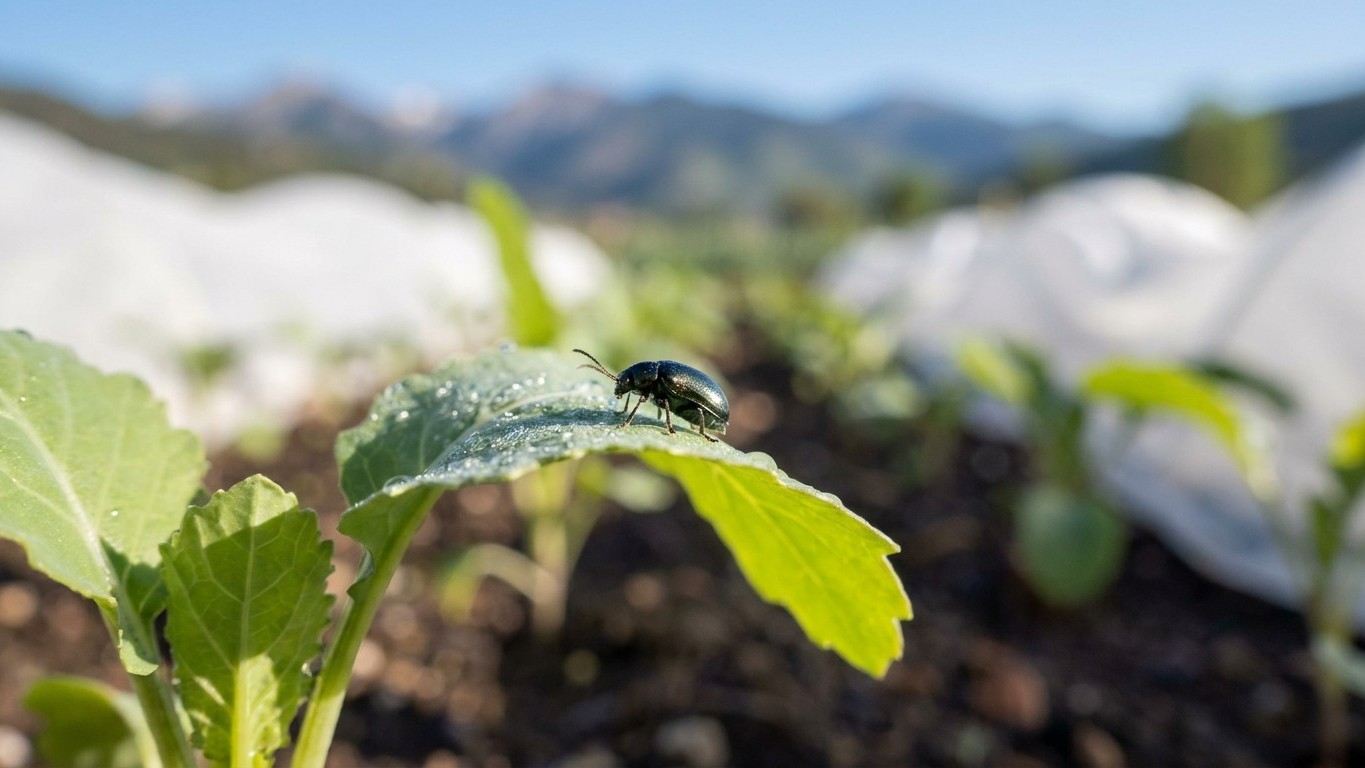

Flea beetles wake up in Utah as soon as soil temperatures climb past 50°F, which usually happens in early to mid-April along the Wasatch Front and up to three weeks earlier in Washington County near St. George. They stick around through October in warmer valleys, feeding hardest during the first six weeks after emergence. Row covers installed before seedlings emerge, sticky traps for early detection, and a two-week gap between removing spring brassicas and planting fall ones are what actually break the cycle.
Utah’s dry climate and wide elevation swings mean this pest behaves differently depending on where you garden. A backyard plot in Logan sees a different flea beetle calendar than a raised bed in Cedar City. Understanding your specific window matters more than any generic pest calendar you’ll find online.
When Flea Beetles Show Up Across Utah

Elevation drives everything here. In the Salt Lake Valley and along the Wasatch Front (roughly 4,200 to 4,500 feet), flea beetles typically emerge from overwintering sites in late April, right around the time gardeners are setting out cole crops. Cache Valley, sitting higher and colder, often lags a week or two behind, with activity ramping up in early May.
Southern Utah tells a different story. Around St. George and the Dixie corridor, where winter soil rarely freezes hard for long, flea beetles can become active as early as mid-March. Gardeners there sometimes get two full generations before the Wasatch Front sees its first wave. Higher desert regions like Moab and the San Rafael Swell run hot and dry enough that beetle populations spike fast once temperatures stabilize, then taper hard during peak summer heat above 95°F, only to rebound in September as temperatures moderate.
Utah’s overall dryness works against overwintering survival in one specific way: without consistent snow cover, exposed soil surfaces swing through more freeze-thaw cycles, which kills off some adult beetles before spring. Gardens with heavy mulch or dense plant debris left over winter, though, give beetles exactly the insulated microhabitat they need to survive those swings. That’s part of why fall garden cleanup matters more in Utah’s climate than in milder, wetter states.
The Two-Generation Pattern
Most of Utah supports two generations of flea beetles per year, sometimes a partial third generation in the warmest southern counties. The first generation does the most visible damage to spring seedlings. The second, emerging in July and August, tends to hit fall brassica plantings and can be worse if summer drought stressed plants are already weakened. Gardeners who only watch for beetles in April and then relax are often blindsided by that second wave right when they’re transplanting broccoli and kale for fall harvest.
Identifying Flea Beetles in a Utah Garden
Flea beetles are tiny, roughly 1/16 to 1/8 inch long, shiny black or bronze, and they earn their name from the way they jump when disturbed rather than fly away like most beetles. The giveaway sign isn’t the insect itself, since they’re easy to miss, but the damage: small, irregular “shot holes” scattered across leaves, giving foliage a pockmarked, papery look. Seedlings hit hard enough can be killed outright, especially brassicas and eggplant transplants still adjusting to outdoor conditions.
Utah gardeners sometimes confuse flea beetle damage with hail damage or spider mite injury, both common in the state’s climate. Hail tends to create larger, more uniform tears concentrated on one side of the plant, matching the storm direction. Spider mite damage shows up as stippling and fine webbing, usually worse during hot, dry stretches in July, and it’s mites, not beetles, causing the leaf surface to look bronzed rather than perforated. Flea beetle holes are cleaner, rounder, and scattered across the whole leaf surface.
A quick field test: shake a suspect plant gently over a white sheet of paper or a light-colored bucket. Flea beetles will jump and land on the surface, visible immediately. This takes thirty seconds and beats guessing based on leaf damage alone.
What Stops Flea Beetles in Utah Gardens
Row covers remain the single most reliable tool, and timing is everything. They need to go on before seedlings emerge or transplants go in the ground, sealed at the edges with soil or landscape staples so beetles can’t crawl underneath. Utah’s wind, especially the spring gusts common along the Wasatch Front and in open valley areas, makes cover placement trickier than in calmer climates. Extra weight along the edges (rocks, sandbags, or buried fabric edges) prevents covers from lifting and creating gaps.
The tradeoff with row covers is heat buildup. Utah’s intense high-elevation sun can push temperatures under lightweight fabric well above ambient on clear April and May days. Gardeners need to remove covers once plants flower, since most brassicas and other affected crops need pollinator access anyway, and by that point plants are usually mature enough to tolerate some feeding without serious harm.
Sticky traps, either store-bought yellow sticky cards or homemade versions using yellow plastic coated in petroleum jelly, work well for monitoring rather than control. Placing a few near vulnerable seedlings gives an early warning before damage becomes visible on leaves. This matters in Utah specifically because the dry air here means beetle populations can build quickly without the natural check that humid-climate fungal pathogens sometimes provide.
Cultural Controls That Work With Utah’s Growing Season
Crop rotation helps, but it requires more intention in small home gardens where space is limited. Moving brassica plantings to a different bed section each year, even just 10 to 15 feet away, disrupts the beetles’ ability to find host plants immediately after emerging from nearby soil.
Trap cropping works surprisingly well in Utah’s sunny, warm springs. Planting a border of radishes or mustard greens, both magnets for flea beetles, around the perimeter of a brassica bed draws feeding pressure away from the main crop. Radishes germinate fast in Utah’s spring soil temperatures and can be sacrificed without much loss.
Timing transplants to avoid the first beetle wave helps too. Waiting an extra one to two weeks past the “typical” spring planting date in a given region, once soil has warmed past the beetle’s initial emergence threshold, means seedlings go in past the highest-pressure window. This costs a little in season length but often saves the whole planting from being shredded before it establishes.
Diatomaceous earth, dusted lightly on and around plant leaves, works as a mechanical control by damaging the beetle’s exoskeleton on contact. It needs reapplication after rain or irrigation, which in Utah’s dry climate is less often an issue than in wetter states, making it a more consistently effective option here than it would be in, say, a humid Southeastern garden.
Crops at Risk and Regional Priorities
Brassicas top the list statewide: broccoli, cabbage, kale, arugula, and radishes take the heaviest hits, especially as seedlings. Eggplant and potatoes are the other major targets, with potato flea beetles specifically capable of transmitting diseases that stunt tuber development. Utah’s commercial potato-growing regions in the northern part of the state monitor flea beetle populations closely for exactly this reason, and home gardeners growing potatoes should watch new growth carefully in May and June.
Gardeners in higher-elevation counties like Summit or Wasatch, where the growing season runs shorter and cooler, tend to see lighter flea beetle pressure overall simply because the beetles have less time and warmth to build large populations. That’s one advantage of a shorter season nobody talks about.
In contrast, southern Utah’s longer warm season and earlier spring mean gardeners there should start monitoring and installing protection weeks earlier than counterparts near Salt Lake City. A planting calendar built for northern Utah timing, if followed in Washington or Kane County, essentially guarantees missing the first beetle emergence entirely.
One detail worth flagging for anyone dealing with a heavy infestation: adult flea beetles overwinter in soil debris, leaf litter, and weedy field edges, not deep underground. A thorough fall cleanup, removing spent brassica plants and clearing weedy borders before the ground freezes, reduces the local population wintering over right where next spring’s seedlings will go in. It’s a small task in October that pays off directly in April.