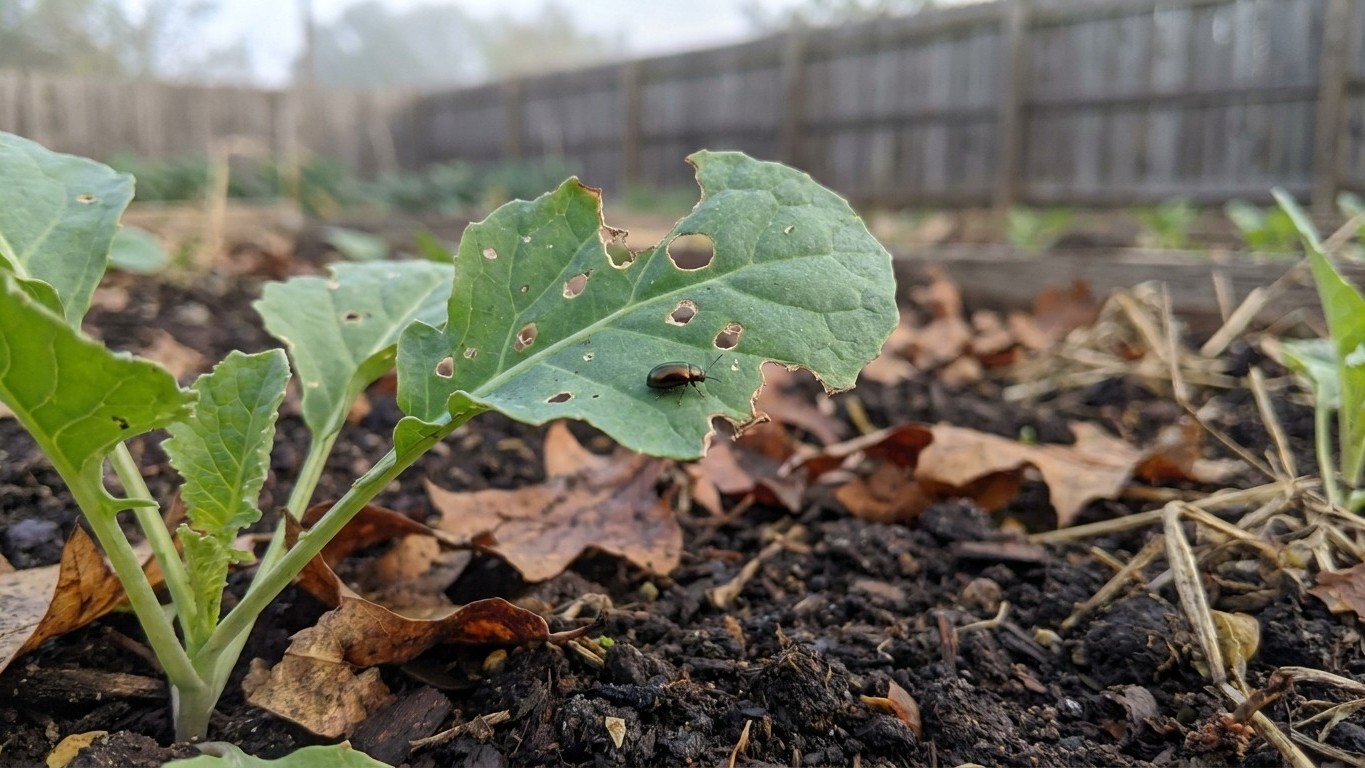

Flea beetles start chewing through Virginia gardens as early as mid-March in the Tidewater region and as late as May in the mountains of Southwest Virginia. The trigger isn’t the calendar, it’s soil temperature: once the ground hits roughly 50 to 55 degrees Fahrenheit, overwintered adults climb out of leaf litter and head straight for young seedlings. Stopping them means combining timing tricks, physical barriers, and targeted treatments, not relying on a single fix.
When Flea Beetles Become a Problem in Virginia

Virginia’s climate splits into distinct bands, and flea beetle activity follows that split closely. Coastal Plain counties around Virginia Beach and Norfolk warm up first, so gardeners there often see the first jumping, pinhead-sized beetles on brassica seedlings by late March. The Piedmont, including the Richmond and Charlottesville areas, usually sees the first wave in early to mid-April. Up in the Shenandoah Valley and the mountainous southwest corner of the state, cooler nights push emergence into late April or even the first week of May.
Adults overwinter in soil, under fallen leaves, or tucked into fencerows and wood edges bordering fields. They don’t travel far to find food. A garden planted right next to last year’s cabbage patch is basically rolling out a welcome mat.
A second generation shows up in most of the state between late July and September, right when fall crops like turnips, kale, and arugula are germinating. This second flush is often worse than the spring one because populations have had a full growing season to build up. Farmers who grow fall brassicas commercially in the Shenandoah Valley frequently rank this late-summer generation as the more damaging of the two.
Warm, dry springs accelerate everything. A stretch of 70-degree days in early April can bring beetles out two weeks ahead of schedule, which is exactly why watching soil temperature and short-term forecasts matters more than marking a fixed date on a calendar.
Spotting the Damage: What to Look For
The signature sign is a “shotgun” pattern: dozens of tiny round or irregular holes peppered across a leaf, as if someone fired fine buckshot through it. Seedlings hit hard can look lace-thin within days.
The beetles themselves are easy to miss because they’re small, usually less than an eighth of an inch, and shiny black, bronze, or striped depending on species. Disturb a leaf and they don’t fly off gracefully. They spring several inches in a single jump, which is exactly where the name comes from.
Different species favor different plants, and Virginia growers deal with several:
- Crucifer flea beetles target cabbage, broccoli, kale, radish, and arugula, usually causing the most visible early-season damage.
- Eggplant flea beetles can strip young eggplant transplants down to skeletons within a week if left unchecked.
- Potato flea beetles chew leaves and, more seriously, their larvae tunnel into tubers, leaving surface scars that reduce marketable yield.
- Corn flea beetles matter less for the direct feeding damage and more because they can carry Stewart’s wilt bacteria, a disease that can devastate sweet corn stands in a single season.
Seedlings and transplants take the worst hits because their leaf tissue is thin and they have little reserve to regrow. Mature plants tolerate flea beetle feeding far better, so protecting the first three to four weeks after planting is where control efforts pay off most.
What Actually Stops Flea Beetles
No single method wipes out a flea beetle population. The approach that works in Virginia gardens and small farms layers several tactics, starting before the beetles even show up.
Physical and Cultural Defenses
Floating row covers are the single most reliable tool for home gardeners. Laid over beds immediately after planting or transplanting and sealed at the edges with soil or stakes, they block adult beetles from ever reaching the crop. The catch: covers need to come off once flowers form on crops that require pollination, and they must go on before beetles emerge, not after damage starts.
Crop rotation breaks the short-distance travel habit that lets overwintered adults find food instantly. Moving brassicas to a bed at least 50 feet from last year’s location, and ideally on the opposite side of the property, cuts early-season colonization noticeably.
Trap cropping works surprisingly well for crucifer flea beetles. Planting a border of radishes or mustard greens, which beetles strongly prefer, around the actual crop draws the pests away from the plants you actually want to harvest. Growers then treat or remove the trap crop once it’s loaded with beetles.
Delayed planting sidesteps peak emergence entirely. Waiting one to two weeks past the typical local frost-free date lets soil temperatures climb past the range beetles prefer for laying eggs, and it lets transplants get a head start on size before the pressure hits.
Cleaning up garden debris in fall, especially old brassica stems and leaf litter, removes overwintering shelter. This one step, done every autumn, measurably reduces the following spring’s population according to extension entomologists who track flea beetle overwintering sites.
Biological and Chemical Options
Yellow sticky traps placed at plant height give an early warning system, letting growers catch the first arrivals before damage becomes visible. They also do some direct capturing, though not enough to serve as standalone control on their own.
Diatomaceous earth, dusted on dry foliage, works through abrasion and desiccation on the beetle’s exoskeleton. It needs reapplication after rain or heavy dew, which in Virginia’s humid summers can mean every few days.
Kaolin clay sprays coat leaves in a fine white film that confuses beetles’ feeding cues and makes the plant less recognizable as food. Commercial vegetable growers in the Piedmont region use this as a standard tool during high-pressure weeks.
Spinosad, derived from a naturally occurring soil bacterium, kills flea beetles on contact and through ingestion while carrying a shorter re-entry interval than many synthetic options. It’s approved for organic production and works well when applied in early morning or evening, since UV light breaks it down quickly.
For situations where pressure is severe, such as commercial fall brassica plantings facing a second-generation outbreak, pyrethroid-based insecticides labeled for the specific crop remain the fastest knockdown option. Rotating chemical classes across a season prevents resistance from building, something Virginia Tech’s entomology researchers have flagged as an increasing concern in flea beetle populations regionally.
Beneficial nematodes applied to soil target flea beetle larvae before they mature into damaging adults, an approach that works best for potato flea beetle since its larvae develop underground near tuber tissue.
Crops and Regions Most at Risk
Small-scale vegetable growers in the Shenandoah Valley report the heaviest crucifer flea beetle pressure of any Virginia region, likely tied to the concentration of brassica production for regional farmers markets. Eggplant growers around Virginia’s Piedmont and central counties consistently rank flea beetles as their top early-season pest challenge, ahead of even Colorado potato beetle in some seasons.
Coastal growers dealing with sandy, fast-draining soils near the Chesapeake Bay tend to see earlier emergence but often milder overall pressure, since sandy soil offers fewer sheltered overwintering spots compared to the heavier clay soils found further inland.
Home gardeners growing a mixed bed of tomatoes, potatoes, and brassicas in the same small plot face compounded risk, since several flea beetle species can move between these crops as one host gets stressed or harvested. Spacing out plant families, even within a single raised bed, reduces that crossover.
According to research summarized by the U.S. Environmental Protection Agency’s pest management resources, integrated approaches that combine cultural controls with targeted, minimal chemical use consistently outperform chemical-only strategies over multiple seasons, largely because they don’t accelerate resistance the way repeated single-mode treatments do.
Timing remains the variable most gardeners underestimate. A row cover installed two days too late, or a transplant set out during a warm snap that triggers early emergence, can undo weeks of otherwise solid prevention work.
Related guides
- Flea beetles in Maryland: When It Shows Up and What Stops It
- Flea beetles in West Virginia: When It Shows Up and What Stops It
- Flea beetles in Washington: When It Shows Up and What Stops It
- Flea beetles in Wisconsin: When It Shows Up and What Stops It
- Flea beetles in Michigan: When It Shows Up and What Stops It