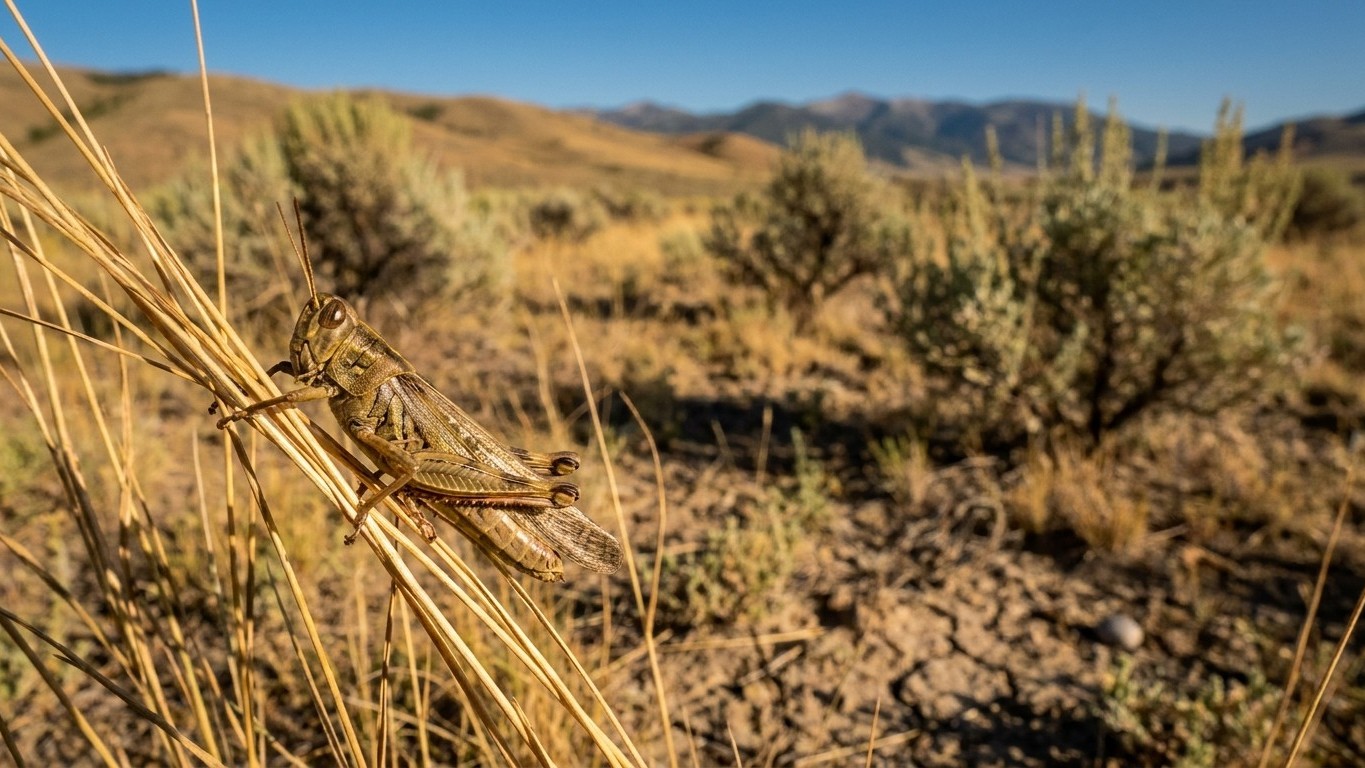

Grasshoppers show up in British Columbia every year between late May and September, with the heaviest activity from mid-July through August in the dry grassland pockets east of the Coast Mountains. Cold, wet springs slow them down. Hot, dry stretches speed up hatching and can turn a normal season into a visible outbreak in places like the Peace River region, the Cariboo-Chilcotin, and parts of the Okanagan and Thompson valleys.
Nothing eliminates grasshoppers from a province this size. What actually controls them is a mix of weather, natural predators, timing of mowing or tillage, and, for home gardens, some low-tech barriers that work better than most people expect.
The Grasshopper Calendar in BC

Grasshoppers in BC follow a one-year cycle that starts underground. Females lay egg pods a couple of inches into the soil in late summer and fall, usually in undisturbed field edges, roadside ditches, or pasture that hasn’t been tilled. Those eggs sit through winter and don’t hatch until soil temperatures warm up consistently, typically in May in the southern interior and a bit later in the Peace region.
Nymphs go through five or six molts before becoming winged adults. That takes roughly six to eight weeks, which is why the small, wingless hoppers you see crawling through a garden bed in June turn into the jumping, flying adults causing headaches by late July. Adults live another six to eight weeks, feeding heavily and mating, before the first hard frost kills them off. In most of BC’s interior, that frost arrives sometime in September or early October, though warm autumns have pushed grasshopper sightings into late September in recent years.
The practical takeaway: the window for catching an infestation early, while grasshoppers are still small and less mobile, runs from late May through June. Wait until August and you’re dealing with fully grown adults that can jump several feet and fly short distances, which makes any control effort far less effective.
Where They Cause the Most Trouble in the Province
Grasshopper pressure in BC isn’t spread evenly. It concentrates where the climate is dry enough and the vegetation is grassy enough to support large populations.
The Peace River region, in BC’s northeast, sits at the edge of the prairie ecozone and shares grasshopper dynamics with neighboring Alberta. Ranchers and grain growers there watch populations closely because outbreak years can mean real forage and crop losses on hundreds of acres at once.
Further south, the Cariboo-Chilcotin’s rangeland and hay country sees periodic spikes tied to drought cycles. Dry summers reduce the fungal diseases that normally knock grasshopper numbers down, letting populations build over two or three consecutive dry years before a wet season resets things.
The Okanagan and Thompson valleys, with their bunchgrass hillsides and orchard-adjacent grasslands, get localized outbreaks almost every summer. Homeowners on the valley benches, where irrigated lawns and gardens sit right next to unmanaged dry grass, often notice grasshoppers moving from the wild grass into cultivated beds as the natural vegetation dries out in July and August. That edge effect, wild grass drying out next to a green, irrigated yard, is one of the most common reasons a homeowner suddenly sees dozens of grasshoppers on tomato plants that were fine two weeks earlier.
Coastal BC, by contrast, rarely sees grasshopper problems at the level of the interior. The wetter climate and denser tree cover don’t favor the open grassland habitat grasshoppers need to build large populations.
What Actually Stops Grasshopper Outbreaks
Weather does more heavy lifting than any pesticide. A cool, wet spring delays egg hatch and gives young nymphs less time to develop before summer heat kicks in, which lowers survival rates. A wet early summer also promotes Entomophaga grylli, a fungal pathogen that specifically targets grasshoppers and can wipe out large portions of a local population within a couple of weeks under the right humidity conditions. You’ll sometimes see dead grasshoppers clinging to the tops of grass stems, a telltale sign the fungus has been at work.
Natural predators matter too, though they rarely stop a true outbreak on their own. Birds, particularly meadowlarks, kestrels, and various sparrows, eat large numbers of nymphs in spring when the young hoppers are small and slow. Ground beetles, spiders, and robber flies pick off nymphs and weakened adults. Blister beetle larvae feed on grasshopper eggs underground, and some parasitic wasps lay eggs directly inside adult grasshoppers.
Land management practices influence outbreak severity as well. Tilling field edges and ditches in fall disturbs egg pods and exposes them to winter cold and predators, which is why row crop farmers who till regularly see fewer grasshopper problems than ranchers managing untilled grassland. Grazing timing matters on rangeland too: heavy grazing in spring removes the vegetation nymphs rely on for shelter and food right when they’re most vulnerable.
None of these factors work in isolation. A dry year with light grazing and no fall tillage sets up ideal conditions for a population to build across two or three seasons, which is the pattern BC’s agriculture sector has documented in past Peace region and Cariboo outbreak cycles.
Practical Control for Yards, Gardens, and Small Acreages
Homeowners dealing with grasshoppers moving in from adjacent grassland have a few options that actually make a difference, and a few that don’t.
Row covers or fine mesh netting over vegetable beds work well in June and early July, while grasshoppers are still small enough to be blocked by the mesh. Once adults show up with wings, netting still helps but isn’t foolproof since a strong jump can get them over a low barrier.
Diatomaceous earth, dusted on the soil surface and lower leaves, damages the exoskeleton of nymphs that crawl through it. It needs reapplication after rain or heavy watering, which limits how practical it is on an irrigated lawn.
Beneficial nematodes and certain biological insecticides based on Nosema locustae, a naturally occurring protozoan pathogen specific to grasshoppers, can reduce populations over a season or two without harming pollinators or pets. These work best applied early, targeting nymphs, and results build gradually rather than delivering an immediate knockdown.
Mowing the buffer strip between wild grass and cultivated garden beds short and keeping it watered removes some of the dry cover grasshoppers prefer, and it makes the transition zone less attractive as a migration corridor. This single step, keeping that border zone mowed and green rather than letting it go to dry seed heads, addresses the exact edge effect that pulls grasshoppers from wild grassland into yards across the Okanagan and Thompson valleys every July.
For anyone managing pasture or hay ground rather than a backyard garden, timing is everything with chemical control. Insecticides targeting nymphs in late May or June require far less product and cause far less collateral damage to beneficial insects than trying to knock down fully grown adults in August. By the time grasshoppers are visibly swarming a field, most of the feeding damage for the season has already happened.
BC’s Ministry of Agriculture and Food, along with regional agricultural extension offices, tracks grasshopper population trends in the interior each spring and issues guidance for producers ahead of the growing season, similar to the forecast systems used across the prairie provinces.
One detail that surprises a lot of people: a single female grasshopper can lay 200 to 400 eggs over her lifetime, packed into pods a few dozen at a time just below the soil surface. That’s the reason a modest-looking population in late June can turn into a visible problem by August, and why fall tillage or fall grazing on untreated field margins carries so much weight in whether next year’s population stays manageable or takes off.