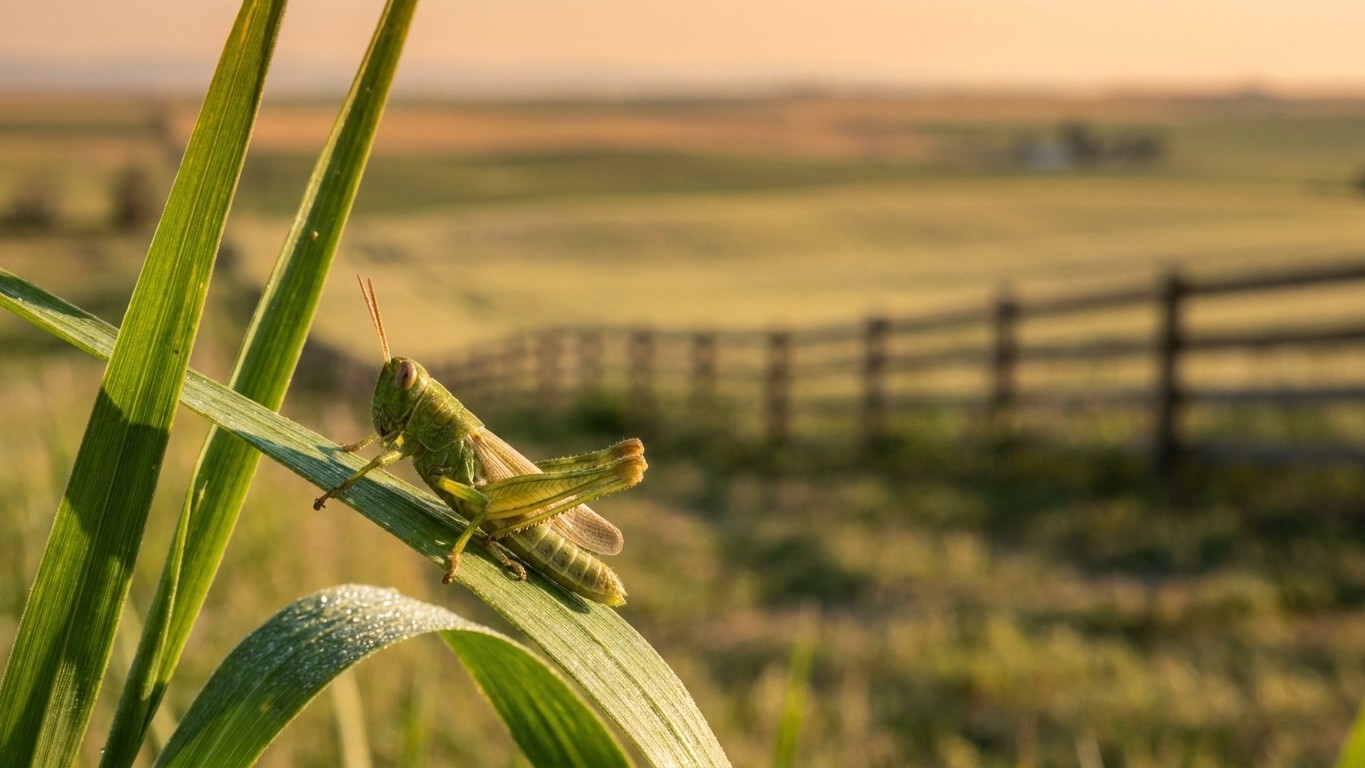

Grasshopper season in Idaho typically starts when soil temperatures warm into the low 60s, which usually happens in April across the Snake River Plain and southern valleys, and stretches into June at higher elevations like the Idaho Panhandle or the mountains around Salmon and Stanley. Nymphs hatch first, feed for six to eight weeks, then mature into flying adults by midsummer. That window between hatch and maturity is also the only real chance to knock a population down before it does serious damage to rangeland, hay fields, or backyard vegetable beds.
When Grasshoppers Show Up in Idaho

Idaho’s grasshopper egg pods spend the winter buried an inch or two below the soil surface, usually in undisturbed ground along fence lines, ditch banks, and weedy field margins. They need a stretch of soil warmth to trigger hatching, so timing shifts noticeably across the state. In the Magic Valley and Treasure Valley, hatch often begins in mid to late April. Up in the Panhandle or in mountain valleys like Custer County, it can hold off until late May or even early June.
Once hatched, grasshoppers pass through five or six nymphal stages before becoming winged adults, a process that generally takes six to eight weeks. Adults show up by late June or July in most of southern Idaho, feed heavily through the hottest part of summer, then mate and lay next year’s eggs in August and September before dying off with the first hard frost. Idaho typically sees one generation per year, which is actually good news, because it means a bad hatch in April doesn’t necessarily mean a second wave in August, the way it might with some other pests.
Species matter here too. The migratory grasshopper and the twostriped grasshopper are the two most common outbreak species on Idaho rangeland, and both tend to favor open grassy areas over shaded or heavily irrigated ground. Mormon crickets, which show up periodically in massive numbers across southern Idaho and cause the kind of highway-covering swarms that make local news, are technically a flightless katydid rather than a true grasshopper, but they’re managed under the same programs and follow a similar spring emergence pattern.
Why Some Idaho Summers Turn Into Outbreaks
Drought is the single biggest driver of a bad grasshopper year in Idaho. Dry springs speed up nymphal development, reduce the fungal diseases that naturally thin grasshopper populations in wet years, and push hungry grasshoppers out of dried-up rangeland and into irrigated crops, gardens, and lawns that still have green growth. Idaho’s rangeland, which covers roughly half the state, gives grasshoppers enormous uninterrupted breeding ground, which is exactly why the U.S. Department of Agriculture’s Animal and Plant Health Inspection Service runs an annual rangeland grasshopper and Mormon cricket survey and suppression program across the West, including Idaho, rather than leaving control entirely to individual landowners.
Southern Idaho counties along the Snake River Plain, including Owyhee, Twin Falls, Cassia, and Elmore, have a long history of periodic outbreaks tied to multi-year dry spells. When a drought stretches two or three seasons, grasshopper numbers can climb from a background nuisance level to genuinely damaging densities, sometimes 20 or more per square yard on affected rangeland. That’s the threshold where forage loss becomes economically significant for ranchers, and it’s also roughly when homeowners on the edges of agricultural land start noticing grasshoppers moving into yards in unusual numbers.
Weedy, unmowed field edges and fallow ground act as reservoirs. Female grasshoppers prefer laying eggs in firm, undisturbed soil with some grass cover, which is exactly the kind of neglected strip you find along irrigation ditches, unused pasture corners, and vacant lots. That’s part of why outbreaks tend to cluster geographically rather than spreading evenly. A property with tidy, regularly disturbed soil at its borders usually hosts far fewer overwintering egg pods than one bordering scrubby, undisturbed acreage.
What Actually Stops a Grasshopper Population
The nymph stage is where control efforts pay off. Adult grasshoppers fly, cover ground fast, and shrug off a lot of intervention, but young nymphs are wingless, clustered near their hatch sites, and far more vulnerable to both insecticides and biological agents. University of Idaho Extension and USDA guidance both point to the same window: treat when most nymphs are still in their second or third instar, generally within three to five weeks of the first hatch, rather than waiting until adults are already dispersing and breeding.
Biological options that actually work
Nosema locustae is a naturally occurring protozoan pathogen sold as a bait product that’s specific to grasshoppers and Mormon crickets, meaning it doesn’t harm bees, birds, or pets the way broad-spectrum insecticides can. It works slowly, reducing feeding and egg-laying rather than killing outright within days, so it’s best applied early in the nymphal stage and works better as a multi-year suppression tool on rangeland than as an emergency fix for a garden under active attack this week. Natural predators also matter more than most people realize. Blister beetle larvae feed on grasshopper egg pods in the soil, and birds like American kestrels and various sparrows can make a real dent in nymph populations if there’s enough cover nearby to support them.
Chemical control and the RAATs approach
For larger-scale outbreaks, USDA APHIS and state agriculture departments often use a method called Reduced Agent and Area Treatments, or RAATs, which applies insecticide in alternating swaths rather than blanket-covering a field. Untreated strips act as refuges that let natural predators and parasites survive, while still cutting grasshopper density enough to protect forage and crops. This approach has become the standard for rangeland suppression programs because it costs less and does less collateral damage than full-coverage spraying, without sacrificing much control effectiveness. Carbaryl-based baits remain a common option for smaller acreages and are labeled for use against grasshoppers in home landscapes, though timing them to the early nymph window is what determines whether they actually reduce a season’s population or just knock back numbers temporarily.
Tilling or disking known egg-laying sites in fall or early spring physically destroys egg pods before they hatch, which is a low-cost option available to anyone managing their own field edges, ditch banks, or fallow ground. It won’t touch eggs laid on a neighbor’s untended property, which is the practical limit of any single-landowner approach to a pest that migrates freely across property lines.
Protecting Home Gardens and Yards
For homeowners, the fight usually starts at the property’s edge rather than in the vegetable bed itself. Mowing or disking weedy border strips in early spring disrupts egg pods before hatch and removes the tall grass cover nymphs rely on in their first few weeks. Row covers made of lightweight fabric protect young vegetable transplants during the peak nymph migration period, generally June in most of southern Idaho, and can be removed once plants are established enough to tolerate some feeding damage.
A few practical steps make a measurable difference on a residential lot:
- Keep grass and weeds mowed short along fence lines and ditch banks, since female grasshoppers prefer taller cover for egg-laying.
- Watch for the small, wingless nymph stage in late spring rather than waiting until adults show up, since that’s the only window where baits and sprays work quickly.
- Use physical barriers like row covers or fine mesh on high-value plants such as young lettuce, beans, and ornamentals that grasshoppers target first.
- Encourage insect-eating birds with nesting boxes or brush piles near garden margins, since kestrels and several songbird species take a real toll on nymphs.
- Till or disk any bare, sunny soil strips on the property in early spring to expose and destroy overwintering egg pods.
Idaho gardeners in outbreak years often notice that grasshoppers strip certain plants almost to the stem while leaving others nearly untouched. Beans, lettuce, carrots tops, and many ornamentals rank among their favorites, while plants like tomatoes, squash, and members of the mint family tend to get skipped more often, which is worth factoring into what gets the row cover treatment first when supplies or time run short.
Timing remains the deciding factor more than any single product or method. A yard treated in early May, while nymphs are still small and concentrated near hatch sites, sees far better results than the same treatment applied in July once adults have scattered across several properties and started laying next year’s eggs. That six-week head start is the real advantage homeowners in grasshopper country have, if they use it.
Related guides
- Grasshoppers in Utah: When It Shows Up and What Stops It
- Grasshoppers in Wyoming: When It Shows Up and What Stops It
- Grasshoppers in Iowa: When It Shows Up and What Stops It
- Grasshoppers in Montana: When It Shows Up and What Stops It
- Carrot rust fly in Idaho
- Grasshoppers in South Dakota: When It Shows Up and What Stops It
- Grasshoppers in Texas: When It Shows Up and What Stops It