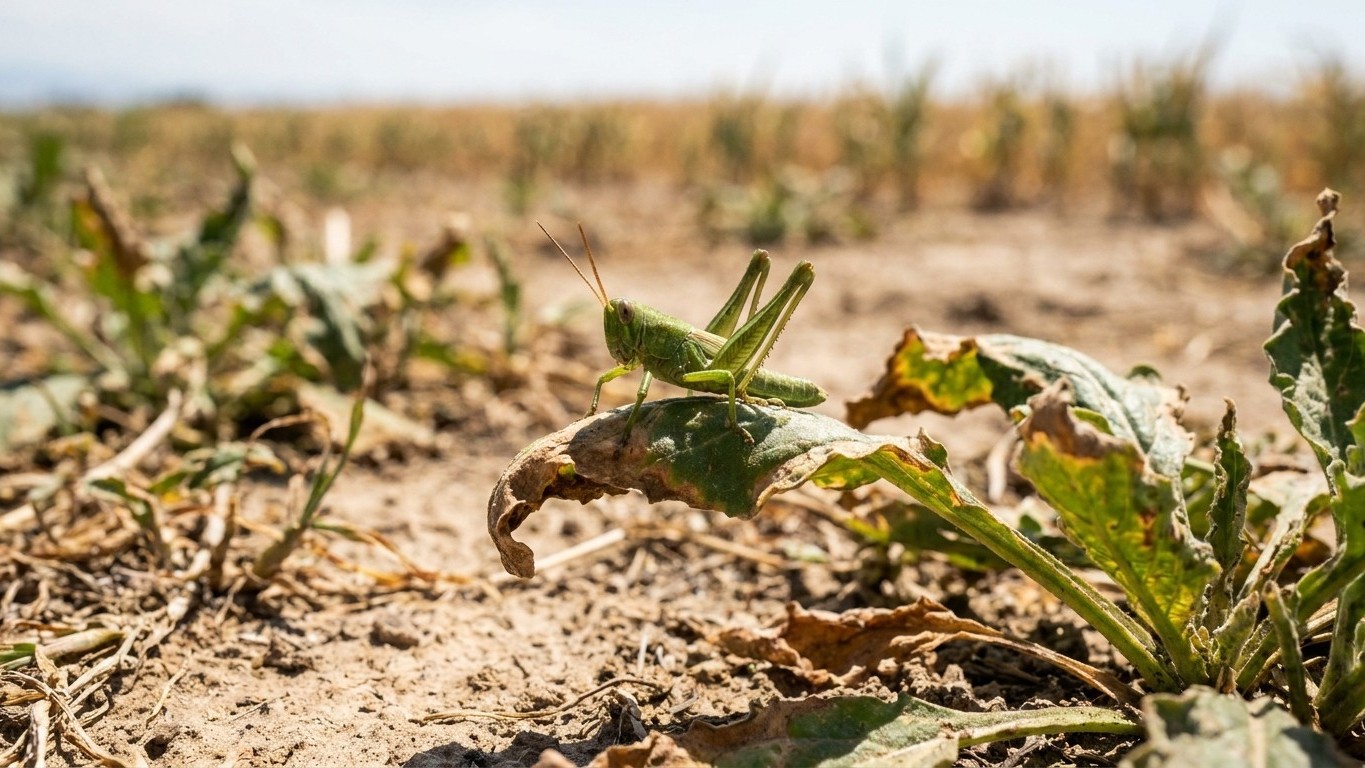

Grasshoppers show up across Colorado every summer, but the timing and severity depend on where you live. Eggs laid in the soil the previous fall start hatching in May when soil temperatures climb into the 60s, and by late June the plains east of Denver and the drier valleys west of the Continental Divide are already dealing with hopping nymphs. Peak damage hits in July and August, when adults are fully winged, feeding heavily, and moving in bands that can strip a garden bed or a hayfield in days. What stops them is a mix of timing your response to that life cycle, reducing egg-laying habitat, and using barriers or targeted treatments before populations explode rather than after.
Why Colorado Sees Grasshopper Booms

Colorado’s grasshopper problem isn’t random. The state sits in a band of the western United States, stretching from the eastern plains through the Arkansas Valley, that regularly experiences outbreak-level grasshopper populations. Colorado State University Extension entomologists have tracked this pattern for decades, and the driver is almost always weather from the prior year.
A warm, dry fall lets more eggs survive the winter because females lay more egg pods when they aren’t stressed by early frost. Then a dry spring the following year reduces the fungal diseases that would otherwise knock down hatching nymphs. Put a warm fall and a dry spring back to back, which happens with some regularity on Colorado’s eastern plains, and you get the kind of grasshopper year that ranchers and gardeners still talk about years later.
Rangeland counties like Weld, Morgan, and Baca have historically reported the heaviest pressure, partly because grasshoppers thrive in the mix of native grass and cropland edges common in that part of the state. But foothill communities along the Front Range aren’t immune. Dry, weedy lots and undeveloped parcels near new subdivisions can host enough egg-laying habitat to send hoppers into adjacent yards by midsummer.
The Colorado Grasshopper Calendar
Most of the species that cause trouble in Colorado, including the migratory grasshopper and the differential grasshopper, follow a single-generation-per-year cycle. Understanding that calendar is the single most useful thing a homeowner or grower can do, because control options that work in June do almost nothing by August.
Egg to Nymph: May Through Early July
Eggs overwinter a few inches deep in undisturbed soil, often in field margins, roadside ditches, and unmowed grass. Hatching starts in May and stretches into June depending on elevation and that year’s spring temperatures. This nymph stage is the window where control is easiest, since young grasshoppers can’t fly, can’t travel far, and are more vulnerable to both insecticides and biological baits.
Winged Adults: Mid-July Through September
By mid-July, most nymphs have molted into winged adults. This is when they become mobile enough to move in from neighboring fields or vacant lots, and it’s when the visible damage to gardens, ornamentals, and crops accelerates. Adult grasshoppers are harder to kill and much harder to contain, since they can simply fly to the next yard.
Egg-Laying: August Through First Frost
Females begin laying eggs in late summer, choosing firm, undisturbed soil, again favoring field edges, fence lines, and untended ground. This stage sets up next year’s population, which is why fall soil disturbance in problem areas is one of the more overlooked long-term tactics.
Where in Colorado They Hit Hardest
Grasshopper pressure isn’t uniform across the state, and knowing your region helps calibrate how aggressive to get with control.
- Eastern plains counties (Weld, Morgan, Logan, Kit Carson) see the most consistent outbreak years due to rangeland and dryland crop mix.
- The Arkansas River Valley near Pueblo and points east has a long history of periodic heavy infestations tied to drought cycles.
- Front Range suburbs bordering open space or agricultural land often see spillover from adjacent fields rather than homegrown infestations.
- Western Slope valleys, including parts of the Grand Valley, report lighter but still noticeable pressure in dry years.
- High-elevation mountain towns above roughly 8,000 feet rarely see damaging populations, since the growing season is too short for most species to complete their cycle reliably.
Colorado State University’s rangeland entomology program has published outbreak maps in past high-pressure years, and the pattern holds: wherever there’s a combination of unmanaged grassland and a dry spring, expect more hoppers by midsummer.
What Actually Stops Grasshoppers
No single method wipes out a grasshopper population on its own. What works is layering tactics that target different life stages, starting well before the insects reach the winged, highly mobile adult stage.
Reduce Egg-Laying Habitat in Fall
Since females favor firm, undisturbed soil for laying eggs, tilling or disking field margins and garden borders in September and October physically destroys egg pods and exposes remaining ones to freezing temperatures and predators. This is a low-cost step that pays off the following spring, especially on properties bordering vacant land.
Treat Early, Not Late
The nymph stage, roughly late May through late June depending on elevation, is the narrow window where insecticidal treatments and biological baits work best. Once grasshoppers have wings, they can simply relocate rather than stay and die, which makes late-summer spraying far less effective and often not worth the cost or the pesticide exposure.
Biological Bait Options
Bait products containing the protozoan Nosema locustae are labeled specifically for grasshopper control and work by infecting nymphs, which then spread the pathogen to others in the population as they’re eaten by surviving grasshoppers or scavenged after death. These baits are slower acting than conventional insecticides, typically taking two to three weeks to show reduced populations, but they’re considered lower-risk for beneficial insects and are commonly recommended by extension programs for rangeland-adjacent properties where broad-spectrum spraying isn’t practical.
Physical Barriers for Gardens
Floating row covers or fine mesh netting over vegetable beds during peak movement in July and August can keep hopping and low-flying adults off high-value crops. This matters most for leafy greens and young transplants, which grasshoppers strip fastest. Taller ornamentals and woody shrubs generally tolerate feeding damage better and rarely need covering.
Encourage Natural Predators
Birds, especially robins, meadowlarks, and various sparrows, along with predatory insects like robber flies and certain wasps, put a real dent in grasshopper numbers over a season. Leaving some native grass and wildflower strips rather than mowing every inch of a property gives these predators cover and food, which indirectly suppresses grasshopper survival without any product application at all.
When Chemical Control Makes Sense
For homeowners with a small garden, spot-treating with an insecticide labeled for grasshoppers during the early nymph stage is usually enough, and broad rangeland-style spraying isn’t necessary or cost-effective at that scale. For larger acreages or agricultural operations facing an outbreak year, coordinated treatment across property lines tends to work far better than one landowner treating in isolation, since adult grasshoppers migrate freely across fence lines. Colorado State University Extension offices in outbreak counties have historically helped coordinate these larger treatment efforts when populations reach damaging thresholds, and checking with a local county extension office before a heavy spray season starts is worth the phone call.
One detail that surprises a lot of new Colorado residents: grasshopper outbreaks tend to run in multi-year cycles rather than single bad summers. A dry fall followed by a dry spring can set up two or three consecutive years of heavy pressure before wetter conditions and natural disease knock the population back down, which is why the fall soil disturbance step matters even in a year when hoppers seem manageable.
Related guides
- Grasshoppers in Wyoming: When It Shows Up and What Stops It
- Grasshoppers in Oklahoma: When It Shows Up and What Stops It
- Grasshoppers in Idaho: When It Shows Up and What Stops It
- Grasshoppers in Iowa: When It Shows Up and What Stops It
- Grasshoppers in Utah: When It Shows Up and What Stops It
- Grasshoppers in South Dakota: When It Shows Up and What Stops It