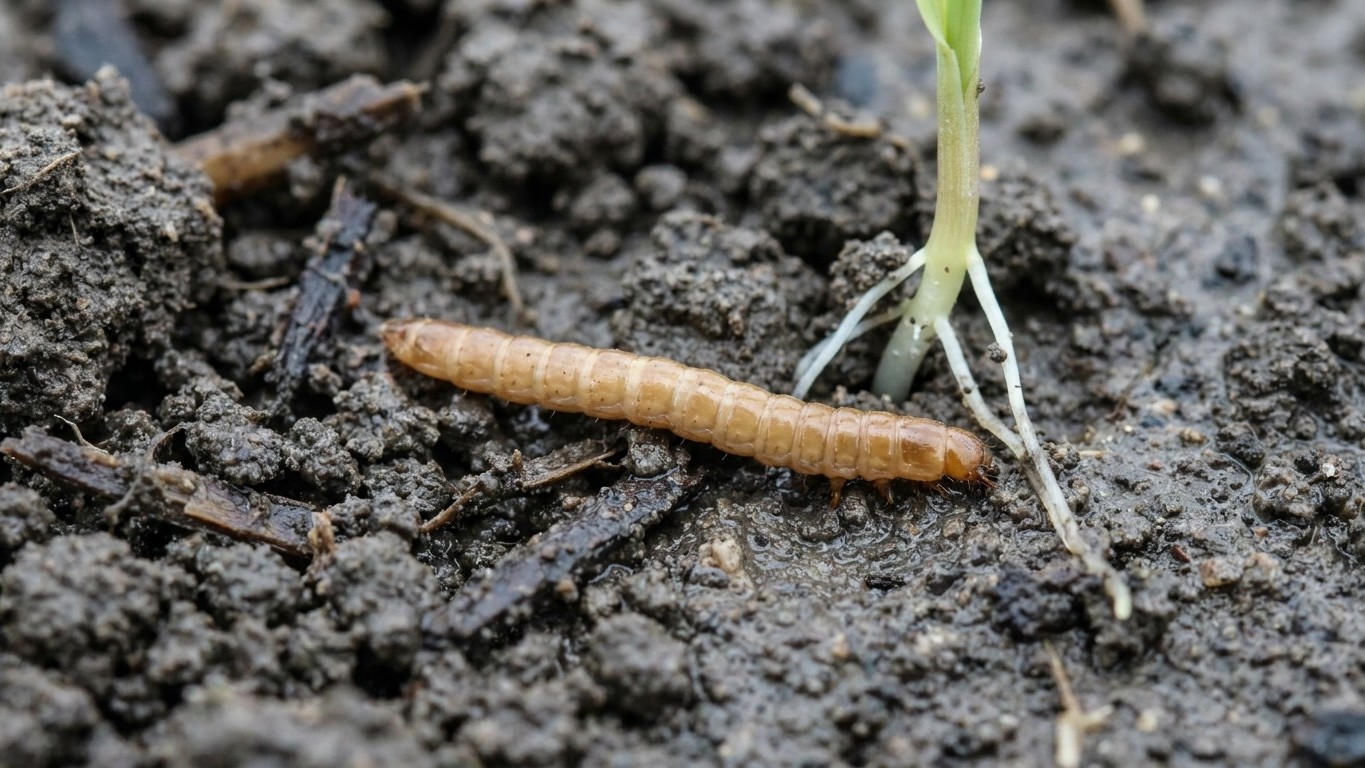

Wireworms show up in South Dakota fields as soon as spring soil temperatures climb past 50°F, usually mid-April in the eastern part of the state and closer to early May on the western plains. They stay active through June, then burrow deeper as summer heat sets in. Stopping them comes down to three moves: treated seed at planting, pre-planting bait tests to check risk, and avoiding a first-year crop right after breaking pasture or CRP ground.
Why South Dakota’s Soil Favors Wireworms

Wireworms are the larval stage of click beetles, and they can live underground for two to six years before ever becoming an adult. That long larval window is what makes them such a persistent problem in the Northern Plains. A single wireworm survives multiple planting seasons feeding on seeds, roots, and underground stems, and it doesn’t care whether you rotated crops last year, because it’s still down there from three seasons ago.
South Dakota’s mix of heavy clay loam in the east and drier, sandier ground in the west both suit different wireworm species, but the shared thread is moisture retention. Fields that stay cool and damp into late spring, common across the James River Valley and much of the northeastern counties, hold larvae closer to the surface longer. Once soil dries and warms past roughly 75°F, wireworms retreat several inches down and feeding tapers off until fall or the following spring.
Land history matters more than most growers expect. Ground that was recently converted from Conservation Reserve Program acres, native pasture, or long-term grass hay into row crops carries a documented higher risk. Click beetles prefer laying eggs in grassy, undisturbed soil, and South Dakota has seen a steady stream of CRP contracts expire and convert to cropland over the past decade. That transition is one of the clearest predictors of a wireworm outbreak the following planting season.
When Wireworms Are Actually Active
Timing follows soil temperature, not the calendar. Larvae start moving upward and feeding once soil hits about 50°F at the 4-inch depth, which typically lines up with corn and small grain planting windows across the state. Feeding peaks between 55°F and 70°F, meaning the same window growers use for planting spring wheat, corn, and sunflowers overlaps almost exactly with peak wireworm damage potential.
There’s a second, smaller window in early fall. As soil cools back into that same 50 to 70°F range in September and early October, wireworms feed again briefly before dropping deeper to overwinter below the frost line. This fall activity rarely damages crops already harvested, but it does matter for winter wheat seedlings planted in September, which can suffer thinning stands if wireworm pressure is high in that field.
Between those two windows, growers get a break. Peak summer heat pushes larvae down where soil stays cooler and more humid, and hard winter freeze does the same in reverse. That’s part of why symptoms often look worse in a cool, wet spring than in a dry one. Slow seedling emergence gives wireworms extra days of exposed, vulnerable tissue to feed on before the plant can outgrow the damage.
What Damage Looks Like in the Field
Patchy, uneven stands are the first sign, usually showing up as gaps or thin rows rather than a uniformly weak field. Corn seedlings may wilt and die before emergence, small grain seeds get hollowed out below the surface, and surviving plants sometimes show a ragged, chewed look at the base of the stem. Because the damage happens underground, a lot of growers don’t connect thin stands to wireworms until they dig up a few missing plants and find the culprit still in the soil next to the rotted seed.
Crops at Risk Across South Dakota
Corn and spring wheat carry the highest documented risk in South Dakota row-crop systems, largely because both are planted directly into the soil during that peak feeding window. Sunflowers, a significant crop across the central and northern counties, also show vulnerability, particularly in fields with a grass or CRP history. Soybeans tend to tolerate wireworm feeding better than corn once past the seedling stage, but early-season stand loss still happens in heavily infested ground.
Potatoes grown on a smaller scale in parts of the state face a different kind of damage. Wireworms tunnel into tubers, and even light feeding creates cosmetic holes that knock a crop out of the fresh market grade, even when yield itself isn’t hurt much. Winter wheat planted into a field that hosted spring wheat or a grass cover crop the prior season deserves extra scrutiny before drilling in September.
What Actually Stops Wireworms
No single tactic eliminates an established wireworm population. Control in South Dakota fields works best as a layered approach, starting before the planter ever leaves the shed.
Insecticidal seed treatments remain the front line for corn, wheat, and sunflowers. Neonicotinoid-based treatments applied commercially to seed protect the germinating seed and early root system through the highest-risk window, though they don’t kill every larva in the field and offer limited protection past three to four weeks after planting.
Soil-applied insecticides at planting give an additional layer for fields with known heavy infestations, particularly first-year corn after CRP or pasture. These are typically applied in-furrow or as a band treatment, and timing them tight to planting matters, since efficacy drops off the longer the product sits exposed before the crop goes in.
Pre-planting bait testing is the single most useful scouting tool and it’s underused. Growers bury small mesh bags or containers filled with a mix of wheat and corn seed about 4 inches deep, spaced across a suspect field, roughly 10 to 14 days before planting once soil temperature has climbed past 50°F. Digging up the baits and counting wireworms gives a real risk number instead of a guess. Finding even one wireworm per bait station in multiple locations across a field is generally treated as justification for a seed treatment or soil insecticide, since populations are almost always higher than what a single dig-up reveals.
Tillage timing plays a supporting role. Fall tillage that exposes larvae to freezing temperatures and predatory birds reduces populations somewhat, though it’s a minor effect compared to chemical control and it comes with tradeoffs for soil moisture retention and erosion risk on South Dakota’s wind-exposed cropland. Delaying planting by a few days to let soil warm past the coldest, wettest stretch can also help seedlings emerge faster and outrun early feeding, though this has to be balanced against the yield penalty of late planting in a state with a relatively short growing season.
Crop rotation helps less than most growers assume, because wireworms feed on a wide range of plant roots and aren’t picky the way some other soil pests are. Rotating out of small grains for a year or two can reduce populations gradually, but it won’t clear a heavily infested field on its own given how long larvae persist underground.
Fields That Need the Closest Watch
Three field histories in South Dakota consistently show up as higher risk, and knowing which ones apply to a given piece of ground changes how aggressively to scout and treat.
- Ground converted from CRP, native grass, or long-term hay within the past one to three years
- Fields with a history of low spots or heavier clay that stay wet into late spring
- Continuous small grain or corn ground with no recent tillage disturbance to the top few inches of soil
None of these guarantee a wireworm problem, but combined with a positive bait test, they’re enough reason to budget for seed treatment rather than find out mid-June that a third of the stand is missing. South Dakota State University Extension’s field crop entomology program tracks regional wireworm pressure through grower reports each spring, and that kind of local monitoring tends to be more reliable than any statewide generalization, since pressure varies sharply county to county depending on land-use history.