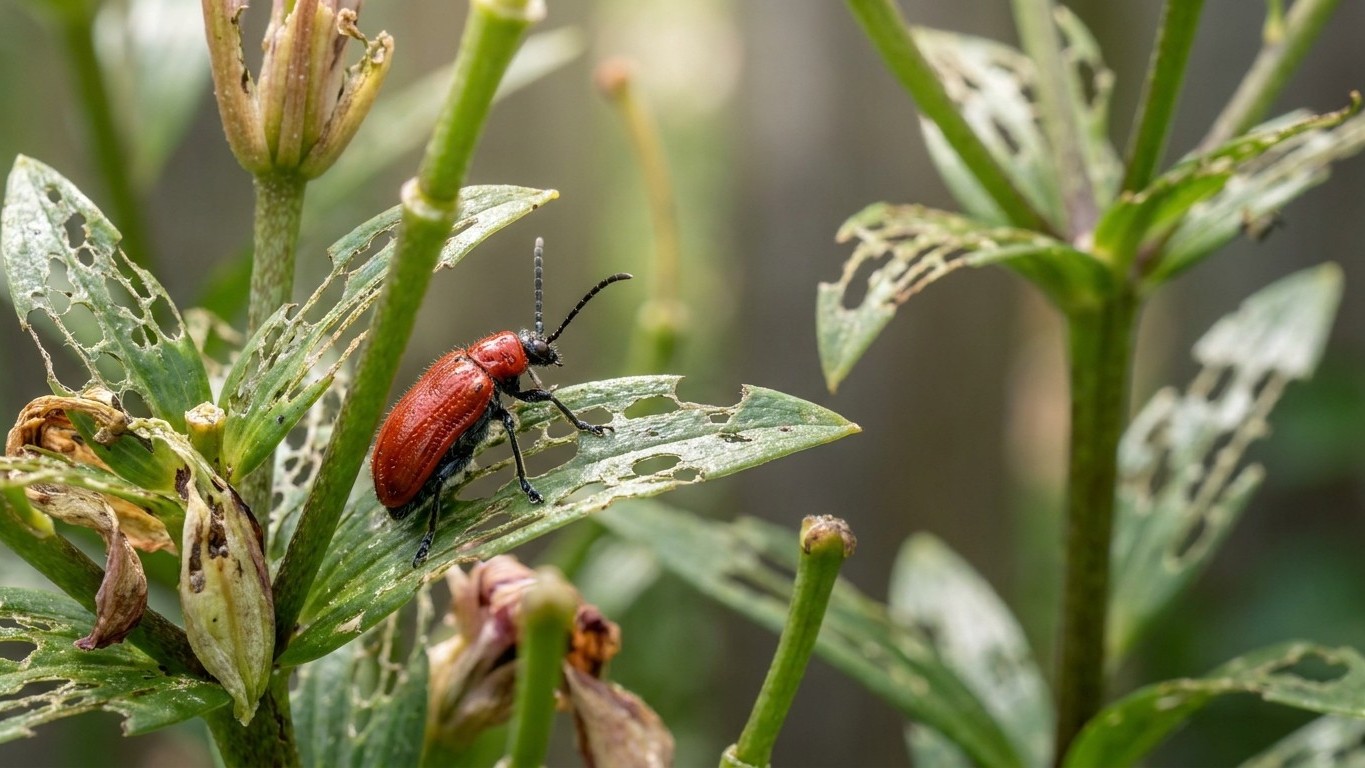

Adult lily leaf beetles emerge in Massachusetts as soon as the ground thaws, usually between late April and early May, right around the time true lilies push their first shoots through the soil. By early June, the real damage starts: skeletonized leaves, chewed flower buds, and stems stripped bare by larvae covered in their own excrement. The good news is that this pest is beatable with a mix of timing, hand removal, and a biological control program that’s been running in the state for over two decades.
Why Massachusetts Is Ground Zero for This Pest

The lily leaf beetle (Lilioceris lilii) isn’t native to North America. It showed up in Montreal in the 1940s, likely hitching a ride on imported lily bulbs, and stayed a Canadian problem for decades. Then in 1992, it turned up in Cambridge, Massachusetts. That single detection point matters, because it means the state has one of the longest observation records of this insect on the continent, and researchers at UMass Amherst have tracked its spread and tested control methods longer than almost anyone else in the country.
From that Cambridge population, the beetle fanned out across New England. It’s now established in every county in Massachusetts, with the heaviest pressure in the eastern and central parts of the state where lily gardens are dense and gardens sit close together, letting adults fly or hitch rides on plants between yards. Rural western Massachusetts sees lighter but still steady infestations, mostly in areas where gardeners have planted Asiatic or Oriental lilies over the years.
When It Shows Up: A Season-by-Season Timeline
Timing control efforts around this pest’s life cycle matters more than almost any other factor. Miss the window and you’re fighting an uphill battle for the rest of summer.
Early Spring: Adults Wake Up
Adult beetles overwinter in leaf litter, mulch, and soil debris near where lilies grow, sometimes wandering a short distance from the original plant before settling in for winter. Once soil temperatures climb into the 50s, usually mid-to-late April in the Boston area and slightly later inland, they crawl or fly to emerging lily shoots. These adults are unmistakable: bright scarlet-red wing covers, black head and legs, about a third of an inch long. They’re loud fliers too, making an audible clicking sound if you catch one in your hand.
Late Spring: Egg-Laying Begins
Females start laying eggs within days of finding a host plant, usually by early-to-mid May in most of the state. Eggs get deposited in irregular rows on the undersides of leaves, orange-red and easy to miss unless you’re actively flipping leaves to check. A single female can lay several hundred eggs over her lifespan, which stretches into summer.
Early Summer: Larvae Do the Damage
Larvae hatch within a week or two and immediately start feeding, and this is where most of the visible plant destruction happens. They cover themselves in their own frass as a defense against predators, which makes them look like slimy black or brown blobs rather than insects. By late June and into July, heavily infested lilies can be reduced to bare stems with a few tattered leaf fragments.
Late Summer: A New Generation Prepares to Overwinter
Larvae drop into the soil to pupate by midsummer, and new adults emerge in August. These late-season adults feed a bit more, then seek out overwintering sites by September and October. One generation per year is typical in Massachusetts, though warmer microclimates or extended fall seasons can occasionally produce a partial second wave.
What Actually Gets Eaten (And What Doesn’t)
This is where a lot of home gardeners get confused, because the name suggests it eats anything called a lily. It doesn’t. The beetle targets true lilies in the genus Lilium, which includes Asiatic, Oriental, trumpet, and tiger lilies, along with fritillaria. Daylilies, in the genus Hemerocallis, are a completely different plant family and almost never get touched. If your daylilies look chewed up, the culprit is something else, likely deer, slugs, or a different beetle species entirely.
Canna lilies, calla lilies, and peace lilies are also unrelated botanically and sit outside the beetle’s host range. Gardeners who’ve lost patience with true lilies sometimes switch to daylilies specifically to dodge this pest, and it works, since the beetle has shown little to no interest in expanding its diet in over 30 years of North American presence.
What Stops It: Control Methods That Hold Up
No single tactic wipes this pest out completely, but combining a few approaches keeps damage manageable even in heavily infested gardens.
Hand-Picking, Done Right
Adults are surprisingly easy to spot given their bright red color, but they drop and play dead the instant they sense movement below them, flipping onto their black undersides where they blend into soil and mulch. The trick is holding a container of soapy water underneath the leaf before you disturb the plant, so the beetle falls straight into the water instead of the garden bed. Checking plants every few days starting in April, and continuing through the larval stage in June, catches both generations before populations explode. Squishing egg clusters on leaf undersides during the same checks removes hundreds of future larvae in seconds.
Insecticide Options
Neem oil and spinosad-based products, both approved for organic use, show real effectiveness against larvae when applied early, before larvae grow past their first couple of molts. Timing the spray for early-to-mid June, right as eggs are hatching, gets the best results. Adults are tougher to kill with contact sprays because of their hard shells, so most gardeners focus insecticide use on the larval stage and rely on hand-picking for adults.
Systemic insecticides containing imidacloprid have shown effectiveness in university trials, but they come with a serious downside: they can harm pollinators visiting nearby flowers, and lilies themselves attract bees. Anyone considering a systemic product should apply it well before bloom and avoid it entirely on plants growing near heavily-visited pollinator gardens.
Biological Control: The Long Game
Massachusetts has been at the center of a biocontrol program using a tiny parasitoid wasp, Tetrastichus setifer, which lays its eggs inside lily leaf beetle larvae. Researchers at UMass Amherst have released this wasp at multiple sites across the state since the early 2000s, and populations have established successfully in several areas, providing a slow but self-sustaining reduction in beetle numbers over time. This isn’t an overnight fix. Wasp populations take years to build up enough density to noticeably dent beetle numbers, and results vary by location depending on local conditions and how established the wasp population has become. Home gardeners can’t buy or release these wasps themselves, but knowing they’re active in parts of the state explains why some regions report lighter infestations than others despite similar lily plantings.
Garden Cleanup That Actually Matters
Since adults overwinter in plant debris and mulch near lily beds, a thorough fall cleanup, removing dead foliage and reducing thick mulch layers right around lily stems, cuts down on overwintering sites. It won’t eliminate the population since beetles can travel from neighboring yards, but in dense residential areas where lilies grow block after block, cleanup habits across a neighborhood add up.
Practical Choices for Massachusetts Gardeners
Gardeners who’ve fought this pest for a few seasons tend to land on one of two strategies. Some commit to the weekly hand-picking routine every spring and early summer, treating it as a recurring chore no different from weeding. Others decide the fight isn’t worth it and shift their lily collection toward less-favored species, or replace true lilies with daylilies and other unrelated look-alikes that never draw the beetle’s attention.
There’s a middle path too: planting a smaller number of prized lily varieties in a spot that’s easy to monitor daily, rather than scattering lilies throughout a large garden where infestations go unnoticed until the damage is severe. Concentrating lilies also makes targeted neem oil or spinosad applications more practical, since you’re not chasing beetles across a sprawling yard.
One detail that surprises a lot of people: this beetle has now been confirmed in nearly every New England state and parts of New York, tracing a spread pattern that started from that original Cambridge population three decades ago. Massachusetts gardeners aren’t just dealing with a local nuisance, they’re living at the source of an infestation that’s reshaped how an entire region grows one of its most popular summer flowers.