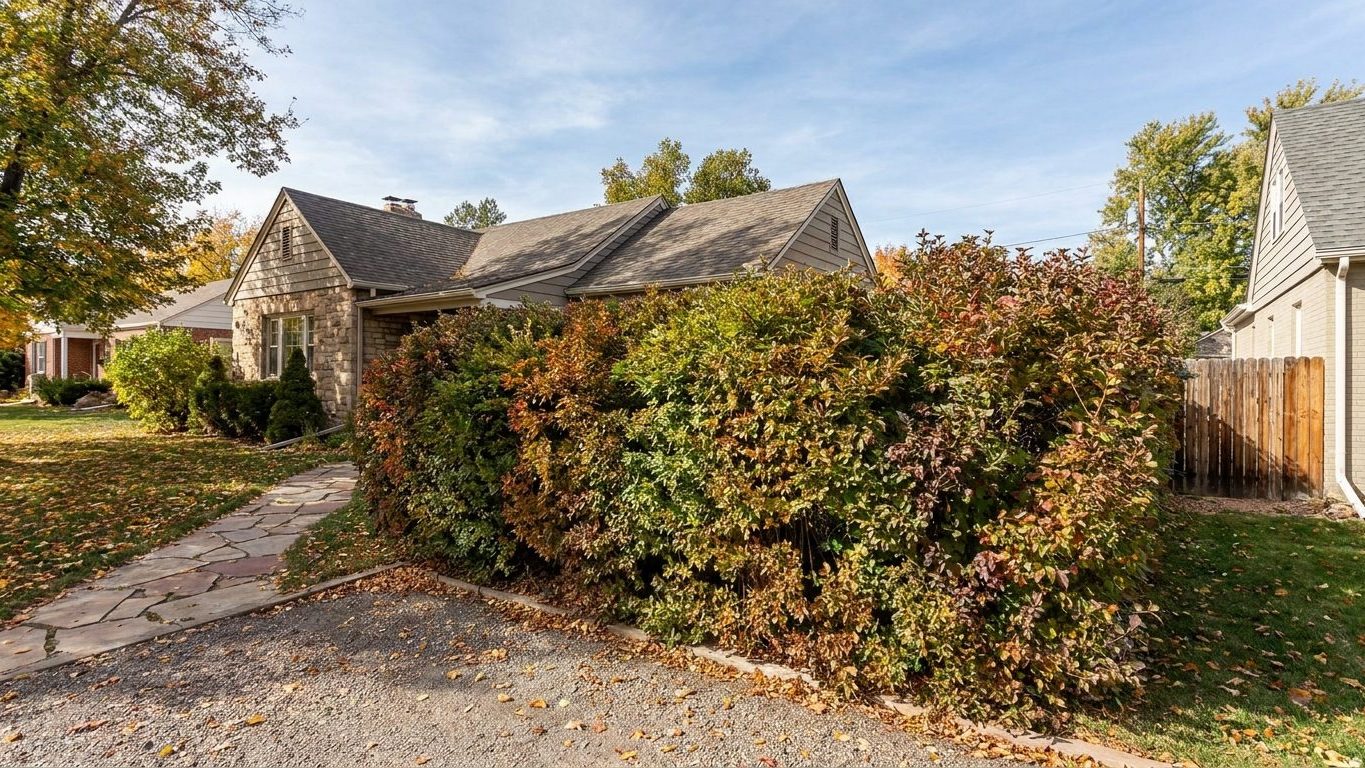

California does not set a legal height limit for hedges. No statute, no statewide code section, no number that applies from Eureka to San Diego. The limit you’re looking for exists, but it’s written into a local zoning ordinance, and it changes depending on which city or county line your property sits inside.
There is no California hedge height law
Search “hedge height law California” and you’ll find pages that quote a single figure, as if Sacramento passed a rule that applies to every yard in the state. That’s not how it works. California, like every other state, leaves fence and landscaping height to local governments. Cities and counties write their own zoning codes, and those codes are the only place a hedge height limit actually lives.
This is a structural fact about American land-use law, not a California quirk. Zoning authority is delegated to municipalities, which means a hedge that’s perfectly legal in one city could be a code violation two miles away, once you cross into the next jurisdiction. A gated community in Marin County, a beach town in Orange County, and a high-desert city in the Inland Empire can each set a completely different standard, because each one writes and enforces its own zoning chapter.
The commercial sites that rank for this question tend to skip that detail. They want a clean, quotable number, so they pick one and present it as universal. That’s the exact mistake to watch for: a page that states one hedge height for “California” without naming the city whose code it’s quoting is not describing state law, it’s describing one town’s rule and mislabeling it.
Fences and hedges aren’t always the same thing in the code
There’s a second layer to this that trips people up even after they find their city’s ordinance. Many zoning codes regulate fences as built structures, meaning wood, chain-link, vinyl, wrought iron, under a section usually called “fences and walls” or “accessory structures.” A living hedge is a plant, not a structure, and some codes treat it differently, sometimes under a separate landscaping section, sometimes not addressed at all outside of the sight-triangle rule covered further down.
Before you assume the fence height limit you found applies to your boxwood row or your ficus screen, check which word the ordinance actually uses. If it says “fence, wall, or hedge,” you have your answer. If it only says “fence” and hedges are mentioned nowhere else in the chapter, your city may not regulate hedge height directly at all, outside of visibility and nuisance rules. That distinction is worth five minutes of reading before you assume a limit that isn’t written down.
How to find the rule that actually applies to you
Every California city and county publishes its municipal code somewhere, and almost all of them use one of three hosting platforms. Knowing the names saves you from wading through a city’s general website looking for a PDF that may not exist.
| Publisher | Web address | How to search it |
|---|---|---|
| Municode | library.municode.com | Search your city name, then open the zoning or land development chapter |
| American Legal Publishing | codelibrary.amlegal.com | Search your city name, look for “Zoning Code” or “Development Code” in the table of contents |
| eCode360 | varies by municipality | Search “[your city name] eCode360” and use the built-in keyword search for “hedge” or “fence” |
Once you’re inside the code, don’t start at the top. Go straight to the zoning chapter, and inside it, look for a section titled “fences,” “walls,” “accessory structures,” or “screening.” That’s almost always where height limits live, usually broken out by location on the lot: front yard, side yard, rear yard, and sometimes corner lots get their own separate rule because of visibility concerns covered in the next section.
Use the search function, then call the city
All three platforms have a keyword search bar. Type “hedge” first. If nothing comes up, try “fence,” then “vegetation,” then “screening.” A code that never mentions hedges at all doesn’t necessarily mean there’s no rule, it might mean the city regulates hedges under a general nuisance ordinance instead of a specific height number.
If the online code is unclear, outdated, or you can’t find your city on any of the three platforms, the fastest path is a phone call. Ask for the planning department or code enforcement division, and ask specifically: “Does the zoning code set a maximum height for hedges or living screens on residential lots, and does it differ for front, side, and rear yards?” That single question, asked to the right department, gets you a faster and more current answer than any web search.
The branches that cross the line
Height limits govern what you can grow. A separate, older set of rules governs what happens when your neighbor’s hedge grows into your airspace, and that’s a common source of disputes that has nothing to do with zoning codes at all.
The general principle, recognized in one form or another across most states, is that a property owner may trim back branches, roots, or growth that crosses onto their land, up to the property line and no further. You’re generally not allowed to reach across the boundary onto your neighbor’s side to do the cutting, and you’re not allowed to trim in a way that kills the plant outright. This comes from case law built up over decades, not from a single statute, and the exact boundaries of the rule shift from state to state and even case to case. Treat it as a general starting point, not a green light to take a chainsaw to the neighbor’s magnolia.
Talk before you cut
In practice, the self-help trimming principle is meant for minor encroachments, a branch over the fence line, a root heaving a walkway. It is not designed to resolve a hedge that’s grown eight feet over the agreed height limit and is now blocking a neighbor’s view or sunlight. That’s a dispute, and disputes over long-standing hedges tend to escalate fast when one side starts cutting without a conversation first.
If a hedge on a shared boundary has become a real point of conflict, whether it’s height, overhang, or root damage, a written note to the neighbor referencing the specific zoning section is a far better first step than any pruning shears. If the disagreement doesn’t resolve informally, that’s the point to talk to a local attorney who handles property line disputes, since the trimming principle described here is general and does not substitute for advice on your specific situation.
What to check before you plant
The best time to deal with hedge height rules is before the first sapling goes in the ground, not after it’s six feet tall and blocking a sightline.
- Zoning code height limits for your specific yard location, since front, side, and rear yards are often treated differently in the same ordinance
- Sight triangle requirements if you’re anywhere near a corner lot, driveway apron, or alley, since this is close to a universal rule: nothing may obstruct a driver’s line of sight at an intersection, and that limit is usually well below the general fence height allowed elsewhere on the lot
- HOA covenants, which are private contracts and can set stricter limits than the city, completely independent of the municipal code
- Utility easements along the property line, since some utility providers reserve the right to remove vegetation that interferes with lines or access, regardless of local zoning
- Mature height of the species, since a plant that looks like a three-foot shrub at the nursery may be listed as reaching fifteen feet or more at maturity, well past most residential limits
The sight triangle deserves particular attention because it’s one of the few rules that shows up in almost every municipal code, in some form, even in cities that otherwise say very little about hedges. It exists purely for driver visibility, so it applies at corners and driveway entrances even in yards where the general hedge height limit is generous. Check for it specifically if your property touches an intersection or shares a driveway apron with the street.
Common questions
Does California have a statewide maximum fence or hedge height?
No. Height limits for fences and hedges are set entirely at the municipal level, through each city or county’s own zoning code. There is no state statute setting a number for residential properties.
Where in the municipal code should I look for the hedge rule?
Start in the zoning or land development chapter, then look for a section labeled “fences,” “walls,” “accessory structures,” or “screening.” Search the code on Municode, American Legal Publishing, or eCode360, whichever platform your city uses, with the keyword “hedge” first and “fence” as a backup.
Can my neighbor cut branches from my hedge that cross onto their property?
In general, yes, up to the property line, at their own expense, and without killing the plant. This principle comes from case law rather than a single statute and varies by jurisdiction, so treat it as a general rule rather than a guaranteed right in every dispute.
What is a sight triangle and does it apply to hedges?
A sight triangle is a zoning requirement, common in nearly every municipal code, that keeps corners and driveway entrances clear of obstructions so drivers can see approaching traffic. It applies to hedges the same way it applies to fences and parked vehicles, and its height limit is usually much lower than the general limit allowed elsewhere on the lot.