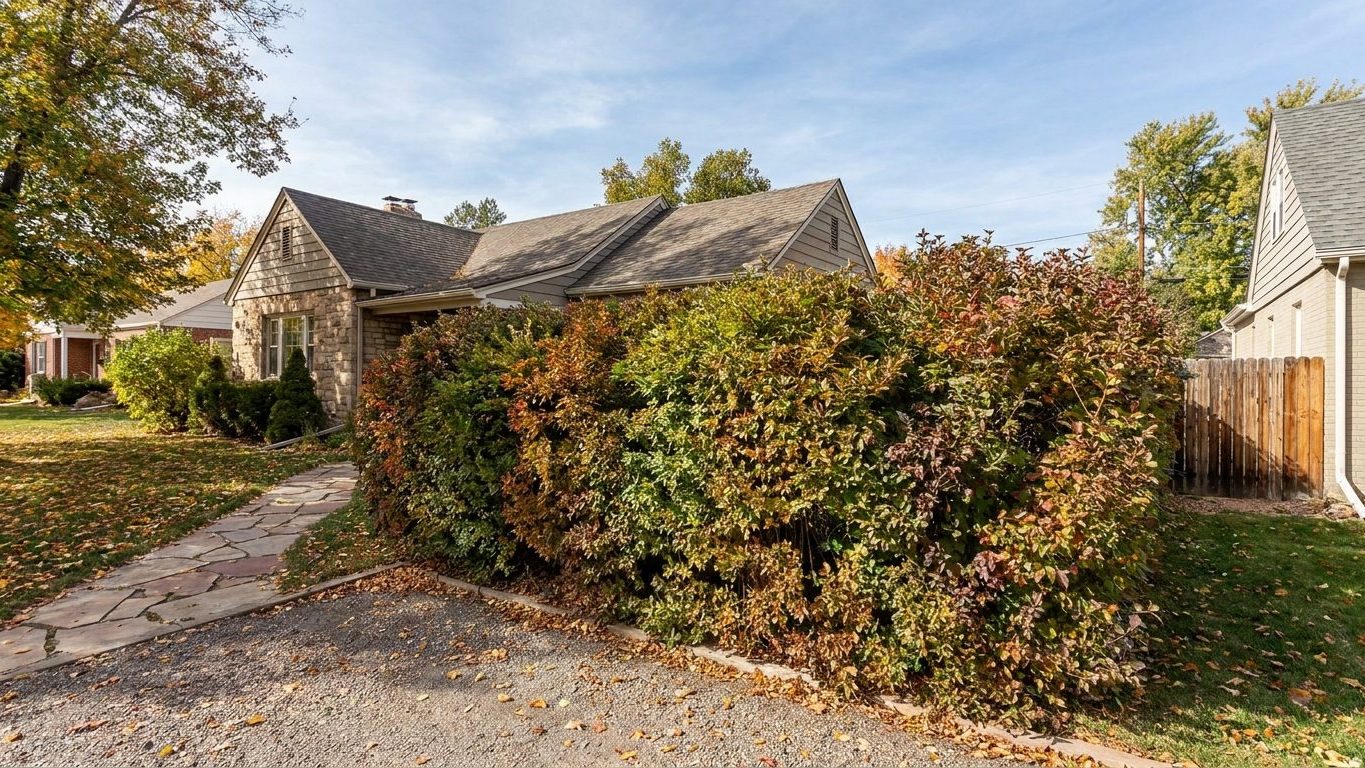

The direct answer is that Kentucky has no statewide hedge height limit. No Kentucky Revised Statute sets a number in feet for how tall a hedge, screen, or living fence can grow on a residential lot. That control sits with individual cities and counties, which means the real rule for your yard depends entirely on your address, not on anything published in Frankfort.
There is no Kentucky hedge height law
Search the Kentucky Revised Statutes for “hedge height” and you will come up empty. That is not a gap in the research, it is how the law is actually built. Fences and hedges fall under land use and zoning authority, and in the American legal system zoning is a local government function, handed down to cities and counties rather than reserved by the state. Kentucky never carved out an exception for landscaping, so the state simply stays out of it.
This pattern is not unique to Kentucky. No state in the country sets a single hedge height figure that applies to every homeowner within its borders. Height limits, where they exist, are written into municipal zoning codes, one city or county at a time, and they can differ from a six-foot cap in one town to an eight-foot cap two miles away in the next jurisdiction, or to no specific number at all in a rural county that has never adopted a fence ordinance.
That reality trips up a lot of the sites that rank for searches like this one. Several present a single height figure and attach it to “Kentucky law,” as if the whole state answered to one rule. It doesn’t, and treating a city ordinance, or worse, a rule borrowed from an entirely different state, as statewide law will give a homeowner false confidence right up until a neighbor or a code enforcement officer points to the actual local text.
The distinction that matters here is between a fence and a hedge. Kentucky courts and municipal codes generally treat a fence as a built structure, something with posts, panels, or rails, and a hedge as a living planting. Some local ordinances lump them together under a single “screening” or “enclosure” category. Others regulate fences in detail and say almost nothing about vegetation, on the theory that a plant is not a structure and therefore isn’t subject to building permit rules. A few flip that entirely and regulate hedges more strictly than fences, specifically because a dense, mature hedge can block sightlines in a way a four-foot picket fence never would.
So the honest starting point for a Kentucky homeowner is not “how tall can my hedge be,” but “does my city even define a hedge separately from a fence, and if so, where in the code does it say so.” That question has an answer. It just isn’t a state law, and finding it takes a short, specific search rather than a quick statewide summary.
How to find the rule that actually applies to you
Municipal codes in the United States are almost always published online, and nearly all of them run through one of three platforms: Municode (library.municode.com), American Legal Publishing (codelibrary.amlegal.com), or eCode360. If you type your city’s name plus “municipal code” into a search engine, one of these three will almost certainly come up as the official, current version of the ordinance, not a paraphrase or a summary written by a third party.
Once you’re in the code, don’t search for “hedge” first. Go to the zoning chapter, sometimes labeled “Land Development Code” or “Unified Development Ordinance,” and look for a section titled “Fences,” “Accessory Structures,” or “Walls and Screening.” That is where height limits live, whether they cover living plants or not. Read the definitions section at the start of that chapter too. If the code defines “fence” to include “any hedge, wall, or other means of enclosure,” then whatever height limit applies to fences applies to your hedge as well. If the definition is narrower and only covers built structures, the hedge may fall outside that rule entirely, which means no permit and no numeric cap, at least from zoning.
If you’re outside city limits
A large share of Kentucky homeowners live in unincorporated parts of a county rather than inside a city’s boundary, and that changes which code applies. Unincorporated areas are usually governed by the county’s planning and zoning office, not the nearest city hall, and many rural counties have adopted much lighter zoning than incorporated towns, sometimes with no fence or hedge height rule at all. The fastest way to confirm this is a phone call to the county planning and zoning department, which can tell you in a few minutes whether your parcel is inside city limits, and if not, whether the county’s own ordinance addresses hedge or fence height.
Two calls worth making
- City or county planning and zoning department: confirms whether a height limit exists, what counts as a hedge versus a fence, and whether a permit is required before you plant or build.
- Your homeowners association, if you have one: HOA covenants are private contracts, separate from municipal law, and they can (and often do) set stricter limits than the city allows, right down to approved plant species.
| Publisher | Domain | What to search once inside |
|---|---|---|
| Municode | library.municode.com | Zoning > Fences, Walls, and Hedges; or Accessory Structures |
| American Legal Publishing | codelibrary.amlegal.com | Land Development Code > Screening and Enclosures |
| eCode360 | ecode360.com | Zoning Ordinance > Definitions, then Fences/Hedges |
The branches that cross the line
One rule shows up in almost every American municipality, regardless of whether it regulates general hedge height at all: the sight triangle. At street corners, and often at the point where a driveway meets a public road, nothing, plant or structure, may block a driver’s line of sight above a certain low height, typically far shorter than any general fence or hedge limit the same code allows elsewhere on the property. This rule exists for safety reasons rather than aesthetics, and it tends to survive even in jurisdictions with otherwise minimal zoning, because it ties back to state and local traffic safety standards rather than ordinary land-use preference.
If your property sits on a corner lot or has a driveway opening onto a street, check for this specific provision before you plant anything tall near that intersection. A hedge that is perfectly legal at six feet along your side yard can still be a code violation, and a genuine safety hazard, if it’s planted inside the sight triangle near your driveway apron. The dimensions of that triangle (how far back from the corner it extends, how tall growth may be within it) are set locally, so this is another item to confirm with the same planning department call mentioned above.
Separate from any ordinance, there’s a long-standing common-law principle that covers what happens when a neighbor’s hedge grows across the property line. In most states, a landowner has the right to trim back branches, roots, or growth that crosses onto their own property, up to the boundary line and no further, and generally at their own expense. That right typically does not extend to killing the plant outright or cutting on the neighbor’s side of the line, and it comes from case law built up over decades rather than from a single statute. It is a widely recognized principle, not a Kentucky-specific rule, and how strictly a court applies it varies by state and by the specific facts of a dispute. If a hedge disagreement escalates past a friendly conversation, that’s a point where a local attorney, not a zoning office, is the right next call.
What to check before you plant
The cheapest time to deal with any of this is before the hedge goes in the ground, not after it’s six feet tall and your neighbor is asking questions. A few checks take less than an afternoon and can save a genuinely awkward removal later.
- Confirm your jurisdiction. City limits or unincorporated county? That single fact determines which code applies and which office to call.
- Read the definitions section of the zoning chapter before assuming a “fence” height limit applies to living plants at all.
- Locate the sight triangle rule if you’re anywhere near a corner lot, a shared driveway, or an intersection.
- Pull your HOA covenants if you have one, since they can override the city’s number with something stricter.
- Verify the property line with a survey or plat map before planting close to a boundary, so a fast-growing species doesn’t end up straddling the line by year three.
Species choice matters here too, in a practical sense rather than a legal one. A hedge planted at eighteen inches today can reach a mature height of ten or fifteen feet within a decade depending on what you chose, and a plant that eventually exceeds whatever local limit applies becomes the homeowner’s problem to fix, usually at their own cost, regardless of how reasonable the planting looked the day it went in.
Common questions
Does Kentucky have a state law limiting fence height too?
No. Fence height, like hedge height, is set by municipal or county ordinance in Kentucky, not by state statute. The same search method (city code through Municode, American Legal Publishing, or eCode360, then the zoning chapter) applies to fences as well.
What if my city’s code doesn’t mention hedges at all?
Some municipal codes regulate built fences in detail and say nothing about living plantings. In that case, there may be no numeric height cap on your hedge from a zoning standpoint, though the sight triangle rule and any HOA covenant can still apply independently.
Can my neighbor legally cut my hedge if it crosses onto their yard?
Generally, yes, up to the property line and at their own expense, under a common-law principle recognized in most states. They typically cannot cut on your side of the line or kill the plant outright. This varies by state and by circumstance, and it’s not a Kentucky-specific statute.
Who do I call if I’m not sure whether I’m in city limits?
Your county’s planning and zoning department can confirm this quickly and point you to whichever code, city or county, actually governs your parcel.