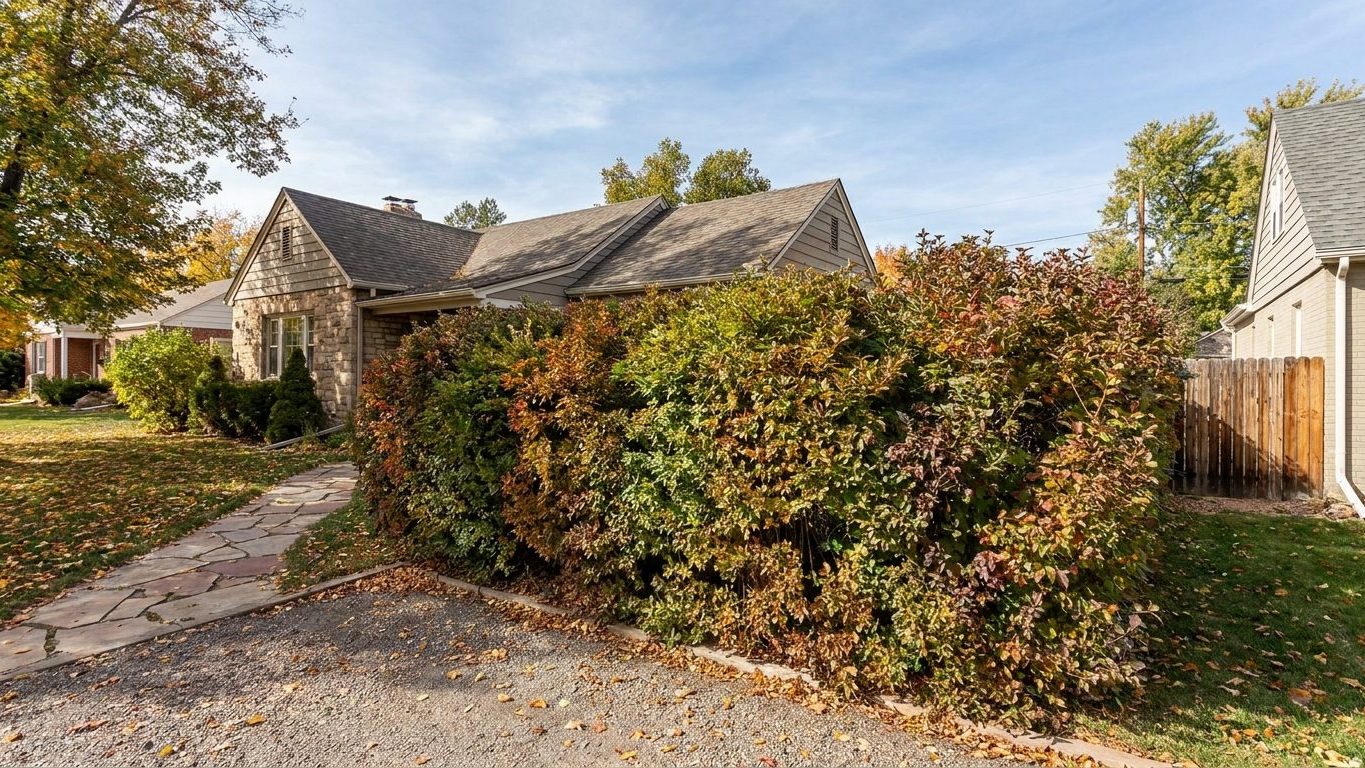

North Dakota has no statewide hedge height law. No statute in the North Dakota Century Code sets a maximum height for a hedge, a shrub row, or a living fence anywhere in the state. That authority belongs to city governments, which means the real limit on your hedge depends entirely on which municipality’s zoning code sits over your address, not on any rule written in Bismarck.
There is no North Dakota hedge height law
Search “hedge height law North Dakota” and you’ll find pages that confidently quote a number, four feet, six feet, sometimes eight, as if it applied everywhere from Fargo to Williston. It doesn’t. State legislatures across the country, North Dakota included, generally stay out of regulating how tall a homeowner’s shrubbery can grow. That job falls to municipal zoning codes, and every city writes its own.
This isn’t unique to North Dakota. No state in the country has a single statewide hedge height limit. Height restrictions come from local ordinances, adopted city by city, sometimes block by block within the same city if a neighborhood has its own overlay district. A duplex lot in one town might allow a ten-foot privacy hedge along the back fence line, while a similar lot two counties over caps everything at four feet near the street. Both rules are legal. Neither one applies outside its own city limits.
The confusion is understandable. Fence height limits get more attention online because fences are structures, easy to define, easy to inspect, and often capped at a uniform number like six feet in residential zones. Hedges are trickier. A living plant grows, spreads, and needs pruning to stay within any limit, and plenty of cities never bothered writing a rule for them at all. Others fold hedges into the same section as fences. Others treat them as landscaping, exempt from height rules except at corners and driveways.
What this means practically: if you’ve been told “North Dakota law says four feet,” ask where that number came from. If the source is a national aggregator site rather than a specific city’s code, treat it as unverified. The only number worth trusting is the one printed in your own city’s zoning ordinance, under its own section, with its own effective date.
This isn’t a gap in the law so much as how American zoning has always worked. Cities, not states, control lot coverage, setbacks, fence height, and yes, hedge height, because these are considered local land-use decisions tied to street design, sightlines, and neighborhood character. A hedge rule in a small North Dakota town built around wide rural lots looks nothing like one in a denser subdivision, and state legislators have generally left that difference alone.
How to find the rule that actually applies to you
Since North Dakota leaves this to cities, your first move isn’t a legal database, it’s your own city’s municipal code. Most North Dakota municipalities publish their full code online through one of three services: Municode (library.municode.com), American Legal Publishing (codelibrary.amlegal.com), or eCode360. Search “[your city name] municipal code” and one of these three platforms will almost always be the first real result, distinct from the aggregator sites that guess at statewide numbers.
Once you’re inside the code, don’t search the whole document for the word “hedge.” Go straight to the zoning ordinance chapter, which usually sits separately from building codes, health codes, or nuisance ordinances. Inside zoning, look for a section titled “Fences,” “Fences and Walls,” or “Accessory Structures.” That’s where height limits for yard features typically live, organized by zoning district (residential, commercial, agricultural) since the same city can allow different heights depending on which district your property sits in.
Read the definitions section first
Before you assume any fence rule applies to your hedge, check how the code defines “fence.” Many municipal codes define a fence narrowly, as a built structure of wood, vinyl, chain-link, or metal, and never mention living plants at all. If your city’s code only regulates “fences” as manufactured structures, a hedge might fall into a gap where no height rule technically applies, except at intersections (more on that below). Other cities are more careful and explicitly include “hedges,” “living fences,” or “vegetative screening” in the same definition, which means the same numeric limit that applies to a wood fence applies to your boxwoods too.
This distinction matters because it changes what you’re allowed to do. A four-foot fence limit that excludes hedges by definition leaves you free to grow a ten-foot arborvitae screen along your property line, at least under that section. A code that folds hedges into the fence definition caps you at whatever height the fence rule sets, typically lower at the front yard than the back or side.
Call before you cut
If the online code is unclear, ambiguous language is common in older ordinances, call the city’s planning or zoning department directly. Ask specifically: “Does your fence height ordinance apply to hedges and living screens, and is there a different rule for corner lots?” Planning staff field this question often enough that most can answer in a few minutes, and getting it in writing (even a follow-up email) protects you if a dispute comes up later.
The branches that cross the line
Height isn’t the only rule that matters, and it’s often not the strictest one. Almost every municipality, regardless of what its hedge rule says or doesn’t say, enforces some version of a sight triangle requirement at intersections and driveways. This is the one restriction close to universal across American cities, North Dakota’s included, and it usually sets a limit far lower than any general yard height rule.
A sight triangle is a mapped zone at a corner, typically extending a set distance back from where two streets meet, or from where a driveway meets a street, within which nothing may block a driver’s line of sight. That includes hedges, but also fences, parked trailers, tall grasses, and sometimes even mailboxes. The logic is simple: a driver pulling out of a driveway or approaching a stop sign needs to see cross-traffic, and a lush six-foot hedge sitting right at the corner turns that into a blind guess.
Because this rule protects public safety rather than just neighborhood aesthetics, cities enforce it more consistently and with less ambiguity than general hedge height limits. It’s also the rule most likely to apply even in a city whose code otherwise says nothing about hedges at all. If your property sits on a corner lot or your driveway meets a public street, check your city’s sight triangle or “clear vision” requirement specifically, separate from any general fence or hedge section.
Beyond your own yard, there’s a second question that comes up constantly between neighbors: what happens when a hedge grows over the property line? The general principle, recognized in most states through court decisions rather than a specific statute, is that a neighbor whose property is invaded by overhanging branches or encroaching roots may trim the growth back to the boundary line, at their own expense, without asking permission. What they generally may not do is cut back so aggressively that it kills the plant, or cut past the boundary onto your side. This comes from case law built up over decades, not a single written rule, and the details (how far back, what counts as damage, whether written notice is required first) vary by state and by the specific facts of a dispute. Treat it as a general starting point, not a settled answer for North Dakota specifically, and if a disagreement with a neighbor escalates, that’s a conversation for a local attorney, not a guess based on a national rule of thumb.
What to check before you plant
Before you put a hedge row in the ground, especially one meant to grow tall for privacy, run through a short checklist rather than assuming the plant tag’s mature height is the only number that matters.
- Your city’s zoning chapter, specifically the fence or accessory structure section, checked directly on Municode, American Legal Publishing, or eCode360 rather than a third-party summary.
- Whether “hedge” or “living fence” appears in the definitions, so you know whether the fence height limit even applies to what you’re planting.
- Any corner-lot or driveway sight triangle rule, which can cap height far lower than the general limit if your lot touches an intersection.
- Your specific zoning district, since the same city often allows different heights in agricultural, residential, and commercial zones.
- Whether a homeowners association layers on its own rule, since an HOA covenant can restrict hedge height further than city code allows, even on a lot where the municipality itself sets no limit.
That last point trips up a lot of North Dakota homeowners in newer subdivisions. City code might say nothing about hedges, or set a generous limit, while the HOA’s architectural guidelines cap privacy screening at a much lower height for sightline or uniformity reasons. Both sets of rules apply at once, and the stricter one wins in practice, even if it isn’t the one your city inspector would cite.
If you’re planting near a shared boundary rather than your own fence line, a short conversation with the neighbor before the shovel goes in the ground tends to prevent more disputes than any ordinance does. Confirming the property line, agreeing roughly on mature height, and noting who’ll handle pruning on the shared side costs you an afternoon. Skipping it can cost years of back-and-forth over branches, shade, and whose responsibility the trimming really is.
Common questions
Is there a statewide height limit for hedges in North Dakota?
No. North Dakota has no state statute setting hedge height. Every limit comes from a specific city’s zoning ordinance, so the rule that applies to you depends entirely on your municipality.
Where do I find my city’s actual hedge or fence height rule?
Search for your city’s municipal code, most are hosted on Municode (library.municode.com), American Legal Publishing (codelibrary.amlegal.com), or eCode360. Inside, go to the zoning chapter and look for the “Fences” or “Accessory Structures” section, then check the definitions to see whether hedges are included.
Can my hedge block a driver’s view at a corner?
Almost certainly not, regardless of what your general height rule says. Sight triangle requirements at intersections and driveways are close to universal among American cities and typically set a stricter limit than the general fence or hedge rule.
What can my neighbor do if my hedge grows over their property line?
In most states, case law allows a neighbor to trim back branches or roots that cross onto their side, up to the boundary line and at their own expense, without killing the plant. This principle varies by state and isn’t a fixed North Dakota statute, so for an active dispute, a local attorney is the right next call.