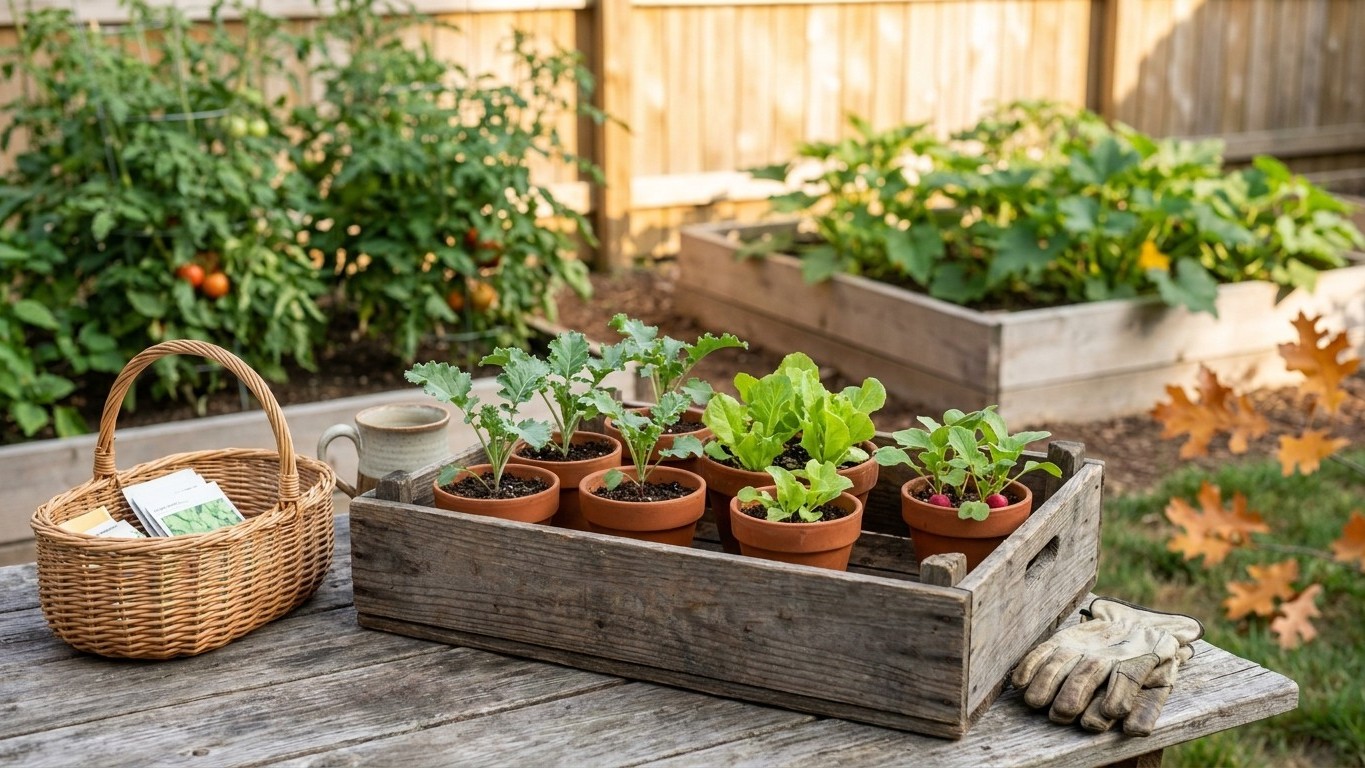

Ohio soil in August is warm from Cincinnati to Cleveland, which means the only question left is arithmetic — days needed against days remaining before frost. Lettuce, spinach, arugula, radishes, baby turnips, kale, mustard greens, and beet greens all fit that math easily, even sown in the second half of the month. Bush beans still work too, but only if you get them in during the first half. This is the month for filling gaps behind your tomatoes and peppers, not starting anything long-season.
What goes in the ground in August

By August the soil is warm everywhere in the state, so temperature is no longer the limiting factor. What matters now is arithmetic: how many days a crop needs, counted against how many days are left before the first fall frost. If you already have tomatoes, peppers and squash growing from transplants set out on the schedule described in What to Plant in Ohio in July, August’s job is filling in behind them, not starting anything that needs a long season.
What’s safe to direct-sow
The fast crops are the safe bet because they can finish well inside the frost window even sown in the second half of the month. Direct-sow these in open ground:
- Lettuce, spinach and arugula, sown in short rows every week or two
- Radishes and baby turnips, both quick enough for a first-half or second-half sowing
- Bush beans, but only in the first half of the month
- Kale and mustard greens for baby-leaf harvest
- Beets for greens, or for roots if sown early in the month
Broccoli, cabbage and cauliflower transplants started under cover in June or July also go into open ground now. They need the extra weeks of a transplant’s head start rather than direct seeding, and August gives them room to size up before the cold really sets in.
What’s a gamble this late
Sweet corn, winter squash, pumpkins, and a second round of tomatoes or peppers are the gamble crops. Any of these direct-sown from seed in August is racing a clock it usually loses, because their maturity windows run well past what’s left before the Columbus-area frost date, and other parts of Ohio close that window even sooner. Garlic and shallots are not an August job here either. That planting comes later in the fall, once the frost window itself has passed, not during it.
What to start under cover
Starting seed under cover in August means cold frames, low tunnels or a shaded seed-starting tray, and it means cold-hardy crops headed for a fall or winter harvest, not another round of warm-season vegetables. Count backward from the same October 5 to October 15 window OSU Extension gives for Columbus: subtract the weeks a crop needs to reach a usable size, and you land on early to mid August as the sensible sowing point for a fall cold frame planting of spinach, mache or a cut-and-come-again kale.
The two ways to get it wrong
Sow too early and the seedlings sit in August heat and humidity under cover, bolt, or turn leggy and rootbound before you ever get them planted out. Sow too late and they never build enough size before shortening daylight and dropping temperatures stall growth altogether, which wastes both the seed and the space. The early-to-mid-August window is narrow on purpose. Treat it as a range to work within, not a single day to hit exactly, since a week either way changes little but a month does.
What is ready to pick
Tomatoes carry most of August in an Ohio garden, and which ones you’re pulling off the vine depends on which cultivar went in back in May. Catalogue days-to-maturity are counted from transplant, and the ranges below assume a mid-May to late-May set-out, which is the local window OSU Extension gives for the Columbus area.
Tomatoes by ripening window
| Variety | Habit | First ripe (calculated) | Margin before frost |
|---|---|---|---|
| Sun Gold | Indeterminate | Late July | 72 days |
| Sakura | Indeterminate | Late July | 74 days |
| Jasper | Indeterminate | Late July | 69 days |
| Juliet | Indeterminate | Late July | 69 days |
| Supersweet 100 | Indeterminate | Late July | 69 days |
| Cherokee Purple | Indeterminate | Early August | 57 days |
| Big Beef Plus | Indeterminate | Early August | 57 days |
| Amalfi | Determinate | Early August | 61 days |
| San Marzano II | Indeterminate | Mid August | 51 days |
| Celebrity Plus | Determinate | Mid August | 51 days |
| Brandywine | Indeterminate | Mid August | 51 days |
| Tiren | Indeterminate | Mid August | 54 days |
| Granadero | Indeterminate | Mid August | 54 days |
| Amish Paste | Indeterminate | Late August | 44 days |
Judge ripeness by color and feel rather than the calendar: a fruit is ready when it has colored fully to the cultivar’s mature shade, gives slightly under gentle pressure, and separates from the vine with a light twist. A tomato that still shows any green shoulder or resists at the stem needs more time on the plant.
Everything else still coming in
Summer squash and cucumbers need picking every day or two in August heat, since a squash left two extra days can go from tender to woody. Peppers, sweet corn, bush beans and bramble fruit are also in full swing this month, and the more consistently you pick, the more the plant keeps producing rather than shutting down once it sets seed.
The jobs that matter this month

August heat makes some jobs urgent and others cheap to skip. Getting the order right matters more than doing everything.
Watering, mulching and staking
Tomatoes and peppers need a steady watering rhythm through August rather than a soak whenever the soil looks dry. Irregular watering during fruit set and ripening is what causes blossom end rot and cracked fruit, so aim for a deep watering on a consistent schedule instead of shallow daily sprinkling. A two-to-three-inch mulch layer over the root zone holds that moisture and keeps weeds from competing for it. Indeterminate tomatoes loaded with fruit also need staking or tying up now, before the weight of an August crop pulls stems down into the dirt where fruit rots and slugs move in.
Scouting for pests and disease
Walk the garden for squash vine borer entry holes at the base of squash stems, Japanese beetle damage on leaves, and tomato hornworm frass on lower foliage. Catching these in the first week they show up is the difference between losing a few leaves and losing the plant. This is also the month to keep succession sowings of the fast crops from the first section going every week or two, since a single planting of lettuce or radishes bolts or gets picked out fast in summer heat.
What not to do in August
The most common mistake is treating August heat as an invitation to start warm-season crops. The air feels like early summer, but by the time seed sown now would reach maturity, it runs straight into or past the Columbus-area frost window OSU Extension gives for early to mid October. Tomatoes, peppers, melons and winter squash started from seed in August are, in most of the state, a loss before they start.
The nitrogen timing trap
A high-nitrogen feed applied late in August pushes soft new leafy growth right when the plant should be finishing fruit or hardening off for fall. On tomatoes it delays ripening in favor of more vine. On perennials and fruiting shrubs it produces tender growth that has no time to harden before the season turns, which makes it more vulnerable when the first frost does arrive. If a feed is needed this late, a lower-nitrogen formulation suits the season better than a general all-purpose one.
Letting weeds go to seed is the other slip that costs more than it looks like it will. A weed that flowers and sets seed in August drops a problem that shows up as hundreds of seedlings the following spring, so pulling it now, even a plant or two past its prime, is cheaper than dealing with it later.
Checking this against your own county
The Columbus-area figures from OSU Extension are a starting point, not an instruction for the whole state. The USDA’s 2023 Plant Hardiness Zone Map puts Ohio across zones 5b to 6b, and that spread alone means a county in the state’s northeast can run weeks behind a county in the south. Elevation, and the moderating effect of Lake Erie on the northern shore, shift both the planting window in spring and the frost date in fall. Before locking in an August sowing date, check OSU Extension‘s county office for your area, and use the Ohio planting calendar as the baseline you adjust from rather than the final word. For what follows once these plantings are in, see What to Plant in Ohio in September.
Common questions
Can I still plant tomatoes in Ohio in August?
Not from seed, and transplants are a stretch too. Even the fastest cultivar on the list here, Sun Gold at 57 days from transplant, needs to be set out well before August to clear the Columbus-area frost window with real margin. A tomato started now is chasing a season that’s already closing.
My county’s frost date runs later than Columbus. Does that change what I can plant?
It can add real time, especially in the southern part of the state. Confirm your local frost window with your county’s OSU Extension office rather than assuming the Columbus figures apply, since a two or three week difference is enough to make a marginal crop safe.
Will an early cold snap kill fall crops I planted in August?
Some will shrug it off and some won’t. Kale, spinach and other cold-hardy greens tolerate a light frost and often taste better after one, while radishes and bush beans have no frost tolerance at all and need to be harvested or protected under row cover before the first hard freeze.
Is it too late to start seeds indoors for a fall garden?
For long-season crops, mostly yes. For quick greens headed to a cold frame, early to mid August still works if you count backward from your local first frost date and give the seedlings enough weeks to size up before growth slows in the shortening days of fall.