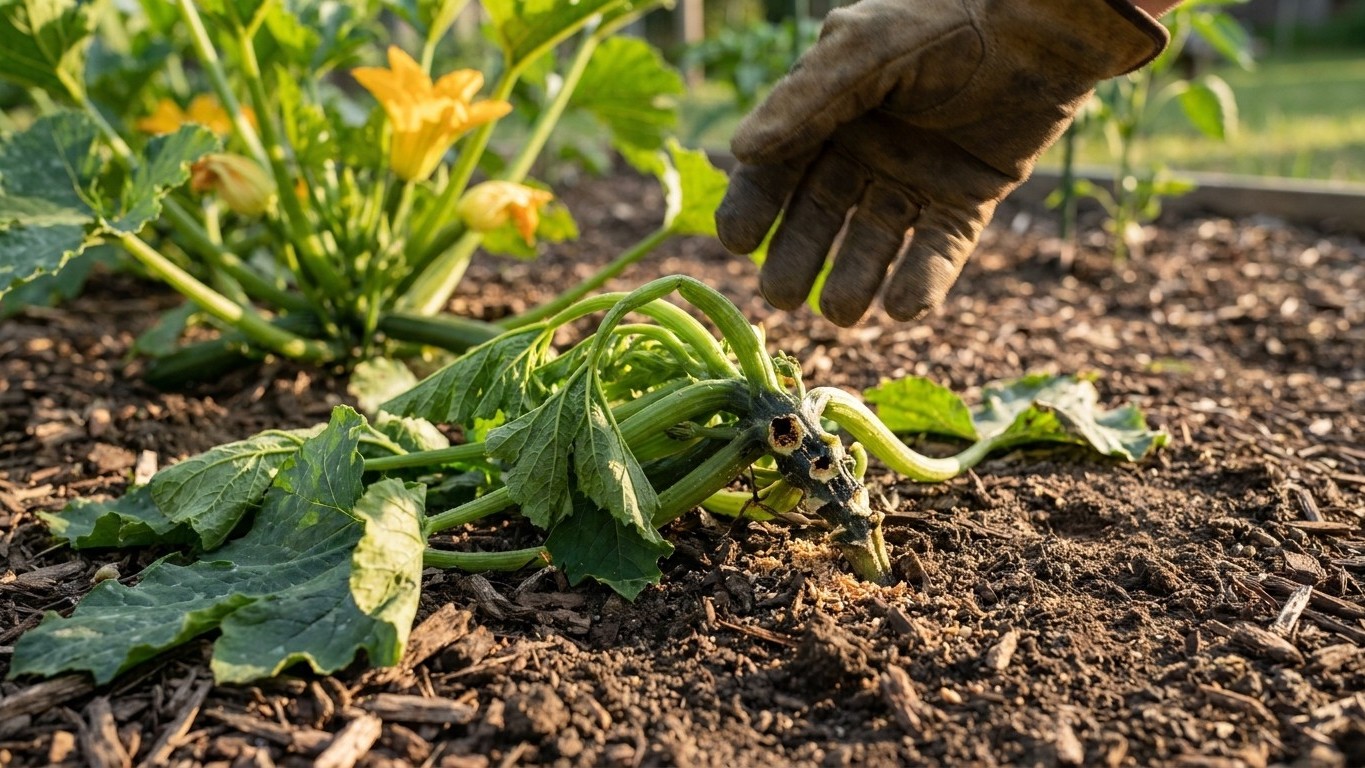

Squash vine borer moths typically emerge in New Hampshire between late June and mid-July, with egg-laying activity peaking through late July into early August. That window matters because it’s the only time you can actually stop this pest before it tunnels into a stem and does damage that’s nearly impossible to reverse. Miss it, and you’re left cutting open vines with a pocketknife, hoping to save what’s left of a plant that looked perfectly healthy three days ago.
Granite State gardeners tend to notice this pest the hard way: a robust zucchini plant collapses seemingly overnight in mid-August, right when it should be producing its heaviest harvest. By then, the larva has already been feeding inside the stem for weeks.
The weeks to watch

New Hampshire sits mostly in USDA hardiness zones 3 through 5, which shapes this insect’s single-generation lifecycle here. Unlike warmer states where a second generation can sneak in during early fall, New Hampshire gardeners generally deal with one wave of activity per season.
The moths overwinter as pupae in the soil, often just a few inches down, sometimes inside old squash vines left over winter. Once soil temperatures warm consistently, adults dig out and start flying. In practice, that means:
- Late June: first adult moths begin emerging in southern and central NH
- Early to mid-July: peak emergence and mating activity
- Mid-July through early August: heaviest egg-laying on stems near the soil line
- Early to mid-August: larvae are actively boring into stems, and wilting symptoms become visible
Northern counties and higher elevations, think the White Mountains region compared to the Seacoast, often run a week or two behind this schedule because soil warms more slowly. Gardeners in Coos or Grafton County shouldn’t assume they’re safe just because their southern NH neighbors are already seeing moths.
Why Timing Beats Guesswork
This is a pest where reacting to visible damage is basically too late. The moth itself, oddly, looks nothing like a typical garden moth. It flies during the day, has a wingspan of roughly an inch and a half, and sports an orange and black body pattern that makes it look more like a wasp than a moth. That disguise means a lot of gardeners walk right past one without a second glance, assuming it’s a beneficial pollinator instead of a threat laying eggs at the base of their zucchini.
Cooperative Extension programs across the Northeast recommend using degree-day tracking or simple calendar monitoring starting in mid-June, checking stems daily once the calendar hits late June. That’s roughly three to four weeks before symptoms would normally appear, which is exactly the head start needed for prevention to work.
Spotting the Damage Before the Plant Collapses
The classic sign is sudden wilting of a single vine, even though the soil is moist and the rest of the plant looks fine. That’s different from drought stress, which usually affects the whole plant evenly and improves with watering. Squash vine borer wilting stays localized to whichever vine the larva has tunneled into, and watering does nothing to fix it.
Look closer at the base of the stem, within the first six to twelve inches from the soil, and you’ll often find small holes with a greenish-yellow, sawdust-like material pushed out. That’s frass, essentially larval excrement mixed with plant fiber, and it’s the single most reliable early warning sign available to home gardeners. Finding frass in early July, before wilting even starts, is the moment to act.
Summer squash and zucchini get hit hardest because their stems are relatively soft and hollow, easy for a newly hatched larva to chew into. Butternut and other hard-necked winter squash varieties show noticeably more resistance, partly because their stems are more solid and less appealing to young larvae. That’s a detail worth remembering for next year’s planting choices, more on that below.
What Actually Stops Squash Vine Borer
Nothing on the market offers a single guaranteed fix. Effective control in New Hampshire gardens comes from layering several tactics across the season rather than relying on one product or method.
Row Covers, Timed Correctly
Floating row covers placed over young plants right after transplanting keep adult moths from ever reaching the stems to lay eggs. The catch is timing: covers need to come off once flowers open, because squash relies on bee pollination to set fruit. In New Hampshire’s calendar, that typically means covers go on in late May or early June and come off by mid to late June, right before peak moth activity begins. Some growers split the difference by hand-pollinating flowers each morning and keeping covers on longer, which sidesteps the timing conflict entirely.
Stem Protection at the Soil Line
Wrapping the base of each stem, from soil level up to about four inches, with aluminum foil or a section of nylon stocking creates a physical barrier that prevents egg-laying at the most vulnerable point. Mounding soil over the base of the vine at planting time and again in early July adds another layer of protection, since female moths strongly prefer laying eggs on exposed stem tissue rather than buried sections.
Biological and Direct Intervention
Beneficial nematodes, applied to the soil around the base of plants in early summer, can attack larvae before they bore in or target them if they’ve only just entered the stem. Bacillus thuringiensis subspecies kurstaki, commonly sold as Bt, can be injected directly into stems at the first sign of frass using a small syringe, killing young larvae that haven’t tunneled far. This works best in the first 24 to 48 hours after frass appears, which is another reason daily monitoring in July pays off.
If a vine is already collapsing, some gardeners perform a small surgical rescue: slitting the stem lengthwise near the entry hole, removing the larva with tweezers, then burying that section of stem in moist soil to encourage new root growth. It’s not elegant, but it has saved plants that otherwise would have been a total loss for the season.
Preventing Next Year’s Infestation
Because New Hampshire typically sees only one generation per year, the pupae that survive winter in the soil are next summer’s problem. Removing and destroying infested vines at the end of the season, rather than tilling them under or composting them, cuts down significantly on the population that overwinters in that same garden bed.
Crop rotation helps too, though it needs to be meaningful rotation, not just moving squash six feet to the other side of a raised bed. Moving cucurbits to a different section of the yard entirely, or skipping a year in a small garden, reduces the odds that emerging adults find host plants right where they pupated.
Variety selection matters more than most home gardeners realize. Butternut, along with other Cucurbita moschata varieties, shows genuine resistance thanks to solid stem tissue that’s harder for larvae to penetrate. Zucchini, yellow summer squash, and pumpkins in the Cucurbita pepo family remain the most vulnerable and deserve the most vigilant monitoring from late June onward.
Succession planting, staggering plantings two to three weeks apart, can also help spread risk. If the first planting takes a hit during peak egg-laying, a later planting might mature after moth activity tapers off in mid-August, giving at least one crop a shot at reaching harvest undamaged.
Gardeners who’ve dealt with repeated infestations sometimes switch to growing squash in large containers filled with fresh potting soil each spring, physically removing the crop from any soil where pupae might be overwintering. It’s a more intensive approach, but for a raised bed that’s produced borer damage two years running, it can break the cycle far more reliably than rotation alone.
Related guides
- Squash vine borer in Maine: When It Shows Up and What Stops It
- Squash vine borer in Massachusetts: When It Shows Up and What Stops It
- Squash vine borer in New York: When It Shows Up and What Stops It
- Squash vine borer in Nova Scotia: When It Shows Up and What Stops It
- Squash vine borer in Wisconsin: When It Shows Up and What Stops It
- Squash vine borer in Georgia: When It Shows Up and What Stops It