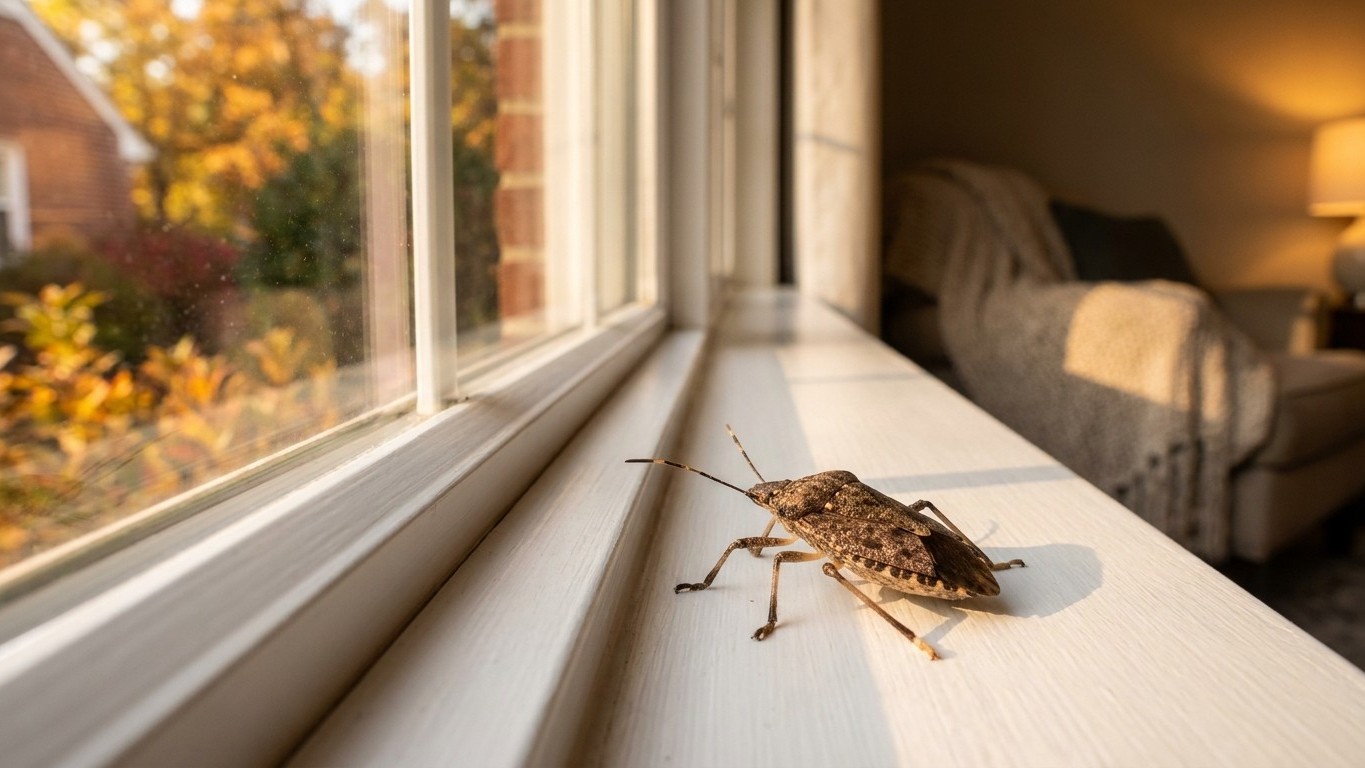

Brown marmorated stink bugs show up in Maryland homes in two predictable waves: a heavy push indoors from mid-September through late October, and a smaller “false spring” reappearance whenever a January or February warm spell hits 50 degrees or higher. Sealing entry points before that fall wave, combined with targeted perimeter treatments timed to early September, is what actually keeps populations out of living spaces. Nothing eliminates the insect from a property entirely, but exclusion cuts indoor sightings by the large majority in most documented cases.
How Brown Marmorated Stink Bugs Got to Maryland

This isn’t a native pest. Halyomorpha halys arrived from East Asia and was first documented in the United States in Allentown, Pennsylvania, in 1998, likely hitching a ride in shipping containers. Maryland picked up an established population within a few years, and by 2010 the Mid-Atlantic region was dealing with a full-blown agricultural crisis. Apple and peach growers in Washington County and the western Maryland fruit belt reported crop losses that, region-wide, ran into the hundreds of millions of dollars that single season, according to entomologists tracking the outbreak for USDA-funded research programs.
What made Maryland such a comfortable landing spot? The mix of orchard country, suburban tree cover, and a climate close to the pest’s native range in China and Japan. The bug isn’t picky either. It feeds on more than 100 plant species, including tree of heaven (itself an invasive weed tree common along Maryland roadsides), which gives it a reliable food source even in years when fruit crops aren’t flowering yet.
Frederick, Washington, Carroll, and Montgomery counties still report some of the highest densities in the state, largely because of the concentration of orchards and wooded residential development. But the insect has spread statewide at this point. Baltimore rowhomes and Eastern Shore farmhouses report the same fall invasions as western Maryland orchards, just with fewer crop losses attached.
The Maryland Seasonal Timeline
Adults overwinter as adults, not eggs, which is part of what makes this species so disruptive indoors. They spend the cold months tucked into wall voids, attics, and any gap they found their way into the previous fall, then emerge in spring once outdoor temperatures stay reliably above 60 degrees, typically late April into May in central Maryland.
Mating and egg-laying happen through late spring and summer, with females depositing clusters of light green, barrel-shaped eggs on the undersides of leaves. Maryland generally sees one full generation per year, though warmer summers have allowed a partial second generation in some southern counties. That’s a shorter breeding cycle than in warmer states, which is one reason Maryland’s outdoor populations, while damaging to orchards, haven’t reached the extremes seen in parts of Virginia’s fruit-growing regions.
The real trigger for homeowners is daylight, not just temperature. As days shorten in September, adults begin seeking overwintering shelter, and they gravitate toward sun-warmed surfaces, usually the south and west-facing sides of a house. This is when the aggregation pheromone kicks in. One bug finding a gap under a windowsill effectively invites dozens of others to the same spot, which explains why infestations tend to cluster on one side of a home rather than spreading evenly.
Peak indoor activity in Maryland runs from mid-September through the end of October, tapering off once temperatures drop consistently below 40 degrees. But it’s not unusual to find a handful of sluggish stink bugs wandering across a windowsill in January during a warm stretch, then disappearing again once the cold returns. This isn’t a new infestation, it’s just the existing population responding to temperature swings.
What Actually Stops Them
Sealing the House Before September
Exclusion work is the single most effective, and most underused, tactic against this pest. Stink bugs need surprisingly small gaps to get inside, sometimes a quarter-inch is enough. The priority list for Maryland homes:
- Weatherstripping around windows and doors, especially on south and west-facing walls
- Caulking gaps where utility lines, cable, or dryer vents penetrate exterior walls
- Repairing or replacing torn window screens, since bugs will find their way through even a small tear
- Installing chimney caps and mesh over attic and soffit vents
Doing this work in late August, before the fall migration starts in earnest, matters more than doing it in October after bugs are already inside walls. Once they’ve settled into a wall void for winter, sealing the exterior does nothing for the ones already in.
Timing Professional Treatments Right
Pest control companies in Maryland typically recommend a perimeter insecticide application in early September, applied to the foundation, eaves, and areas around windows and doors before the bugs start actively seeking shelter. Applied too early or too late, the treatment misses the window when bugs are actually crossing those treated surfaces. This is one of the more common mistakes homeowners make when trying to handle it themselves with a single late-October spray after bugs are already visible indoors.
Indoor sprays are generally discouraged. Killing a stink bug releases its defensive odor regardless of the method, and dead bugs inside wall voids can attract secondary pests like carpet beetles. Vacuuming live bugs (with a shop vac dedicated to the task, since the smell lingers) and releasing them outside, or simply into a container of soapy water, remains the most practical indoor response.
Traps and Emerging Biological Controls
Light traps combined with a pyramid-shaped collection funnel have shown decent results for capturing bugs already inside a home, particularly in attics or near windows where light draws them at night. Pheromone lures, which mimic the same aggregation signal the bugs use to find each other, work outdoors to concentrate populations away from a house, though they can also draw more bugs toward a property if placed too close to the foundation. Placement matters: setting a pheromone trap 30 to 50 feet from the house, rather than right against it, pulls bugs away rather than inviting them closer.
The most promising long-term development isn’t a product homeowners buy, it’s a wasp. The samurai wasp (Trissolcus japonicus), a natural parasitoid of the stink bug in its native range, was found to have established itself independently in several mid-Atlantic states, including Maryland, without being intentionally released everywhere it’s now found. Researchers with USDA’s Agricultural Research Service have been monitoring its spread as a potential biological check on stink bug populations, since it lays its own eggs inside stink bug egg masses, killing the developing bugs before they hatch. It won’t eliminate the pest, but early field data suggests it’s reducing egg survival rates in some monitored orchard sites.
Why Crushing Them Makes Things Worse
The smell released when a brown marmorated stink bug is squashed comes from compounds called trans-2-decenal and trans-2-octenal, the same defensive chemistry that gives the species its name. It’s not just unpleasant, it can also linger in fabric and carpet for days. Beyond the immediate smell, crushed bugs left in wall voids or window tracks can attract dermestid beetles and other scavenger insects looking for an easy meal, turning a stink bug problem into a secondary infestation months later.
A shop vacuum with a mesh bag insert, emptied outdoors immediately after use, remains the cleanest removal method for bugs already inside. Some Maryland pest control companies also offer a fall service specifically built around this species: sealing, an early September exterior treatment, and a follow-up visit in late October to address any bugs that got in before the treatment took hold. For homes with a documented history of heavy infestation, that two-visit approach tends to outperform a single treatment applied at either end of the season.
One detail that surprises a lot of Maryland homeowners: stink bugs don’t reproduce indoors. A house full of them in October isn’t breeding a bigger problem for next spring, it’s just sheltering adults that will leave on their own once warm weather returns in April or May, provided they can find a way back outside, which is exactly the kind of gap a fall sealing project is meant to close.
Related guides
- Brown marmorated stink bug in Pennsylvania: When It Shows Up and What Stops It
- Brown marmorated stink bug in Missouri: When It Shows Up and What Stops It
- Brown marmorated stink bug in Montana: When It Shows Up and What Stops It
- Brown marmorated stink bug in Saskatchewan: When It Shows Up and What Stops It