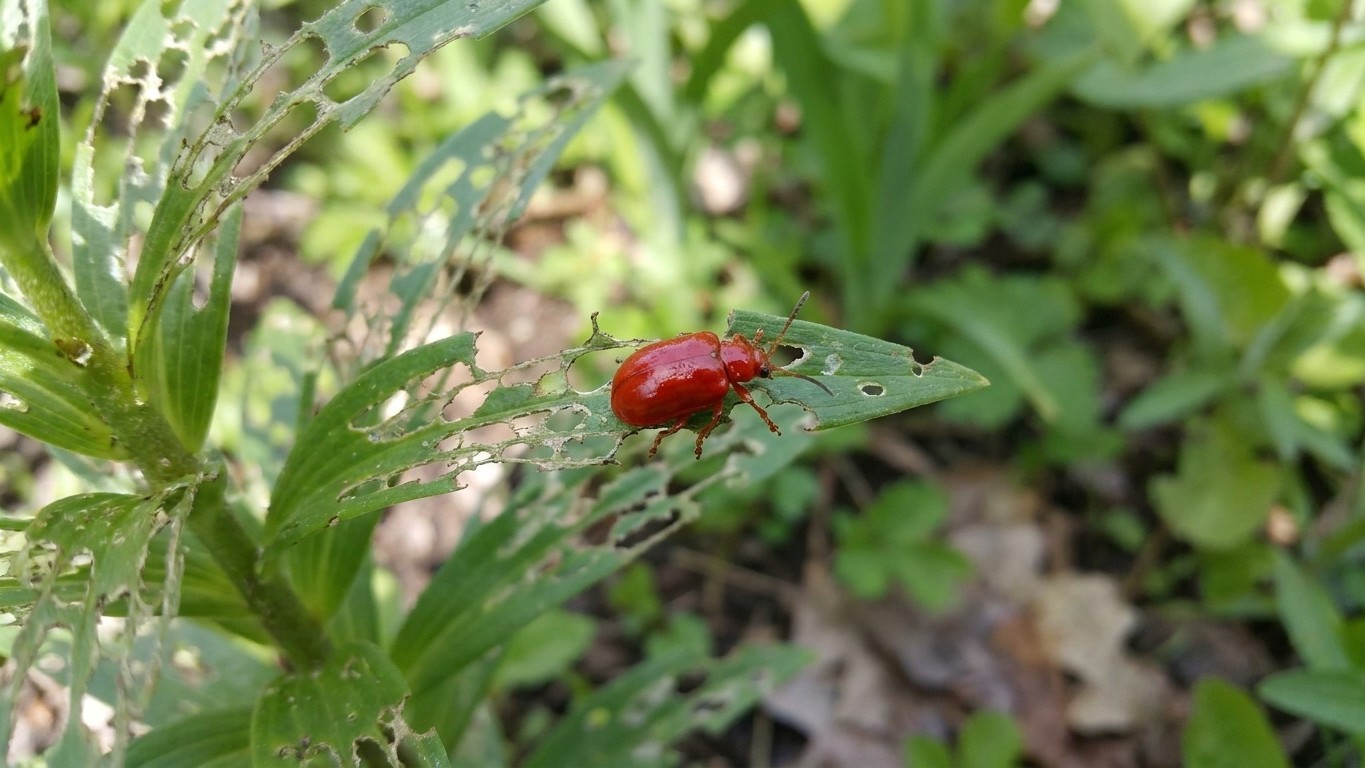

Adult lily leaf beetles wake up in Nova Scotia gardens right around the same time daffodils finish blooming, typically mid to late April when soil temperatures climb into the low 50s. They stop being a threat when you interrupt one of three things: their winter hiding spots, their egg-laying window, or the tender leaf tissue their larvae need to survive. Miss all three and a single infested lily bed can go from healthy to skeletonized in about six weeks.
How This Beetle Got to Nova Scotia

The scarlet lily beetle isn’t native to North America. It arrived from Europe, first documented in Montreal back in the 1940s, likely hitching a ride on imported bulbs. From there it crept eastward at a pace of roughly a few miles a year, showing up in New England gardens by the 1990s and working its way into the Maritimes not long after. Nova Scotia’s population is now well established, particularly in the Annapolis Valley and around Halifax where home gardeners grow the plants this beetle actually wants.
That distinction matters. Despite the name overlap, daylilies (Hemerocallis) aren’t a real target. The beetle goes after true lilies (Lilium species like Asiatic, Oriental, and Trumpet hybrids) and fritillaries (Fritillaria). If your garden is all daylilies, you might see an occasional beetle wander through, but it won’t set up a breeding colony there.
The Beetle’s Yearly Calendar
Timing is everything with this pest, and its schedule is fairly predictable once you know what to watch for.
Early spring (April into May): Adults that overwintered in soil, leaf litter, or under garden debris crawl out and head straight for emerging lily shoots. They’re bright red, about a quarter-inch long, and easy to spot against green foliage. This is also when they mate.
Late spring (May into June): Females lay eggs in tidy rows on the undersides of leaves. Eggs start pale yellow and darken to orange-red before hatching, usually within a week to ten days. A single female can lay several hundred eggs over her lifetime, which is why populations explode fast once they’ve settled into a bed.
Early summer (June into July): Larvae emerge and feed aggressively for two to three weeks. They’re slug-like and orange, but most gardeners never see the actual larva because it covers itself in its own excrement as a defense against predators. It’s unpleasant to handle, but that fecal shield is also the reason larvae are relatively easy to knock off with a strong water spray or gloved hand.
Midsummer (July into August): Mature larvae drop into the soil to pupate. New adults emerge two to three weeks later, feed briefly to build up energy reserves, then start looking for overwintering sites by late summer or early fall.
One generation per year is standard in Nova Scotia’s climate, though a warm, extended fall can sometimes push a partial second wave of feeding before the beetles bed down for winter.
Spotting Damage Before It Spreads
Adult feeding leaves ragged holes along leaf edges, but the real destruction comes from larvae, which can strip a lily down to bare stems in a matter of days. Buds get chewed before they open, and heavily infested plants often fail to flower at all that season. Because both adults and larvae feed on the same plants at overlapping times in late spring, a bed that looked fine on a Sunday can look devastated by the following weekend.
Check the undersides of leaves weekly starting in late April. Orange egg clusters are easiest to catch before they hatch. Squishing eggs between your fingers is unpleasant but effective, and it’s the single fastest way to cut a season’s population before it multiplies.
What Actually Stops the Lily Leaf Beetle
No single method eliminates this pest entirely once it’s established in a region, but combining a few tactics keeps damage manageable year after year.
Hand-Picking and Physical Removal
Adults drop to the ground and play dead the moment they sense movement, landing on their backs where their dark undersides blend into soil. That instinct is actually a weakness gardeners can exploit: hold a container of soapy water underneath the plant, tap the stem, and let gravity do the work. Doing this every few days from late April through May removes breeding adults before egg-laying ramps up. Checking leaf undersides for eggs and larvae on the same schedule catches what the adults leave behind.
Biological Control
Researchers in the northeastern United States have released parasitic wasps, including Tetrastichus setifer, that specifically target lily leaf beetle larvae. These wasps have gradually expanded their range northward into parts of eastern Canada on their own, offering a slow but genuine reduction in beetle pressure over time in areas where they’ve become established. This isn’t something a home gardener can order and release themselves, but it’s worth knowing that natural biological pressure is building in the region even without direct intervention.
Targeted Insecticide Use
Neem oil products containing azadirachtin disrupt larval feeding and development without the broad toxicity of older chemical options. Spinosad-based insecticides are another commonly recommended choice, effective against larvae when applied directly to infested foliage. Because lilies are often grown near other flowering plants that attract pollinators, avoid systemic insecticides on blooming lilies, and always apply any product in the early morning or evening when bees are less active.
Garden Sanitation and Plant Choices
Adults overwinter in leaf litter, mulch, and soil near where lilies grew the previous season. Clearing dead foliage and debris from lily beds each fall removes a chunk of that overwintering habitat before beetles even settle in. Spacing lily plantings farther apart, rather than growing them in dense monoculture clusters, also slows the beetle’s ability to move easily from plant to plant.
Gardeners dealing with chronic, severe infestations sometimes shift toward daylilies or other perennials the beetle ignores, at least for a few seasons, letting local populations decline from lack of food before reintroducing true lilies. It’s not a permanent fix, but it buys time in a garden where the beetle has become overwhelming.
What to Expect Going Forward
Lily leaf beetle populations in Nova Scotia aren’t going away. The insect has proven adaptable across a wide climate range in Europe and North America, and nothing suggests the Maritime provinces will see it disappear naturally. What changes year to year is pressure, and that pressure responds directly to how consistently a gardener intervenes during that narrow spring window between adult emergence and egg hatch.
Gardeners who check their lily beds weekly from late April through June, remove what they find, and clean up debris each fall typically keep damage to cosmetic leaf holes rather than total plant loss. Those who skip a season entirely often find the following year’s infestation harder to manage, since a handful of overlooked adults can lay enough eggs to repopulate an entire bed.