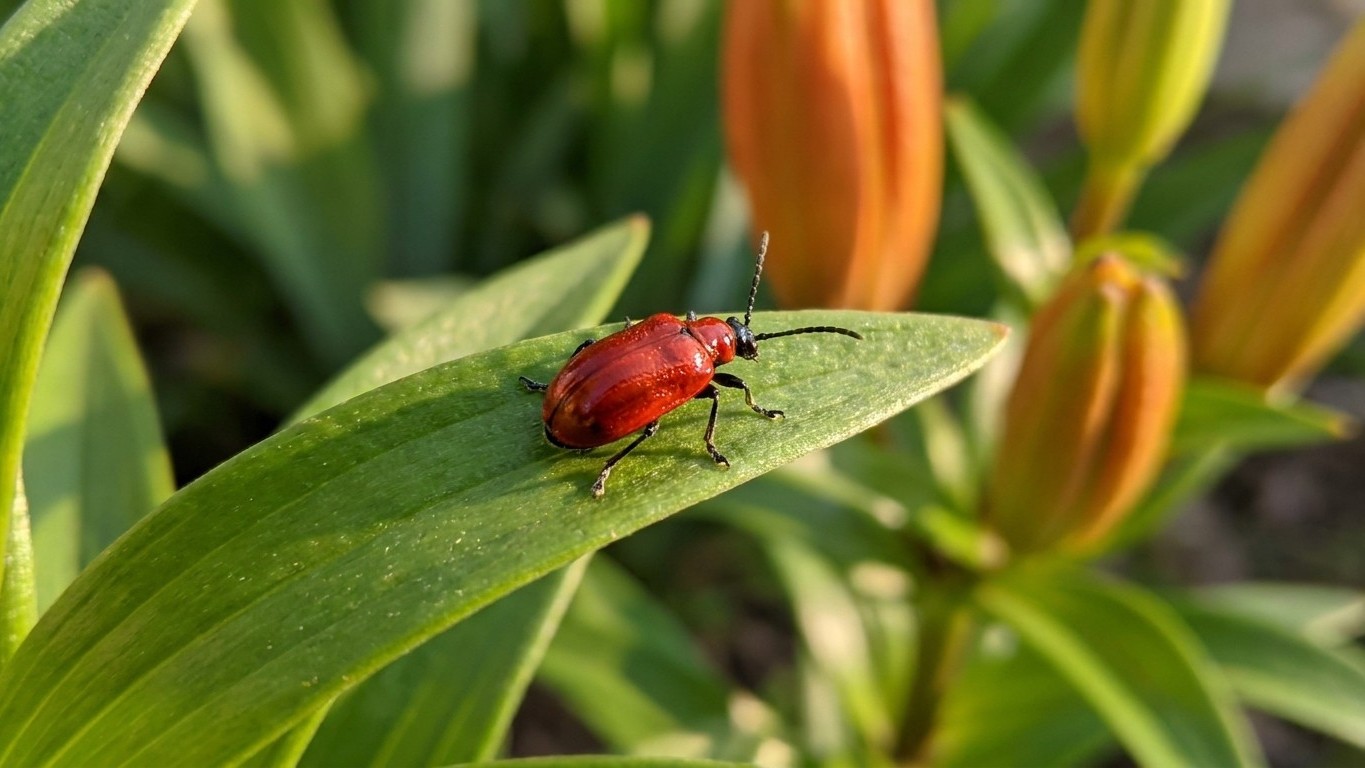

The lily leaf beetle turns up in Quebec gardens as soon as the soil warms past roughly 50°F, usually in mid to late April, and it stays active clear through October. It has been part of the province’s insect fauna since the 1940s, first noticed near Montreal, and today it remains the single biggest threat to true lilies grown anywhere south of the boreal forest. The good news: a mix of fall cleanup, early hand-picking, and well-timed spray applications keeps most home lily collections intact, even in yards where the beetle has been a regular visitor for years.
A Quebec Origin Story That Spread Across Eastern North America

Lilioceris lilii isn’t native to this continent. Entomologists trace its first North American sighting to the Montreal area in the mid-1940s, likely arriving on imported lily bulbs or nursery stock from Europe, where the species has coexisted with lilies for centuries. From that single foothold, the beetle expanded outward at a pace that surprised researchers. It reached Ontario by the 1970s, crossed into the Maritimes and New England over the following decades, and by the early 2000s had been confirmed in most northeastern states. Quebec, wasn’t just an early stop. It was ground zero.
That history matters for gardeners today because it explains why the pest pressure feels heavier in southern Quebec than in many other parts of Canada. Populations have had eighty years to build up, adapt to the climate, and settle into a predictable annual rhythm that gardeners can plan around.
How to Recognize the Lily Leaf Beetle
Adults are hard to miss once you know what to look for. They measure about 3/8 inch long, with a glossy scarlet-red back that almost looks lacquered, contrasted against a jet-black head, legs, and antennae. Flip one over and the underside is black too, a detail that separates it from a few harmless native beetles that share a reddish tint.
Eggs are laid in tidy rows on the underside of lily leaves, orange-red in color and easy to spot with a quick check of the foliage. Larvae are the part most people find unpleasant: soft-bodied, orange or yellowish grubs that cover themselves in their own excrement as a defense against predators. It looks like a smear of dirt on the leaf, but that “dirt” is alive and actively chewing.
Distinguishing Damage From the Culprit
Leaves riddled with irregular holes, stripped down to the veins, or coated in that dark fecal residue almost always point to lily leaf beetle rather than slugs or other chewing insects. Slug damage tends to be smoother and glossy from the slime trail; beetle damage is ragged and dry.
The Seasonal Timeline in Quebec
Understanding the life cycle is the single most useful thing a gardener can do, because timing determines whether a treatment works or gets applied too late to matter.
- Overwintering (October to early April): Adults survive Quebec winters tucked into leaf litter, garden debris, and even under nearby conifers or perennial beds, sometimes several feet from the lilies themselves.
- Emergence (mid-April to May): As soon as soil temperatures climb into the low 50s, adults become active, often before lily shoots have fully emerged from the ground.
- Egg laying (May into June): Females can lay 250 to 450 eggs across their lifetime, spread over many leaves in small batches, which is why a single spring inspection rarely catches everything.
- Larval feeding (late May through July): This stage causes the bulk of the visible damage, since larvae feed continuously and can strip a plant in a matter of days.
- Pupation and new adults (July into August): Larvae drop into the soil to pupate for about three weeks, emerging as a fresh generation of adults that feed briefly before searching out overwintering sites in September and October.
Most of southern Quebec sees one full generation per year. That’s slightly different from warmer parts of the beetle’s range, where a partial second generation sometimes appears, so local gardeners generally deal with one intense wave rather than a rolling series of infestations.
What It Actually Damages
The beetle is highly selective, and that selectivity is worth knowing because it prevents a lot of misdiagnosed garden panic. True lilies (Lilium species, including Asiatic, Oriental, Turk’s cap, tiger lily, and Easter lily types) are the primary target, along with fritillaria. Daylilies, despite the shared common name, belong to a completely different genus (Hemerocallis) and are almost never bothered by this insect. If daylily foliage is chewed up, the culprit is something else.
In years with heavy populations, the beetle will occasionally nibble on Solomon’s seal or lily-of-the-valley as secondary hosts, but the damage there is minor compared to what it does on true lilies, which can be defoliated entirely if left unmanaged for a full season.
What Stops It: Practical Control Strategies
No single method eliminates the lily leaf beetle for good, but layering a few tactics keeps populations low enough that lilies bloom normally most years.
Cultural and Manual Control
Fall cleanup does more for next year’s population than almost anything else. Clearing leaf litter and dead plant material around lily beds in late October removes the overwintering shelter adults depend on, forcing them to find riskier hiding spots where they’re more likely to freeze.
Hand-picking works well early in the morning when adults move slowly and are less likely to drop and disappear into the soil, a defensive trick they’re known for. Holding a shallow tray or piece of cardboard under the plant while checking for beetles catches the ones that do fall, before they can burrow away. Checking leaf undersides weekly from early May onward and crushing egg rows by hand prevents dozens of larvae from ever hatching, and it takes only a couple of minutes per plant once it becomes a habit.
Biological and Lower-Toxicity Options
Insecticidal soap and neem oil sprays target young larvae effectively when applied directly to the feeding sites, though they need to be reapplied on the schedule listed on the product label since they break down quickly and don’t offer lasting residual protection. Spinosad-based sprays also perform well against larvae but have limited effect on the tougher-shelled adults.
Researchers have been studying a parasitoid wasp, Tetrastichus setifer, as a long-term biological control for lily leaf beetle populations across the northeastern United States and parts of eastern Canada. Where it has established, it reduces beetle numbers over several seasons without the need for repeated spraying. Establishment in Quebec specifically remains limited and uneven, so gardeners shouldn’t count on it as a standalone solution yet, but it’s a promising sign that natural checks on this pest are slowly developing.
When Systemic Insecticides Make Sense
For collectors with high-value lily plantings or gardens where hand-picking simply can’t keep pace, a soil-applied systemic insecticide timed for early spring, before adult emergence, can offer season-long protection. Quebec regulates several pesticide classes more tightly than other provinces under its pesticide management rules, and certain neonicotinoid products face restrictions for residential lawn and garden use. Checking current provincial guidance or asking a local garden center before buying anything systemic saves both money and potential legal headaches.
One detail that surprises a lot of first-time lily growers: a beetle population that seems minor in spring can explode by midsummer simply because of how many eggs a handful of females can lay across a bed. Scouting weekly from the moment lily shoots poke through the soil, rather than waiting for visible damage, catches that math before it turns into a stripped plant.
Related guides
- Lily leaf beetle in New Brunswick: When It Shows Up and What Stops It
- Lily leaf beetle in Newfoundland and Labrador: When It Shows Up and What Stops It
- Lily leaf beetle in Rhode Island: When It Shows Up and What Stops It
- Lily leaf beetle in Connecticut: When It Shows Up and What Stops It
- Lily leaf beetle in Nova Scotia: When It Shows Up and What Stops It
- Lily leaf beetle in Massachusetts: When It Shows Up and What Stops It