
Squash bugs show up in Illinois gardens as soon as soil temperatures climb into the 60s, usually mid-May in the southern counties and closer to early June around Chicago and the northern tier. Adults overwinter in leaf litter, mulch, and wood piles, then move into vegetable patches the moment squash, pumpkin, and zucchini plants put out their first true leaves. Peak damage hits in July and August, right when vines are setting fruit and can least afford to lose leaf tissue.
Cornell and Midwest extension entomologists have tracked this species (Anasa tristis) for decades, and the pattern in Illinois holds steady year after year: one generation typically completes its cycle by late summer, though warm seasons can squeeze in a partial second generation before frost. That’s the window gardeners need to watch, not just a single “bug season” but a rolling threat that starts small and multiplies fast if ignored.
When Squash Bugs Appear in Illinois Gardens

Timing splits roughly along the state’s north-south divide. Southern Illinois, around Carbondale and down toward the Ohio River, sees adults active by mid-May because the growing season starts two to three weeks earlier than in the north. Central Illinois, including the Springfield and Decatur corridor, typically reports first sightings in late May. Gardeners near Rockford or Chicago usually don’t see meaningful activity until early June, sometimes pushed later by a cool, wet spring.
Once adults mate, egg-laying ramps up through June and July. Females deposit clusters of bronze, football-shaped eggs on the underside of leaves, often tucked into the V formed by leaf veins. Each cluster can hold twenty to forty eggs, and a single female lays hundreds over her lifetime. Eggs hatch in about ten days under Illinois summer heat, and nymphs start feeding immediately.
The real damage window runs from late June through August, when nymphs are actively piercing leaf tissue and adults are still reproducing. By September, activity slows as days shorten and plants mature, but a warm fall can keep bugs feeding on late-planted winter squash well past Labor Day.
How to Identify Squash Bug Damage Before It Spreads
Squash bugs don’t chew holes the way cucumber beetles do. They pierce plant tissue with a needle-like mouthpart and drain fluid, which causes a distinctive stippled yellowing on leaves that spreads into brown, crispy patches within days. Left unchecked, an entire leaf can collapse and turn black almost overnight, a symptom some gardeners mistake for disease when it’s actually cumulative feeding damage from a nymph colony.
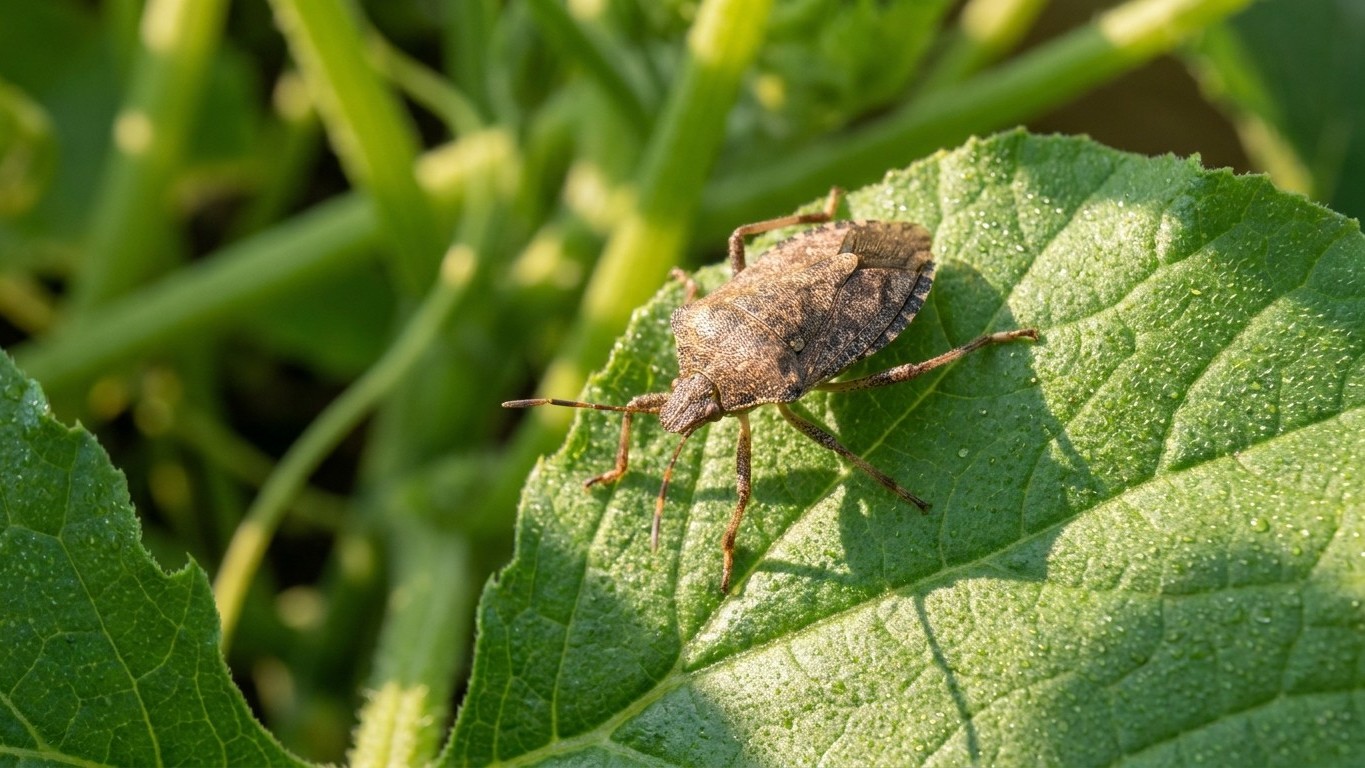
Adults are easy to overlook because they’re brown to gray, flat-backed, and about five-eighths of an inch long, roughly the size of a large ant but shaped like a shield. They tend to cluster at the base of plants or hide under mulch during the heat of the day, which is exactly why an infestation can look mild at noon and severe by dusk. Nymphs go through five stages before reaching adulthood, starting out pale gray with black legs and gradually darkening as they mature.
Check the undersides of leaves weekly starting in late May. Egg clusters are the easiest early warning sign, and scraping them off before hatch is far more effective than treating nymphs after the fact. Zucchini, yellow crookneck squash, and pumpkins are consistently the most attractive targets in Illinois gardens, while butternut squash tends to show more natural tolerance, likely due to thicker stems and different leaf chemistry.
What Actually Stops Squash Bugs
No single tactic wipes out squash bugs in one pass. Extension research consistently points to layered control: reduce overwintering sites, intercept eggs and young nymphs, and reserve insecticides for genuine outbreaks rather than routine spraying.
Cultural controls that reduce pressure season over season
Fall cleanup matters more than most gardeners realize. Squash bugs overwinter as adults in plant debris, mulch, and even stacked firewood near the garden. Removing spent vines and tilling under crop residue in October strips away shelter before the first frost, which measurably cuts the population that emerges the following spring. Rotating squash family crops to a different bed each year also helps, since adults that do survive winter tend to search nearby ground first.
Trap cropping is a technique worth trying if space allows. Blue Hubbard squash draws squash bugs more strongly than most other varieties, so planting a small block of it along the garden’s edge concentrates the pest population where it’s easier to monitor and treat, leaving the main crop less exposed. Floating row covers work well early in the season, before flowers open, but need to come off once plants bloom so pollinators can reach the flowers.
Mechanical removal still works better than most people expect
Handpicking adults and nymphs into a bucket of soapy water remains one of the most reliable methods for home gardens, especially in beds under a few hundred square feet. Early morning is the best time, since bugs are sluggish in cool temperatures and cluster near the base of plants. Scraping egg masses off leaves with a butter knife or piece of tape, then discarding them, prevents an entire generation before it starts.
A trick extension agents have recommended for years: lay a flat board or shingle near the base of squash plants in the evening. Adults seek shelter overnight and often gather underneath by morning, making them easy to collect and destroy before the day’s heat scatters them.
When insecticides make sense, and when they don’t
Adult squash bugs have a tough exoskeleton that shrugs off many contact insecticides, which is why most guidance focuses on timing sprays to hit the vulnerable nymph stage instead. Insecticidal soap and horticultural oil work reasonably well on young nymphs when applied directly to the underside of leaves where they cluster. Products containing spinosad or pyrethrins offer broader knockdown but should be applied in the evening to limit harm to bees and other pollinators visiting during the day.
Broad-spectrum insecticides tend to backfire over a full season. They kill off tachinid flies and other natural predators that would otherwise help suppress squash bug numbers, sometimes leading to a rebound population later in summer that’s worse than the original infestation. Spot-treating only the plants showing active feeding damage, rather than blanket-spraying the whole garden, keeps that beneficial insect population intact.
Regional Differences Worth Planning Around
Illinois spans USDA hardiness zones from 5b in the far north to 7a along the southern tip near Cairo, and that stretch matters for squash bug management. Southern growers get a longer window for a possible partial second generation, which means late-season vigilance on fall pumpkins and winter squash pays off more than it does farther north. Central Illinois gardeners, working with the state’s heaviest concentration of home vegetable plots, typically see the sharpest single population peak in mid-July, right as sweet corn and tomatoes are also demanding attention, which is exactly when squash bug checks get skipped.
Northern Illinois gardeners get a bit of a break with a shorter season, but cooler springs there sometimes coincide with wetter conditions that keep mulch and debris damp longer, extending the overwintering survival rate for adults. A dry, well-drained garden bed with debris cleared before winter tends to host noticeably fewer bugs at spring emergence, regardless of which part of the state it’s in.
Community and school gardens across the state have reported that consistent weekly monitoring, rather than reactive spraying after damage appears, cuts losses more reliably than any single product. That pattern shows up in university trial data too: gardens checked twice weekly during peak season report substantially less vine collapse than those checked only when symptoms are already visible.
Winter squash varieties destined for storage deserve extra attention in late August, since feeding damage to the stem near harvest time can shorten how long the squash keeps in storage, even if the fruit itself looks undamaged at picking.
Related guides
- Squash bug in Wisconsin: When It Shows Up and What Stops It
- Squash bug in Iowa: When It Shows Up and What Stops It
- Squash bug in Indiana: When It Shows Up and What Stops It
- Squash bug in Kansas: When It Shows Up and What Stops It
- Squash bug in Michigan: When It Shows Up and What Stops It
- Squash bug in New Mexico: When It Shows Up and What Stops It