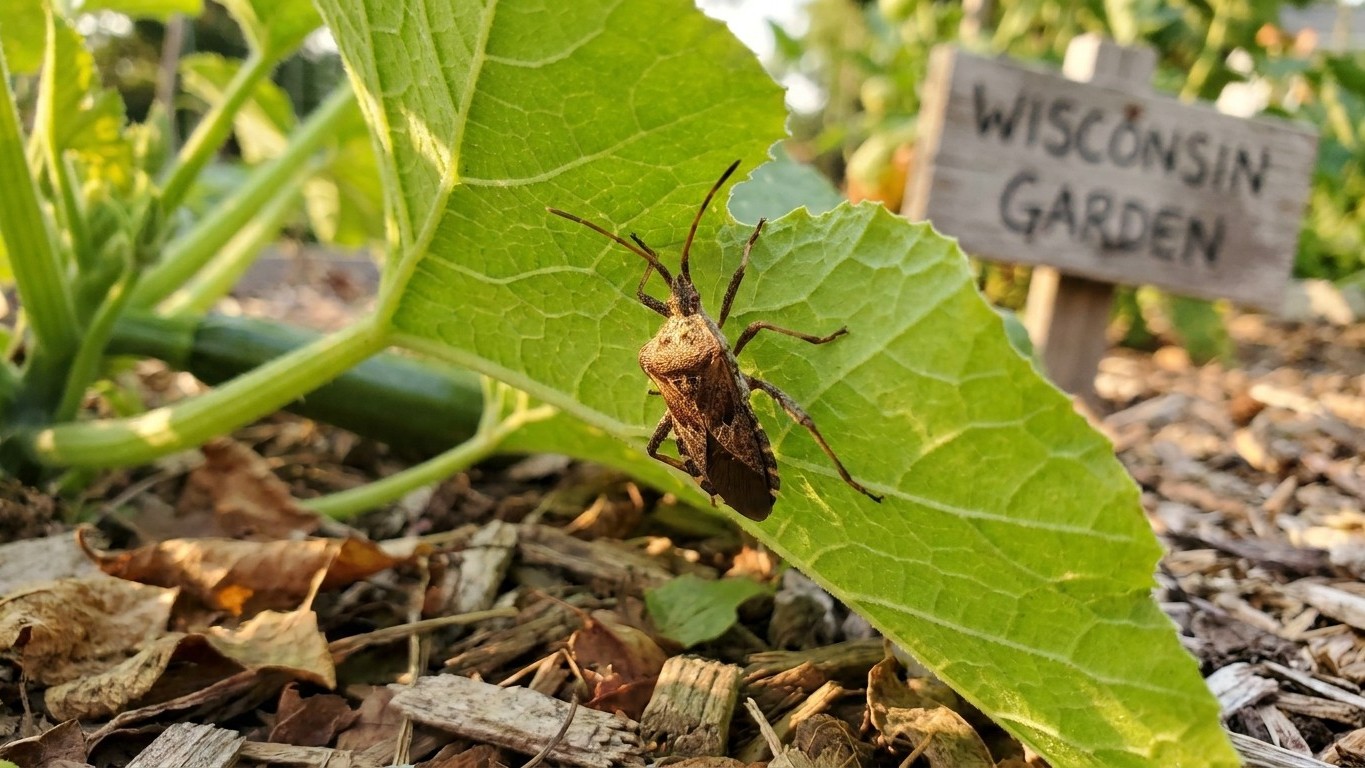

Squash bugs turn up in Wisconsin gardens right around the time your zucchini plants start putting out their first true leaves, usually mid-to-late June once soil and air temperatures settle into the 70s. What actually stops them isn’t a single spray but a combination of timing, physical barriers, and catching the nymphs before they harden into tough adults. Row covers pulled off before flowering, egg removal every few days, and insecticidal soap applied to young nymphs do more damage control than almost anything else a home gardener can try.
When Squash Bugs Actually Show Up in Wisconsin

Anasa tristis, the scientific name for the common squash bug, overwinters as an adult. Not as an egg, not as a nymph. Full-grown, mated adults tuck themselves under leaf litter, mulch, loose boards, or the edges of raised beds and wait out the Wisconsin winter in a state of near-suspended animation. That matters because it means the bugs attacking your pumpkins in July were alive last fall, hiding somewhere within a few hundred feet of your garden.
These overwintered adults emerge as soon as daytime temperatures hold consistently in the 70s, which across most of Wisconsin lands somewhere in late May to mid-June depending on how far north you are. Southern counties near Madison and Milwaukee typically see activity start a week or two earlier than gardens up around Wausau or Green Bay. Once active, adults fly to cucurbit plants, mate, and start laying eggs almost immediately.
Wisconsin’s shorter growing season works slightly in gardeners’ favor here. In warmer states, squash bugs push out two generations per year. In Wisconsin, cooler spring soil and an earlier fall frost usually limit the pest to a single generation, sometimes stretching into a partial second wave if summer runs hot and long. That single-generation pattern means the population you see in July is largely the one you’ll be dealing with through September, rather than a compounding problem that doubles every few weeks.
The Egg-to-Adult Timeline
Eggs take about seven to ten days to hatch depending on temperature. The nymphs that emerge go through five growth stages, called instars, over roughly four to six weeks before becoming full adults capable of laying their own eggs. That six-week window from egg to reproducing adult is the entire strategy window for control. Miss it, and you’re managing adults, which are far harder to kill with anything short of picking them off by hand.
Identifying Squash Bugs at Every Stage
Confusing squash bugs with other garden insects is common, and it costs gardeners valuable treatment time. Adults are shield-shaped, grayish-brown to nearly black, about five-eighths of an inch long, with edges on the abdomen that show a slight orange or gold stripe when the wings are folded. They move slowly compared to beetles and tend to cluster at the base of plants or hide under leaves during the heat of the day.
Eggs are the easiest life stage to catch early and the most overlooked. They’re small, oval, and a distinctive bronze or copper color, laid in tight clusters on the undersides of leaves, often in the V-shaped angle between leaf veins. A single female can lay well over 100 eggs across her lifetime, spread out in batches of a dozen or two at a time. Checking leaf undersides every three to four days from mid-June through July catches most of these clusters before they hatch.
Nymphs go through a visible transformation. Early instars are small, gray, and almost spider-like, with black legs and antennae that make them look nothing like the adults they’ll become. By the fourth and fifth instar, they’ve taken on a grayish color closer to the adult form but still lack full wings. This is the stage most vulnerable to contact insecticides and soap sprays, since their exoskeleton hasn’t hardened yet.
The damage itself is often the first clue something’s wrong, even before you spot the bugs. Squash bugs feed by piercing plant tissue and injecting saliva that’s toxic to the plant, causing wilting that starts at the point of feeding and spreads. Leaves develop yellow speckling, then brown, crispy patches, and entire vines can collapse within a week or two of a heavy infestation. Unlike drought stress, which affects the whole plant somewhat evenly, squash bug damage tends to start on one leaf or one section of vine and radiate outward.
What Actually Stops Squash Bugs in a Wisconsin Garden
Cultural controls do more heavy lifting than most gardeners expect. Since adults overwinter in garden debris, clearing out old vines, fallen leaves, and mulch from cucurbit beds every fall directly reduces the population available to emerge the following spring. Leaving squash and pumpkin residue in the garden over winter is essentially building the pest a hotel.
Crop rotation matters more here than with many garden pests, because adults that survive winter in one location will target cucurbits planted in that same spot first. Moving squash, pumpkin, and cucumber plantings to a different section of the garden each year, even by just fifteen or twenty feet, forces overwintered adults to search further and delays the infestation.
Floating row covers, the lightweight fabric sold at most garden centers, block adults from reaching young plants during the critical early weeks. The trick is timing: covers need to come off once flowers appear, since squash and pumpkin plants depend on bee pollination and a sealed cover blocks that too. For Wisconsin gardeners, that usually means covers go on at transplanting in late May and come off by mid-June when the first blossoms show.
Hand removal remains one of the most effective tactics precisely because it requires no chemicals and works on every life stage. Checking the undersides of three or four leaves per plant every few days, scraping off egg clusters with a fingernail or piece of tape, and dropping adults and nymphs into a bucket of soapy water is tedious but genuinely effective for a home garden of typical size. Many gardeners report this single habit cutting their squash bug damage more than any spray they’ve tried.
Trap cropping uses the pest’s own preferences against it. Blue Hubbard squash is disproportionately attractive to squash bugs compared to other cucurbits. Planting a few Hubbard plants along the garden’s perimeter, several feet from the main zucchini or pumpkin crop, draws the bugs there first. Those trap plants then get checked and treated aggressively, sometimes even sacrificed entirely, while the main crop sees lighter pressure.
When Sprays Make Sense
For infestations that outpace hand removal, insecticidal soap and neem oil work best against nymphs, particularly the earlier instars before their shells toughen. Spraying in the early morning or evening, directly onto the undersides of leaves where nymphs cluster, gives better contact than a general overhead spray. Adults are resistant to most soap and oil treatments because of their hardened exoskeleton, which is another reason catching the population at the nymph stage carries so much weight.
Products containing spinosad or pyrethrin offer a stronger option for heavier infestations, though they carry more risk to pollinators and beneficial insects if applied during flowering. Spraying in the evening after bees have finished their daily activity reduces that risk. Diatomaceous earth, a fine powder made from fossilized algae, can be dusted around the base of plants to damage the exoskeletons of crawling nymphs, though it needs reapplication after rain.
Natural predators do some of the work without any effort from the gardener. Tachinid flies lay eggs on adult squash bugs, and the resulting larvae kill their host from the inside over several days. Certain spiders and ground beetles also feed on nymphs. Avoiding broad-spectrum insecticides that wipe out these predators alongside the squash bugs helps keep a natural check on the population from one season to the next.
Which Wisconsin Crops Are Most at Risk
Squash bugs favor certain cucurbits over others, and that preference is worth knowing before planting. Winter squash varieties like acorn, butternut, and the aforementioned Hubbard tend to draw the heaviest pressure. Pumpkins, a major crop across Wisconsin’s fall harvest season, rank close behind. Cucumbers and melons see somewhat lighter infestation in most gardens, though they’re far from immune once squash bug populations build up nearby.
One additional risk worth flagging: squash bugs can transmit a bacterial pathogen linked to cucurbit yellow vine disease, which causes sudden wilting and plant death separate from the direct feeding damage. This adds a disease-transmission angle beyond the physical harm the insects cause while feeding, similar to how certain aphids spread viruses rather than just weakening plants through feeding alone. Gardens with a history of unexplained squash or pumpkin collapse late in the season may be dealing with this combined pressure rather than feeding damage alone.
Younger transplants and seedlings face the highest risk, since a smaller plant has less leaf tissue to absorb damage before wilting sets in fully. Established plants with a strong root system and full canopy can often tolerate moderate squash bug feeding without the dramatic collapse seen in younger plants, which is part of why early-season vigilance during the first few weeks after transplanting pays off more than treatment applied later in the summer.
Related guides
- Squash bug in Michigan: When It Shows Up and What Stops It
- Squash bug in Minnesota: When It Shows Up and What Stops It
- Squash bug in Arizona: When It Shows Up and What Stops It
- Squash bug in British Columbia: When It Shows Up and What Stops It
- Squash bug in Massachusetts: When It Shows Up and What Stops It
- Squash bug in Maryland: When It Shows Up and What Stops It