
West Virginia’s tomato pests show up in a fairly predictable order through the season, not all at once. Cutworms and flea beetles hit transplants in spring, aphids and Colorado potato beetles build through early summer, and hornworms and brown marmorated stink bugs arrive as the season pushes toward the first fall frost, which NOAA’s 1991-2020 climate normals put at October 18 to November 1 near Charleston. The single most useful habit is checking transplant stems for cutworm damage in the first week after you set plants out, since that’s the one pest that can wipe out a bed before you even see it coming.
What this comes down to in West Virginia

If you’ve already worked out bed prep, staking and watering, that groundwork is done. See growing tomatoes in West Virginia for the basics if you haven’t. What follows is the short list of pests that reliably turn up here, in the order they tend to appear, so you can match what’s on your plant to what’s actually likely.
Six pests account for nearly all the damage reported in West Virginia tomato beds. Timing is the fastest way to narrow down which one you’re looking at, since each has a fairly narrow window when it does the most harm.
Cutworms

Cutworms do their damage in the first two weeks after transplant, usually at night. A seedling that was fine yesterday and is now lying on the ground, sheared clean through at the soil line with no leaf chewing above it, is a cutworm and not a wilt problem. A cardboard collar pushed an inch into the soil around each stem at planting time stops them cold, and it’s far easier than treating for them after the fact.
Flea Beetles

Flea beetles show up on young transplants within the same window as cutworms but leave a completely different mark: small round shot-holes peppered across the leaves, as if someone took a hole punch to them. Established plants shrug off light feeding, but a transplant hit hard enough can be set back for weeks. Floating row cover kept on until the plants start flowering is the most reliable barrier, and kaolin clay or spinosad handles the rest.
Colorado Potato Beetle

This one arrives a few weeks later than the first two, once plants have some size on them. Both the striped adult and the humpbacked, spotted larva strip foliage fast, and a heavy infestation can defoliate a plant in days. Hand-picking adults and crushing the bright yellow egg clusters on leaf undersides works well in a home garden and avoids killing off the beneficial insects that keep aphids in check.
Aphids

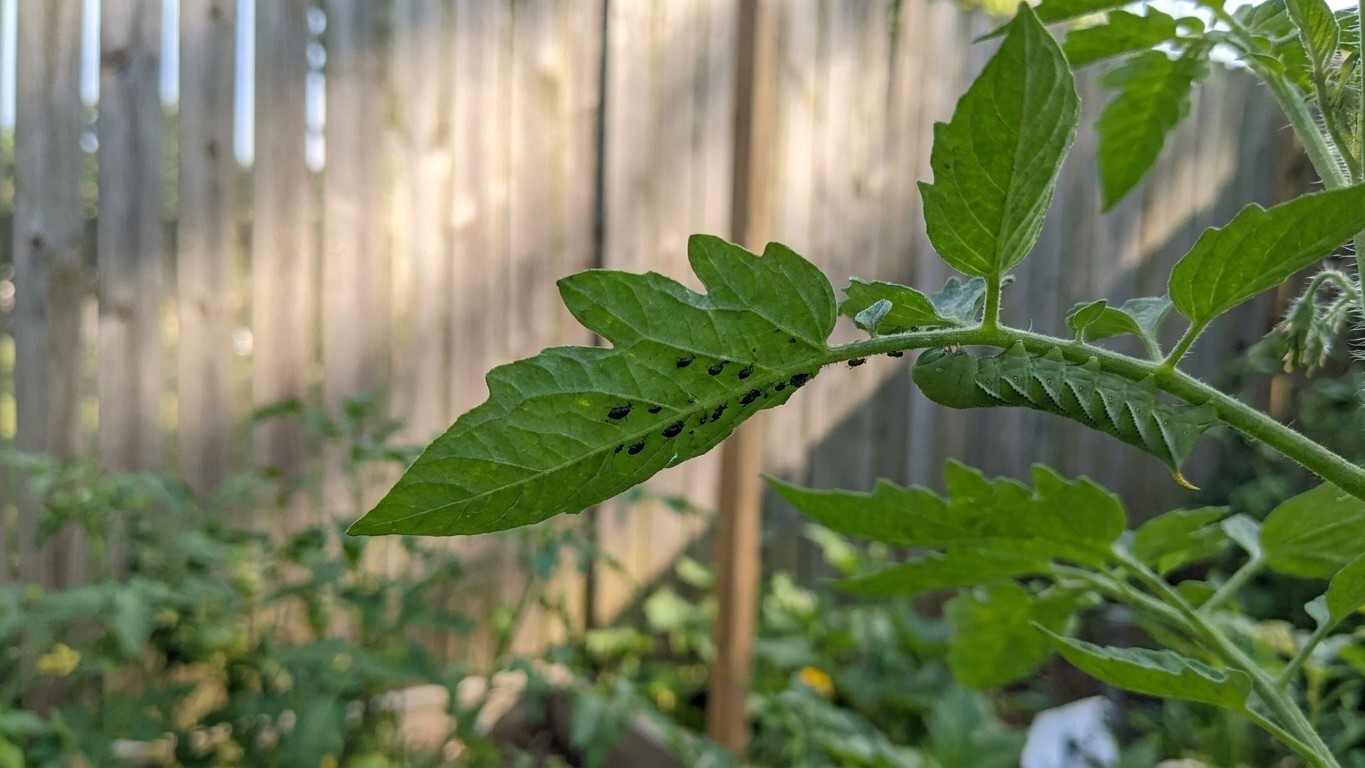
Aphids build steadily from early summer onward rather than arriving on a single date. Clusters on new growth and leaf undersides cause curling, yellowing leaves and a sticky residue that turns black with sooty mold. A hard spray of water knocks most of them off, and insecticidal soap handles the rest without harming the lady beetles that will otherwise do the job for you.
Tomato Hornworm

By midsummer, the hornworm is the pest most gardeners actually notice, because it’s large enough to see and leaves ragged holes and dark, pellet-shaped droppings on the leaves below where it’s feeding. It’s more common to spot the damage before the caterpillar itself, since the green body blends in almost perfectly. Hand-picking works, but leave any hornworm covered in small white cocoons alone. Those are a parasitic wasp already doing the control for you.
Brown Marmorated Stink Bug

This one shows up latest, as fruit starts to ripen heading into fall. It doesn’t chew visible holes. Instead it pierces the fruit to feed, leaving pale, cloudy spots on the skin with a dry, pithy patch of discolored flesh underneath once you cut into it. Row cover has to come off by flowering time to let pollinators in, which leaves ripening fruit exposed just when this pest is most active. Removing nearby weedy hosts and checking fruit clusters daily as they color up is the most practical defense in a home garden.
Working it out for your own garden
Identifying which pest you have comes down to three questions asked in order: when in the season is it, where on the plant is the damage, and what does the insect itself look like. That sequence rules out most of the wrong guesses before you even reach for a reference photo.
A quick diagnostic checklist
- Seedling toppled with a clean cut at the soil line, no insect visible: cutworm
- Small round holes across young leaves, tiny beetles jumping when disturbed: flea beetles
- Striped adults or spotted larvae stripping whole leaves: Colorado potato beetle
- Curling, yellowing new growth with tiny clustered insects: aphids
- Large ragged leaf holes with dark droppings below, midsummer: tomato hornworm
- Cloudy pale spots on ripening fruit, pithy flesh underneath: brown marmorated stink bug
The timing half of that checklist only works if you know your own transplant date, and that date moves with the frost window rather than sitting on a fixed calendar day. See Tomato Planting Dates in West Virginia: Counting Back From Your Frost Window for how that date is worked out from NOAA’s spring freeze normals. Once you know roughly when your plants went in, you can place yourself on the pest calendar above instead of guessing at what’s chewing your leaves.
Resistance printed on a seed packet, things like Fusarium wilt or Tobacco Mosaic Virus resistance, protects against disease, not against the insects themselves. A variety can carry high resistance to Tomato Mosaic Virus and still get chewed by a hornworm, because those are two separate problems. Don’t mistake disease resistance for pest resistance when you’re deciding what to plant.
What changes across the state
The frost dates and pest timing above come from a NOAA weather station near Charleston, sitting low in a river valley. Higher ground across the state, the eastern highlands and much of the interior mountain counties, freezes noticeably earlier in fall and later in spring, which compresses the whole pest calendar into a shorter window. A hornworm season that runs several weeks in Charleston may be shorter and more concentrated at elevation.
USDA’s Plant Hardiness Zone Map places the state anywhere from zone 5a to zone 7a, and that spread matters for pests as well as plants. Warmer, lower zones tend to let aphids and flea beetles get an earlier start and squeeze in more generations before frost. Cooler, higher zones delay that buildup but also shorten the growing season those pests have to work with.
Distance from the Ohio River valley versus the eastern panhandle also shifts humidity levels, and humidity affects how fast aphid populations explode once they get established. A damp, sheltered garden in a low valley will generally see heavier aphid pressure earlier than an exposed, breezy site at higher elevation, even within the same county. None of this changes which six pests to watch for, only how early each one shows up and how much time you have before frost shuts the season down.
The mistakes this state punishes

The most common mistake is pulling row cover off too early because a warm stretch in spring makes it feel like summer has already arrived. Flea beetles and cutworms are still active on that schedule, and an uncovered bed of young transplants during a warm snap inside the April frost window is exactly when they do the most damage. Keep cover on until flowering regardless of how warm a particular week feels.
The second mistake is spraying broad-spectrum insecticide the moment a hornworm or a Colorado potato beetle turns up, rather than hand-picking first. Broad-spectrum products kill the parasitic wasps and lady beetles that would otherwise keep aphids and hornworms in check for the rest of the season, which usually means a worse infestation two or three weeks later.
The third is choosing a long-season paste variety, something with a high days-to-maturity count on the packet, without checking whether the local frost window leaves it enough margin, and then blaming a late-season pest for a poor harvest that was actually a timing problem from the start. See Tomato Varieties That Ripen in Time in West Virginia for how days-to-maturity figures line up against this state’s frost dates before you commit a whole bed to one cultivar.
Checking this against your county
Everything above is a starting point built from a single NOAA weather station near Charleston, and pest pressure, elevation, and local weather all shift from one county to the next. Before you settle on a treatment plan, check with your county office through WVU Extension, which tracks regional pest reports and can confirm what’s actually active in your area this season. That’s also the place to ask about current insecticide labeling, since product approvals change and a county agent will have the current list.
Common questions
What’s eating my tomato leaves at night but I never see anything during the day?
That pattern points to cutworms or, later in the season, hornworms, both of which feed mostly after dark and hide low on the plant or in the soil during daylight. Check the base of the stem and just under the soil surface with a flashlight after sunset if you want to catch one in the act.
Are hornworms dangerous to touch or handle?
No. The horn at the rear looks alarming but doesn’t sting or bite, and the caterpillar itself is harmless to pick up by hand. Wear gloves if you’d rather not touch it directly, but there’s no real risk either way.
Do I need to spray every year even if I didn’t see many pests last year?
Not automatically. Pest pressure varies year to year with weather and with what’s growing nearby, so a light year doesn’t guarantee another one, but it also doesn’t mean you need to spray preventively. Scout plants weekly and treat based on what you actually find.
Will floating row cover stop all of these pests?
It stops flea beetles and cutworm moths from reaching young plants, but it has to come off once flowers appear so pollinators can reach the blossoms. That means it does nothing against aphids, hornworms, or stink bugs, all of which arrive after cover typically comes off anyway.