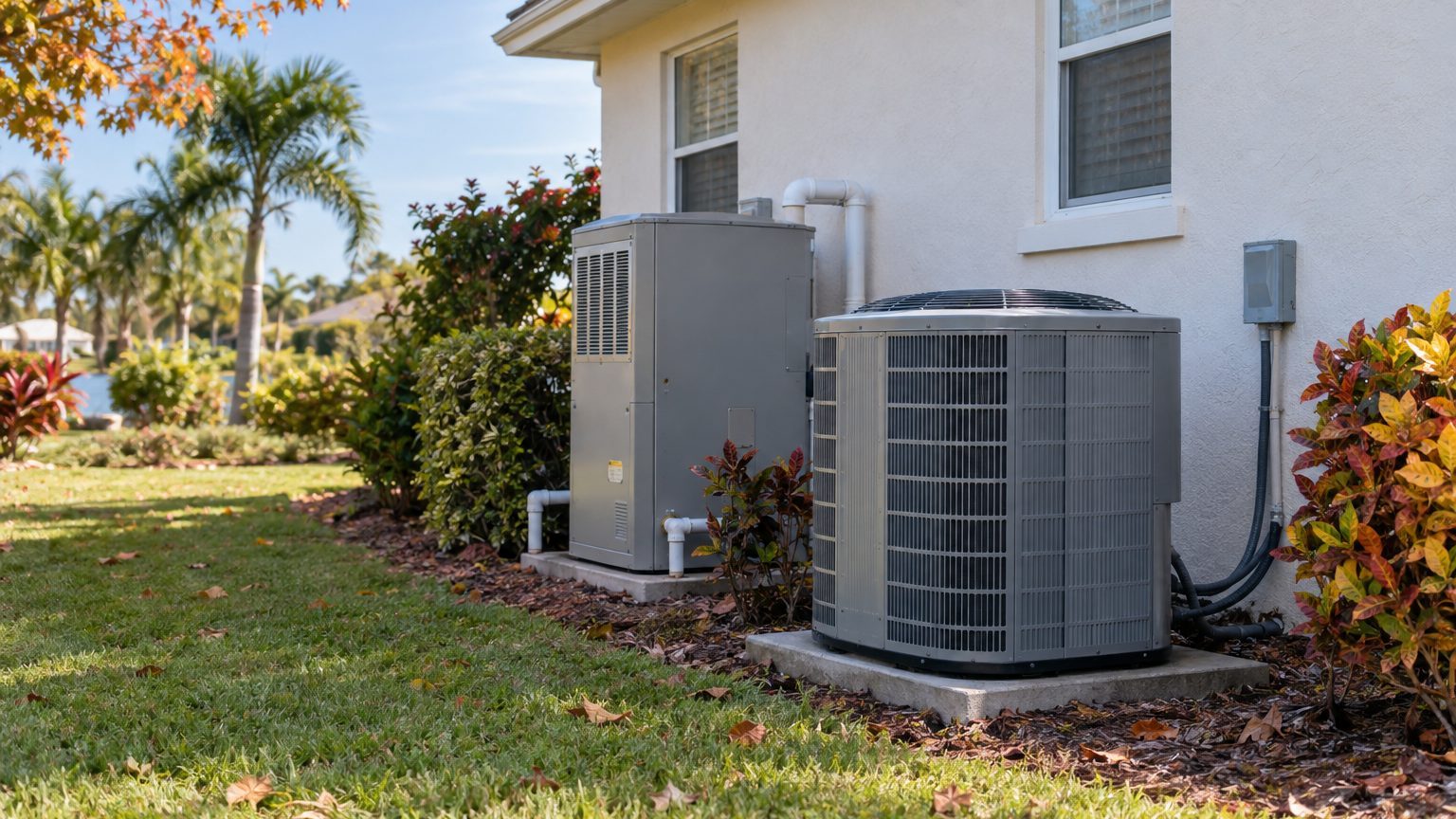

Against electric baseboard, a heat pump wins on running cost in North Dakota: $15.26 per million Btu of delivered heat versus $36.23. Against a gas furnace, the verdict depends on a number we don’t have, your utility’s gas rate. Winters here are long and cold enough that backup heat, the fuel already feeding the house, and the need for air conditioning can matter as much as the fuel price.
The short answer for North Dakota
Start with what can be computed. Using average residential prices from the U.S. Energy Information Administration (EIA) and the ENERGY STAR efficiency floor for a ducted heat pump, one million Btu of heat delivered to the house costs $36.23 with electric resistance (baseboard, 100% efficient) and $15.26 with a heat pump rated at 8.1 HSPF2, which works out to a seasonal COP of about 2.4. The heat pump comes in $20.97 less per million Btu.
Natural gas is the missing piece. The verified figures for this state carry no residential gas price, so there is no honest number to put beside the other two. Gas rates vary by utility and by season, and the right source is your own gas bill or your utility’s published rate sheet. Take that rate, apply your furnace’s efficiency rating, and compare the result to $15.26.
These figures measure running cost per unit of heat, not a yearly bill, which depends on the size and tightness of the house. They also say nothing about equipment price, installation, or ductwork, and a cheaper fuel bill can still mean a slow payback.
So the verdict has two parts. If the house has no gas service and heats with electricity, a heat pump costs $20.97 less per million Btu than baseboard, and the only open question is how much backup you need on the coldest nights. If a gas line is already there, get your utility’s rate and run the same math before you decide anything.
What each option costs to run in North Dakota
Each row shows the efficiency assumed and the cost of one million Btu of heat actually reaching the house.
| System | Efficiency used | Cost per million Btu delivered |
|---|---|---|
| Electric resistance (baseboard) | 100% | $36.23 |
| Heat pump | 8.1 HSPF2 (seasonal COP about 2.4) | $15.26 |
| Gas furnace | Depends on the unit’s efficiency rating | Not computed: needs your utility’s gas price |
Behind the electric rows sits one price: 12.36 cents per kWh, the average residential price, year-to-date through July, from the EIA’s Electric Power Monthly (Table 5.6.B). It is a statewide average, so your utility and rate plan may land above or below it. For gas, no price is included, because none was verified. Gas is billed by volume, and the EIA’s conversion is about 1,037 Btu per cubic foot, with 3,412 Btu per kWh for electricity. Those two conversions let you put any gas bill on the same footing as the table.
Efficiency matters as much as the fuel price because you pay for the energy that goes in, not the heat that comes out. Baseboard turns one unit of electricity into one unit of heat. A heat pump moves heat that already exists outside, so it returns roughly 2.4 units for each one it consumes over a season at this rating. That ratio produces the gap in the table. The 8.1 figure is the ENERGY STAR minimum for ducted systems, so a better unit would do better. The label asks more of non-ducted split systems, 8.5 HSPF2, because with no duct losses they start with an edge. For how that rating is built, see What HSPF2 Measures, and Why Ductless Asks for More. Compare units on HSPF2 for heating, never on SEER2, which only measures cooling.
How cold it gets, and what that does to a heat pump
Fargo’s airport station logs about 8,806 heating degree days a year (base 65°F), according to NOAA’s 1991-2020 climate normals. Heating degree days add up, for every day of the year, how far the average temperature sat below 65°F. Twice the degree days means roughly twice the fuel for the same house. That is a long, hard heating season.
The coldest month tells the other half of the story. NOAA’s normals put the average daily minimum in the coldest month at 0.2°F, so plenty of nights fall below zero. Those are the nights when a heat pump works hardest for the least return.
Here the $15.26 needs an honest asterisk. It rests on a seasonal average efficiency that blends mild fall days and bitter January ones. In deep cold, a heat pump’s efficiency drops, and the real cost of heat on a subzero night is higher than the seasonal number suggests. That is why systems in cold climates pair the heat pump with backup, either electric resistance strips inside the air handler or an existing furnace, to carry the coldest stretches. Whether the seasonal average holds depends on how much time the house spends in that deep-cold range and how well the equipment is sized and installed. For the longer discussion, How Cold Is Too Cold for a Heat Pump goes through the performance curve.
The practical reading is that a heat pump here should be priced and sized as a system with backup, not as a stand-alone replacement, unless an installer shows you the numbers for your coldest nights. The savings in the table are real, but the coldest week will pull them downward.
What homes in North Dakota already heat with
The EIA’s 2020 Residential Energy Consumption Survey (RECS), state tables, shows what was installed. A furnace is the main equipment in 64% of homes, and a steam or hot-water boiler in 12%. By fuel, natural gas leads at 46%, then electricity at 34%, propane at 15%, and fuel oil or kerosene at 4%. For central heat pumps the survey does not publish a figure, because the estimate was suppressed as unreliable. That is not the same as zero. These are also state numbers from a national survey, not a count for your county or town.
Still, they change the comparison in useful ways. More than half of homes do not rely on gas, and a house without a gas line can’t run a gas furnace at all. Propane at 15% is a different fuel with a different price, so check your propane delivery price instead of a gas rate. And the 34% on electricity means a large group already pays electric rates for heat. For anyone on baseboard or electric furnace heat, the table’s $20.97 gap is the number to look at.
The 12% on boilers matters for another reason. Radiators and hot-water baseboards have no ductwork to reuse, so converting means either adding ducts or going ductless, which is a different project from swapping a furnace. Ductless or Central covers that decision. For the wider picture, see Heating a Home in North Dakota. If the house runs on a boiler or has no gas line, treat the heat pump question as a conversion project, not a like-for-like swap.
When the other choice wins
The heat pump is cheaper to run than baseboard, but a gas furnace can still be the better choice in several common situations.
A home already on natural gas, with a furnace that works, is the first. If your utility’s gas rate turns out low enough to beat $15.26 once your furnace’s efficiency is applied, the furnace costs less to run, and no new equipment is needed. An older system with years left changes the timing too, since replacing something that still heats the house means paying for new equipment before the old one has earned its keep. Repairing a Furnace or Replacing It lays out how to weigh age against repair cost.
Dual fuel is a middle path. A heat pump handles the fall and spring, when it is most efficient, and the furnace takes over when the temperature drops far enough to make electric heat expensive. It costs more to install, but it matches a heat pump’s slide in deep cold.
Cooling points the other way. Fargo records about 542 cooling degree days a year, a modest summer load but enough that many homes want air conditioning. If the central air conditioner is aging, a heat pump replaces both jobs with one outdoor unit, which tips the decision toward it. If the house never needed air conditioning, the heat pump has to win on heating alone.
Common questions
Is a heat pump cheaper to run than a gas furnace in North Dakota?
It depends on your gas rate, which the verified figures don’t include. A heat pump at 8.1 HSPF2 costs $15.26 per million Btu delivered, using the EIA’s electricity price. Get your utility’s gas price, apply your furnace’s efficiency, and compare.
Does the $15.26 figure show what I will pay in a year?
No. It compares fuels on the same unit of heat. Your yearly bill depends on the size of the house, insulation, air leakage, thermostat habits, and your local rates.
Will a heat pump keep my house warm on the coldest nights?
The average daily low in the coldest month is 0.2°F at the Fargo station, so many nights are colder. Efficiency drops in deep cold, and backup heat, either resistance strips or a furnace, typically carries those nights.
Which rating should I compare when shopping for a heat pump?
HSPF2 for heating, since SEER2 only measures cooling. ENERGY STAR sets the minimum at 8.1 HSPF2 for ducted and single-package systems and 8.5 for non-ducted split systems. Those are minimums to earn the label, not what any particular house needs.