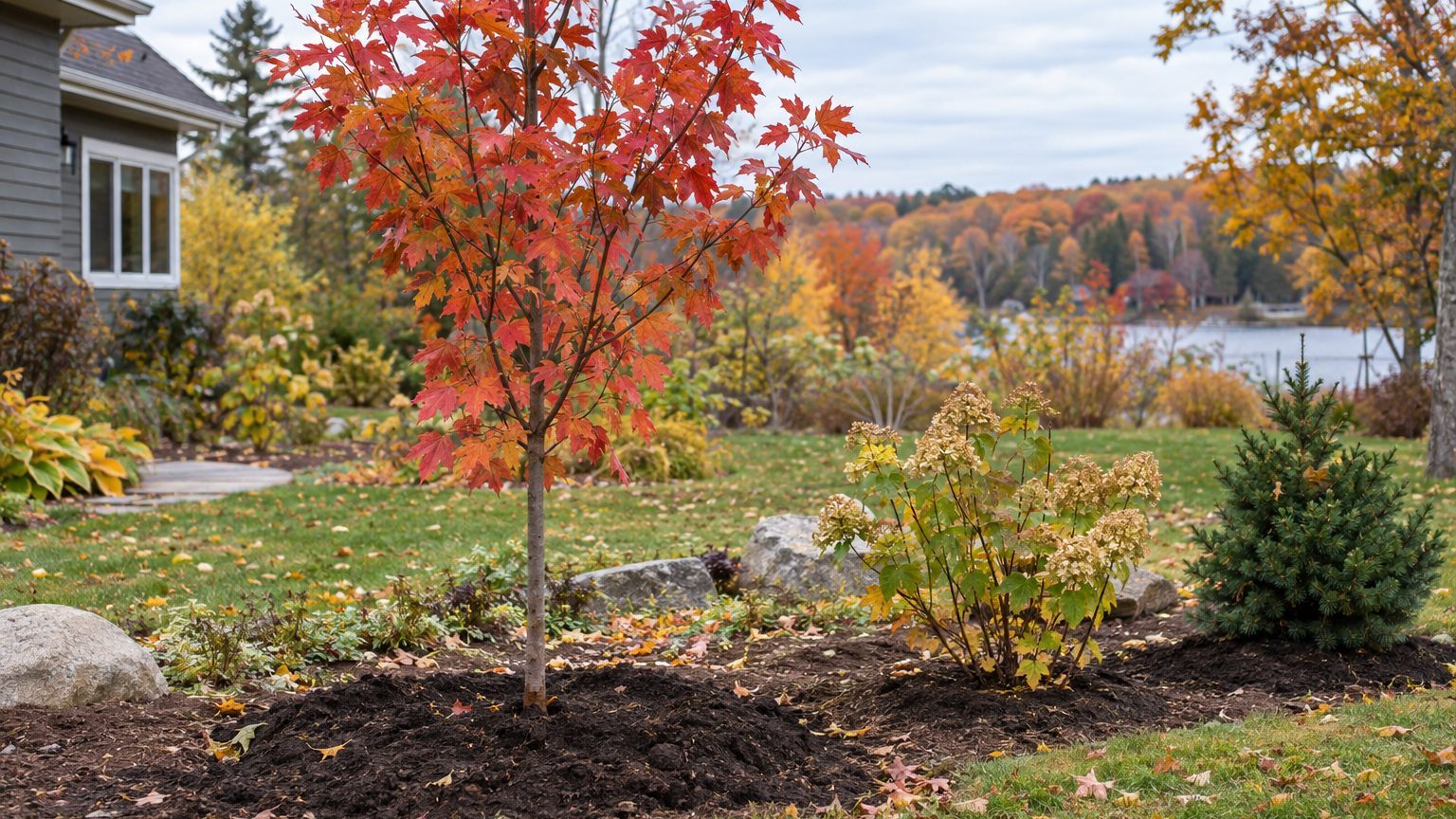

In the low desert, there is no frost-based deadline for planting trees and shrubs in fall. Phoenix has no reliable fall freeze, and NOAA lists its frost-free season as 365 days, so fall and winter are the best planting window rather than the last chance. The high country works differently. Around Flagstaff the ground freezes hard, and the deadline counts backward from that freeze. Where you garden decides which rule applies.
The deadline in Arizona
Roots don’t follow the calendar the way leaves do. They keep growing as long as the soil is workable and above freezing, which can be weeks after the air turns cold. That is why the deadline for fall planting is never “the first frost.” It is a point several weeks before the ground itself freezes, and the ground freezes later than the air does.
Low desert: no frost deadline at all
For Phoenix, the reference station here (USW00023183), the NOAA NCEI 1991-2020 Climate Normals and NOAA’s daily records show no reliable fall freeze. In the 30 springs on record, the temperature reached 32°F in only 6. The mean daily minimum of the coldest month is 45.3°F, according to the same NOAA normals, well above freezing. Soil that never freezes never shuts down root growth, so there is no fall planting deadline from frost in the low desert.
The limit in this part of the state is heat. Summer stress is the reason to avoid the hottest months, and it is also why planting in fall, winter, or very early spring suits the low desert so well. Roots get months of mild soil before the next summer arrives. Cold-state advice about a “last safe planting date” does not transfer here, and this part of the state should not borrow one.
Flagstaff and the high country: count back from the freeze
Higher elevations and the northern part of the state are a different climate. A colder location has an earlier first fall frost, and the fall planting deadline moves earlier with it, while spring tasks move later. Cornell Cooperative Extension (Orleans County) states the rule this way: “Fall is an excellent time for transplanting, provided you get them to their new home at least 6 weeks before the ground freezes, allowing them time to establish roots before winter dormancy.”
Work it as a range. Find the typical first fall frost for your town, expect the ground to freeze somewhat later, and count six weeks back from that. The First and Last Frost Dates in Arizona page is the place to start for your own town. Don’t convert the six weeks into a single calendar day. Cold falls, warm falls, and elevation shift it.
| Criterion | Low desert (Phoenix) | High country (Flagstaff area) |
|---|---|---|
| Fall freeze | No reliable fall freeze | Freezes hard |
| Does the ground freeze? | No (coldest-month mean minimum 45.3°F) | Yes |
| Cornell 6-week rule | Does not apply | Applies, counted from ground freeze |
| Main limit on planting | Summer heat | Winter cold |
One caution about the numbers. The USDA Plant Hardiness Zone Map (2023 edition, built on average annual extreme minimum temperature) gives Arizona a range of 4b-10b. That is a statewide spread, not a single zone, so read it for your own town rather than for the state as a whole.
What to plant late, and what to wait on
The safe bets
Container-grown and balled-and-burlapped trees and shrubs that are fully hardy in your area establish well when planted late. Their root systems come intact, so they lose little time recovering from transplant. In the low desert that includes the great majority of desert-adapted trees and shrubs, and fall into winter is the time to put them in. Plant fully hardy container and balled stock through fall and winter in the low desert, and in the high country only within the six-week window before ground freeze.
Bare-root plants, which are dormant when sold, also do well planted while the soil is workable, since the cold keeps their tops quiet while roots settle. Whatever the form, dig a wide hole rather than a deep one, set the plant at the same depth it grew before, and tease apart roots circling the container so they head outward instead of strangling the trunk later.
The risky ones
Two groups deserve caution. The first is borderline plants, meaning anything only marginally hardy where you garden. In the low desert, Phoenix reached 32°F in 6 of 30 springs, so a freeze is uncommon but not impossible. A frost-tender tree such as citrus planted in fall faces its first winter with those odds. Many gardeners hold tender plants until spring, giving them a full warm season to build roots before the next cold snap. Your local last-frost range helps you pick the moment.
The second group is evergreens in the high country. Pines, junipers, and broadleaf evergreens keep losing water through their needles and leaves all winter. When the soil is frozen, the roots cannot replace it. A late-planted evergreen has not built enough roots to keep up, and the result is browned foliage by spring. If the six-week window has closed, wait for spring. In the low desert, evergreens are not under that same frozen-soil pressure, but dry winter air still pulls water from them, so they need the same attention to irrigation described below.
Large specimens deserve a second look as well. A bigger plant has more top growth to feed from a root system that was cut down when it was dug. Size is not the same as readiness, and a smaller plant often catches up to a bigger one within a few seasons.
Watering and mulch until the ground freezes
Water deeply, and keep going
Newly planted trees and shrubs depend entirely on you for water until their roots reach beyond the planting hole. Soak the whole root zone slowly and deeply rather than sprinkling the surface. Deep watering pulls roots downward, where soil moisture is steadier, while frequent shallow watering keeps them near the surface and exposed. Arizona falls and winters can be dry for long stretches, and a plant that went in during a rainless month will not wait for rain to catch up.
In the high country, keep watering until the ground freezes. A final deep soak late in fall, while the soil is still workable, gives roots and evergreen foliage a reserve to draw on. In the low desert, the ground never locks up, so watering continues through winter, adjusted to the weather. Cool air slows the plant’s demand, so you can stretch the interval between waterings as temperatures drop. Check the soil with a trowel or screwdriver instead of guessing from the surface.
Mulch: a ring, not a volcano
Mulch holds soil moisture and evens out soil temperature. NC State Extension, in its Extension Gardener Handbook (chapter 11, Woody Ornamentals), says that “a 2-inch to 3-inch layer of mulch suppresses most annual weed seeds and makes it easy to hand-pull any that do germinate.” On trees, it adds: “Provide a 3-inch layer of mulch to reduce water loss and maintain uniform soil moisture and temperature around roots.” Spread a 2-inch to 3-inch layer out over the planting area and no deeper. More is not better.
Shape matters as much as depth. Pull the mulch back so it does not touch the trunk, and keep the root flare, where the trunk widens at the base, visible. Mulch piled against bark holds moisture where you don’t want it and invites rot and pests. Spread it wide in a flat ring, thinning toward the trunk. The Mulching Without Killing the Plant guide covers materials and common mistakes in more detail.
The first winter is about roots, not growth. A plant set in the ground this fall will do very little above ground before spring, and that is what you want. Skip heavy pruning and heavy feeding, which push soft top growth. Cornell’s phrasing, “establish roots before winter dormancy,” is the whole goal of the first season. For the wider routine, see Planting and Caring for Trees, Shrubs and Perennials.
What goes wrong
Timing and winter damage in the high country
The most common failure is planting too late for the climate. A tree that goes in after the six-week window has closed meets frozen soil with a root system that has barely left the pot. In the high country, count back from your own ground freeze and skip the planting if you’ve missed the window. Waiting until spring costs a few months and saves the tree. Colder states face the same arithmetic, and the Arkansas version of this question, How Late Can You Plant Trees and Shrubs in Fall in Arkansas?, shows the same countdown in a different climate.
Winter burn is the second problem. Evergreens exposed to wind and sun lose moisture through their foliage while frozen soil blocks resupply, and the needles turn brown. Shallow root balls bring a third: repeated freezing and thawing can push a poorly anchored plant up out of the soil, a process called frost heaving. Mulch helps by keeping soil temperature steadier, and a firm planting at the right depth helps even more. Both problems belong to the high country and its hard freezes, not to the low desert, where the ground does not freeze.
Drying out and misplaced worry
Across the whole state, the quieter killer is a dry fall. Plants that went in during a stretch without rain can dry out gradually and show it only after damage is done. In the low desert, summer heat is the opposite risk, and it is the reason not to plant in the hottest months. Gardeners who bring northern habits to the low desert often worry about frost deadlines that do not exist there, while skipping the irrigation that does matter. Water first, worry about freeze dates second, and only if you live where the ground freezes.
Common questions
Is it too late to plant a tree in the low desert in winter?
No. At the Phoenix reference station, NOAA normals show a coldest-month mean minimum of 45.3°F and a frost-free season of 365 days, so the ground does not freeze. Fall and winter plantings have months of mild soil to establish before the next summer. Just keep watering and protect frost-tender plants during rare cold nights.
How do I find the deadline in Flagstaff or the high country?
Start from your town’s first fall frost range, assume the ground freezes somewhat later, and count back at least 6 weeks, per the Cornell rule. Colder spots and higher elevations have earlier frosts, so the window closes earlier there. Use the frost-date range, not a single day.
Should I wait until spring for evergreens?
In the high country, yes, if the six-week window has passed, because evergreens keep losing water all winter while frozen soil cannot supply it. In the low desert, fall and winter planting works for hardy evergreens, as long as you water through dry spells.
How deep should mulch be on a new tree?
NC State Extension recommends a 2-inch to 3-inch layer for weed control and a 3-inch layer on trees to reduce water loss and keep soil moisture and temperature even. Keep it off the trunk. More is not better. For other local timing questions, the Arizona guides cover your region.
Related guides
- How Late Can You Plant Trees and Shrubs in Fall in California?
- How Late Can You Plant Trees and Shrubs in Fall in Nevada?
Sources : almanac.com | extension.unh.edu