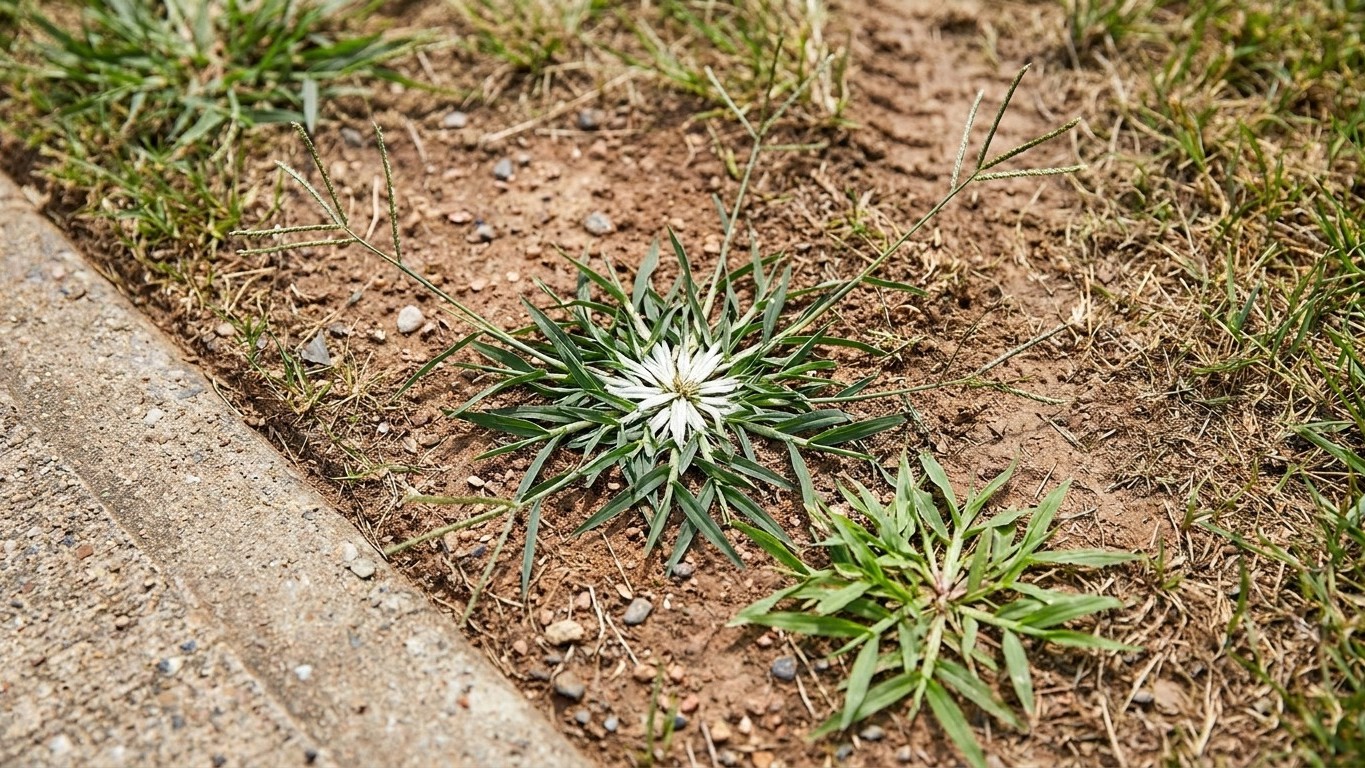

In frost-free coastal and Southern California, sow warm-season grass seed when the soil two inches down reaches 65°F and keeps climbing. A calendar date won’t tell you. Where winters freeze (Northern California, the Central Valley, the Sierra), the deadline works backward from your first fall freeze, which leaves you about 45 days of growing weather. Either way, pick a warm-season grass.
The best time to sow grass seed in California
Warm-season seed stays dormant until the ground warms up. The number to watch is soil temperature at 65 to 70°F and rising, measured two inches down, mid-morning. “Rising” matters. One balmy afternoon in a cool spell can fool you, while a thermometer reading taken at the same time on several mornings in a row won’t.
Coastal and Southern California: no frost to wait for
NOAA’s 1991-2020 Climate Normals for a coastal Southern California station list no computable freeze date at all. Daily records show zero days at or below 32°F in 30 years, and the frost-free season is listed as 365 days. So there is no “after the last frost” rule to follow here. The constraints are heat, drought and water restrictions. Your window opens when the soil warms, and the goal is to get seedlings established while you can still keep them evenly moist within whatever your water district allows.
Northern California, the Central Valley and the Sierra
These regions do freeze. Get frost dates from your local University of California Cooperative Extension office. Sow once the soil hits 65°F and rising, then confirm you still have about 45 days of growing weather ahead of that first fall freeze.
| Region | What sets the sowing window | Main risk |
|---|---|---|
| Coastal and Southern California | Soil at 65°F and rising; no freeze in an average year | Heat, drought, water restrictions |
| Northern California, Central Valley, Sierra | Soil at 65°F and rising, plus about 45 days before the first fall freeze | Seedlings that sprout, then die over winter |
Which grass to sow
The recommended warm-season species are Bahiagrass, Bermudagrass, Carpetgrass, Centipedegrass, Seashore Paspalum, St. Augustinegrass and Zoysiagrass. Cool-season grasses won’t hold up the same way. They are built to grow in mild, moist weather, so they stall in long dry heat and demand the kind of steady irrigation that restrictions are meant to limit. Bermudagrass and zoysiagrass are the two on that list most often sold as seed, and the rates below show why.
The last date that still works
Seed needs about 45 days of growing weather before the first fall freeze. A seedling that sprouts later than that has too little time to build roots, and it dies over winter. The seed did germinate, so the failure looks like bad luck, but the date was simply wrong.
Finding your own cutoff takes three steps. Look up the typical first fall freeze for your town (your county’s UC Cooperative Extension office can supply it). Count back 45 days. Treat that date as the last one you should be seeding, with a few days of cushion, because an average freeze date is a midpoint. Half of all years bring the freeze earlier. Gardeners in Georgia and North Carolina do the same arithmetic against their own fall freezes, which is why their sowing windows look so different from yours.
Today is October 3, so some freezing-climate gardeners have already passed their cutoff. If so, wait for spring. Seed that sits in cold soil does little, and a lawn started on schedule in warm soil usually outruns one started late and forced along.
On the frost-free coast and in the south, the cutoff isn’t a freeze at all. It’s the soil thermometer. If your reading is falling below 65°F rather than climbing toward it, warm-season seed has no reason to wake up, so hold off until it warms again. Gardeners there can sow whenever the soil is warm, which is more flexibility than most of the country gets, but the same rule applies in reverse: no warmth, no germination.
Seed rate and soil preparation
How much seed to spread
These are pounds per 1,000 square feet for a new lawn. Overseeding an existing lawn takes half.
| Grass | New-lawn rate per 1,000 sq ft |
|---|---|
| Bahiagrass | 5 to 10 lb |
| Bermudagrass | 1 to 4 lb |
| Carpetgrass | 1 lb |
| Centipedegrass | 0.25 to 1 lb |
| Zoysiagrass | 1 to 2 lb |
| Seashore Paspalum | Sod, sprigs or plugs only, not seed |
| St. Augustinegrass | Sod, sprigs or plugs only, not seed |
If you want St. Augustinegrass or seashore paspalum, buy sod, sprigs or plugs, because seed isn’t the way. More seed is not insurance. Crowded seedlings compete for water and thin themselves out, and you pay for the extra bag. Cover the seed no more than 0.25 inch and press it into the soil for good contact. Seed buried deeper often never emerges, and it’s the most common reason a new lawn comes up patchy. A light raking followed by a roller or a walk-over with a lawn roller does the job. The full sequence is laid out in Starting a New Lawn From Seed.
What your soil probably does
California’s official state soil, named by law in 1997, is the San Joaquin series, an Alfisol. USDA NRCS records for its surface layer give a pH of about 6.1 (slightly acid), a loam to silt texture of 51 percent sand, 18 percent clay and 32 percent silt, organic matter of about 0.8 percent, and moderately good drainage. In practice, ground like that holds nutrients reasonably well, drains at a moderate pace, and starts out low in organic matter.
California has hundreds of soil series. River bottoms, hill country, and any lot a builder has scraped or filled can behave nothing like it, and the pH above is not your pH. Send a sample to a lab (your UC Cooperative Extension office can point you to one) and get your own numbers. Then loosen the top few inches, rake smooth, and work in compost if the test or the soil’s feel says it’s thin.
Watering a new lawn until it holds
Seed sown at a quarter inch or less dries out fast, and a seedling that dries out even once can die. For the first weeks, the top layer of soil should stay evenly moist, which means short, frequent waterings rather than one long soak. Early morning is best, since evaporation is lowest and the grass dries before evening.
Check your local rules before you plan the schedule. California water agencies often set the days and hours when outdoor irrigation is allowed, and the rules vary by city and district. Some agencies handle new-lawn permits or exemptions separately, so a phone call to your water provider before you buy seed can save you a fine and a failed lawn. Sowing at the right moment helps here too, since seed that germinates quickly in warm soil needs fewer days of babysitting than seed sitting in cool ground.
Once seedlings are up and the lawn looks like a lawn, taper off. Water less often and more deeply, which pushes roots down and builds drought tolerance. Slopes call for a cycle-and-soak approach: run the sprinklers in short bursts with breaks between them, so water soaks in instead of running off. Keep foot traffic off the area, and hold the first mowing until the grass is clearly established and the blades are sharp.
Common questions
Is there a last frost date for planting grass seed in California?
Not on the coast or in the south. NOAA’s 1991-2020 normals for a coastal Southern California station show no freeze in an average year and a 365-day frost-free season. Northern California, the Central Valley and the Sierra do freeze, so check local dates there.
Can I grow St. Augustinegrass or seashore paspalum from seed?
No. Both are established from sod, sprigs or plugs. Seed is the route for Bahiagrass, Bermudagrass, Carpetgrass, Centipedegrass and Zoysiagrass.
How much seed do I use when overseeding?
Half the new-lawn rate. For Bermudagrass, for example, the new-lawn range is 1 to 4 lb per 1,000 square feet, so overseeding uses half of that.
What if I missed the 45-day cutoff?
Wait until spring. Seed sown too late germinates and then dies over winter, so a later start loses the seed, the water and the time.
If you follow the almanac, here is when to plant grass seed by the moon. It is a tradition, not a proven method.