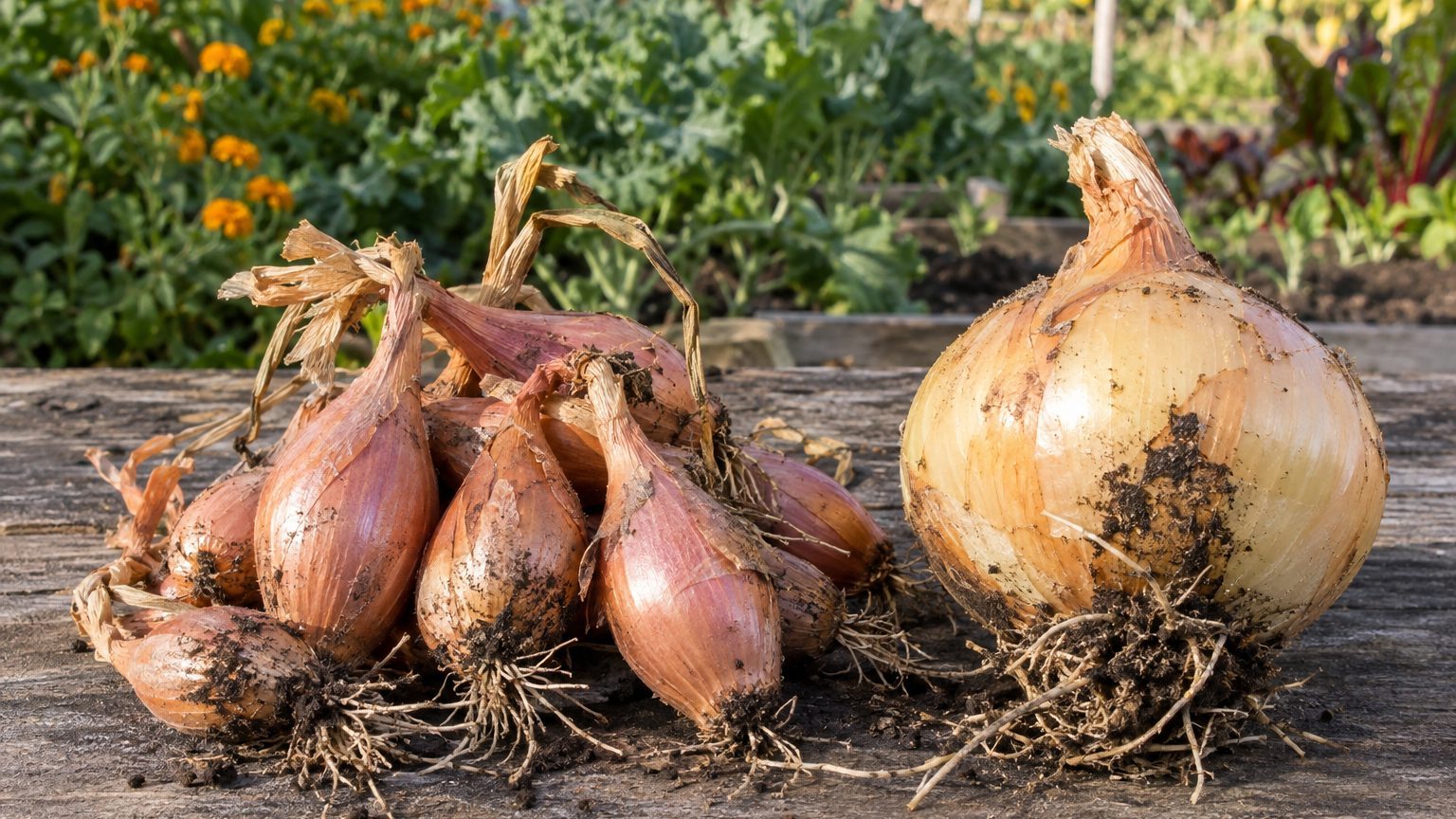

A shallot is a type of onion. Both belong to the same species, Allium cepa, and the real differences are in how the plants grow and how the bulbs taste. Shallots form a cluster of small, tapered bulbs from a single planting. A common onion forms one large round bulb. In the kitchen, shallots taste milder, sweeter and a little garlicky, with a finer texture that melts into sauces. Onions bring more bite and more water.
That short answer hides a lot of useful detail, especially if you are deciding what to put in a garden bed or what to grab for a recipe. Here is how the two compare.
Same species, different growth habit
Botanists usually file the common onion under Allium cepa var. cepa and the shallot under var. aggregatum. You will still see older references to Allium ascalonicum, a name that was dropped once it was clear the two were close relatives and not separate species. The “aggregatum” part describes the habit well: the plant aggregates, or clumps. Gardeners also call these plants multiplier onions, which is a fair description of what happens underground.
Plant one shallot bulb and you typically dig up a small handful, often somewhere between three and ten bulbs depending on variety, soil and spacing. Plant one onion set and you get one onion. That multiplication is the main reason shallots appeal to home gardeners, and it is also the reason they cost more at the store. A bed of shallots yields smaller bulbs and takes more hand labor to plant and harvest, so the price per pound runs higher than for storage onions. For a closer look at that one-in, many-out pattern, see Growing Shallots: One Bulb In, a Handful Out.
Cut a shallot open and you will notice other differences. Most have a papery skin in copper, gray or rosy red, and the flesh often divides into two or three lobes, a bit like a garlic clove with an onion’s layers. The flesh is usually tinged with pink or purple, even in brown-skinned types. An onion is a single sphere of concentric rings with a thicker, more watery texture. Shallots have a finer, tighter grain, which is why they dissolve so easily in a hot pan.
Then there is shape. Round, small shallots are common, but so are elongated ones that look like a stretched teardrop. Long ones are often sold as banana shallots (sometimes called echalion), and the grayish “true” shallots from French tradition are a separate category again. Color and form vary enough that picking a variety is a real decision. Which Shallots to Grow: Gray, Brown and Red walks through those choices.
Flavor, chemistry and what ends up on the plate
Both bulbs get their sharpness from sulfur compounds that form when cells are cut or crushed. Shallots have a lower perceived pungency, and many cooks describe the taste as a blend of onion and a whisper of garlic. Raw, that makes them a favorite in vinaigrettes, mignonette sauce for oysters and quick pickles, where a raw yellow onion can steamroll everything else.
Shallots are also denser. According to USDA data, raw shallots carry about 72 calories per 3.5 ounces, against roughly 40 for raw onions. Much of the gap comes from water: onions are more watery, shallots more concentrated in sugars and solids. That density has a practical consequence at the stove. Shallots caramelize quickly and also go from golden to bitter in less time than onions do, so medium-low heat and a closer eye pay off. If you have ever scorched minced shallot in the first minute of a pan sauce, that is why.
Texture matters as much as taste. Because shallots break down into a soft, almost jammy base, they suit pan sauces, beurre blanc, custards and dressings, where chunks of onion would feel coarse. Onions hold their structure better, which is exactly what you want in a long braise, French onion soup, burgers or a tray of roasted vegetables. For deep, sweet caramelization over a long cook, a yellow onion is hard to beat.
Some quick guidelines for what goes where:
- Raw uses (dressings, salsas, garnishes): shallots, for the milder bite.
- Pan sauces and delicate dishes: shallots, since they dissolve smoothly.
- Soups, stews and long braises: yellow onions, which keep their body.
- Grilling and burgers: large onions, because rings need size.
Swapping one for the other
Recipes that call for shallots usually survive an onion substitution. Use a sweet or yellow onion, mince it finely, and consider rinsing it briefly under cold water if you plan to serve it raw. A tiny bit of garlic can bring back some of the shallot’s character. Going the other direction is easier still. Shallots work in nearly any recipe that asks for onion, but you will need more of them by volume, and they cost enough that you may not want to use them for a big pot of chili. A medium shallot yields roughly two to three tablespoons minced, so a recipe asking for a half cup of chopped onion needs several.
In the garden: planting, timing and storage
Most home gardeners plant shallots from bulbs, not seed. Onions can be grown from seed, transplants or sets, and the choice affects timing and variety. Planting shallots is closer to planting garlic: set each bulb pointed end up with the tip just at or slightly below the soil surface, spaced about 6 to 8 inches apart so the cluster has room to expand. In mild-winter areas (roughly USDA zones 7 through 10), fall planting is common, and in colder parts of the country, planting as soon as the soil can be worked in spring works well. Seed-grown shallots do exist, and they behave more like onions, but they are a smaller niche.
Onions are pickier about day length, which is where many gardeners go wrong. Short-day types form bulbs when days reach about 10 to 12 hours, which suits southern states such as Texas and Georgia. Long-day types need 14 hours or more, which suits northern states such as Minnesota, Michigan and Washington. Plant the wrong type for your latitude and you get either tiny bulbs or lots of leaf with no bulb at all. Shallots are noticeably more forgiving here. They respond to day length too, but they tend to produce something useful across a wider range of latitudes, and that tolerance is one reason beginners often have an easier first season with them.
Timing is similar but not identical. Shallots generally mature in about 90 to 120 days from planting, and onions grown from seed can take 100 to 175 days depending on type. In both cases, the signal to harvest is the same: tops yellow and flop over, and the necks soften. Pull the bulbs and cure them in a dry, shaded, ventilated spot for a couple of weeks until the skins crackle and the necks dry fully.
Storage is where shallots often pull ahead. Properly cured shallots can keep for six months or longer in a cool, dry, well-ventilated place, and some varieties go close to a year. Storage onions can match that, but sweet onions are a different story: their high water content and low sulfur content make them tender and mild, and they may last only a few weeks to a couple of months. If you want a bulb that will still be in the pantry in March, a cured shallot or a pungent storage onion is the safer bet.
Both crops share a habit that can catch gardeners off guard. When plants go through stress, such as a cold snap after warm weather, or when sets are too large, a flower stem can shoot up and the bulb stops sizing. It happens to onions and shallots alike. The causes and fixes are covered in Shallots That Send Up a Flower Stem.
Which one deserves bed space
If your space is limited, shallots earn their spot because one planting multiplies into many bulbs and each one is a more expensive item at the grocery store. If you cook mostly big, hearty dishes and want a pantry staple by the bagful, onions give more pounds per square foot. Many gardeners end up with both: a few rows of onions for the bulk and a smaller patch of shallots for sauces, salads and gifts.
Pests and diseases are shared, so the two crops should not follow each other in the same bed. Onion maggots, thrips, downy mildew and rust affect both. The bigger risk is white rot, a soil fungus (Sclerotium cepivorum) that attacks every allium, including garlic and leeks, and whose resting structures can persist in soil for many years, in some cases two decades. If you see it, treat that bed as off limits for alliums for a long time and move the planting elsewhere. Even without disease, a rotation of at least three to four years between alliums in the same spot is a sensible habit.